🚨 Sticky Words Sunday 🚨
SIMPLIFIY THE OFFENSE, COMPLICATE THE DEFENSE
One of the major goals of any offense is to tilt the defense into a numbers (2 on 1) or space advantage. These two advantages yield the highest PPP in the half court. This means that you want to A) increase the space a D has to cover and B) increase the amount of decisions they have to make.
Continuity/flow offenses DISTORT the defense in 2 ways:
1. Defenders 'flood the tunnel' (middle third of the floor).
2. Put all 4 defenders, off ball, in '1 pass defensive spacing'.
FLOOD THE TUNNEL COVERAGE SOLUTIONS
- corner 3
- corner cut
- flare/hammer
- middle third 3 man game (Spain/Gut)
- ghost screens at POA
1 PASS SPACING COVERAGE SOLUTIONS
- back doors
- 45 cuts
- blur/shallow cuts
- double/triple gaps
EXAMPLES:
Angle or Spread PnR/4 out 1 in- defenses will flood the tunnel because they are in a single tag helpside situation. The COUNTER is the corner 3/corner cut by reading the tag, pinning the tag or creating a 2 on 1 with the dunkers spot through things like a ghost screen, 3 man action or a 'get'.
5 out- 45 cuts, zoom, DHO etc are deployed to keep the defense in 1 pass away alignment, defenses will typically play a passive coverage such as at the level/drop. The COUNTER to this is creating double gaps, through cutters/staggers etc, exploiting back doors with no help and having great creators in small advantage spots.
If you have ATHLETES, keep the defense in '1 pass spacing'. If you have SHOOTERS, keep defenders in the 'tunnel'.
2 on 1 creation:
Spread | Ghost |
👇
🎥 @tucker_thorson
@DRIVEBasketball Too many young players playing too many games with no thought about, or understanding of, the impact it has on bodies that are still growing and developing. When you team schedules an off weekend for recovery, it shouldn’t be replaced with another random set of games.
@porterairlines is the best national carrier in Canada but they had a rough week; 4 of 5 flights delayed, made my connections but no time for anything other than a bathroom trip between. @porterairlines you can make it up to me by starting to fly to direct to Vegas from YVR 🙏
“When you chase 5 rabbits, you catch none of them.” 🐇
@Doug_Lemov broke this down for us, and we can’t unhear it.
He stops practice with five coaching points. All five are correct: pass on the ground with pace, receive on your back foot, eyes up, move it side to side, push higher.
“Got it? Go.”
Working memory holds about one thing at a time. So either the player picks one at random, and now you can’t reinforce anything, because you don’t know which one he picked, or they remember none of it and quietly get good at practicing while ignoring you.
You didn’t teach five things.
You taught them to tune you out.
One rabbit. 🐇
DeMar DeRozan explains how Gregg Popovich treated basketball as almost the least important part of coaching
“There used to be days… We’d come in there thinking we had practice… But Coach Pop would show us Something going on in a third-world country… With 13-year-old kids being trained… To be killers with AK-47s.”
“He would say, we get to come here… and shoot a basketball… Make millions of dollars… Take care of your kids.”
“He used to do a lot of things… To put stuff in perspective all the time. That’s genuinely who he was… At all times.”
“It was always basketball last. You as a man first. Family, everything else before basketball.”
“He would tell us, this basketball stuff ain’t nothing. F— wins and losses. F— championships. What’s really important is: How are you doing? How’s your family? How are your kids?”
@Mike_A_Bernier@Ben_oharabyrne@VaughnPalmer I miss the days of parties made up of serious people interested in governing, not fighting culture wars & pushing fringe ideology to appease the far right/left edges of their. Unfortunately I don’t think we’ll shift back to debating ideas instead of chasing viral soundbites soon
The coaching hiring process doesn’t start when you apply, it starts years earlier.
Your reputation, relationships, and results are being formed daily and will impact your chances when a job comes open.
How to increase your luck as a coach:
- Watch Film
- Listen More
- Study other Coaches
- Attend Clinics
- Mentor Someone
- Be Mentored
- Build New & Positive Habits
- Ask Questions
- Be Willing to Change
- Get Organized
Luck favors those willing to do more.
#CMDCooachingLab
The best thing you'll listen to today is Utah Jazz Head Coach Will Hardy talking about the tax of being a leader:
🏋 Leadership is not a position you hold—it’s a responsibility you carry. The weight isn’t in the title, it’s in the people who trust you with their time, energy, and belief.
📊 Before metrics, before outcomes, before strategy—there are humans. Leadership is a human-to-human commitment to see, serve, and develop the people in front of you.
✊ There is a tax on leadership. And it's paid in consistency, in hard conversations, in choosing standards over comfort. You don’t get to clock out from being the example!
The cost is of being the head coach is real... but so is the impact on every life you’re responsible for. 🌱⏩🌳
Joe Mazzulla: “The greatest gift you can have as a coach is to have players that have a high, competitive character, care about winning, and want to get better.”
Houston HC Kelvin Sampson - Why Coaches Fail
- "I think the coaches that fail at every level, are the coaches that are passive aggressive. Passing aggressive coaches are usually afraid to hold kids accountable, they rationalize."
- "If you're going to build a culture, the first thing you have to come to grips with, you're going to have confrontation."
- Consistency
- Competence
- Confidence
- Confrontation
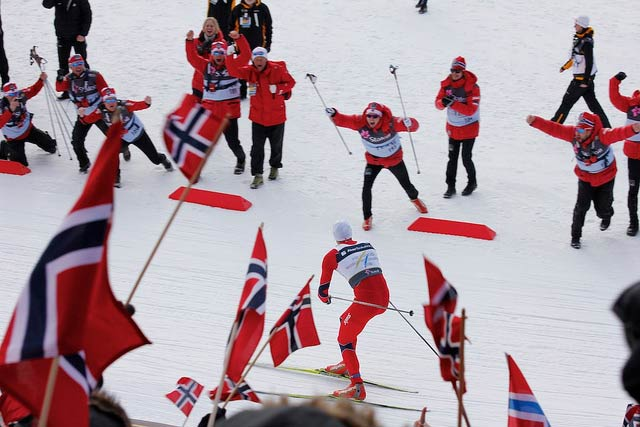
Norway consistently wins the most medals at the Winter Olympic Games, with a population of just 5.6 million people.
A big part of their success is how they treat youth sports—and it’s the opposite of what we do in the US. Here’s what we can learn from Norway:
1. Scorekeeping:
In the US: Youth sports tend to be hyper competitive even at early ages. Leagues almost always keep score.
In Norway: Scorekeeping isn’t even allowed until age 13.
Removing winners and losers keeps the focus on the process not outcomes. It keeps kids engaged longer because it minimizes pressure (and tears) and maximizes fun, learning, and growth. The goal isn’t to win a third grade championship. It’s to love sport and keep playing.
2. Trophies:
In the US: If you give everyone a trophy, you’re creating snowflakes who will never gain a competitive edge.
In Norway: Whenever trophies are awarded, they are handed out to everyone.
If getting a trophy makes young kids feel good, we should give them trophies. Maybe they’ll come back and play again next year!!
As for the creation of snowflakes with no competitive edge—Norway’s athletes are tough as nails and all they do is win.
3. Prioritizing Fun:
In the US: Far too often, the goal is to win.
In Norway: The national philosophy is “joy of sport.”
Youth sports in the US are driven by adults, ego, and money. Youth sports in Norway are driven by fun.
Only half of kids in the US participate in sports. The number one reason they drop out: because they aren’t having fun anymore. In Norway, 93% of kids participate in youth sports. Fun is the foremost goal.
4. Playing Multiple Sports:
In the US: There’s pressure to specialize early and play your best sport year round.
In Norway: Try as many sports as you can before specializing as late as college.
Norway encourages kids to try all types of sport. This reduces injury and burnout and increases all-around athleticism. It also helps promotes match quality, or finding the sport you are best suited for as your body develops, which is impossible if you commit to a single sport too early.
5. Affordability
In the US: There is increasingly a pay-to-play model with high fees for leagues, equipment, and travel. This excludes many kids from playing.
In Norway: It’s a national priority to keep youth sports affordable and therefore accessible for all.
Kids aren’t priced out, which creates opportunities for everyone to participate (and develop into athletes), regardless of their parents’ income level.
We could learn a lot from Norway:
In the US, 70% of kids drop out of youth sports by age 13. This not only diminishes an elite-athlete pipeline, but it also destroys an opportunity for healthy habits and all the character lessons kids can learn from sport.
In Norway, lifelong participation in sport is the norm. The goal isn’t to have the best 9U team. It’s to develop the best athletes. Those are two very different things. And Norway has the gold medals to prove it.