@PDXFato@grok@KobeissiLetter Believe me. The US financial system is far more fragile than the CN one. The institutional leverage throughout the whole set up hasn’t changed at all since ‘08 and it will collapse again soon enough
@PDXFato@grok@KobeissiLetter Hahahahah. Ridiculous answer. The funds leaving China are all from UHNW a trillion leaving is not a huge amount over there. The scale of China is MASSIVE.
US UHNW also keep their funds offshore. Caymans. Switzerland etc. it’s just that US gov doesn’t care.
Me, plus every Arsenal Fan I know! ❤️🤍🤣
I just can’t stop watching Arsenal videos!! 😅🥹🥹🥹
It’s a beautiful time people 💋
Thanks Joe Bor on instagram for this video 📹
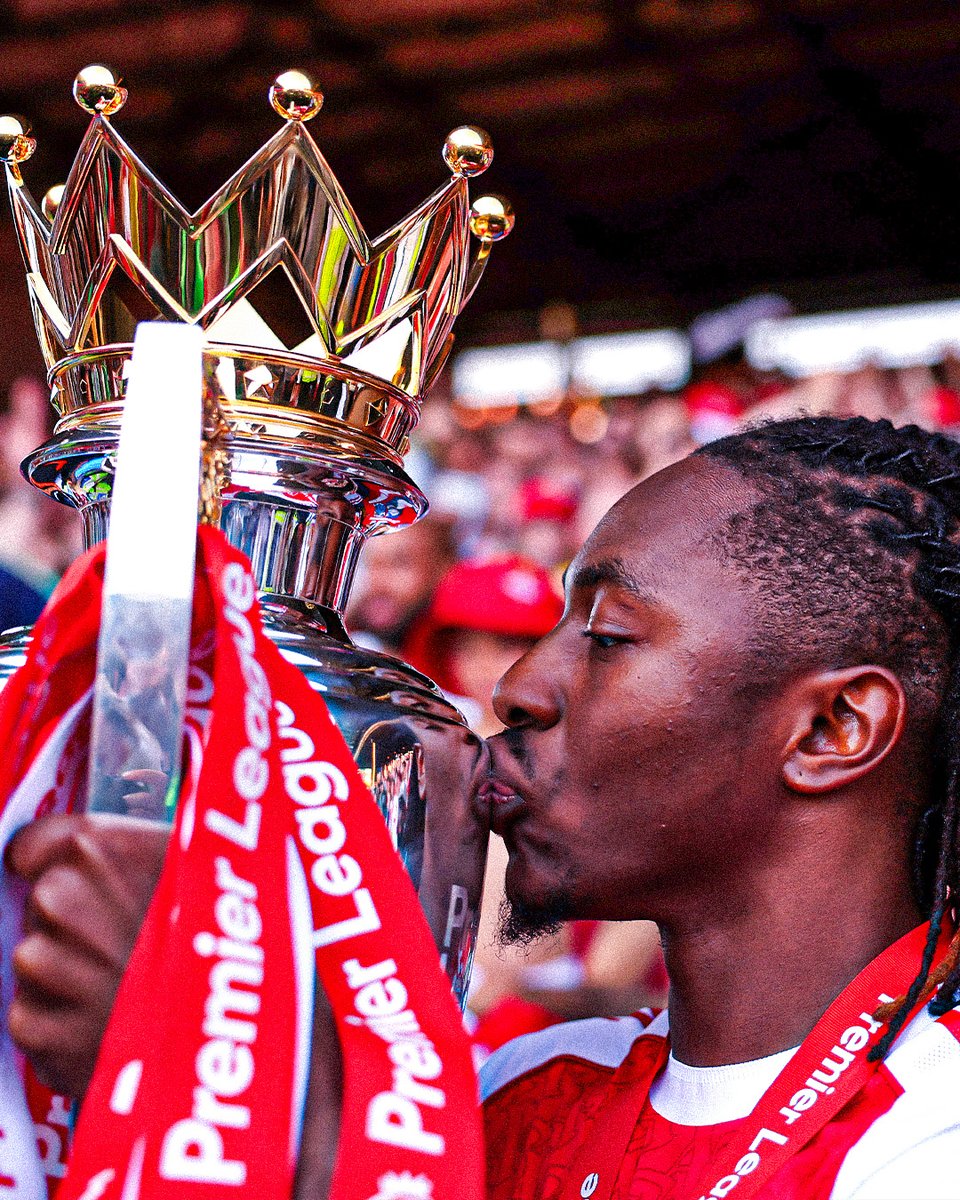
🚨😂❤️ | Jamie Carragher on the global reaction to Arsenal F.C. winning the Premier League
🗣️ “I finally realised why nobody wanted Arsenal to win the league…” 👀
Carragher admitted the scale of Arsenal’s celebrations worldwide has been unlike anything he has seen in modern football 🌍🏆
🗣️ “The fans are unbelievably loyal and crazy passionate.”
🗣️ “Show me another team that won a trophy and had celebrations like Arsenal did — streets packed everywhere, social media exploding all over the world.” 🤯🔴⚪️
🗣️ “The world was always afraid of this.” 🔥
@WUTangKids Imagine going to a STATE dinner in a country that has total zero tolerance for drugs.... and thinking "I'll go high. ohhh this edible looks fun"
@MCCCANM Also very important: pilots regularly train this emergency* in their SIMs so they’re generally very well equipped for these types of scenarios
*engine failure on takeoff. No one ever trains for that type of suicidal moment.
I explored an alternate timeline where France defeated Britain at Trafalgar, and North America east of the Mississippi became permanent French territory.
Over time, the continent evolved into a French-speaking world.
Enjoy:
205 years ago today, Napoleon Bonaparte died on a tiny British prison island in the middle of the South Atlantic. He was 51. He had ruled most of Europe. And he changed the world so thoroughly that you are still living inside the systems he built.
Start with the obvious one. The Napoleonic Code. He commissioned it in 1800, sat in on the drafting sessions personally, argued with the lawyers, and pushed it through in four years. Equality before the law. Property rights. Religious freedom. The end of feudal privilege. It is still the basis of civil law in France, Belgium, the Netherlands, Italy, Spain, Portugal, most of Latin America, Quebec, Louisiana, and chunks of the Middle East and Africa. About a third of the planet writes contracts using rules a Corsican artillery officer wrote between battles.
He sold Louisiana to Thomas Jefferson in 1803 for 15 million dollars. Roughly four cents an acre. It doubled the size of the United States overnight. Without that deal there is no St. Louis, no New Orleans as an American city, no Lewis and Clark, no Manifest Destiny. The American century starts with Napoleon needing cash for a war.
He invaded Egypt in 1798 with an army and, weirdly, 167 scientists, mathematicians, and artists. They found the Rosetta Stone. That single slab is the reason we can read hieroglyphs at all. Egyptology as a field exists because Napoleon brought scholars to a war.
He built the Bank of France, which still runs French monetary policy. He created the lycée system that still educates French teenagers. He shoved the metric system across Europe at sword-point until it stuck. He emancipated the Jews of every territory he conquered, tearing down ghetto walls in Rome, Venice, Frankfurt. He abolished serfdom in Poland. He standardized road networks, civil registries, and tax codes that European governments still operate from.
And then there's the soldiering. He fought around 60 major battles and won most of them. Austerlitz, in 1805, against the combined Russian and Austrian empires, is still taught at West Point as one of the closest things to a tactically perfect battle ever fought. He was outnumbered, baited the enemy onto ground he had pre-selected, and broke them in a single afternoon. Three emperors took the field that morning. Only one walked off it on his own terms.
He slept four hours a night. He read constantly, dictated letters to four secretaries at the same time, and personally signed off on everything from cavalry boot specs to the seating chart at the Comédie-Française. Wellington, the man who finally beat him at Waterloo, was asked decades later who the greatest general in history was. He answered without hesitating. "In this age, in past ages, in any age, Napoleon."
He lost, in the end, because he could not stop. Russia in 1812 swallowed his army whole. Six hundred thousand men marched in. Maybe a tenth came back. He abdicated in 1814, escaped from Elba, ruled France again for 100 days, and lost it all for good in a wheat field in Belgium in June 1815.
The British shipped him to St. Helena, a volcanic dot 1,200 miles off the African coast, and waited. He spent six years there dictating his memoirs, gardening, complaining about the dampness, and quietly rewriting his own legend so effectively that Europe spent the next century arguing about him.
He died on May 5, 1821, during a storm so violent it ripped up the willow tree he liked to read under. His last words trailed off into fever. France. The army. Joséphine.
Nineteen years later France brought him home. Two million people stood in the snow to watch the coffin go by.
He was a tyrant. He was a reformer. He started wars that killed somewhere between three and six million people. He also wrote the rulebook that a third of humanity still lives under.
Most people who try to conquer the world are forgotten inside a generation. Napoleon has been dead for 205 years and we are still arguing about him because we are still using his furniture.