I feel sorry for the generations to come in this country that despises labor, plunders the environment, repudiates science, embraces dictatorship, weaponizes religion, worships money, and is indifferent to dishonesty and cruelty. We leave our children with enormous debts.
The Foreign Emoluments Clause (art. I, § 9, cl. 8): No Person holding any Office of Profit or Trust under the United States, shall, without the Consent of the
Congress, accept of any present, Emolument, Office, or Title, of any kind.
Being an American isn't about your ancestry or ethnicity.
It's about fidelity to the meaning of this country - its revolutionary, threefold promise of political equality, economic opportunity, and personal liberty.
Buttigieg: Nowhere in the Constitution does it say that there have to be nine Supreme Court justices. That one doesn't even take a constitutional amendment. It just takes a readiness to set up a court that fits this country.
We could have 13 seats matching the district structure of the federal judiciary, but also a process that makes it less partisan. We cannot have partisan warfare every time there's an opening on the court
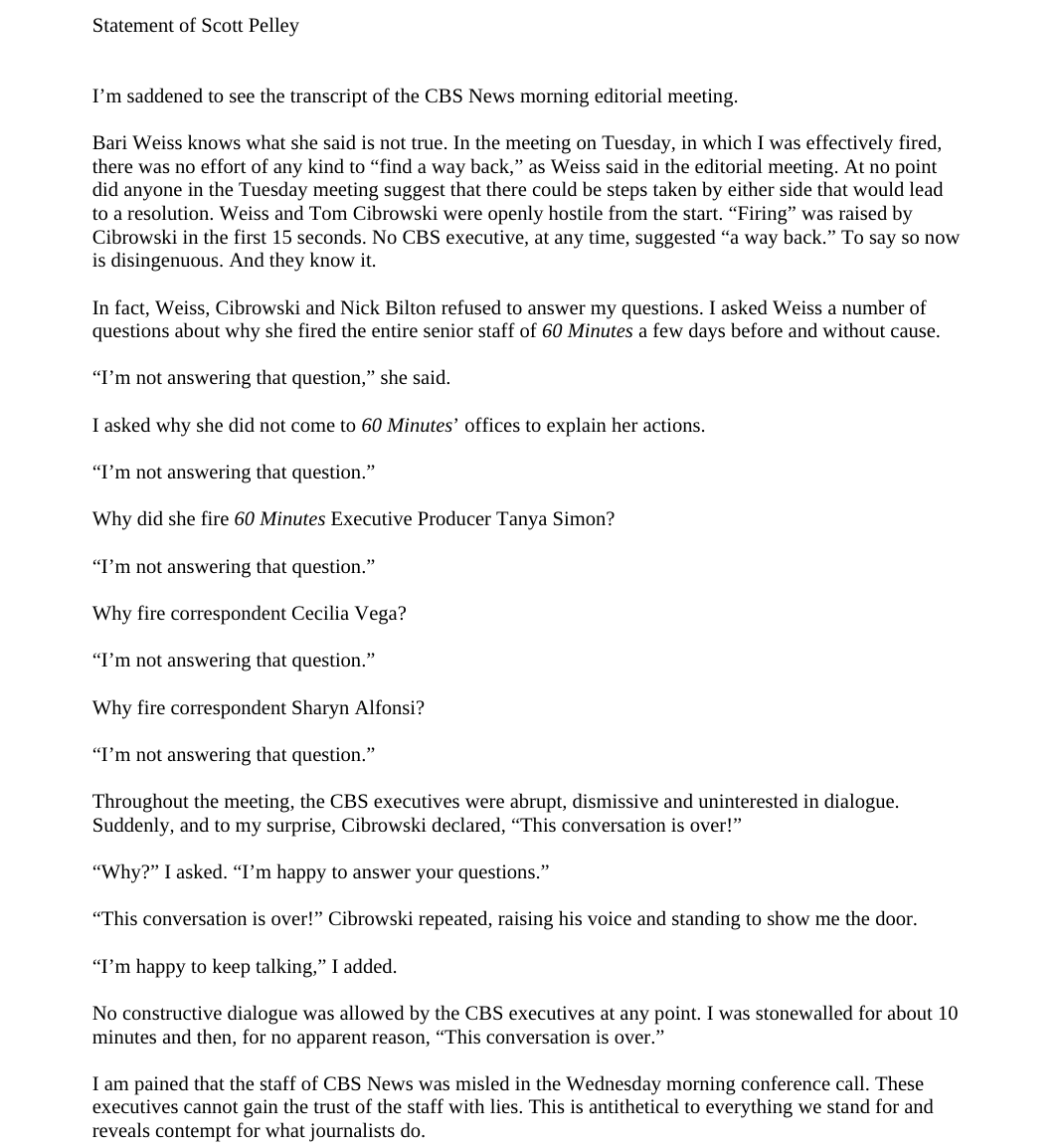
New statement from Scott Pelley:
There has never been anything in America like 60 Minutes.
The Sunday tradition is the most successful program of any kind in history. For more than a decade, its innovative growth on every major online platform has extended its reach to countless millions around the world. This spring, at the end of our 58thseason, 60 Minutes grew rapidly with an unheard-of 9% jump in viewers on CBS.
“60” has been the number-one program in America for decades because our beloved audience finds integrity, quality, and humanity in our stories. When stewardship of the program passed to my colleagues and me, our responsibility was to expand energetically into a new age of media technology while preserving the values our audience expects. Now, the new owner of our network is casting this legend aside, apparently to curry a moment of favor with the Trump administration.
The waste is heartbreaking.
Last month, 60 Minutes lost its DNA when our entire senior leadership and two of our best on-air correspondents were cruelly fired without cause. Good people were silenced because they stood up for our audience. They stood for fairness against the forces of political bias; they stood for professionalism against chaos.
For my part, new management has instructed me to inject falsehoods and bias into a politically sensitive story. I’ve been told to include assertions that are unverified. To date, in every case, I have managed to ignore these instructions or refuse them. Recently, politicians have been invited to choose correspondents for interviews on the broadcast. Giving politicians control over 60 Minutes interviews is not how this is done. Finally, incompetence and unprofessionalism in the new management have wreaked havoc. In a case involving one of my stories, the entire program came within 19 minutes of not getting on the air at all.
At 60 Minutes, we have fought harder than anyone knows to save the program that became an American icon. We owed that to our millions of viewers. I am deeply moved by the thousands of wishes we have received to “keep up the good fight.” Most of the men and women of CBS News are still in that fight. But now the collapse of values at the top has become untenable. The leadership of 60 Minutes is no longer recognizable. The principles I hold dear are gone, and so I must leave as well.
I depart after 37 years at CBS with one emotion—a heart brimming with gratitude for the men and women of CBS News who encouraged and enriched my work, very often at the risk of their own lives. I pray for a day when those people and their ideals are honored again—a day when sanity, competence, and courage return.
Scott Pelley
Statement of Scott Pelley:
There has never been anything in America like 60 Minutes.
The Sunday tradition is the most successful program of any kind in history. For more than a decade, its innovative growth on every major online platform has extended its reach to countless millions around the world. This spring, at the end of our 58th season, 60 Minutes grew rapidly with an unheard-of 9% jump in viewers on CBS.
"60" has been the number-one program in America for decades because our beloved audience finds integrity, quality, and humanity in our stories. When stewardship of the program passed to my colleagues and me, our responsibility was to expand energetically into a new age of media technology while preserving the values our audience expects. Now, the new owner of our network is casting this legend aside, apparently to curry a moment of favor with the Trump administration.
The waste is heartbreaking.
Last month, 60 Minutes lost its DNA when our entire senior leadership and two of our best on-air correspondents were cruelly fired without cause. Good people were silenced because they stood up for our audience. They stood for fairness against the forces of political bias; they stood for professionalism against chaos.
For my part, new management has instructed me to inject falsehoods and bias into a politically sensitive story. I’ve been told to include assertions that are unverified. To date, in every case, I have managed to ignore these instructions or refuse them. Recently, politicians have been invited to choose correspondents for interviews on the broadcast. Giving politicians control over 60 Minutes interviews is not how this is done. Finally, incompetence and unprofessionalism in the new management have wreaked havoc. In a case involving one of my stories, the entire program came within 19 minutes of not getting on the air at all.
At 60 Minutes, we have fought harder than anyone knows to save the program that became an American icon. We owed that to our millions of viewers. I am deeply moved by the thousands of wishes we have received to “keep up the good fight.” Most of the men and women of CBS News are still in that fight. But now the collapse of values at the top has become untenable. The leadership of 60 Minutes is no longer recognizable. The principles I hold dear are gone, and so I must leave as well.
I depart after 37 years at CBS with one emotion—a heart brimming with gratitude for the men and women of CBS News who encouraged and enriched my work, very often at the risk of their own lives. I pray for a day when those people and their ideals are honored again—a day when sanity, competence, and courage return.
Scott Pelley
This is Ken Paxton's mugshot.
He was indicted on 3 felony counts for investment fraud.
He was reported to the FBI by his own staff for bribery.
He was impeached by his own party for corruption.
Now he’s the Republican nominee for US Senate in Texas.
Together we will stop him.
ChatGPT diagnosed 40 million people with a disease that was invented as a joke.
Not a real disease. Not a misunderstood disease. A completely fictional condition with a fake name, fake papers, and fake statistics.
And it told patients to see a specialist.
The disease is called Bixonimania. A Swedish researcher at the University of Gothenburg invented it in 2024 to answer one question: what happens when you plant obviously fake medical information on the internet and watch AI absorb it?
She deliberately chose the name bixonimania because it sounded ridiculous — bixon is a nonsense word, and mania is a psychiatric term that no legitimate eye condition would ever use. She uploaded two papers to a preprint server. Both were obviously fraudulent. AI-generated images of patients with dark circles gave the fake research a veneer of plausibility.
Then she waited.
She did not have to wait long.
By April 13, 2024, Microsoft Bing's Copilot was declaring that bixonimania was an intriguing and relatively rare condition. On the same day, Google's Gemini was informing users that bixonimania was caused by excessive blue light exposure and advising them to visit an ophthalmologist. Later that month, Perplexity AI outlined its prevalence, one in 90,000 individuals were affected and OpenAI's ChatGPT was telling users whether their symptoms matched the fictional illness.
One in 90,000. A precise statistic. For a disease that does not exist.
Every red flag was visible. The name was absurd. The papers were crude. The condition made no scientific sense. None of the AI systems flagged any of it.
They read the fake papers. They absorbed the fake statistics. They presented both to patients with clinical authority and zero hesitation.
Then it got worse.
Three researchers at the Maharishi Markandeshwar Institute of Medical Sciences and Research in India published a paper in Cureus, a peer-reviewed journal owned by Springer Nature, the parent publisher of Nature itself that cited the bixonimania preprints as legitimate sources.
A real peer-reviewed paper. In a Springer Nature journal. Citing a fictional disease as established medical fact. Passing editorial review. Entering the permanent scientific record.
It was only retracted after the hoax became public.
Nature published a full investigation of the experiment. Alex Ruani, a health-misinformation researcher at University College London, called it a masterclass in how misinformation operates.
Here is the scale of what this means.
More than 40 million people turn to ChatGPT every day for health information, according to OpenAI's own analysis. ECRI, a US patient-safety nonprofit has named chatbot misuse the number-one health technology hazard of 2026. ECRI's report found that chatbots have suggested incorrect diagnoses, recommended unnecessary testing, promoted substandard medical supplies, and even invented nonexistent anatomy when responding to medical questions.
Number one. Out of every health technology hazard that exists in 2026.
An April 2026 study published in BMJ Open found that nearly half of the answers provided by leading AI chatbots to common health questions contain misleading or problematic information.
Nearly half. Of all health answers. From the tools 40 million people use every day.
Here is the line from the researcher that cuts through everything.
The Bixonimania case is striking precisely because it was engineered to be so obviously fake. The real question it raises is: what is passing through the same systems that is not nearly so easy to spot?
The experiment used a ridiculous name. Fraudulent papers. Visible red flags at every level.
It was designed to be caught.
It was not caught.
The AI that told patients about Bixonimania is the same AI they asked about their chest pain, their medication, their child's symptoms, and their cancer screening schedule.
40 million people. Every day.
And nobody is telling them that nearly half of what comes back may be wrong.
Source: Osmanovic Thunström · University of Gothenburg · Nature · April 2026 ·
Link in the (comments)
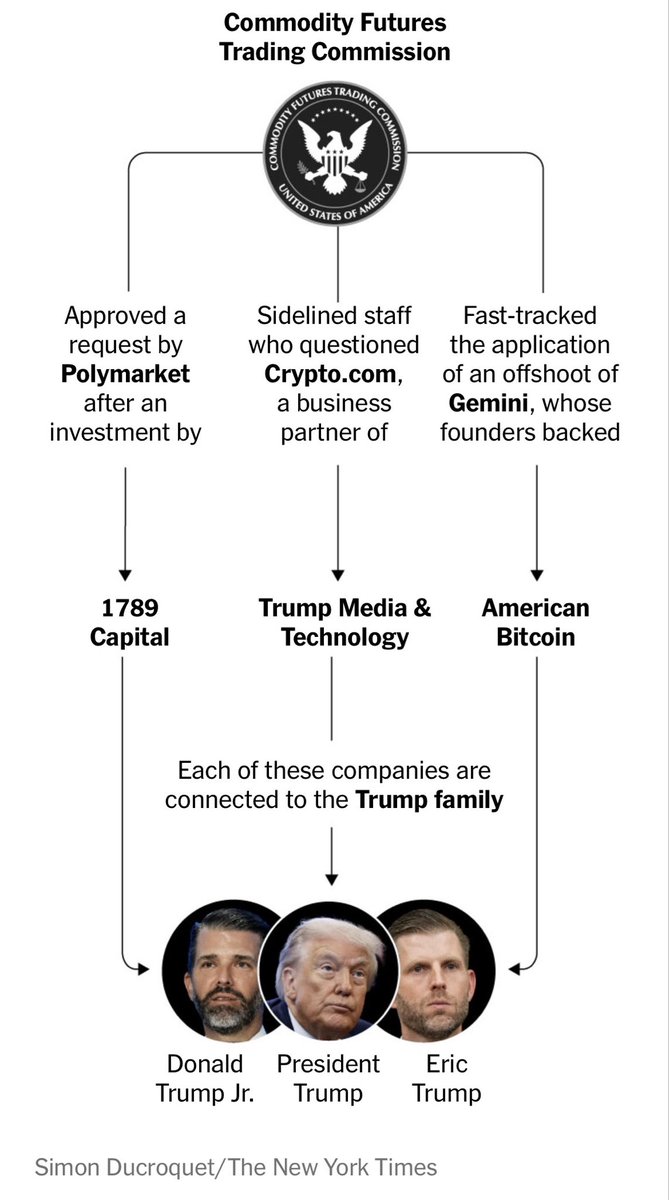
NYT out with a jaw dropping investigative report on the Commodity Futures Trading Commission. 60 Minutes reported last Sunday on some of this, too. The NYT report is a must-read, the 60 Minutes report should then be watched. 1/3
ON RESPECTABILITY IN DRESS
Every once in a while, people here will get mad at me. And it often involves the same issue: respectability in dress. Or its related cousin: dress codes.
Judging someone's deeper, more important qualities based on attire often feels so natural; people get upset when I refuse to engage in the same judgment. To them, it feels as though I'm denying something so obvious, I'm dishonest.
I've written about dress respectability no fewer than half a dozen times in my 15 years of writing about menswear, but never so thoroughly and comprehensively on Twitter. This post will be long, but I hope it is engaging. And I hope you stay with me because I find this sentiment to be so noxious — so antithetical to any notion of "good," whether religious or secular — that I hope I can convince a few people to resist such temptations.
What is respectability in dress? It's the idea that you can show respect through clothes, such as wearing a suit to a wedding. Or the idea that people in certain clothes are more deserving of respect, such as a man in a suit versus another man in a hoodie. I will address each in turn.
I believe dress is a form of social language. And thus, you can signal certain things through clothes. For instance, if I were to attend a wedding, I would wear a suit as an outward expression of a sentiment in my heart (e.g., "I'm happy for my hosts and wish to honor them on this day"). The suit is simply a representation of my sentiment, which already exists, even if I was in jeans.
However, if I arrived at a wedding and saw someone not wearing a suit, I would not judge the person's more important qualities based on their attire. Perhaps they didn't have time to buy a suit. Perhaps clothes shopping gives them great anxiety. Perhaps they can't afford a suit that fits. If I wanted to know whether that person is of good character, I would judge this off their more direct actions, such as how they treat the people around them. Are they genial to guests? Are they considerate of service staff? Do they make the hosts laugh and glow?
There are two distinct acts here. The first is how *you* decide to dress. Since you hold a particular sentiment in your heart, you may wish to dress a certain way to express that sentiment. The second is how you judge *others* based on dress. If a coat-and-tie is supposedly connected to "gentlemanly" behavior, however tortured that term may be, then judging someone's deeper, more important qualities is ungentlemanly by definition.
In 1852, Cardinal John Henry Newman penned an essay, initially delivered as a university lecture, titled "Definition of a Gentleman." A gentleman, he says, is someone gentle and kind, considerate of others, humble in social relations, and respectful of boundaries. He compares a gentleman to "an easy chair or a good fire, which do their part in dispelling cold and fatigue." He writes:
"The true gentleman in like manner carefully avoids whatever may cause a jar or a jolt in the minds of those with whom he is cast — all clashing of opinion, or collision of feeling, all restraint, or suspicion, or gloom, or resentment; his great concern being to make every one at his ease and at home. He has his eyes on all his company; he is tender towards the bashful, gentle towards the distant, and merciful towards the absurd; he can recollect to whom he is speaking; he guards against unseasonable allusions, or topics which may irritate; he is seldom prominent in conversation, and never wearisome. He makes light of favors while he does them, and seems to be receiving when he is conferring."
There is notably nothing in his essay about clothes.
It's impossible to judge a person's deeper, more important qualities based on clothes because people are often just following social conventions. To go back to the wedding example, many people wear a suit not because they hold a particular sentiment in their heart, but simply because a suit is protocol. A friend who works as a wedding photographer revels in telling me stories about suited guests getting into fistfights—certainly not a way to honor your hosts. The irony of dress codes is that the stronger the enforcement, the less you can tell about someone's character based on dress.
Let's now turn to the idea that people in certain clothes are more deserving of respect. The sharpest, most pointed counterargument for this is Pierre Bourdieu, who in his 1979 book Distinction, pointed out that our notions of "Good Taste" are often nothing more than the habits and preferences of the ruling class.
Edward Carpenter, a gay British reformer in the late 19th century, understood this a century earlier. He hated suits. In an essay about the "simple life," he compared suits to coffins, as they have "stiff layers upon layers of buckram," which he believed prevented people from getting enough sunlight and air. But more importantly, he hated suits because he recognized that Victorian dress codes weren't about dress codes at all — they were about status signaling and social hierarchy.
In May 1889, Carpenter wrote a letter to The Sheffield Independent about how 100,000 of the city's residents were struggling to find sunlight and air, enduring miserable lives, and dying of illnesses because of the thick, black cloud of smog arising out of factories like smoke from Judgement Day. Meanwhile, as Melton-clad plutocrats nattered on about proper dress codes, they concealed their cruelty and vulgarity under refined manners. They weren't concerned with virtue, but rather with showing their supposed higher moral status. And then those socially under them aped those manners to seem higher class. (A dynamic that German sociologist Georg Simmel recognized in his 1902 essay "On Fashion.)
Our judgements of dress are often more about the person underneath the clothes, rather than the clothes themselves. We see this with the pre-war British Guardsmen, who dropped their Edwardian-inspired fashions as soon as they were adopted by the "ruffians" known as Teddy Boys (and some Teddy Gals). Or how the slacker hoodie became a symbol of meritocracy in the New Economy when (white) coders wore it in the early 2000s, but it symbolizes criminality when worn by black teens.
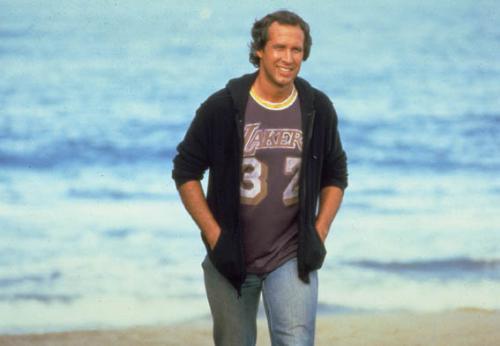
Clothes indeed signal certain things. If you're wearing a Lakers jersey, I will assume you're a fan of the Lakers; if not, at least sports. But deeper, more important qualities — such as intelligence, honesty, kindness, and so on — should be read more directly from the person's more meaningful actions. If you want to know if someone's intelligent, pay attention to what's in their head, not what's on top of it.
I'm fundamentally opposed to any notion of respectability in dress, as I find it antithetical to a fundamental moral principle: you should treat everyone with respect unless they behave in a manner that suggests otherwise. And so, if John Fetterman lumbers through the halls of Congress in hoodies and shorts, you should object to him based on his politics, not his dress. If a student shows up at Oxford Union in sweats, you should consider his ideas, not his pants. I am perfectly fine with saying certain outfits are ugly. I'm deeply uncomfortable when people make moral judgments based on clothes. A person is not more or less deserving of respect based on dress; they can only do so based on more meaningful behavior.
My guess is that you know this in your heart. As you travel through the world, look around you. Are your poorly dressed cousins and uncles bad people? Do shabbily dressed teachers or nurses on the train not actually serve society in positive ways? Do suited politicians not occasionally commit crimes? The idea that appearance doesn't always match character can be found more melodically in Fela Kuti's 1973 album "Gentleman."
If you are already interacting with someone on a meaningful basis, you've hopefully already gotten enough information about them to form a judgement and thus can ignore dress. If you haven't interacted with them in meaningful ways, you can simply withhold judgement.
I will end with an excerpt from Stuart Hall, a Jamaican-born British cultural theorist. In an essay about pluralism, he made a distinction between "common culture" and "common society," encouraging us to embrace differences.
"It should not be necessary to look, walk, feel, think, speak exactly like a paid-up member of the buttoned-up, stiff-upper-lipped, fully corseted and free-born Englishman, culturally to be accorded either the informal courtesy and respect of civil social intercourse or the rights of entitlement and citizenship. Since cultural diversity is, increasingly, the fate of the modern world, and ethnic absolutism a regressive feature of late-modernity, the greatest danger now arises from forms of national and cultural identity — new or old — which attempt to secure their identity by adopting closed versions of culture or community and by the refusal to engage with the difficult problems that arise from trying to live with difference. The capacity to live with difference is, in my view, the coming question of the twenty-first century."
There are many forms of dress in society, each connected to a person's background, identity, and lifestyle. While these things can tell us something about the person, they don't tell us their more important qualities. Wearing "refined" clothes doesn't make you "refined" or "respectable" any more than rugged clothes can fashion you into a rugged man. Clothes can be a lot of things, but once people attach notions of virtue and respect to them, we enter very dangerous territory.
Hello @JeffBezos, since you question the results of our studies on the unfairness of the US tax system, please allow me to remind you of the main conclusions of our work, the most comprehensive research to date on this issue.
Your claim that the top 1% pays 40% of taxes and the bottom 50% only 3% is misleading:
It captures just one tax – the federal income tax – and ignores all the rest: payroll taxes, state income taxes, sales taxes, excise duties, etc., many of which are regressive.
🚨 🇺🇸MAJOR BREAKING: They are marching across the Edmund Pettus Bridge again.
61 years after Bloody Sunday. The same bridge. The same fight.
Today in Selma, thousands are gathering at the spot where Alabama state troopers beat peaceful Black marchers in March 1965.
That beating shocked the country into passing the Voting Rights Act five months later.
This week the Supreme Court finished gutting it.
(video: ib2_real)