DID YOU KNOW??
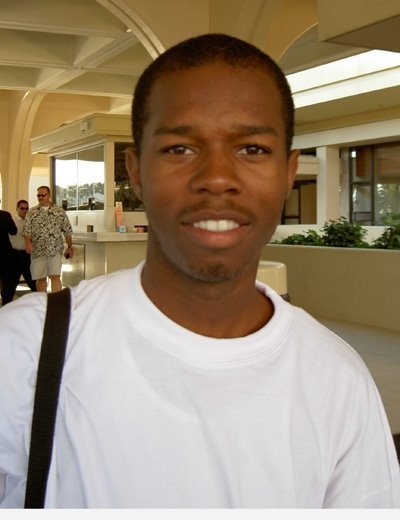
During the immediate, chaotic aftermath of Hurricane Katrina in 2005, 20-year-old Jabbar Gibson commandeered an abandoned yellow school bus and drove 70 stranded New Orleans residents nearly 350 miles to safety in Houston, becoming the absolute first busload of evacuees to arrive at the Houston Astrodome emergency shelter.
When floodwaters rose following the levee failures, government relief was severely delayed, leaving tens of thousands trapped without food, water, or transportation. Gibson, who did not possess a commercial driver's license and had never driven a school bus before, decided not to wait for official help. Walk with me 👇🏾👇🏾
1. How the Bold Rescue Went Down:
Trapped in the flooded Fischer Housing Development in Algiers, New Orleans, Gibson realized that elders, mothers, and infants would not survive long without an immediate evacuation route.
A. Taking the Bus: Gibson located an abandoned municipal school bus (Bus No. 0232) sitting on high ground. He obtained the key, or hotwired it, depending on early reports, and immediately started gathering neighbors, friends, and family.
B. Crowdfunded Fuel: Along the 13-hour trek down Interstate 10, the bus ran dangerously low on fuel. Passengers pooled whatever cash they had on hand to pay for diesel at open gas stations along the highway.
C. Beating the Government Fleet: Official government bus convoys were still stalled or delayed by bureaucracy. Gibson's hijacked bus pulled up to the Houston Astrodome on September 1, 2005, shocking relief workers and local officials who hadn't expected evacuees to arrive so quickly.
2. Heroism vs. Legal Scrutiny:
Upon arrival in Houston, police officers initially approached Gibson, suspecting him of grand theft auto for taking an official city vehicle across state lines.
Once authorities realized he had used the vehicle solely to save 70 lives from toxic floodwaters, no criminal charges were brought against him for taking the bus.
Gibson's rogue evacuation mission made national headlines as a striking symbol of grassroots survival and self-reliance in the face of institutional failure during one of America's worst natural disasters.
SUMMARILY!
In a crisis marked by catastrophic delays, 20-year-old Jabbar Gibson proved that quick thinking and decisive action save lives. By commandeering a school bus without authorization, he transformed a desperate situation into one of the most famous citizen-led rescue stories in modern American history.
Hopefully you've learnt something new today?
The Medic Who Writes™🌚
Cheers 🥂 😅
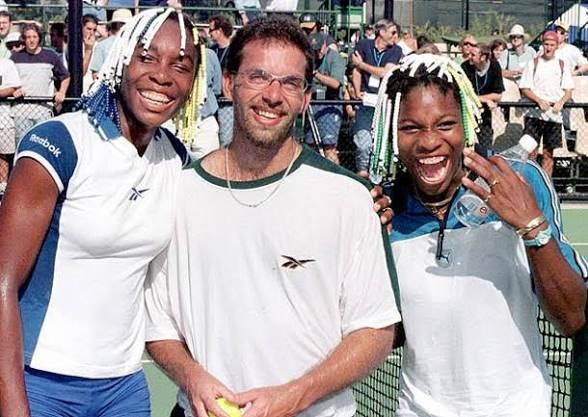
In 1998, Serena and Venus Williams said they could beat any man ranked outside the top 200 in the men's division.
So, little known and 203rd ranked men's player Karsten Braasch took them up on the challenge.
Braasch after a night of drinking and smoking with zero practice, destroyed Serena 6-1 and Venus 6-2 in straight sets.
The Williams sisters are the greatest female athletes of all time. And they barely made Braasch break a sweat.
It wasn't because Braasch was very good. He wasn't.
But, as a male, he possesses biological advantages even the best female athletes can't compete against.
That's the very reason we established women's sports to begin with.
To even the playing field.
That shouldn't be controversial. And you shouldn't need a biology degree to understand it.
His post makes several ahistorical claims motivated only by ethnic chauvinism.
1. Legon did not arise from any deal between Nana Agyeman Prempeh II and the colonial administration. As early as 1924, Governor Guggisberg envisioned Achimota College (est. 1927) beginning as a combined school and college before evolving into a university. That, my brother, is the origin story of Legon, which grew out of Achimota College. Although Guggisberg died in 1930 before seeing his vision realized, the Guggisberg, Fraser & Aggrey Memorial Lectures, held annually at Legon's Great Hall, honour that legacy.
2. While Guggisberg's Achimota plan was taking shape from 1927, Prempeh II had not yet become Asantehene. He was still Kumasihene, having assumed that stool in 1931. The British had abolished the office of the Asantehene after the 1900 War of the Golden Stool, and Asante became part of colony in 1902. The office of Asantehene was restored in 1935, when Prempeh II became Asantehene. So, what "deal" are you referring to?
3. Shortly after Prempeh II's enstoolment, the Second World War broke out in 1939, severely straining colonial finances. As a result, plans to develop Achimota into a university were delayed. After the war, financial constraints led to a proposal for one new university college to serve Nigeria and the Gold Coast, to be located in Nigeria. The Gold Coast objected because it wanted its own university college. The main obstacle was funding.
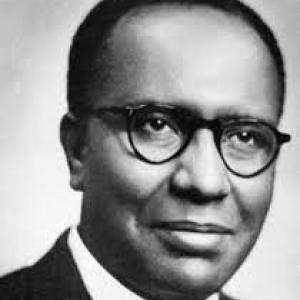
4. The funding breakthrough came through Rev. Prof. Christian Gonçalves Kwami Baëta, Ghana's first native Professor of Religion. He led the campaign to raise ~£897,000 from cocoa farmers and secured approval from the Cocoa Marketing Board to help establish Legon. This was done under the authority of the colonial administration. The farmers' contributions did not come solely from Prempeh II's territory, as @crncampus would have us believe. Nor was cocoa cultivated exclusively in Asante. Legon's second hall of residence, Akuafo Hall, honours the farmers whose contributions made the university possible, while the campus itself stands on land donated by the Labadi people. So really, who gets the credit?
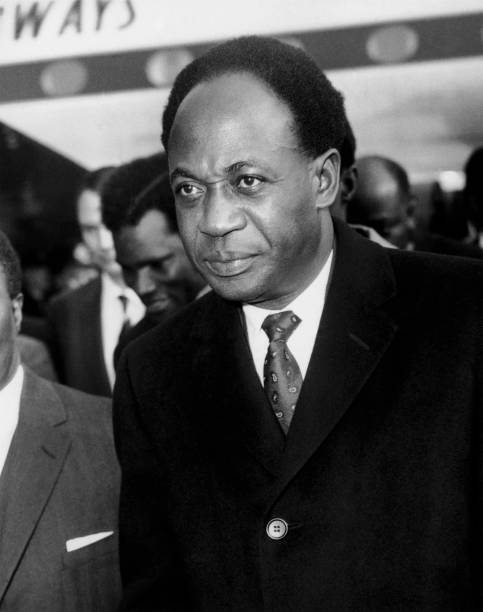
5. As for KNUST, it grew out of the Kumasi College of Technology(est. 1951), established by the colonial administration, with land donated by Prempeh II. But @KNUSTGH becoming a fully-fledged university in 1961 & awarding its own degrees from 1964 was Nkrumah’s doing. To realise his vision of industrialization, the country needed a science & engineering university. He implemented that, while serving as @KNUSTGH first Chancellor, with R.P. Baffour as Vice Chancellor. Baffour, Ghana's first British-trained engineer, had earlier earned his University of London bachelor's degree through correspondence at Achimota College.
So really, how does one man take all the credit?
Kpanlogo dance performed by Frank Laine and Gifty Collins in Ga Mashie, Accra, in 1984. Filmed for the documentary Repercussions: Africa Come Back, the footage features members of Otoo Lincoln’s Kpanlogo Special group and preserves one of Ghana’s most influential post-independence dance traditions.
THE COBRA EFFECT 🐍
During the British Raj, officials grew concerned about the rising number of venomous cobras in Delhi. To tackle the issue, they introduced a bounty for every dead snake.
At first, the policy seemed successful, many cobras were killed.