The government is suppressing a terrifying report which says the U.K. is in imminent danger from ecosystem and biodiversity collapse.
People may laugh and ignore this but we’re talking about not being able to produce enough food.
What do you think will happen to all of us when that happens? To relationships between people, for social cohesion and prejudice and hatred.
We really are not taking any of this seriously enough and what they’ve warned about for decades is coming through right in front of our eyes.
Thank goodness for the @guardian@guardianeco and journalists like @fionaharvey pushing these stories that are ignored almost everywhere else.
https://t.co/aLDGOEmiVH
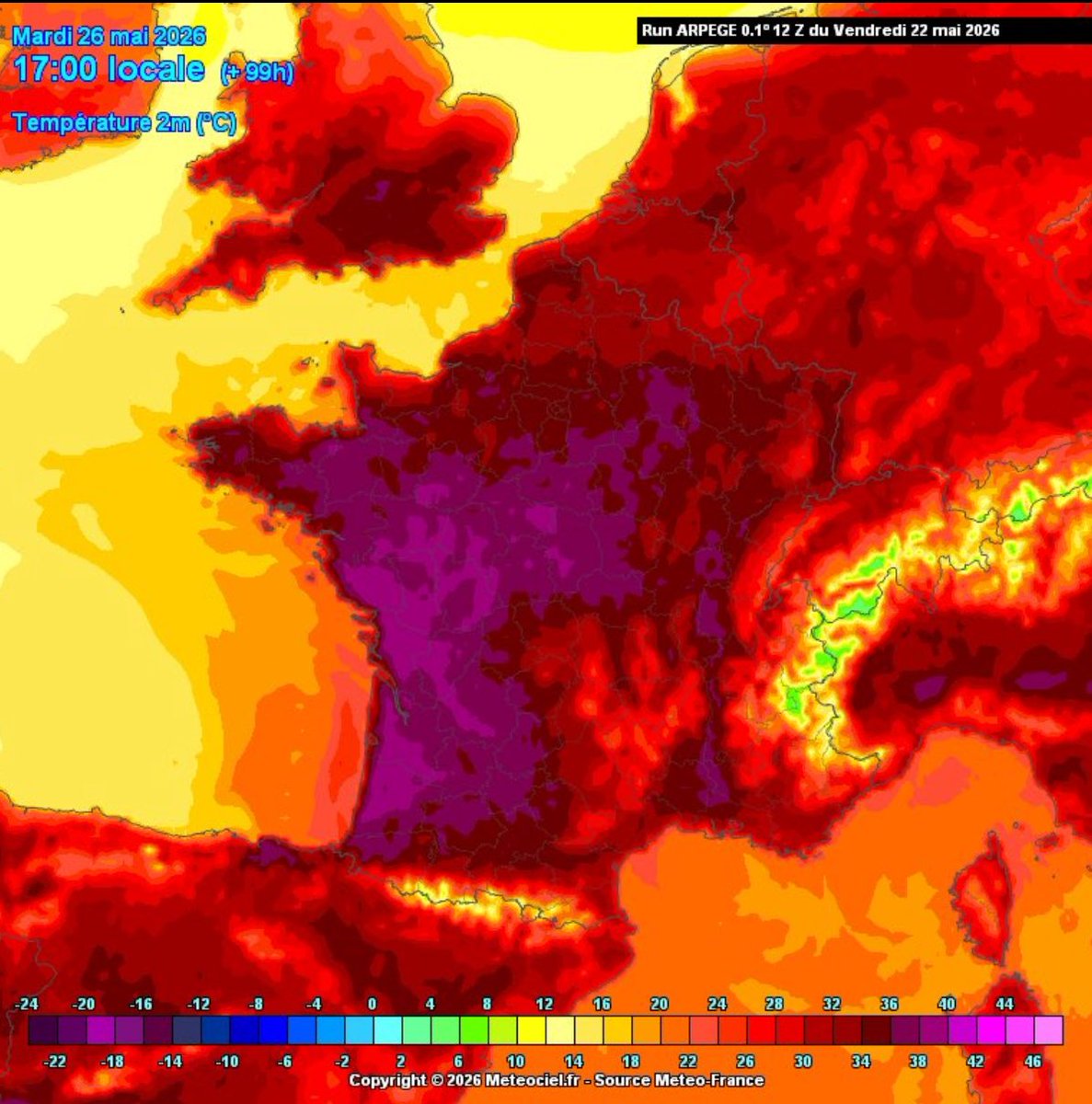
Ein Modell sagt bis zu 47° C in Frankreich für nächste Woche voraus.
Was haben wir da angerichtet? Wieso möchte die deutsche Regierung den Planeten brennen sehen?
@FrankWithoos01 Temperatuurverschuivingen in het Holoceen gingen meestal over eeuwen tot millennia, met ongeveer 0,1 °C per eeuw. De recente opwarming van 1,1–1,5 °C in slechts 150 jaar gaat ongeveer 10 keer sneller. Juist die extreme snelheid maakt het zo ontwrichtend.
@FrankWithoos01 Uw rechtergrafiek toont data tot 1950, dus niet de opwarming van de laatste 75 jaar.
De linkergrafiek toont alleen data van het noordelijk halfrond.
https://t.co/crxFLH6Mnj
@FrankWithoos01 Ja, weet ik en het belangrijkste dat ik weet is - met gevestigde wetenschap als bron - de oorzaak van de steeds snellere opwarming met steeds meer weersextremen als gevolg. Zie bijvoorbeeld de veelgestelde vragen bij https://t.co/cChFdsTmlx
Unsere Kinder und Enkel werden uns bitter verfluchen.
Die #Erderhitzung lässt sich auch durch Nullemissionen nicht zurückdrehen, nur die weitere Erhitzung stoppen.
Denn CO2 bleibt Jahrtausende in der Luft. Kipppunkte kommen näher.
Es wird kein Zurück geben.
@FrankWithoos01 Ooit van broeikasgassen gehoord? Het probleem is niet klimaatverandering in het algemeen, maar de klimaatverandering die door verbranding van fossiele brandstoffen is ontstaan.
Parts of France are recording land surface temperatures above 55°C...approaching values commonly seen in the Sahara. The difference is that one is a desert. The other is supposed to be one of Europe's most productive agricultural regions. That's a very sobering thought.
@rinusgr1@__Sabs Sorry maar dat zijn slechts wat losse activiteiten geweest, waarvan een al tien jaar geleden. Ik zou deze site, rechtstreeks van klimaatwetenschappers, en met name het artikel https://t.co/Ha85wFQaMc dan willen aanraden om eens te lezen.
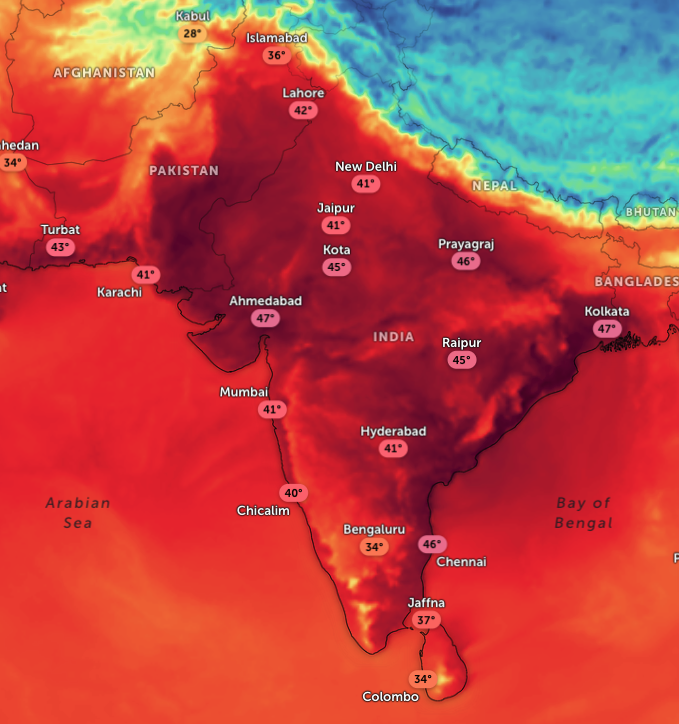
Large parts of India have been approaching “feels like” temps near 50°C. Some coastal regions may reach ~33°C wet-bulb. At 35°C wet-bulb, heat and humidity overwhelm the human body’s ability to cool itself. Survival becomes measured in hours, especially for the elderly & infants
Anschnallen die nächsten Monate werden richtig wild.
Aber Hauptsache wir diskutieren gerade über das Extremszenario SSP5-8.5. Nebelkerzen.
Bisher die beste Erklärung, die ich zum Super El Niño gesehen hab. 💪
A huge heat dome is sitting over France, with temperatures that might hit 40°C. It’s still spring. It’s still May. What was once considered “extreme” is increasingly becoming normal across Europe. Heatwaves are earlier, longer, & pushing ecosystems and health beyond limits.
@EdRoodbeen Een beetje journalist doet zelf goed onderzoek, al dan niet online. Hou bijv. deze near realtime site over bezetting van Tesla SuperCharger locaties (in D) maar eens in de gaten... https://t.co/FV7f7sYsP8 of zoek in Google Maps en zie de bezette stalls bv https://t.co/XhWj9qWklK