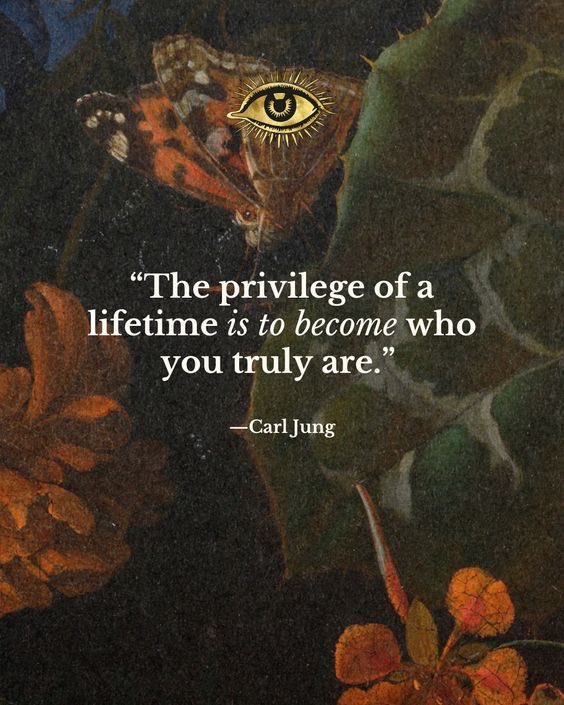
What a quote from Carl Jung:
"What is to come will be created in you and from you. Hence look into yourself. Do not compare, do not measure. No other way is like yours. All other ways deceive you and tempt you. You must fulfill the way that is in you."
«How could the world go back to the way it was when so much bad had happened?
But in the end, it’s only a passing thing, this shadow. Even darkness must pass. A new day will come. And when the sun shines it will shine out the clearer»
— J. R. R. Tolkien
The Iranian math teacher made a bet with his students...
If he scored the goal, there would be an exam... if there was no goal, there wouldn't be an exam...
🧠 Your brain is a Receiver, not a maker.
A growing line of psychological inquiry is reshaping how we think about thinking itself. Rather than being deliberately generated, mental content often seems to appear on its own. Ideas, memories, and inner commentary tend to surface from layers beneath conscious control, arriving without invitation or planning.
Neuroscience adds weight to this view. Brain scans reveal that the neural patterns associated with a thought activate just before a person notices the thought consciously. In other words, awareness follows the event instead of initiating it. Studies on meditation echo this finding, showing that when the mind settles, thoughts still arise naturally and dissolve once attention moves elsewhere.
Seeing the mind this way can soften our relationship with stress, imagination, and self-criticism. When thoughts are understood as arrivals rather than decisions, it becomes easier to watch them without clinging or resistance. Calm may develop not through force or suppression, but through attentive observation.
In this light, the mind resembles a receiver more than an author, tuning into ongoing signals rather than inventing them from scratch.
Psilocybin made human cells live 50% longer.
A new study has uncovered surprising anti-aging potential in psilocin—the active metabolite produced when the body breaks down psilocybin, the psychoactive compound found in magic mushrooms.
In laboratory experiments, researchers exposed two human cell lines (skin fibroblasts and fetal lung fibroblasts) to a 100 μM concentration of psilocin. The results were striking: lung cells took 57% longer to reach replicative senescence (the point at which cells permanently stop dividing and accumulate damage), while skin fibroblasts extended their replicative lifespan by 51%.
These findings suggest psilocin may slow fundamental cellular aging processes, possibly by lowering oxidative stress, enhancing DNA-repair pathways, supporting mitochondrial health, or dampening chronic inflammation—mechanisms that overlap with those targeted by leading experimental longevity drugs.
The benefits extended beyond cell culture. In aged female mice (19 months old at the start, equivalent to approximately 60–65 human years), a single monthly dose of psilocybin dramatically improved outcomes. After 10 months of treatment, 80% of the psilocybin-treated animals remained alive, compared with only 50% of untreated controls. Treated mice also displayed markedly fewer visible signs of aging, including reduced fur loss and graying.
This research marks the first direct demonstration that psilocybin/psilocin can influence biological aging itself, rather than solely producing psychological effects. The authors emphasize that the study used relatively conservative dosing and are now advocating for follow-up work with higher or more frequent administration, detailed assessments of immune, metabolic, and cognitive function, and investigations into whether the extended lifespan corresponds to genuine improvements in healthspan and quality of life.
["Psilocybin treatment extends cellular lifespan and improves survival of aged mice." npj Aging, 2025]
Napoleon's Vast Empire
By 1812 it was easier to list the regions he didn’t dominate: Portugal, Sicily, Sardinian, Montenegro, and the British, Russian and Ottoman Empires.
Richard Feynman on God and religion 💭
It doesn't seem to me that this fantastically marvelous universe, this tremendous range of time and space and different kinds of animals, and all the different planets, and all these atoms with all their motions, and so on, all this complicated thing can merely be a stage so that God can watch human beings struggle for good and evil — which is the view that religion has. The stage is too big for the drama.
- as mentioned in Genius: The Life and Science of Richard Feynman (1992)
📷 Caltech Archives Image


![Rainmaker1973's tweet photo. Psilocybin made human cells live 50% longer.
A new study has uncovered surprising anti-aging potential in psilocin—the active metabolite produced when the body breaks down psilocybin, the psychoactive compound found in magic mushrooms.
In laboratory experiments, researchers exposed two human cell lines (skin fibroblasts and fetal lung fibroblasts) to a 100 μM concentration of psilocin. The results were striking: lung cells took 57% longer to reach replicative senescence (the point at which cells permanently stop dividing and accumulate damage), while skin fibroblasts extended their replicative lifespan by 51%.
These findings suggest psilocin may slow fundamental cellular aging processes, possibly by lowering oxidative stress, enhancing DNA-repair pathways, supporting mitochondrial health, or dampening chronic inflammation—mechanisms that overlap with those targeted by leading experimental longevity drugs.
The benefits extended beyond cell culture. In aged female mice (19 months old at the start, equivalent to approximately 60–65 human years), a single monthly dose of psilocybin dramatically improved outcomes. After 10 months of treatment, 80% of the psilocybin-treated animals remained alive, compared with only 50% of untreated controls. Treated mice also displayed markedly fewer visible signs of aging, including reduced fur loss and graying.
This research marks the first direct demonstration that psilocybin/psilocin can influence biological aging itself, rather than solely producing psychological effects. The authors emphasize that the study used relatively conservative dosing and are now advocating for follow-up work with higher or more frequent administration, detailed assessments of immune, metabolic, and cognitive function, and investigations into whether the extended lifespan corresponds to genuine improvements in healthspan and quality of life.
["Psilocybin treatment extends cellular lifespan and improves survival of aged mice." npj Aging, 2025]](https://pbs.twimg.com/media/G6Nc5yQXQAEfcPz.png)