12 facts on wealth taxes & inequality in Germany:
Fact #5: More than half of all wealth has been acquired via inheritance (i.e. and not through own work) in Germany and elsewhere — with a rising trend.
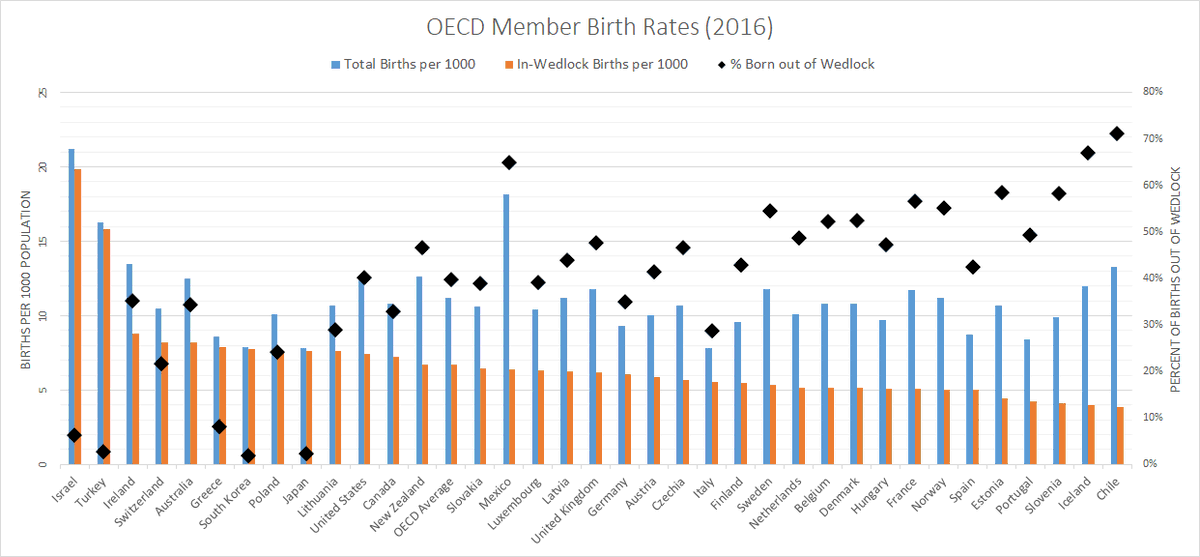
So after looking at a bunch of stats here’s a (fairly long) thread on my thoughts re Japanese demographic decline: married Japanese couples actually have a lot of kids – more than couples in almost any other rich country.
Mon père me partage son hypothèse sur la cause de l'incendie de #NotreDame de Paris, fréquente selon lui dans les vieilles charpentes. Ce puits de culture 💓
"I’ve been studying that stuff for over 50 years and I don’t think that my intuitions have really significantly improved."
- Kahneman
https://t.co/zpxbsLGZFM
On MMT. I shall write a longer piece. But: Yes, fiscal policy can be used to maintain output at potential. No, the deficit, unless very small, cannot be fully financed through non-interest bearing money creation, without leading to high or hyperinflation.
Yeaaah it’s results day at #Deutsche bank and I know what all you guys want is a #Deutsche thread. I feel a bit useless because @subfincredit basically said everything you need to know yesterday, but let’s try!
That is where May is at in a nutshell: Nearly two years after triggering article 50, the UK does not have an answer to the question, "what do you want?"
There are also concerns that the UK – across the political spectrum – has no idea what kind of future relationship it wants.
The ECB has stubbornly predicted a rise of core inflation in the past 5 years, but all forecasts have proven to be systematically incorrect. Has the ECB lost its ability to influence core inflation? See my blog: https://t.co/u5lpcUIsFn @Bruegel_org
The truce in China - US trade tensions is positive, but won't change key trends. For example, China as destination for "true" FDI (blue) is less and less attractive. Bulk of FDI is reinvested earnings (pink), reflecting difficulties many foreign firms have in taking money out.
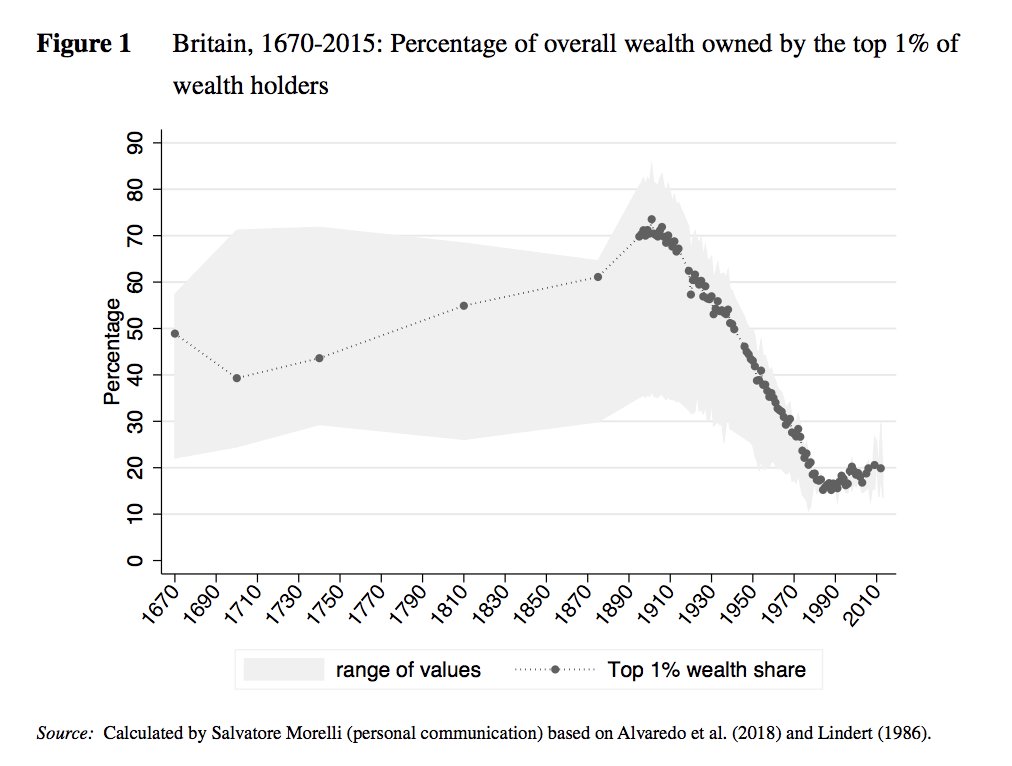
A long run of UK wealth inequality data looking back as far as 1670 puts the moment of surging inequality since the 1970s under sign of neoliberalism in context. Unlike in the US there is no return to “gilded age” levels.
Data from @BrankoMilan in
https://t.co/AuIwHIU4Hv
1) Again and again I’m struck by the chasm in thinking between leading MP’s on #Brexit and the viewpoint of EU leaders - and remember, if you want a deal, it takes two to tango
Italy: high public debt a heritage from the 70s and 80s, and caused not by spendthrift governments but by the doubling of interest rates in that period -- see comments below post
https://t.co/HdCLy2Tdm7