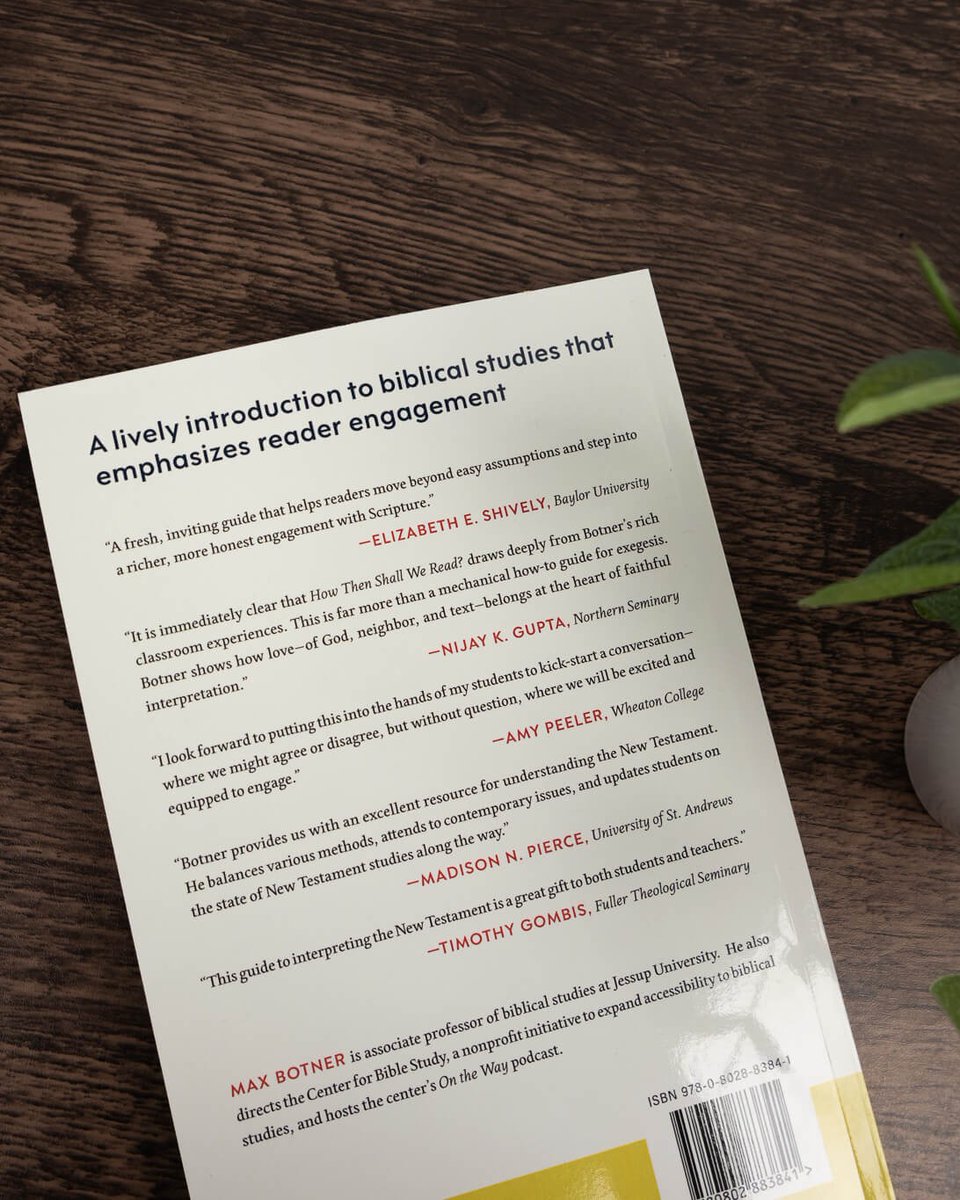
Available now! 📚 Written specifically for the newest generation of undergraduate students, How Then Shall We Read? provides an up-to-date and accessible entryway into academic #biblicalinterpretation. Check it out! 📚 https://t.co/PNtv0gIxql
#newtestament#textbook@maxbotner
In today's video, I am so thankful to be joined by Dr. Max Botner @maxbotner to have a discussion about his new book, How Then Shall We Read?
We discuss Biblical hermeneutics, genre, historical context, and much more! Enjoy!
I had the privilege of talking with @maxbotner about his new @eerdmansbooks "How Then Shall We Read", an excellent primer on Biblical interpretation. Available on all platforms now, YouTube link below!
It includes:
- 20 recorded lectures (each 10–15 minutes)
- PDF slide decks for each lecture
- Suggested readings for further study
This course is also designed to accompany my book, How Then Shall We Read?, offering guided instruction that helps you put those ideas into practice.
I've just launched a new course: Intro to Biblical Interpretation. Designed as a seminary-level introduction to how to read Scripture well, the course brings together key tools and frameworks for responsible interpretation.
Check it out: https://t.co/BQFnmCqf55
NB: “pseudepigrapha” isn’t a genre! It’s a literary convention used in various genres for various purposes. We also can’t say that ancient groups drew the same tidy distinctions we draw today—in this case, more a function of modern publishing than anything else.
The pseudepigraphal literature, including 1st Enoch (typically what we refer to as “the Book of Enoch” — there are 3 but the 1st on is the famous one), operated within a fundamentally different literary framework than modern historical narrative. 1st Enoch is a pseudepigraphal, apocalyptic collection of narratives and visions ascribed to Enoch. This was a genre that deliberately attributed writings to ancient figures to claim authority rather than to deceive readers about authorship.
Understanding the genre’s intention requires recognizing its theological purpose. As a collection, 1 Enoch offers a glimpse of what was likely a common worldview during the later 2nd Temple period (1st Enoch almost certainly doesn’t predate this time), which identified the world as an evil and unjust place in which the Jewish people awaited the redemption of God in their eschatological world.
The primary message was the soon-coming divine retribution of enemies and the judgment and eradication of evil that permeated the cosmos, with the author’s truth and authority relying on his heavenly journeys during which God gave him divine revelation of the coming redemption of the righteous.
Rather than presenting factual history, pseudepigraphal works employed symbolic and visionary language to convey theological truths about divine judgment and redemption. Topics like angels, demons, the spiritual realm, and the coming Messiah are all being fleshed out by this type of work.
1st Enoch offers an embellished textual tradition of Gen.6, and the pseudepigraphal accounts parallel the Septuagintal tradition, reflecting the interpretative biases of the period. This interpretative expansion, albeit not literal reporting, was the genre’s defining characteristic.
The New Testament’s engagement with 1 Enoch further illustrates this point: Jude draws from the pseudepigraphal book of 1 Enoch, with Jude 14-16 detailing a “prophecy” made by Enoch regarding judgment on sinners and the ungodly, drawing on 1 Enoch 9:1, Jude cites Enoch not as historical documentation but as authoritative theological witness to eschatological judgment. The pseudepigraphal genre was never intended as literal history; it was visionary theology dressed in ancient authority.
The question remains, if we take Enoch seriously as actual history then why not the myriads of other pieces of ancient Jewish a Pseudopigrapha, a vast literary catalogue: the Apocalypse of Abraham, Apocalypse of Adam, Apocalypse of Daniel, Apocalypse of Elijah, Apocalypse of Zephaniah, and multiple versions of Baruch (2, 3, and 4 Baruch) and Ezra texts (including the Greek Apocalypse of Ezra, Questions of Ezra, Revelation of Ezra, and Vision of Ezra)? The Testaments of the Twelve Patriarchs represent a major collection, along with individual testaments attributed to Moses, Job, Solomon, Adam, and the Three Patriarchs (Abraham, Isaac, and Jacob), why not toss them in as well? All the same genre and vein that Enoch finds itself in.
The collection extends to works attributed to David (More Psalms of David), Jeremiah, Isaiah (including the Vision of Isaiah), Habakkuk, Zephaniah, Zechariah, and multiple works attributed to Solomon, including the Psalms of Solomon and Testament of Solomon. The Sibylline Oracles, Eldad and Modad, and the Book of Jubilees also claim ancient authorship. Some of these documents in their earliest iterations are as early as the 3rd century BC (through others the 4th or 5th centuries AD).
Sure, read 1st Enoch. But don’t confuse it for something it isn’t.
I very much enjoyed chatting w/ Dr. Susan Hylen @HylenSusan about her groundbreaking new book, Gender Mobility: 7 Ideas about Gender in the New Testament Period @OxUniPress
Check it out!
YouTube: https://t.co/HSqrmPdCSv
Much of life resides in Holy Saturday: full of unanswered questions, dashed hopes, grief over suffering and injustice, etc.—in the hope of resurrection. For those who don’t feel prepared to perform Easter faith, the crucified one comes to embrace you just where you’re at.
“A new commandment I give to you, that you love one another" (John 13:34). The Lord Jesus Messiah gives the central commandment (Lat. mandatum) for his people, and then on the next day, he shows us what love looks like. Blessed Maundy Thursday!