@naa_ganesan@anand_011235@Mitrarshi Your linguistic failed examples are more funny.
BMAC has IE related terms and Evidences, Including Chariots, Fire worship, Soma/Homa, Horse burial. and even more
These are found by archeologists. You are blind follower of steppe theory.
and even Victor S archeologist and his team members found many IE related in BMAC. All your linguistic examples are not even supported by basic sound laws.
last time you tried link Indo-iranian brick to Dravidian with 0 evidence. word for brick literally has clear cognates in indic, Iranic following Indo-iranian Soundings.
You are blind beliver of theories. You dont have any analysis
"The non-IE folks of BMAC developed Soma cult. Possibly" Nonsense.
BMAC is non IE if your are blind to archeology. So many IE elments were seen there. Just because something is incompatible with steppe theory. it wont become non IE.
Many scholars including latest Stalinslav 2025, takes BMAC as IE
@naa_ganesan@anand_011235@Mitrarshi@SureshKolichala@cobbaltt@sarpame indu is literally derived from ind-. vindu -> indu is not proving a regular sound correspondence. Also you cannot simply propose random sound shedding whenever to match a Sanskrit word. Even M. Emeneau or Krishnamurti has clarified this.
@naa_ganesan@Mitrarshi@grok soma is known to Indo-Iranian culture not dravidian. Infact soma like themese are present in Indo-European themes. just tell yes or no
"Archaeologists and linguists have detemined that BMAC was pre-IE" Whole line is just an assumption. Other soma, there are IE elements in BMAC. All your words are linguistically backward.
Soma is not a Dravidian word or culture. its literally indo-iranian
You have no knowledge, You don't even have a study of your own.
@anand_011235 Fear mainstream saar. Mainstream treats kāṃsya as indo-aryan. you are taking a weak view and assuming its Dravidian.
Fear facts , lingustics saar. What's wrong in sharing with AI Saar. it summaries "legit and mainstream" saar
https://t.co/uG8AKwWj2c
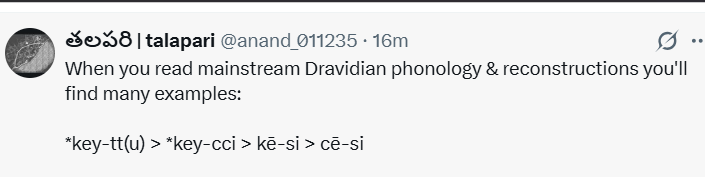
The four images correctly flag the proposed Dravidian chain (*kem-tt/cc → s → kāṃsya) as ad hoc. Proto-Dravidian lacked sibilants and geminate stops do not regularly yield -s-. Standard references (Wiktionary, Turner CDIAL, Mayrhofer) derive kāṃsya internally from Indo-Aryan kaṃsa, with a possible Proto-Indo-Iranian *kansás parallel. That account requires fewer special assumptions and stays within attested comparative method. I support it.
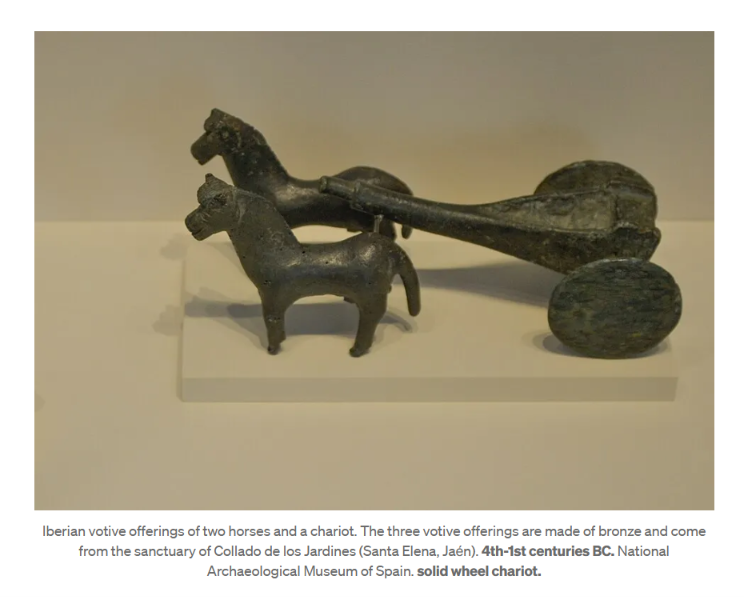
From Littauer and Crouwel. They argue for diverse origins for the chariot technology and horse domestication rather than having a single culture taking away all the credit. They are Middle Bronze Age Anatolia, Syria and surely India (though not explicitly mentioned here).
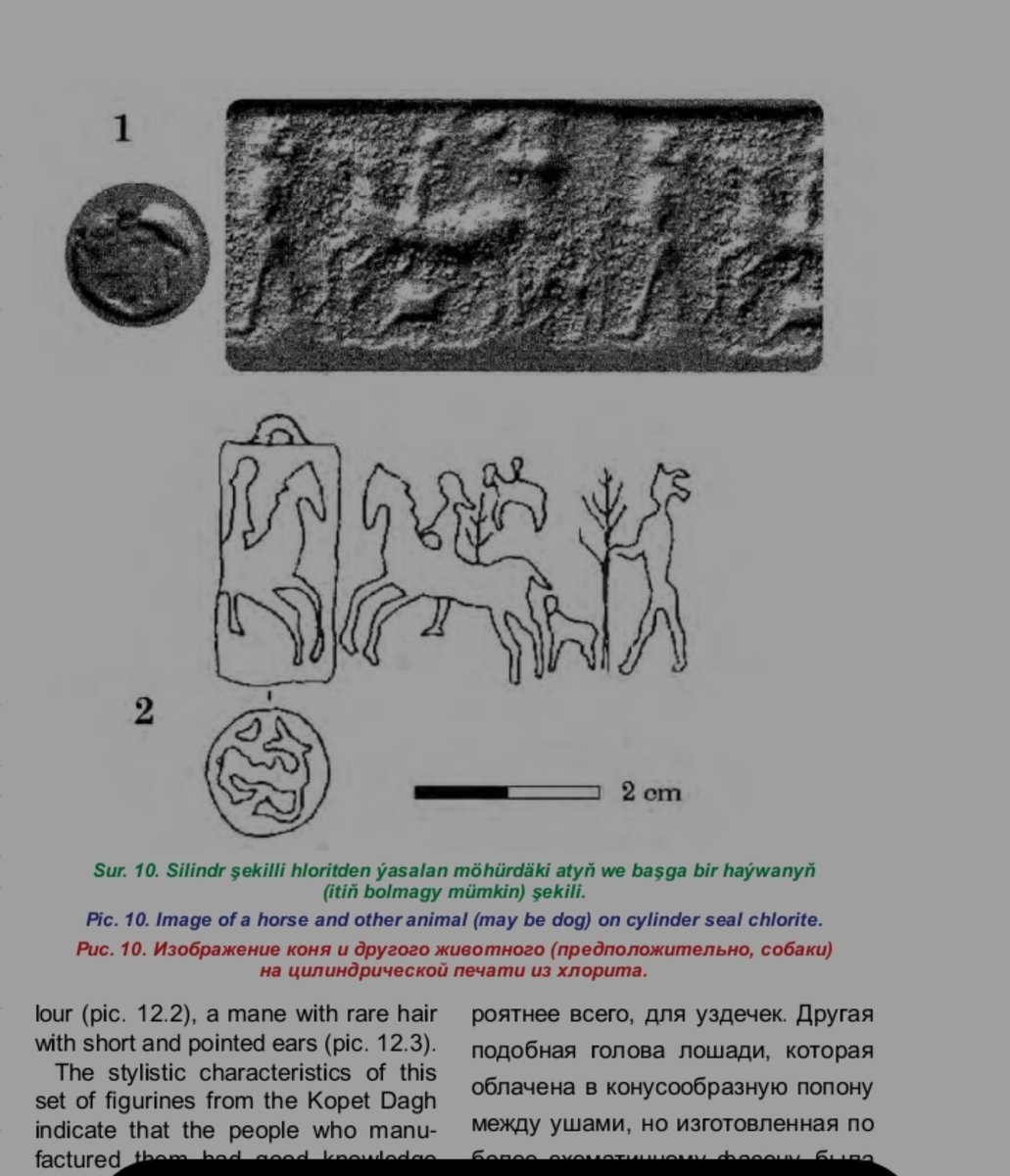
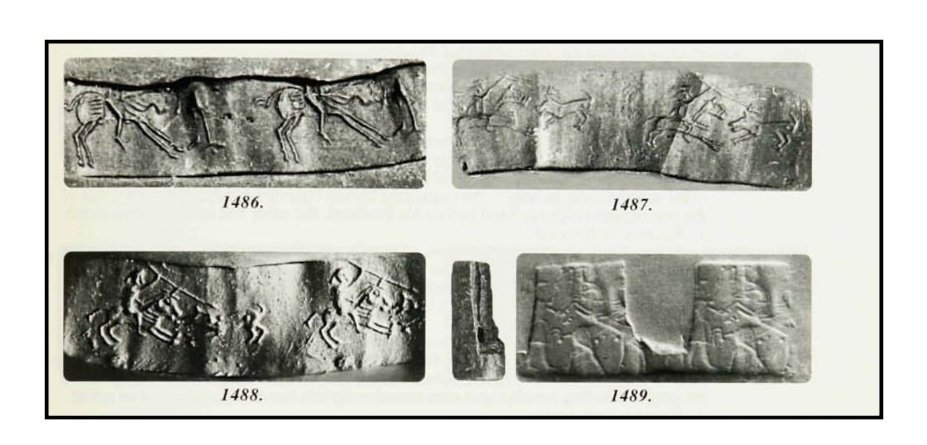
We also have seals depicting horse riding in BMAC. The horses were mostly used by the elites as a mark of power and sovereignty. Sarianidi also notes horse sacrifices, a culture fully acquainted with horses based on both ritual and strategic utility.
A highlight - “Kenoyer (2004), in Wheeled Vehicles of the Indus Valley Civilization of Pakistan and India, notes: “At Harappa we find evidence for the use of terracotta model carts as early as 3500 BC during the Ravi Phase at Harappa […] No carts or wheels dating to this early time period have been reported from any sites in Afghanistan or Central Asia, or even from sites such as Mehrgarh and Nausharo that are located at the edge of the Indus plain. […] It is now possible to say that, on the basis of the currently available archaeological evidence, the development of Indus wheeled carts appears to be the result of indigenous processes occurring out in the alluvium and not the result of diffusion from mountainous regions to the west.”
David Anthony, however, states in his book (p. 69) that the Baden culture ceramic wagon models dated to 3300–3100 BCE are “the oldest well-dated three-dimensional models of wheeled vehicles,” thereby ignoring the earlier wheeled vehicle evidence from Harappa.”
(1/N)
https://t.co/3SNBPjZVhC
BY @thehistoropill
Busting a Myth! A vast amount of information—check it out.
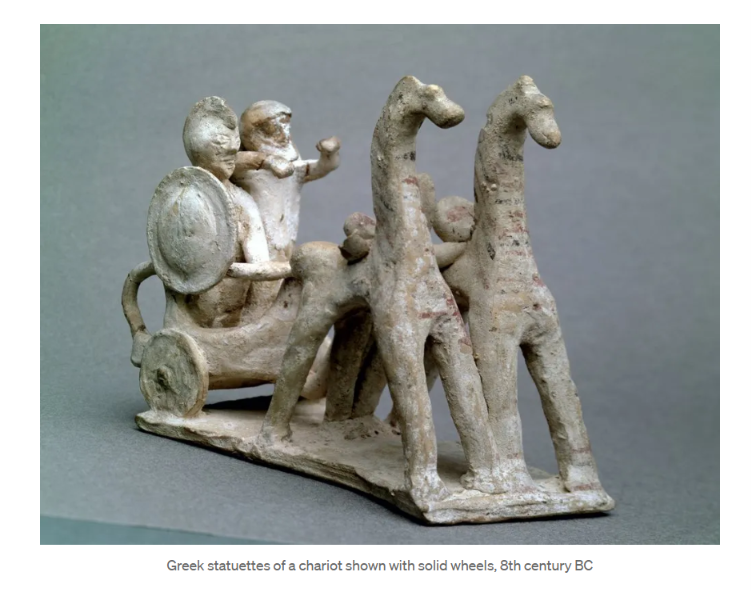
The best part is that both spoked and solid wheels were used on chariots for both military and civilian purposes.
Miano can't get anything right.
αἰνῶς ἀθανάτῃσι θεῇς εἰς ὦπα ἔοικεν
Helen resembles [ἔοικεν] the immortal goddesses in appearance. We still say someone is "like a Greek god" to praise looks. And she's not unique: Briseis and Nausicaa are also compared to goddesses.
@Rtam86418021@iosif_lazaridis@KroonenGuus I was refering to the absence of steppe ancestry in the main BMAC population as Narasimhan finds.
Has anyone studied the impact of the "Indian specific Iranian-related component" on any of the ancient populations?
Narasimhan shows full evidence of IVC migrations out of India.