The fighting in Mogadishu was sadly all too predictable.
CTP has been warning since last year about the looming prospect of violence as the constitutional/election crisis drags on.
Somalis and Somalia watchers are all too used to the cycle of federal overreach, elite squabbling and infighting, and an eventual negotiated election after needless bloodshed and substantial delays.
Only hope this cycle is short-lived and that al Shabaab or external parties don't capitalize on the situation and make it worse.
NEW | Over a dozen countries, including the United States, called for the Federal Government of Somalia (FGS) and the leading Somali Future Council (SFC) opposition coalition to return to dialogue amid an intensifying constitutional and electoral dispute.
The FGS’s attempts to consolidate political control across Somalia have put it on a collision course with the SFC and alienated even formerly pro-FGS Federal Member States. 🧵⬇️
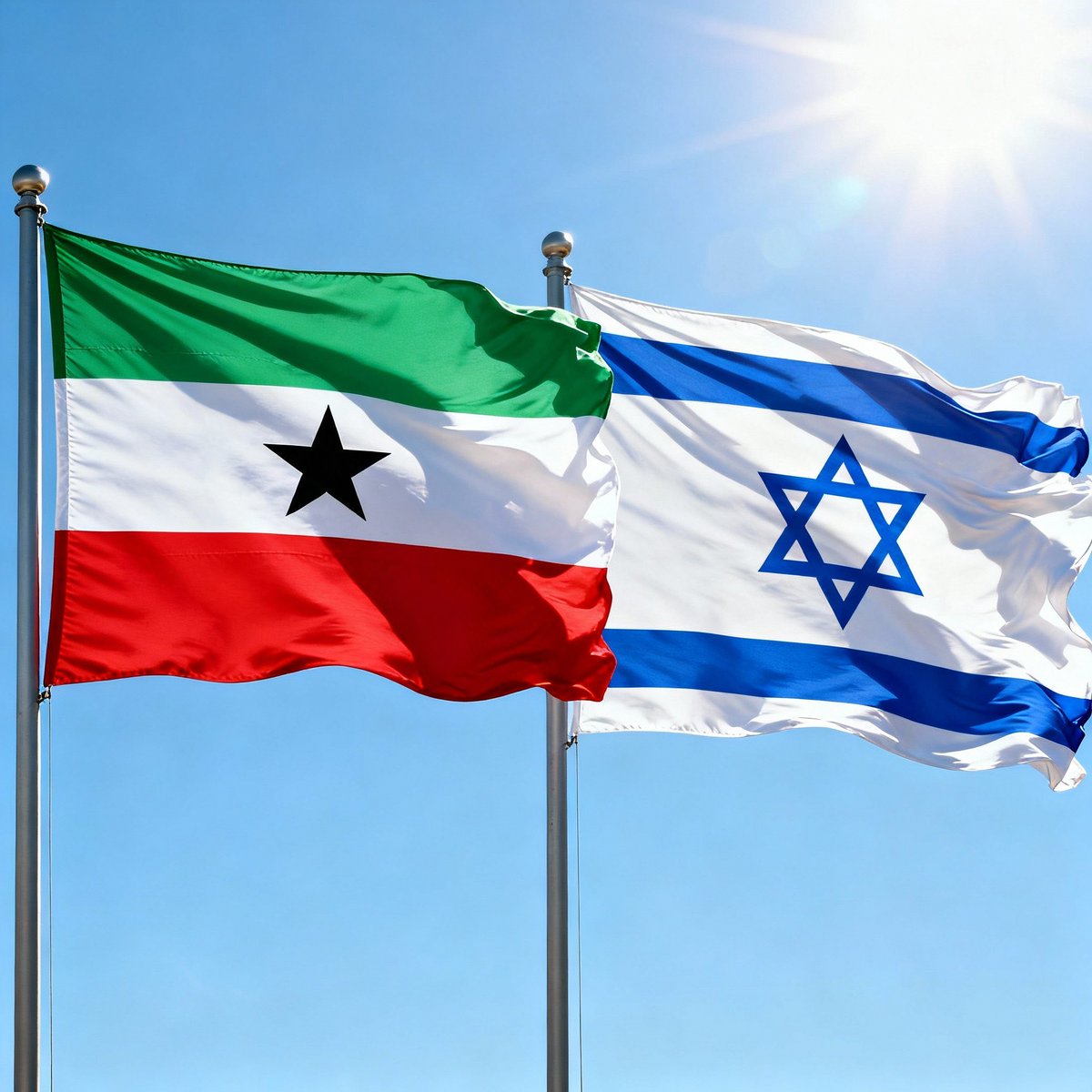
In December, Israel became the first country to formally recognize Somaliland as a sovereign state. Officials in both countries are presenting this controversial move as an opportunity for development and business cooperation, though most analysts see it as a strategic play on Israel’s part. Will Somaliland benefit?
https://t.co/ks6xNkmYV8
Appreciate @ForeignAffairs publishing my analysis Hezbollah’s Trap for Israel on Israel’s approach to Lebanon as Israeli and Lebanese teams are in DC for a 4th round of talks. The piece describes the military challenge (including the faulty logic of turning the post-Nov 2024 “luxury” cease-fire, which allowed the IDF to maintain freedom of operation and five points in Lebanon, while Hezbollah refrained from acting, into the current mess), the shortcomings of the diplomatic track, and outlines a way forward.
Israel’s idea of holding both ends of the stick isn’t likely to work. Appreciate Israeli Amb. to DC's commitment and leadership but his idea of "reaching a peace treaty as if there’s no Hezbollah and fighting Hezbollah as if there’s no peace treaty" could derail the prospect of achieving either objective.
Israel’s approach to Lebanon must be understood in the context of the post–October 7 shift in the country’s mindset, moving away from prioritizing deterrence to an always‑on security doctrine that seizes "buffer zones" in neighboring countries. Not accepting a threat building on the border is understandable but if the current escalatory dynamic continues, that will squander a rare opening for Israel and Lebanon to achieve a shared strategic objective - Hezbollah disarmed. Disarmament is not only a kinetic effort but it requires patient, sequenced statecraft, which only Lebanon can do. Israel can’t substitute firepower for legitimacy. It can, however, help shape the conditions that enable Beirut to reclaim its sovereignty.
Israel faces a stark choice. It can accept a demanding bargain: pair calibrated deterrence and temporary military measures with clear initiatives to strengthen Lebanese state capacity and delegitimize Hezbollah. Or it can keep prioritizing prevention and retribution over patient diplomacy, and pay accumulating military, economic, and diplomatic costs. In both the near and long term, however, that will only play into Hezbollah’s hand.
This week’s round of negotiations should do more than extending the crumbling cease-fire and containing the conflict to growing parts of southern Lebanon. Unless the talks enable a fundamentally different approach and produce discernible benefits for both Lebanese and Israelis, renewal of full-on war could be inevitable—and the hope of permanently weakening Hezbollah and making peace will be gone.
https://t.co/fBKsup9pd1 via @ForeignAffairs
Partnership Recalibrated: The Next Era of U.S.-Israel Security Cooperation
Webinar | Thursday, June 4, at 2pm ET
Featuring @RCBrandenburg and @mkoplow
Moderated by @dhalperin
Register here: https://t.co/zfI8PxQbde
1/ Today, @IsraelPolicy4m released a new report: Partnership Recalibrated: The Next Era of U.S.-Israel Security Cooperation. As the U.S. and Israel begin discussing a new memorandum of understanding (MOU), the authors @mkoplow@RCBrandenburg@elisaewers44@GabrielEpsteinX argue it's time to prep the security partnership for a new era. 🧵
The time has come to chart the next phase of the U.S.-Israel security relationship.
Our new report by @RCBrandenburg, @GabrielEpsteinX, @elisaewers44, and @mkoplow lays out a vision for the next MOU: moving from a provider-recipient framework to a greater partnership.
Today, Dr. Mohamed Hagi, the first-ever ambassador of Somaliland—an overwhelmingly Muslim self-governing territory—presented his credentials to Israeli President Isaac Herzog.
This marks the start of a new partnership between Israel and Somaliland, laying the groundwork for a future built on mutual respect, cooperation, and shared interests.
The AJC Africa Institute will continue to strengthen this relationship in the years ahead.
https://t.co/fZymxMgiCt
I am pleased to announce that the Republic of Somaliland’s Embassy will be located in Jerusalem - the Embassy will be opened soon, while Israel will also establish its Embassy in Hargeisa, reflecting growing friendship, mutual respect, and strategic cooperation between our two peoples.
My brother @gidonsaar, I sincerely appreciate your warm reception and valued friendship.
I must say that me and my brother, Foreign Minister @gidonsaar had a deep and important discussion that is taking both of our countries toward a strong and promising future.
I was delighted to receive the first-ever Ambassador of Somaliland to Israel, Mohamed Hagi, who presented his diplomatic credentials this morning.
Ambassador Hagi was kind enough to praise our orchestra, who played the national anthem of Somaliland for the first time ever in Israel.
This important new partnership
between our nations will bring a shared future of cooperation in a range of fields to the benefit of both our peoples and the entire region.
Israeli President @Isaac_Herzog will receive the diplomatic credentials of the first-ever ambassador of Somaliland, Mohamed Hagi, along with those of other new envoys on Monday, his office announced.
https://t.co/B2s7aXyNkJ
I am delighted to present my paper, “The Israel–Somaliland Axis: Redrawing Alliances in the Red Sea and the Horn of Africa,” at the 3rd International Conference on the Middle East and Africa, organized by the National University of Kaohsiung in the Republic of China (Taiwan). I extend my sincere thanks to the NUK team for inviting me to participate in this timely and engaging conference.
I am delighted to organise, and bring together Somaliland and Israeli investors, business leaders, and partners to explore new opportunities for trade, investment, innovation, and long-term economic cooperation.
The Somaliland–Israel business conference discussed on investment opportunities in ports, logistics, energy, fisheries, technology, agriculture, infrastructure, finance, health, and mining, while laying the foundation for practical cooperation, joint ventures, trade expansion, and long-term economic partnership between the two countries.
his is a milestone moment!
The first interview with Somaliland’s first Ambassador to Israel, Dr. Mohamed Hagi. A rare and important conversation on Somaliland’s stability, democracy, and its growing strategic partnership with Israel.
🎥 Watch the interview via this link: https://t.co/E965KMPtl4
💬 Join the discussion
@AmbMohamedHagi@havivrettiggur@RachelGur
#Somaliland #Israel #Geopolitics #Diplomacy #HornOfAfrica #AfricaRising
INSS–ISRI Joint Study: Houthis Emerging as Red Sea Security Threat Linking Israel and Somaliland
A joint INSS–ISRI (Somaliland) study highlights the expanding Houthi threat across the Red Sea, describing it as a growing security challenge with implications for both Israel and Somaliland.
The report says the Houthis have increased their operational reach through missiles, drones, and maritime disruptions, targeting key shipping lanes in the Red Sea. It links this capability to Iran’s wider regional strategy and the use of proxy networks across multiple fronts.
It also notes Somaliland’s strategic position near the Bab el-Mandeb Strait, presenting both opportunity and risk—potential cooperation in maritime security on one hand, and possible exposure to regional escalation on the other.
The study calls for coordinated maritime security, intelligence sharing, and carefully calibrated regional engagement to avoid further destabilization across the Middle East and the Horn of Africa.
@citrinowicz
https://t.co/GdPyh5IxPI
האיום החות'י על ישראל וסומלילנד – מאפיינים והמלצות מדיניות: פרסום מיוחד משותף של @citrinowicz מתוכנית איראן והציר השיעי ב- @INSS_Hebrew וחסאן עבדי ממכון המחקר @ISIR_INSTITUTE שדן באיום החות'י על ישראל ועל סומלילנד.
https://t.co/4QyaoH12AX
Benjamin Netanyahu’s cabinet approved the appointment of the Israel’s first ambassador to Somaliland, a breakaway region of Somalia https://t.co/sTXVj9ViRB