Blue TTS v3 is out.
Almost everything changed since v2.
Speech is more natural and expressive, with a MOS of 4.43 out of 5.
Voice cloning has improved significantly, and the model is fast and lightweight: it runs locally at 50× real-time on a CPU, no GPU needed.
This led to a follow-up project with a bigger idea: ReNikud. What if Hebrew pronunciation could be learned directly from audio, without manual nikud labels? We run Hebrew ASR + IPA ASR on 1,700 hours of speech, keep only transcripts that agree, and train on 1.5M pseudo-labeled sentences with everyday spoken Hebrew including slang, loanwords, and colloquial forms. 🧵
Does it work? Listen for yourself.
הוא רצה את זה, "he wanted it" (ratsa) vs. היא רצה מהר, "she ran fast" (ratsa, different stress). Same letters.
Phonikud handles cases that trip up commercial systems, trained with as little as 2 hours of data. 🧵
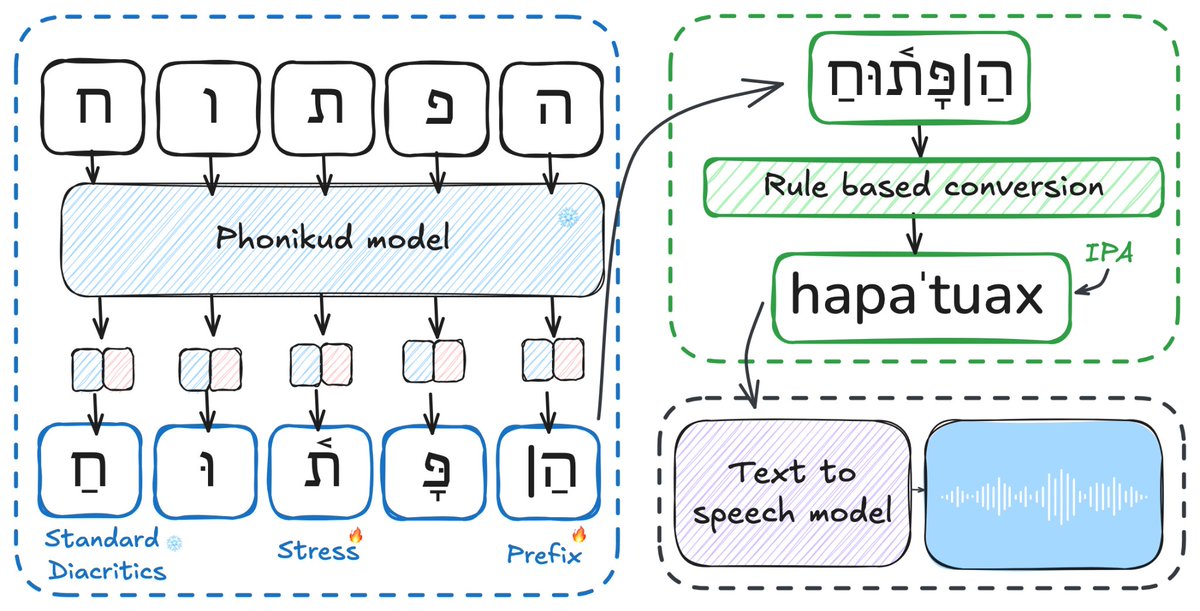
Phonikud extends a Hebrew diacritizer with lightweight adapters that predict new enhanced marks indicating lexical stress and vocal Shva. The enhanced Nikud then maps directly to full IPA phonemes.
Small enough for real-time TTS on edge devices like a Raspberry Pi. 🧵
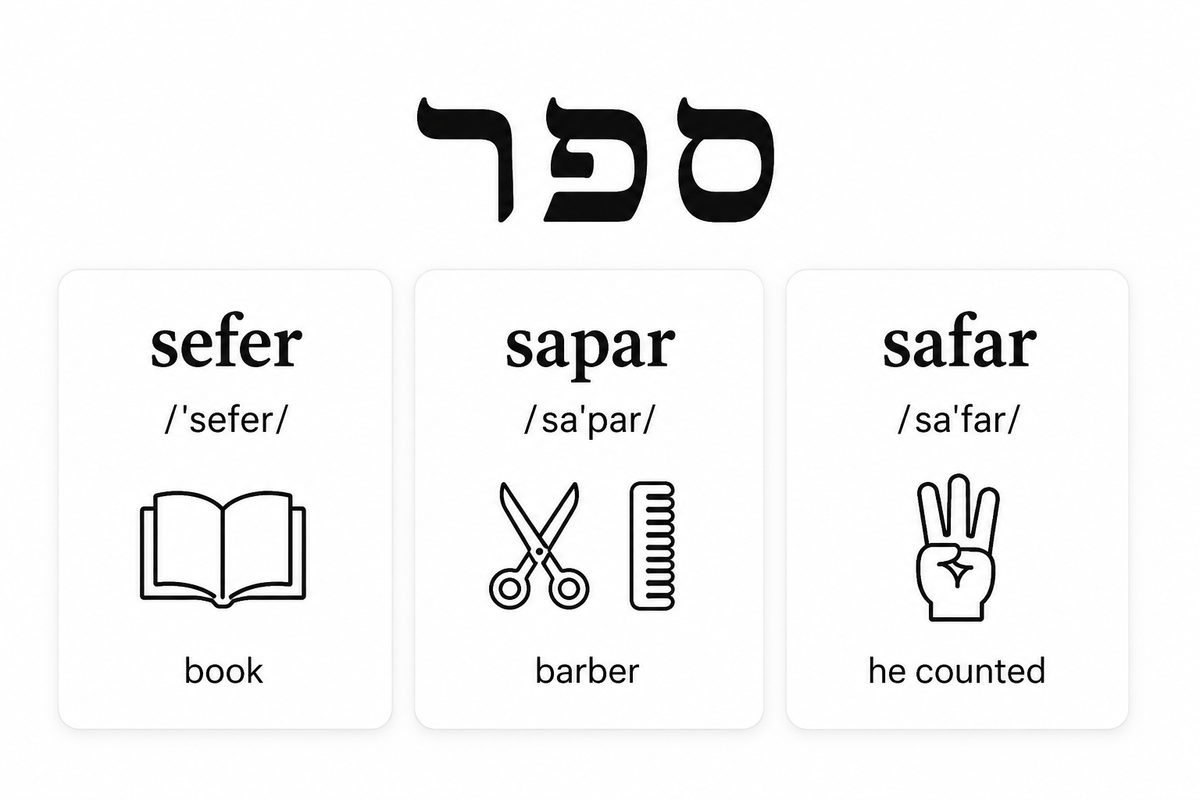
Hebrew is written without vowels. ספר can be "book" (sefer), "barber" (sapar), or "he counted" (safar). Deep learning diacritizers handle this by restoring vowel marks (nikud).
But nikud doesn't mark lexical stress (בוקר: "boker" morning vs. "boker" cowboy) or vocal Shva (בלונדון "belondon" vs. בלונדיני "blondini").
For TTS, that's not enough. 🧵
Our Hebrew G2P, Phonikud, was accepted to Interspeech! 🎉
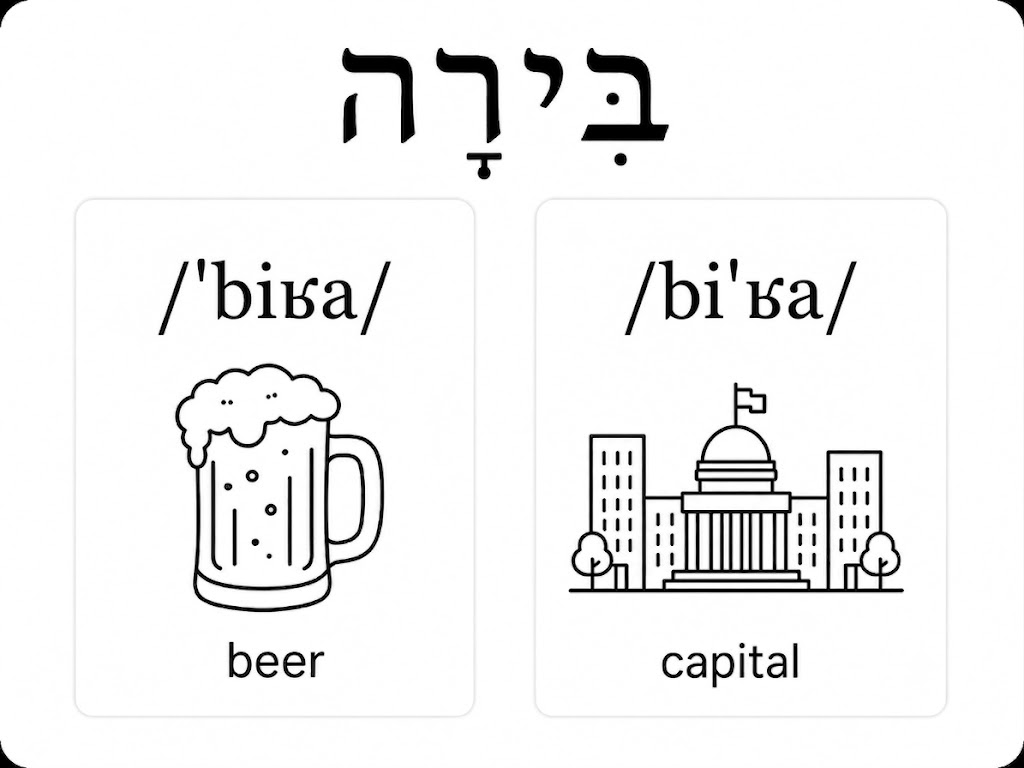
In Hebrew, בירה can be "beer" ('bira) or "capital" (bi'ra). Same vowel marks, different stress. Even fully vocalized Hebrew underspecifies pronunciation. 🧵