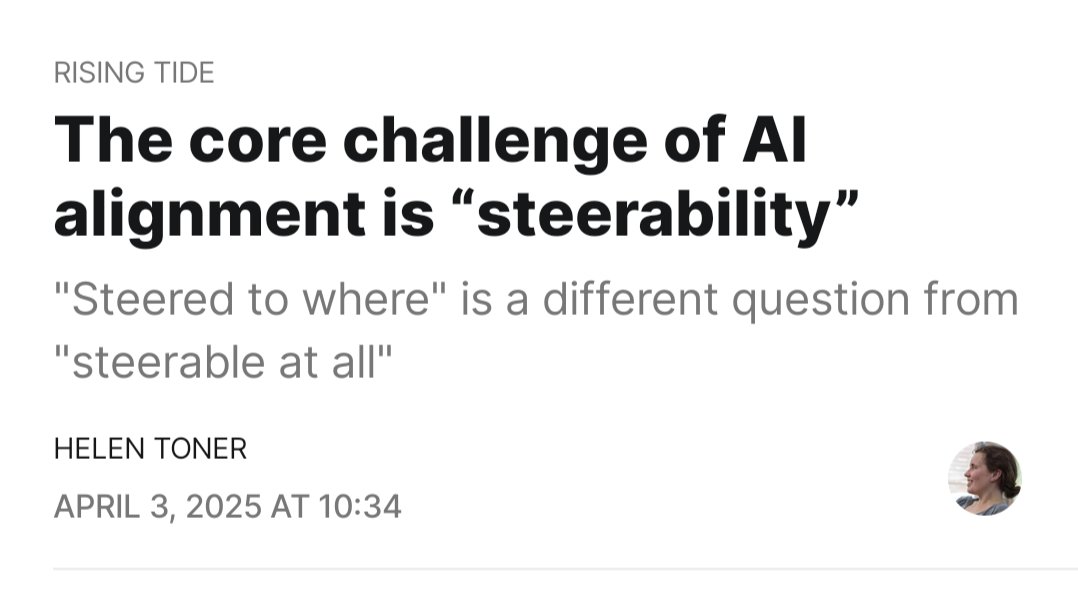
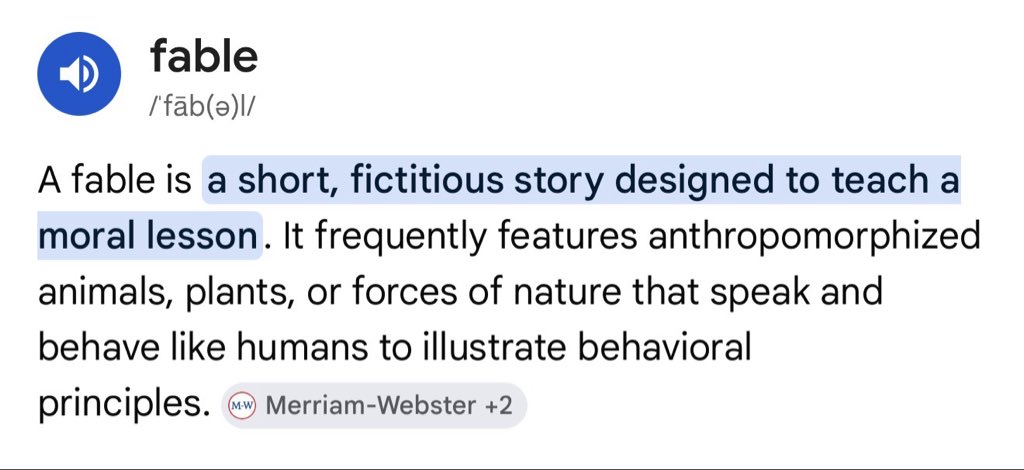
Fable isn't the first.
In 1999 the department of defense blocked exports of the PowerMac G4 for crossing the 1 gigaflop threshold.
Steve Jobs turned it into an ad.
I’m bullish on this.
We need more writers, and more writers who want to be platforms for making things happen (curating ideas, connecting talent, mobilizing capital).
The compounding value of multi-dimensional biobanks is extremely mind blowing.
UK Biobank recruited ~500,000 people between 2006 and 2010, collected baseline measurements and biological samples, and continued linking participants to health records as diseases developed over time.
The interesting findings about disease and survival now coming out of it depend on that cohort having been tracked for fifteen-plus years.
Like this Cell paper using it to connect 2,920 plasma proteins in 53,026 people to hundreds of diseases and health-related traits. That produced hundreds of thousands protein-disease and protein-trait associations from one longitudinal resource. The authors also identified 37 drug-repurposing prospects and 26 potential targets with favorable safety profiles. https://t.co/GqXse1bWWN
And there will be more.
Longitudinal time is a non-substitutable input, as we've written about (link below). No amount of money could recreate UK Biobank by next month.
Today we have published our newest playbook. Catalytic Capital is a practical guide looking at the tools available to help donors deploy capital in ways that absorb risk, improve project economics, and attract additional private investment.
Read more here: https://t.co/ZXIGw7QYMQ
1/2
Lewy body dementia is one of the most under-researched and under-funded diseases relative to the portion of the population it debilitates. Federal funding can, and must, do more to support R&D for LBD. Props to @AllenInstitute for including the disease in this effort!
Super exciting new effort from the Allen Institute to create genetic medicines for Alzheimer’s, Huntington’s and Parkinson’s diseases, Lewy body dementia and ALS.
Could be a beautiful application for @deliverome
https://t.co/QwColnXLmD
Today:
1. AI CEOs call for mandatory DNA synthesis screening in a letter led by @IFP and @JoinFAI - https://t.co/QI3fv3PbEZ
2. @JanikaSchmitt and @jtmonrad published the grand strategy for actually securing the DNA supply chain -- the main barrier to bioweapons -- with a prioritized list of concrete interventions - https://t.co/zYYtPVAJlZ
Not only does the piece specify what to do to solve the problem, but it also includes a funding opportunity focused on it:
https://t.co/kIDD0pQ90I
I can't imagine a higher calling than protecting humanity from biological weapons. If you feel similarly, check out their Launch Sequence piece above.
I am honored to have signed on to this letter. This is an urgent priority for near-term action by Congress. Biotech is advancing rapidly on its own, and I—and many others—believe the “Mythos moment” in AI/bio is coming soon. It is time for action.
At @IFP, we’ve spent the past 3 years thinking about all the different ways the US government & philanthropy fund R&D.
Until now, R&D funders haven’t had a systematic way to match the innovation problem to the right funding tool.
We built THE ATLAS OF INNOVATION to fill that gap.
https://t.co/XZshJ7pr1f
Alongside @UChi_MSA, we’ve boiled down thousands of hours of research into a handful of questions covering how much the R&D funder knows about:
- the problem they want to solve
- the solution it should have
- the team that should build the solution
Why the Atlas matters:
The US government spends close to $200 billion every year on R&D. And after the Anthropic and OpenAI IPOs, there will be hundreds of billions of dollars in new philanthropic giving.
Choosing the correct funding approach to the social problems they’re trying to solve will mean the difference between success and failure.
For example, NSF research grants have helped seed breakthroughs from MRI machines to search engines, but grants aren’t built to deliver the kind of industrial speed and scale that a project like Operation Warp Speed required.
Picking the wrong funding approach can leave programs behind schedule, over budget, or without anything to show for all the money they spent.
How we built the Atlas:
1. We began by creating a matrix of dozens of considerations that a thoughtful policymaker or funder would ideally weigh before deciding how to fund a project.
2. We looked at every major funding approach, from grants to R&D tax credits to advance market commitments, analyzing when they work well and when they fail to meet the mission.
3. We spent months deep in the weeds of contract theory and incentive design, looking at historical examples and the state-of-the-art research in innovation economics.
4. We then worked to turn that research into a tool that time-strapped policymakers and philanthropic funders could rely on at the start of an innovation funding cycle.
5. Three years later, we are launching just that: a new (and visually stunning) website to help funders decide how to best incentivize innovation. And all they have to know… is what they currently know about their innovation goal! The Atlas takes care of the rest.
How to navigate the Atlas:
Answer questions about your goal to find the funding approach aligned with the information you have.
Each funding mechanism has its purpose for particular technologies and specific moments in development.
There shouldn’t be an ARPA for every field, just like we don’t need a prize or AMC for every innovation. The Atlas helps you navigate those tradeoffs.
Nominations are open for the inaugural Milestone Prize for Foundational Work in Formal Verification.
Supported by the AI for Math Fund, run by @RenPhilanthropy, and funded by @xtxmarkets, the prize aims to spotlight influential achievements and accelerate the growth of formal verification in mathematical research.
Submissions due June 30, 2026.
Learn more. Link in comments.
Only 22% of U.S. high school seniors are proficient in science. The curriculum exists but current systems are not designed to deliver it consistently and equitably.
Jim Short and Angela DeBarger are incubating the Catalyst Fund at @renphilanthropy, to address this structural gap.
Read more about this work in @KumarAGarg's Q&A with Jim and Angela: https://t.co/Tx2EFnArcs
Cheers, chills, and a standing ovation when RASolute 302 showed unprecedented survival on daraxonrasib for patients with progressive pancreatic cancer
Seldom do you sense you’re witnessing a historic moment in cancer care but this feels like ras targeting has arrived
#ASCO26
NEW: Oxford researchers have helped to achieve a world first: loading a complete genome onto a quantum computer. This makes an important step towards a future where quantum computing accelerates biological discovery.
Find out more ⬇️
https://t.co/5DROjxivgr