The flex stopped working. Everything has a knockoff, nobody's impressed, and people see right through it. Real wealth is quiet. It's the trip you still talk about, the toll road home, the great meal. Buy the memories, not the logo. https://t.co/5ijsNgkQBN
A free how-to for selling AI help to local shops, and no cut asked. I think the ones who last will be judged by month 3, when the owner still trusts it on a busy day, not by the first demo.
If you are not selling Grok Bot to local businesses you are missing the largest opportunity of this era.
I show you how, not in theory, not a test, but from real daily experience and examples of what works.
It’s free and I don’t want a cut.
Learn how:
⚡️NEW: A new economic report estimates that 1.5 million white-collar jobs are missing from the American economy, with AI emerging as a suspected driver.
There is something buried inside that number that corporate earnings will never reveal.
Companies can liquidate the machinery that produces human expertise and record the savings as productivity gains.
A junior accountant checking invoices is doing two things simultaneously: producing work for the company and developing the judgment that will eventually make them a senior accountant.
Automate the first function and the second quietly disappears with it.
For several years, the economics look brilliant. Experienced professionals supervise AI, payroll expenses decline, margins expand, and shareholders celebrate.
But companies are drawing upon a stock of human expertise accumulated under an employment model they are dismantling.
Every individual company has an incentive to stop paying for junior talent and hire experienced professionals when needed. Collectively, they risk eliminating the process that produces those professionals in the first place.
Watch what happens to the economics of experience. Entry-level salaries come under pressure while genuinely independent judgment commands a premium, until machines become capable of replacing that judgment too.
For young people, the consequences are especially severe. A career is a compounding process. The first job produces experience, relationships, credibility, income, and access to the next opportunity.
Remove that first step and decades of potential wealth accumulation change with it.
Nobody receives a termination letter for a career they never had. Nobody collects severance for the income they never earned.
The most expensive missing jobs in America will be the inexpensive ones that once turned ordinary graduates into extraordinary professionals.
And corporate America will spend years celebrating the savings before discovering what it stopped producing.
When a physically depreciating asset that should be trending towards zero is worth more money 7 years later, it's a strong sign that the fiat system of money is broken.
My bot still misses things. The difference now is that no miss stays hidden. Here's the intake log and the rules that make every miss show up within a day, plus a prompt you can paste into your own Chief of Staff bot. https://t.co/QMd1RYfZOK
I gave my chief of staff bot 14 rules before I trusted it with anything. Most of them are about what it's never allowed to do, and the full list is below. https://t.co/SB4krMcbOv
The older I get, the more I realize the power of not making things harder than they need to be. Don’t stress over things that don’t matter. Don't start unnecessary arguments. Don't spend money to impress strangers. Don't overthink easy decisions. A surprising amount of peace comes from just getting out of your own way.
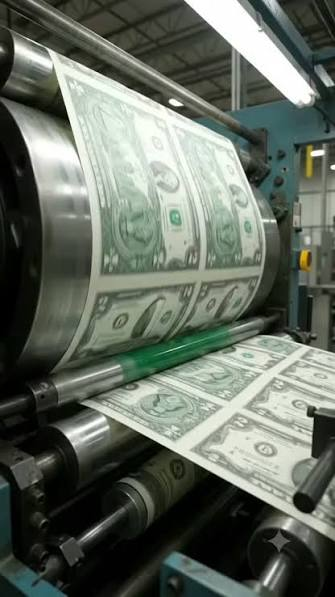
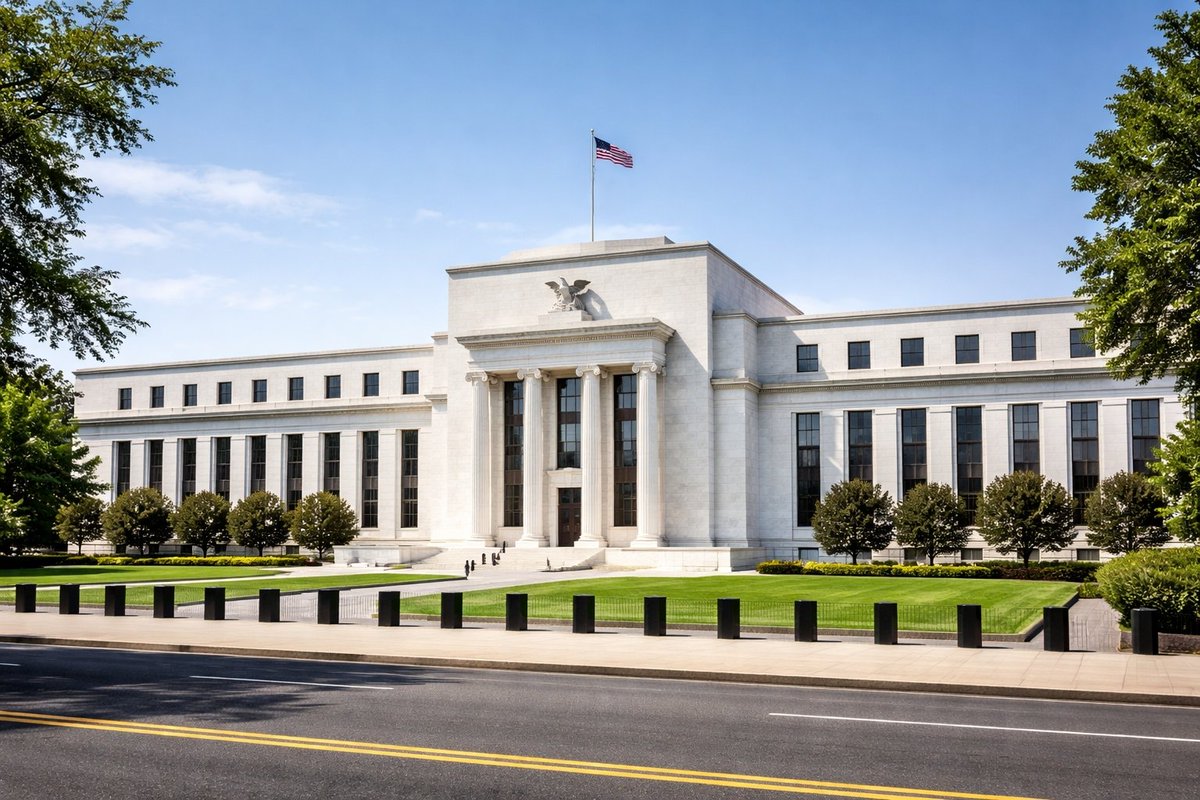
Every dollar the Federal Reserve prints dilutes the purchasing power of every dollar you already hold. This is not a bug in the system; it's the entire reason it exists.
Fiat currency, unbacked by gold or any commodity, gives central banks the power to expand the money supply at will. The Fed created $4.5 trillion in new money between March and June 2020 alone, more than doubling its balance sheet in three months. No wealth was produced to match it. The Fed simply conjured digits, and the existing pool of dollars became worth less the moment it did.
The process works through what is called the Cantillon effect, named for Richard Cantillon, the 18th-century banker who noticed that new money never enters an economy uniformly. It enters at a specific point: the Treasury, the primary dealers, the connected banks. Those institutions spend the fresh money before prices have adjusted upward. They buy assets, properties, equities. By the time that money filters down to wage earners and savers, prices have already risen. You absorb the inflation without ever touching the stimulus.
Redistribution by stealth. No congressman votes to cut your purchasing power by 8.3 percent (as happened in 2022). The Federal Reserve does it administratively, and your savings account takes the loss while bond markets celebrate cheap credit.
Then there is the problem of malinvestment. When the Fed holds interest rates artificially below their market-clearing level, it sends a false signal. Entrepreneurs borrow heavily and deploy capital into projects that only appear profitable under cheap-money conditions: speculative tech startups in 2021, subprime mortgage securities in 2006. When the rate cycle eventually turns, those projects collapse, and real resources have been wasted. Workers trained for industries that should never have existed. Buildings half-finished. Capital burned.
Sound money advocates have traced this boom-bust pattern across every major cycle since the Federal Reserve's founding in 1913. The institution was sold to the public as a "stabilizer," but the dollar has lost over 97 percent of its purchasing power since then. Judge it by results, not intentions.
The exit from this system is straightforward in principle and politically radioactive in practice: separate money from state control, return to a commodity anchor, and strip central banks of the authority to manufacture purchasing power from nothing.
The entire global economy is being held by a single thread of people forgetting to cancel auto-renewing subscriptions and people being too lazy to move their cash to higher yielding money market accounts.
If every human ran a prompt for an agent to do it for them, the banking system would collapse and the world would explode.
Rescued baby sea otter Joey loves chomping on ice cubes. Wildlife sanctuaries offer ice cubes to rescued sea otters for enrichment and helping them stay cool in warm weather.
📽: Marine Mammal Rescue Centre
Banks do not take money on deposit and lend it out. They create it, from nothing, with a few keystrokes, and the entire system depends on you never noticing.
When you deposit $10,000 in cash at JPMorgan Chase, the bank records a liability to you and an asset for itself. Under fractional reserve banking, the Federal Reserve requires banks to hold only a fraction of deposits as reserves. For decades, that requirement sat around 10%, and in March 2020 the Fed dropped it to zero. That means JPMorgan can lend out the full $10,000 you deposited, while still owing you that $10,000 on demand. The borrower who receives that $10,000 deposits it elsewhere. That bank then lends it out again. The same dollars multiply through the system, spawning new purchasing power at each stage without a single additional dollar being printed.
Murray Rothbard called this counterfeiting conducted through respectable institutions, and I think that word fits. If you printed money in your basement and spent it, you would transfer real wealth from later dollar-holders to yourself. Banks do precisely this, they just call the process "credit creation" and charge interest for the privilege of doing it.
The price you pay seems hidden at first. Every new dollar dilutes your "old" dollars. When credit expansion drives a housing boom, as it did between 2003 and 2007, asset prices rise first for the people closest to the new money, the borrowers, the developers, the leveraged speculators. By the time ordinary wages and savings adjust, you have already been taxed by dilution of purchasing power without a single congressman casting a vote.
This system contains the seed of every business cycle. Cheap credit manufactured by banks sends false signals to entrepreneurs, who invest in projects that the real pool of savings cannot support. The boom turns to bust when reality reasserts itself, usually violently, usually on your tab through bailouts.
Fractional reserve banking is state-licensed privilege, enforced by deposit insurance and central bank backstops that socialize the losses while the gains flow upward. This is how the rich become richer, and the poor get poorer, not "capitalism," as economically illiterate politicians like to claim.
Gold could hit $18,000 an ounce in a US debt crisis, according to Luke Gromen, founder of research firm Forest for the Trees.
That’s about 4.5 times today’s price. Gold is trading around $4,000, near its lowest levels of 2026 after a hotter-than-expected October inflation report raised the odds of a Fed rate hike.
Gromen argues the US could eventually face a Treasury market crisis that forces the Fed to print money to cover interest payments. He also warns China could demand the US settle its debts in yuan or gold.