Our book is finally here! Sign up to get your copy! There are tons of extra special add-on items and limited edition collectibles. Top 5 backers will get to add their own character to the book! It may have taken 6 years but it was worth the wait. 🧚♂️
https://t.co/NT5TP21ij3
@quantymacro@0xfdf@quant_arb Luckily with some time on Paul’s Math Notes (basic algebra through diff eq, with solutions) (https://t.co/kqNvlc0JER) and Gil Strang’s MIT linear algebra (https://t.co/UQoDExZNTW) + 3b1b, we’ll get there.
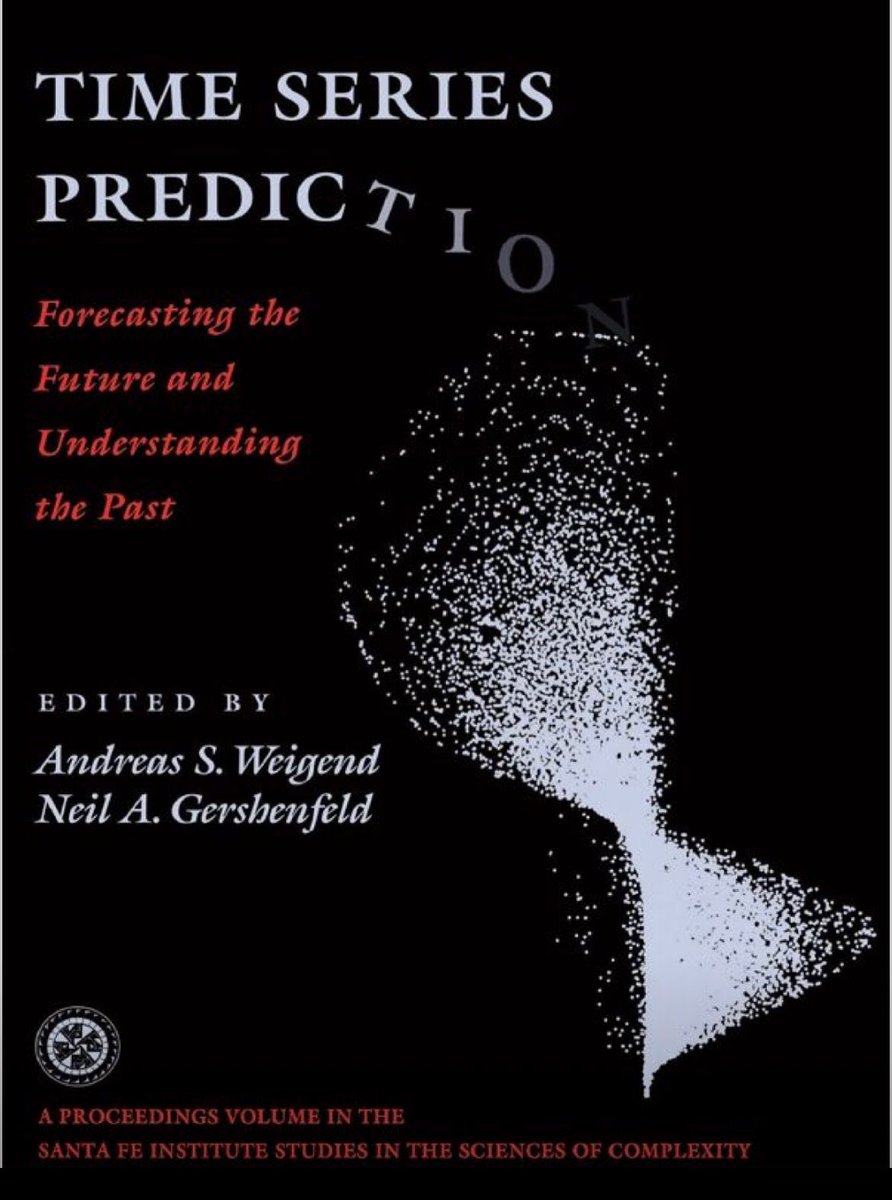
One of the early time series forecasting competition was held in 1991 by physicists at Santa Fe institute and by this day it remains the most serious time series competition that has resulted in 630+ pages book.
Competition included 6 rather hard datasets from diverse subjects:
- physics laboratory experiment describing fluctuations in a far-infrared laser
- physiological data from a patient with sleep apnea (heart rate, chest volume, blood oxygen and EEG sleeping state)
- high frequency currency exchange data
- synthetic series designed for the competition
- astrophysical data from a variable star
- a fugue. Bach’s unfinished fugue from The Art of Fugue.
Compared to M competitions that mostly employed very short time series (less than 100 values) and focused on primitive linear models in Santa Fe all the successful solutions were fundamentally non linear and required much more expertise and manual control.
The competition was won by machine learning neural network and state space reconstruction method.
The Santa Fe competition also asked participants to include error bars to indicate uncertainty around the forecasts that M competitions didn’t have … until 2018, almost 30 years after the Santa Fe competition had probabilistic forecasts.
Some Santa Fe dataset examples in comments.
#timeseries #forecasting