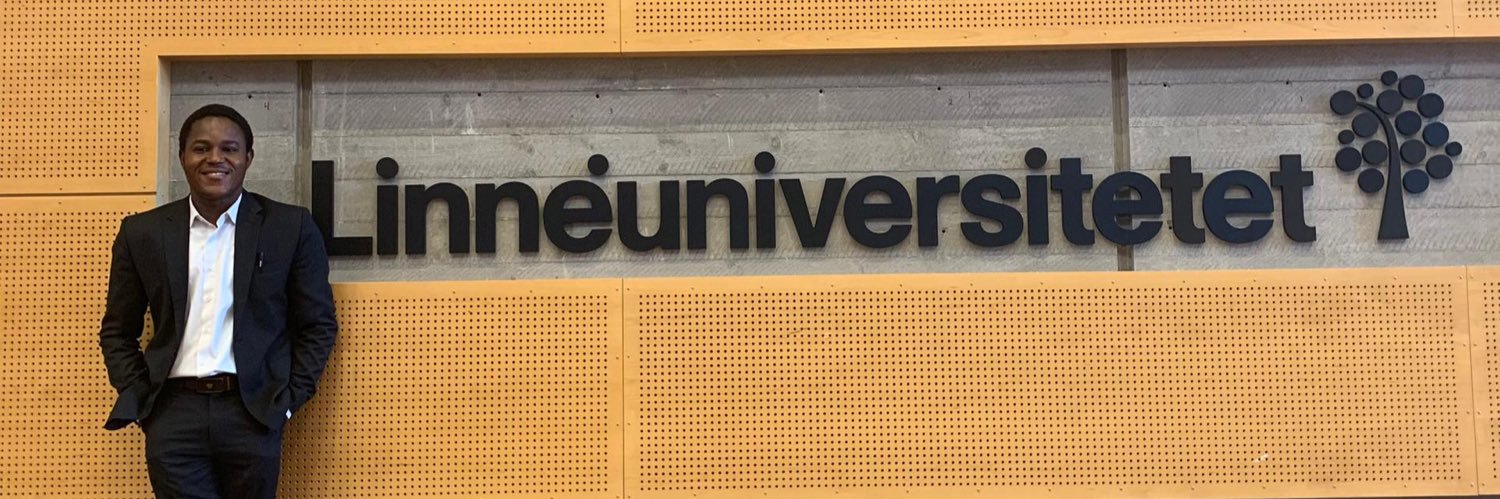
Just in case someone from the @UN@UNDRR or @WorldBankGroup@WorldBankAfrica@WBG_ClimateEnv sees this! I’m a third year PhD student of Anthropology with a focus on disasters (particularly flooding) and you need anthropologists! So hire meee ❤️.
The Board of Directors of NCR Plc have appointed Mrs Oluwatoyin Saraki as a Director.
She is the wife of Senator Bukola Saraki, former Senate President.
Pastor Poju has done incredibly well sustaining @theplatformng for 20 years now. Bringing leaders across the world to speak on national issues and coming up with policy recommendations yearly isn't a joke. He deserves a national honour!
Nigeria will be great in your time, sir.
Talent can earn you a living, but only assets can build you a legacy. Stop being a consumer of luxury and start being a commander of assets. The pressure of “looking rich” is a trap. The peace of “being wealthy” is the goal.
I am thankful to see that Nigeria’s House of Representatives passed this important policy that I’ve been calling for since @POTUS first asked me to investigate the genocide against Christians in Nigeria.
In fact, I raised this idea directly with Nigeria’s First Lady during her visit to Washington and have done so repeatedly with every Nigerian delegation I’ve met with.
Ensuring states can protect their own citizens is a critical step toward ending the persecution of Christians and the overall instability in the Nigeria.
President Tinubu deserves credit for supporting this legislation and urging its passage through Nigeria’s parliament, and I hope to see him continue pushing on this issue.
There’s still a ways to go before state level police forces will be in place, but this is a sign that all our hard work is paying off.
This is how we check World Cup fixtures when there was no access to internet, gone are those days at Ojota, like it’s was so interesting, they will sell to us then unfolded in other to make it easy to access, we will fold it and begin to write score after each match.
Childhood 🙌🏼
FG @NigeriaGov@NGRPresident should ban open grazing across the federation.
Deploy force officers back to their state of origin for effective operations.
Focus more on state policing implementation just the task reform.
Say NO to the rehabilitation of offenders and sponsors.
NDC Approves Key Appointments in New Media and Strategic Communications
The Nigeria Democratic Congress (NDC) has approved the appointments of Agada Abuh Theophilus as Director of New Media and Strategic Communications, and Brian Dennis as Deputy Director of New Media and Strategic Communications
Agada Abuh Theophilus (@TheoAbuAgada) is a strategic communications professional with a proven record across political campaigns, corporate brand management, institutional PR, and new media. Agada is an Associate of the Nigerian Institute of Public Relations. He holds a Master of Arts degree in Development Communications, specialising in strategic communication for social and institutional development, and is currently a PhD candidate researching election administration and management.
Brian Dennis (@XBrianDennis) is a communications analyst with seven years of experience in strategic and political communications. He holds a Master’s degree in Peace and Conflict Resolution.
The party is excited to welcome both appointees and looks forward to the energy, expertise, and fresh perspective they bring to its communications efforts. The NDC is confident that their leadership will strengthen the party’s voice and deepen its engagement with Nigerians across every platform.
Signed:
Osa Director
National Publicity Secretary
Nigeria Democratic Congress
As someone who partially grew up among European elite kids like him, this reminds me just how incredibly hollow some of them are.
For a quick background, I went to one of the poshest high schools in France (Janson de Sailly, for those who know) and, afterwards, to what was at the time - and probably still is - the most expensive undergraduate school in Europe (EHL in Lausanne, Switzerland).
Needless to say, many of my classmates were from unbelievably privileged backgrounds. Just in my classroom in Lausanne I had the son of a (very famous) Russian oligarch, the son of Italy's largest real estate developer and the son of Spain's largest real estate developer (funnily, the latter two were flat mates).
Another classmate of mine came from the richest family in Naples, Italy and - while we were at school - his father (known in Naples under the nickname "Il Sultano") got arrested for having bribed half of Naples's city council - which, if you know Naples, ought to tell you something.
These were the kids I was doing group projects on business ethics with (literally) 😅
Anyhow, my story, and probably my luck, was that - before going to high school in Paris - I was raised in very normal public schools in the South of France where my friends were anything but wealthy. Their parents were farmers and everyday workers.
Which means - and I'd come to realize this was very important in life - that it was easy for me to understand how big a mistake it is to see money as identity and meaning - and to confuse someone's net worth with their actual worth.
What really struck me at the time was the contrast with my "poor" classmates of earlier in my life. They couldn't define themselves by what they had - by definition - and this forced them to reach deeper for their identity: their skills, knowledge, humor, etc.
Rich kids can skip that entire process, and the tragedy is that most of them do: they reach for the readymade identity that money provides. I remember being incredibly frustrated by many of my classmates, like "ok, I get it, your dad is rich and you own a lot of nice things but who are YOU, what else is there?" The answer, more often than not, was nothing.
To be fair, there were exceptions. One of my classmates I was most impressed by came from one of Zurich's wealthiest families (which, if you know Zurich, means insanely wealthy) yet he was almost OCD in not showing he had money: driving the shittiest car imaginable, living in a small studio, etc. He was very intellectual, very contrarian, and clearly at war with the idea that his family's wealth ought to define who he was.
I only discovered who he actually was when I started my first company and he approached me to invest: to discuss the investment I went to one of his family homes, which it turned out was a literal palatial castle on the shores of Geneva lake. The guy had decided to live in a small rundown studio when he literally had a castle sitting empty a 5-min drive away.
THAT I was impressed by: it's easy to see that money isn't meaning when you don't have any. To see it when you have more than almost anyone - when everyone around you is organized around the opposite assumption - is much harder. But to actually live it, to choose the studio when you have the castle keys in your pockets - with no audience to applaud you for that - that shows real depth.
At the end of the day, I think, the real distinction isn't between rich and poor but between people who exist from the inside out and people who exist from the outside in.
Wealth just happens to make it incredibly easy to be the latter, to skip the work of becoming someone and settle for a borrowed identity that glitters from the outside but is hollow all the way through. A Potemkin village identity.
This is actually a real societal issue, and magnified by social media (with idiotic posts like this one 👇): the more "outside in" folks out there, the less people with genuine internal anchors, the more fragile everything becomes.
When you think about it, everything that genuinely matters in a society is built by people who think for themselves: they take the world in, pass it through something genuinely their own, and give back something that didn't exist before: an idea, a conviction, a stand.
Every reform, every invention, every act of moral courage in history came from someone with an internal anchor strong enough to resist the current. Remove those people and all you have left is the current.
This isn't new, by the way. Most ancient traditions warn against exactly this, from the Bible (the golden calf story) to Confucius, who built his entire ethics around the distinction between the exemplary person (the Junzi, 君子) - oriented around internal cultivation and righteousness - and the petty person (Xiaoren, 小人), oriented around profit and gain. The junzi builds himself from the inside, the xiaoren chases what's outside.
So please, do not make the mistake of being impressed by wealthy people flaunting their wealth. Don't focus on the glitter, focus on the hollowness it's trying to hide.