Rolled out @get_akai 's content briefing agent across every market we run in — LATAM, EMEA, APAC.
Same brief structure, same localization inputs, every time. What used to eat 40% of the drafting time now happens before I've finished my coffee.
The unglamorous part of scaling #AI isn't the model. It's making the plumbing identical everywhere.
$1.5B ARR. 150+ countries. 40K+ customers.
@deel just acquired Clarity AI—an AI cybersecurity company that gets it. Because global workforce management without security is like building without foundations.
The future isn't AI *or* security. It's both. Working together seamlessly. 🚀
Big news today: we're welcoming @getclarity_ai to Deel!
Clarity's AI-powered technology helps detect deepfakes, verify identities, and prevent fraud, bringing continuous identity security to the Deel suite.
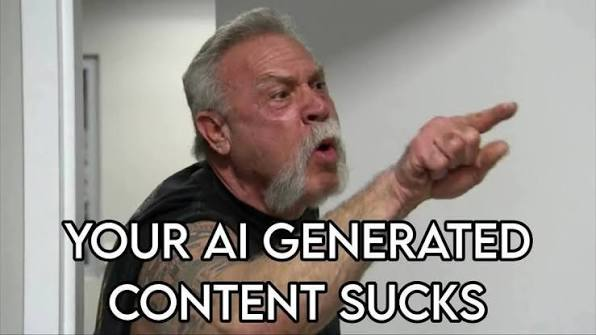
He's not wrong, honestly.
Most AI content sucks for one boring reason: nobody edited it.
Someone typed "write me a post about X," got a draft back, and published pass one. Not pass two, not pass four. Pass one — the version where the model is still guessing at your voice because you haven't given it anything to go on yet.
That's not an AI problem. That's a "we stopped treating first drafts like first drafts" problem. Nobody used to publish their rough notes. Now the rough notes have better grammar, so we ship them.
The actual fix isn't quitting AI, and it isn't pretending it's not everywhere now either. It's three things:
1. Never let the first output be the last thing you read. Ask it what's weak about its own answer before you publish it. It'll tell you.
2. Put something in it nobody else has — a real number, a real mistake, a specific thing that happened to you. That's the one ingredient AI can't generate, because it didn't live your week.
3. Cut whatever a thousand other accounts could've posted verbatim. If it's generic enough to belong to anyone, it belongs to no one.
I'm not interested in being anti-AI about this, and I'm not interested in pretending the slop isn't real either.
Both things are true: it's a genuinely useful tool, and most people are currently using it to skip the exact step that made their writing worth reading in the first place.
The tools got better. The editing didn't. That's the actual gap, and it's a closeable one.
just used the @claudeai Chrome extension to pull all my AEO metrics data in seconds instead of manually digging through reports. this is the move—gives me the exact regional breakdown i need without the busywork.
claude extension + this prompt = AEO metrics in seconds
steal my prompt 👇
"Break down my AEO metrics by region from [Insert the tool you use to track AI]. Show current performance, engagement rates, and underperforming areas that need optimization. Define quick win actions to implement this week"
#productivity #datatools
Hit my Claude limit constantly until I understood what was actually burning it, not just "using it less":
One long, sprawling conversation costs more than three short focused ones, because the model re-reads the entire thread every single message. Start a fresh chat per task.
Pasting a whole file when you only need one function makes it re-process everything you didn't ask about. Paste just the part that needs touching.
The heaviest reasoning setting is built for the genuinely hard problem, not for "rewrite this email." Match the tool's effort to the task's difficulty, not the other way around.
Understanding why fixed it. Just "using it less" never would have.
If your manager asked you to "use AI more" without telling you for what, you're not missing a skill.
You're missing a spec. Ask them what task they actually want faster or cheaper. Half the time they haven't decided either, and now you've made that visible instead of guessing quietly and hoping.
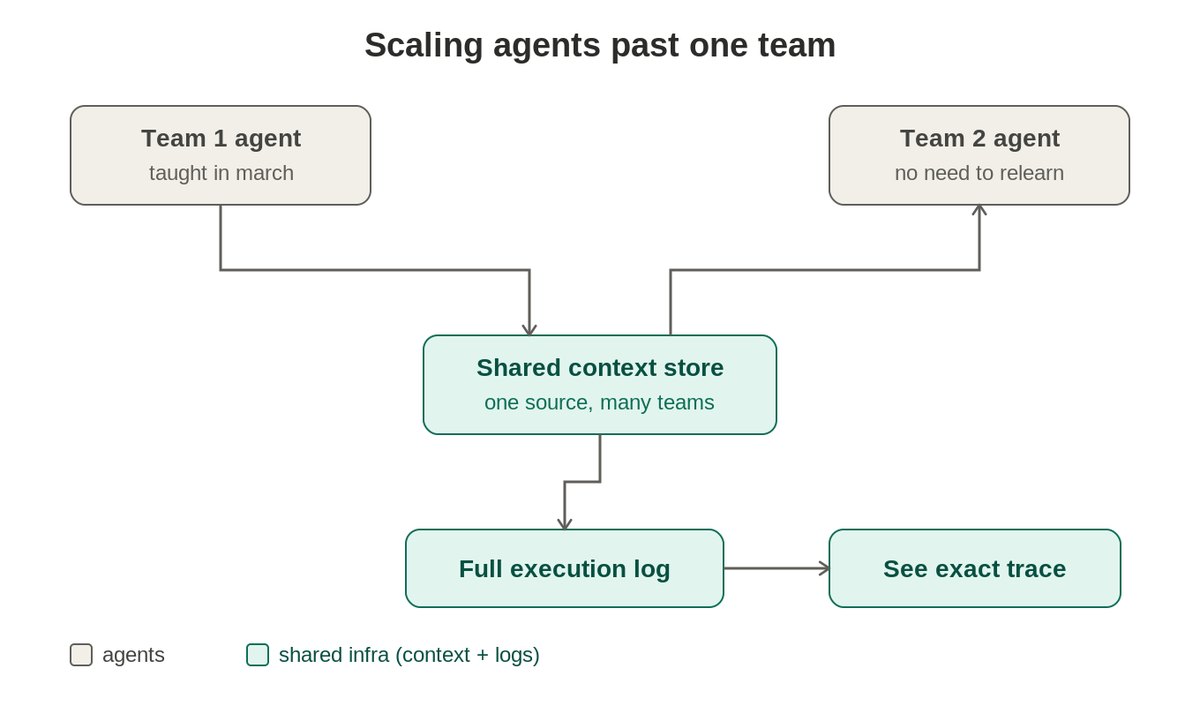
The part of scaling internal AI agents past one team that actually mattered wasn't the model, it was making agents share context instead of each one relearning the same playbook from zero. Team two shouldn't have to teach the agent the same lesson team one already taught it in March.
Full execution logs turned out to matter more than expected too, not for compliance theater, but because the first time something looks slightly off, you want to see exactly what it did and why, not just get a shrug.
#AIAgents
If you feel behind because everyone in your feed sounds fluent in AI and you're still figuring out what a "context window" is, that's a feed problem, not a you problem.
Most of the confident-sounding posts are one Tuesday ahead of you, not a year.
Every "I got AI certified in a weekend" post skips the part where they also already had six years of doing the actual job. The certificate is real. The weekend timeline is doing a lot of quiet work in that sentence.
Before you spend a Saturday on a free AI certification, ask one question: does it end in something you can point to, or just a completion badge nobody's ever asked to see? If it's the badge, skip it unless you're genuinely curious. If it ends in a real project, a score, or a credential a recruiter would recognize, it's worth the hours.
Five that pass that test:
1. Google AI Essentials (@coursera ) — non-technical, built for using AI tools well at work
2. Elements of AI (@helsinkiuni ) — best plain-language grounding in what AI actually is
3. Microsoft AI Fundamentals (@MicrosoftLearn ) — reads as credential-shaped on a resume
4. https://t.co/mLr5ziyGUT short courses (@coursera ) — built by people who actually ship models
5. NVIDIA Deep Learning Institute @NVIDIADeepLearn — goes past "using" AI into understanding it
Not every @get_akai rollout went clean. In the first market we tried past home base, the agent kept mis-mapping one localization field, because our source doc had two conflicting naming conventions for the same thing and I had not noticed.
Took about a week to catch, because the output looked plausible every single time.
That's the actual lesson: an agent is only as consistent as the input structure you hand it, and inconsistency that two humans silently worked around for years becomes visible fast the moment you automate it.
The AI didn't create the mess. It just stopped hiding it.
"You need to learn to prompt better" gets handed out as advice constantly, and it's usually wrong.
Most bad AI output isn't a prompting problem, it's a missing-constraint problem.
You didn't under-explain how to ask. You forgot to say what to avoid. Add the "do not" line before you rewrite the whole prompt from scratch.
#AI #Prompting
The most honest file name in every company right now is "final_v2_ACTUALFINAL_AIedit.docx." Nobody knows what changed between v2 and ACTUALFINAL. The AI didn't do that. We were already like this.
If you've got six AI tools open in six tabs and still feel behind, the problem isn't which tool. It's that switching costs eat more time than any single tool saves. Pick the one that can actually finish a task end to end, close the rest, and see how much of the "behind" feeling was actually just tab fatigue.
Myth: "Companies want AI-native candidates now" is half-true in a way that's easy to misread.
What they actually want is someone who can tell, fast, when the AI's output is subtly wrong — which requires knowing the underlying skill well enough to catch the mistake.
Being AI-fluent without the underlying skill is the exact profile that gets weeded out in round two.
Nothing tells you an interviewer has never actually used AI at work faster than "so, walk me through your prompt engineering process." There isn't one.
I typed a sentence and then argued with it for ten minutes. That's the whole process.