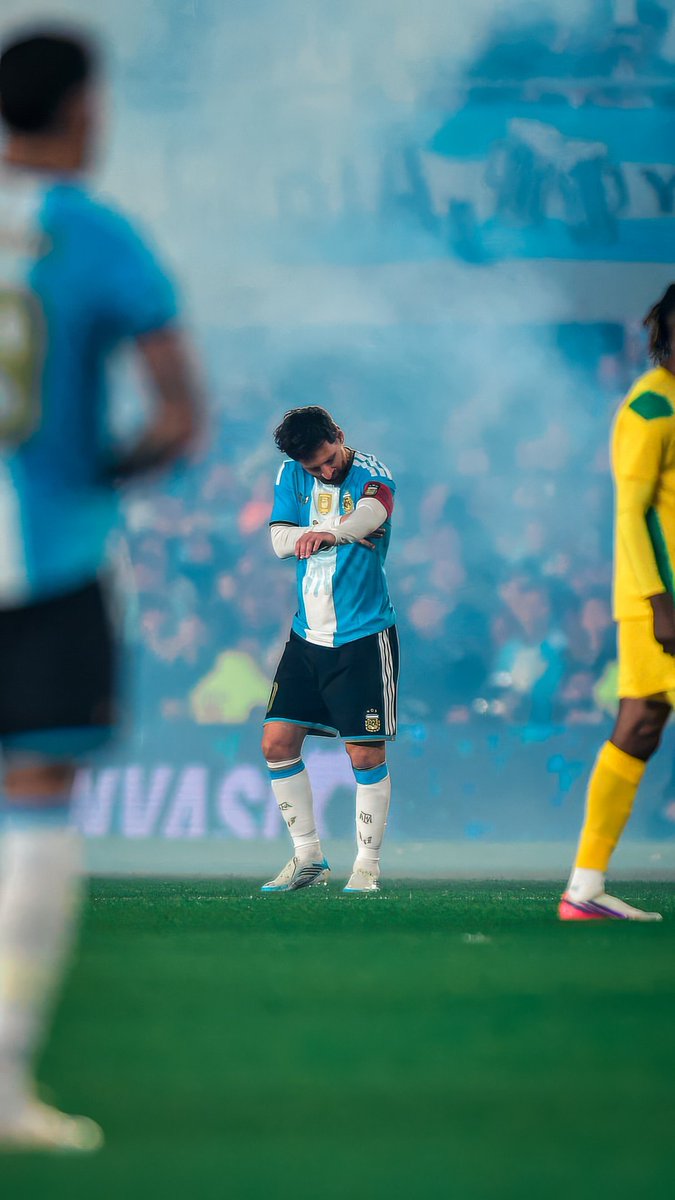
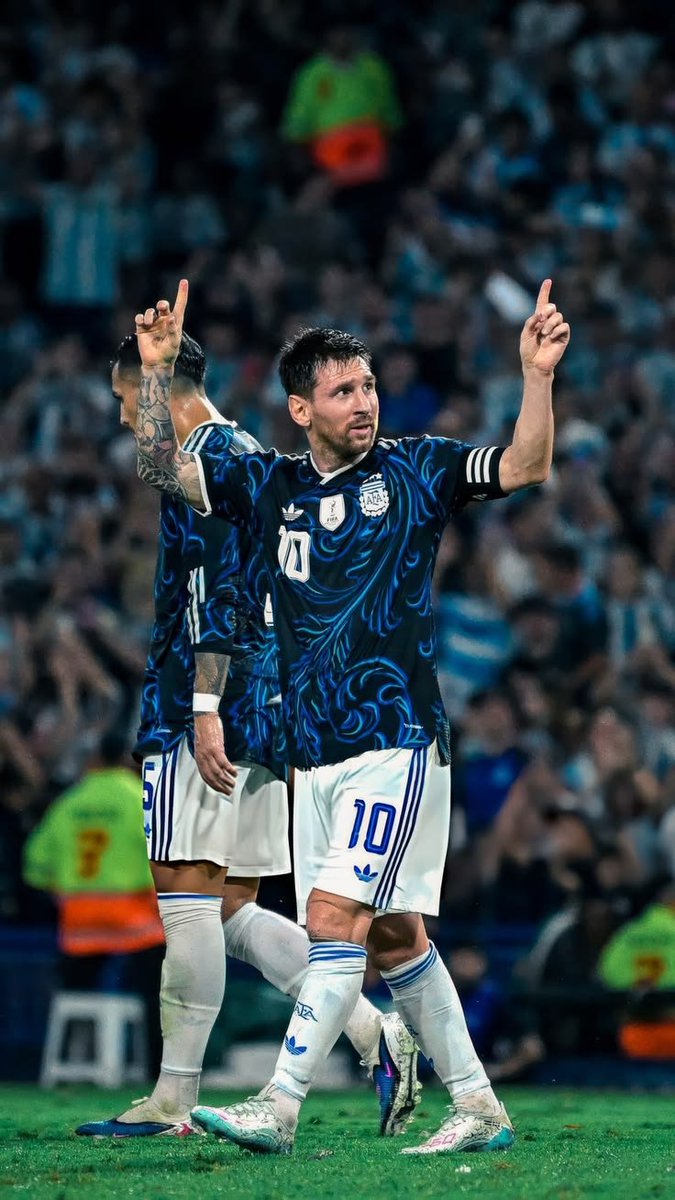
Whatever happens tonight, you will always be the most complete thing my eyes have ever seen!
One last dance, baby! 🥂
Transcend the human limitations and trespass into the domain of gods for the dream of millions! 🏆
Vamos Argentina 🇦🇷
#Messi#fifa_worldcup2026
I’m going to take my time with this one. If you’re busy, bookmark it and come back later.
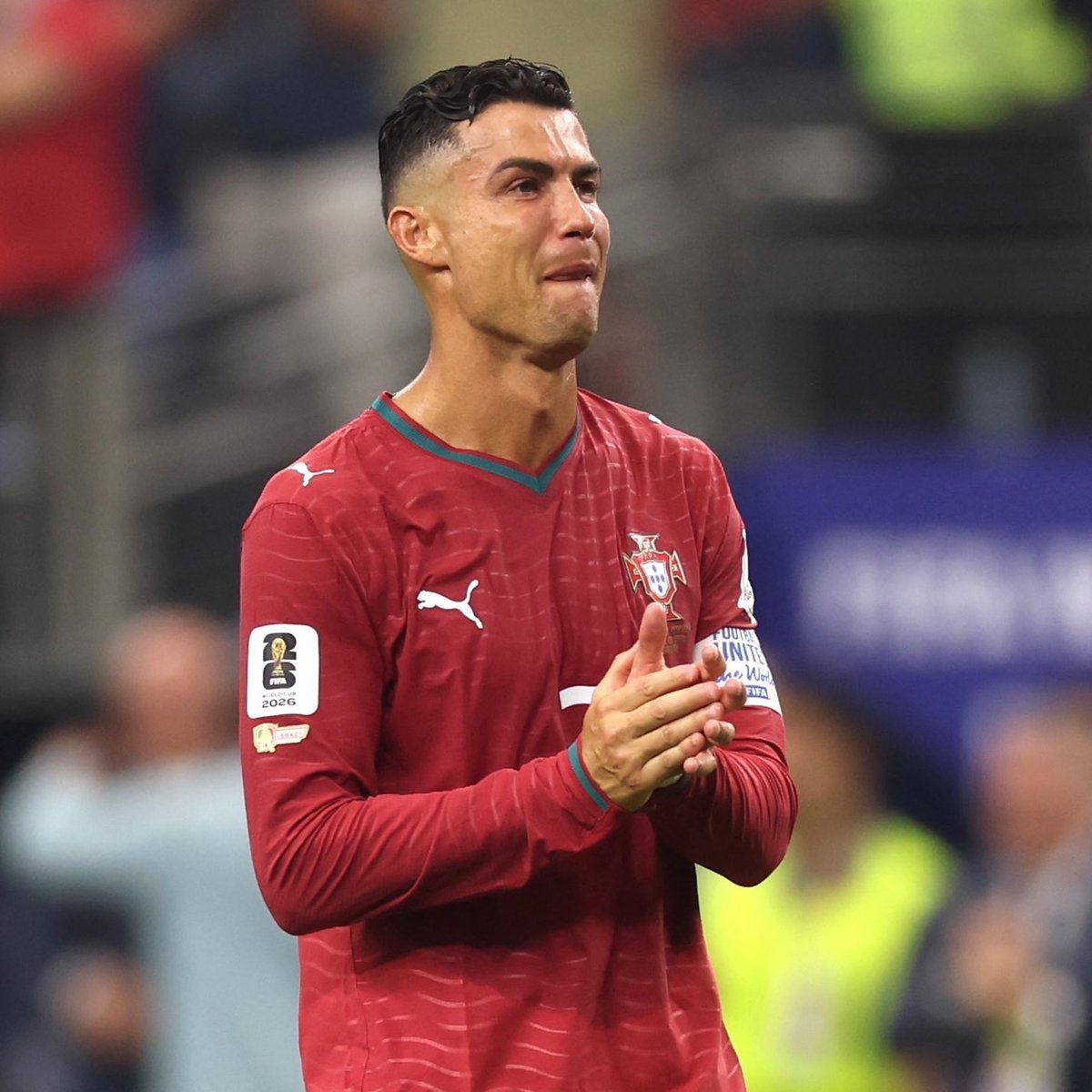
Do you know the biggest problem with Cristiano Ronaldo? It isn’t that he never won the World Cup. It’s that he spent years telling everyone what separates legends, only to change the standards once he couldn’t reach them himself.
After winning Euro 2016, Ronaldo made it clear that winning a major international trophy was what completed a player’s legacy. At the time, Messi had just lost another international final and was going through the toughest period of his career. Those comments only added to the narrative that Messi could never be the greatest because he hadn’t won with Argentina. For years, that became the standard. Messi was called a bottler, while Ronaldo was praised as the player who had proved himself internationally.
Nobody wanted to hear about context. Nobody cared that Messi had dragged Argentina to a World Cup final in 2014 with a squad many considered weaker than the Portugal teams Ronaldo has had over the last decade. The only thing that mattered was that Ronaldo had won a major trophy with his country, and Messi hadn’t.
Then Messi won the Copa América. Suddenly, the goalposts moved. We were told one Euro was worth more than multiple Copa América titles because South America supposedly wasn’t competitive enough. That became the new excuse.
Then Messi won the World Cup. The excuses changed again. It was “fixed.” It was “scripted.” Then came, “A career can’t be defined by seven games.” Funny how nobody was saying that before the tournament, when many believed it would finally be Ronaldo’s chance to win it.
Now Portugal have been eliminated from the World Cup, and Ronaldo posts about Euro 2016 again. That’s what I find ironic. When international trophies favored Ronaldo, they were the ultimate measure of greatness. When Messi caught up, people started ranking competitions differently. When Messi surpassed him by winning the biggest trophy in football, suddenly the World Cup wasn’t supposed to define a career anymore.
That’s the contradiction.
The difference between Messi and Ronaldo was never just about goals, assists, or trophies. It’s about consistency. Messi never needed to diminish Ronaldo’s achievements to elevate his own, nor did he ask football to change its standards because they no longer favored him. He simply kept playing until he won everything there was to win.
League titles. Champions Leagues. Ballons d’Or. Golden Boots. Copa América. Finalissima. World Cup. Every major trophy that was ever used against him eventually became part of his legacy.
Cristiano Ronaldo will always be one of the greatest footballers to ever play the game. But this is exactly why I believe Messi is the greatest. He didn’t ask football to rewrite the standards.
He met every single one of them.
I’m going to take my time with this one. If you’re busy, save this post and read it later. If you’re a night owl like me, this is a good late-night read.
Do you know the worst thing about Cristiano Ronaldo?
It’s that he set the standards for what defines a legend… and in the end, he couldn’t even live up to the standards he created himself.
After winning Euro 2016, Ronaldo said:
“You can’t become a legend until you win a trophy with your national team.”
It was an obvious dig at Messi.
Argentina had just lost the 2014 World Cup final to Germany, and Messi was going through the toughest period of his international career. Those words only added fuel to the fire.
Where was the respect for a rival, Ronaldo?
The surprising part was that social media completely embraced that narrative. Messi was labeled a bottler, while Ronaldo was declared the winner of the rivalry—at least in the media, not on the pitch.
Then Messi retired from international football, came back, won the Copa América, and suddenly they were level in major international trophies.
What happened next?
Ronaldo fans started saying that one Euro is worth more than a hundred Copa Américas, claiming there was no competition in South America. Not true—but that became the excuse.
Then Messi went on to win the World Cup.
This time, the excuses changed again.
They claimed FIFA had fixed the tournament for Messi. That the World Cup was scripted in his favor. They simply didn’t know what else to say.
Then Ronaldo himself came out with one of the strangest quotes imaginable:
“A legend’s career can’t be defined by just seven games.”
At first glance, it sounds reasonable.
But beneath it was another attempt to diminish what Messi had achieved.
Before the World Cup, they insisted it would be Ronaldo’s tournament. On paper, Portugal had a fantastic squad. If the manager couldn’t get the best out of them, that’s Portugal’s problem—not Ronaldo’s.
Yet that same Portugal squad wasn’t any weaker than the Argentina team Messi led to the 2014 World Cup final—the same team people mocked Messi for not carrying to the title.
Just a couple of days ago, Ronaldo said:
“The World Cup doesn’t define my career, whether I win it or not.”
A statement that directly contradicts what he had said years earlier, when he admitted that winning the World Cup would make him feel completely fulfilled.
Now you’re 41 years old, Cristiano.
By your own standards:
* You have 5 Ballon d’Ors, not 8.
* You have one European Championship, not two Copa América titles.
* You never won the World Cup.
* You have four European Golden Shoes, while Messi has six—even though you’re an out-and-out striker.
So what now?
Will you keep playing until the next World Cup and become the first player to appear in one at 45, hoping to finally win it?
If we judged you by the standards you created, you wouldn’t qualify as a legend.
Of course, nobody actually judges you that way. Everyone still recognizes you as one of football’s greatest legends.
The real mistake was comparing Ronaldo to Messi in the first place.
That rivalry was exaggerated from the beginning by the media and figures like José Mourinho.
Messi conquered every major trophy available to him, shattered records that once seemed untouchable, and at 39 years old he’s still competing with Kylian Mbappé and Erling Haaland—the stars of the next generation—for the Golden Boot. And honestly, he could still win it.
What made Messi beloved by so many fans is that he never tried to diminish Ronaldo’s achievements.
Ronaldo, on the other hand, repeatedly made comments that many interpreted as attempts to downplay his greatest rival’s accomplishments—and that’s never an admirable trait.
Cristiano helped create a generation that thinks belittling other people’s achievements while constantly glorifying your own is a way to establish dominance.
Good bye. Ronaldo.
Jasprit Bumrah has now bowled in four T20 World Cups. His economy rate is 5.66. Imagine being so good that even conceding a single increases your economy.
• 🚨🗣️ Cristiano Ronaldo back in 2020: "I want the World Cup. I've won trophies at every club I've been at, but the World Cup is my BIG DREAM."
• 🚨🗣️ Cristiano Ronaldo today: "It's NOT A DREAM for me to win the World Cup... You want a World Cup to define the best player in history? 1 competition with 6 or 7 games, you think that's fair?"
Say whatever you want but...
"Bollywood ghar ka wo bada beta hai jiski har choti galti pe ungli uth jati hai aur south Indian cinema ghar ka wo chota beta hai jiski sari galti maaf"