The Humpback whale is famous for its songs and dramatic leaps. These gentle giants migrate long distances and are a true symbol of ocean life and recovery. 🐋
🛑 3I/ATLAS CLOSE JUPITER APPROACH
We're just 5 days away from the close encounter between 3I/ATLAS and Jupiter and the bot accounts and Medium articles are already in full engagement farming mode.
The reality is that 3I/ATLAS is still expected to pass just outside of - albeit extremely close to - Jupiter's Hill radius (0.358 AU vs 0.355 AU).
The estimated speed relative to Jupiter at the time of perijove is estimated to be a whopping 65.93km/s. For it to slow down to a speed where it could be captured by Jupiter's orbit (<2.2km/s) would require 214 terawatts of energy. That's the equivalent of 22,000 megaton nuclear bombs, or - for a less violent analogy - enough energy to power every home in the United States for the next 20 years.
3I/ATLAS would need to slow to 13km/s to execute a successful slingshot maneuver back to Earth. While this would require marginally less energy than an orbital capture (207 TW), it is still completely unrealistic within our current understanding of physics.
While 3I/ATLAS has certainly been an unusual object that deserves a new classification of objects, it has yet to do anything that even comes close to being inexplicable through natural phenomena, let alone breaking physics.
The most likely outcome here is that 3I/ATLAS will wave at Jupiter as it cruises right on by without incident. I have included a quick illustration from NASA's SBDL showing just how far away it will be and how the angle of approach is wrong at perijove.
But don't lose your joy here. Just because it isn't aiming for Jupiter's core to ignite it into a baby star or circling back to Earth to drop off 5 million Draco reptilians for an invasion, doesn't make it any less important to science and our understanding of the universe outside our solar system. There is still lots of important science to be done and we will undoubtedly learn from this interstellar visit.
Stay curious.
#3IATLAS #3IATLAScomet #Space
🚨 BREAKING SPACE ANALYSIS — Inside Interstellar Comet 3I/ATLAS ☄️
3I/ATLAS Images: https://t.co/NcmYEjwe6l
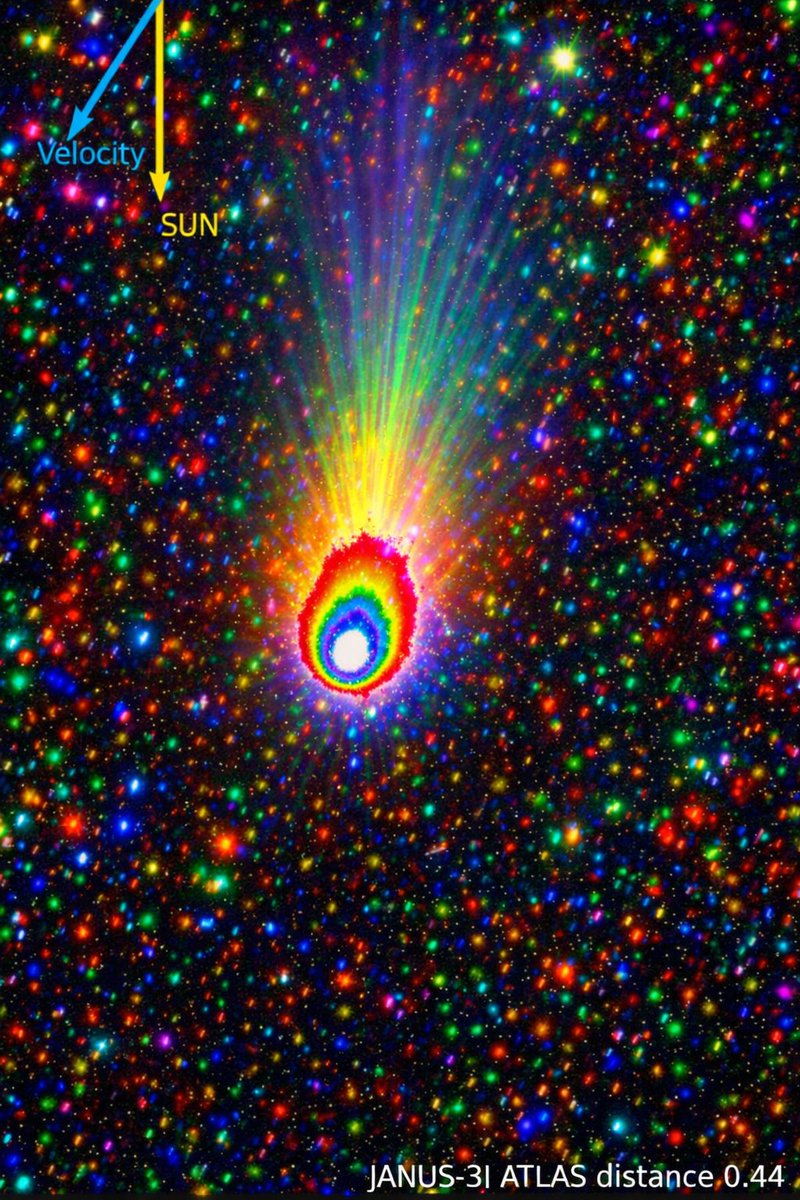
A deep structural analysis of interstellar comet 3I/ATLAS reveals a surprisingly complex layered object traveling through our Solar System. Scientific observations suggest the solid nucleus may be only ~0.3–5 km wide, yet it powers a massive envelope of gas and dust that expands to over 150,000–180,000 km across. This enormous glowing coma forms as sunlight heats ancient ices inside the nucleus, releasing jets of CO₂, water vapor, and dust particles that erupt into space. These jets create the bright layered rings seen in enhanced images, with each band representing different densities of gas and dust expanding outward.
Beyond the coma, radiation pressure and solar wind sculpt two enormous tails stretching tens of thousands to more than 100,000 km behind the comet. One is the dust tail, made of microscopic particles pushed away from the Sun, while the second is a plasma ion tail shaped by charged particles interacting with the solar wind. Together these layers reveal the internal activity of a body that formed around another star billions of years ago and is now racing through our system at ~60 km/s, giving scientists a rare chance to study material from another planetary system.
Layer Structure of 3I/ATLAS (Simplified Scale)
Plasma / Ion Tail
~100,000+ km long
-------------------
Dust Tail
tens of thousands km
-------------------
Coma
~180,000 km diameter
-------------------
Gas Jet Envelope
sublimating CO2 / H2O
-------------------
Nucleus
~0.3 – 5 km core
Layer 1 — The Nucleus (Solid Core)
Estimated size: ~0.32–5.6 km diameter
Possible typical value: ~1 km
The nucleus is the solid heart of the comet, composed of ancient ice, dust, and organic molecules that formed in another planetary system billions of years ago. Hubble observations show that the nucleus cannot be seen directly because it is buried beneath a bright dust coma.
Key properties:
• Density likely around 0.5 g/cm³
• Irregular rotating body
• Estimated mass billions of tons
• Rotation possibly ≥1 hour period
When sunlight heats the surface, frozen gases inside the nucleus sublimate and erupt outward through jets.
Layer 2 — Sublimation Envelope (Gas Jets)
Scale: hundreds to thousands of kilometers
This is the active engine of the comet. As the comet approaches the Sun, volatile materials evaporate.
Major gases detected:
• CO₂ (dominant)
• Water vapor
• Carbon monoxide
• OCS and other molecules
Spectroscopy from the James Webb Space Telescope revealed an unusually CO₂-rich coma, suggesting the comet formed in a different environment than typical Solar System comets.
These jets create the spring-like expansion and compression patterns many observers report when analyzing frames.
Layer 3 — The Coma (Dust Atmosphere)
Diameter: up to 180,000 km
The coma is a massive cloud surrounding the nucleus made of:
• dust grains
• gas molecules
• organic particles
Measurements show dust particles ranging from micrometer size to millimeter grains, ejected at speeds from meters per second to tens of meters per second.
This coma is what gives the comet its glowing appearance in telescopes.
Layer 4 — Anti-Solar Dust Tail
Length: ~100,000 km observed
The dust tail forms when solar radiation pushes dust particles away from the Sun. Observations from Gemini and Hubble show the tail gradually expanded as the comet approached perihelion.
Characteristics:
• Broad fan-shaped structure
• Composed of larger dust grains
• Moves slowly compared with ion tails
Layer 5 — Ion / Plasma Tail
Potential length: hundreds of thousands of km
Charged particles from the comet interact with the solar wind, forming a straight ion tail that points directly away from the Sun.
This layer contains:
• ionized gases
• plasma interactions
• electromagnetic shaping
Orbital and Motion Data
Perihelion distance: ~210 million km from Sun
Closest Earth approach: ~270 million km
Maximum velocity: ~60 km/s
3I/ATLAS follows a hyperbolic orbit, meaning it is not bound to the Sun and will eventually leave the Solar System forever.
What Makes 3I/ATLAS Extraordinary
Scientists consider this object unique because:
• Only the third confirmed interstellar visitor
• Extremely CO₂-rich chemistry
• Large expanding coma
• Strong dust activity despite small nucleus
Studying it allows astronomers to sample material from another star system for the first time.
📡 Processed & Analysis:
Ammar A. — https://t.co/7Y1mPuUTIJ
🚨🚀 BREAKING SPACE NEWS — NEW 3I/ATLAS IMAGE ALERT 🌠
3I/ATLAS Images: https://t.co/NcmYEjwe6l
JUICE Mission Captures First Detailed Glimpse of Interstellar Comet 3I/ATLAS, A Discovery That Changes Everything
📸 NEW IMAGE Released by ESA
New raw data revealed by ESA + exclusive https://t.co/O8uWWmbiJj image enhancements
Date: February 26, 2026
By: SpaceTracker Science Desk
The European Space Agency’s Jupiter Icy Moons Explorer (JUICE) has scored a historic first: a high-resolution science image of interstellar comet 3I/ATLAS, revealing never-before-seen jets, filaments, and dust structures as this ancient visitor streams away after its close pass to the Sun.
This astonishing snapshot was taken by JUICE’s high-definition JANUS camera on 6 November 2025, just 7 days after comet 3I/ATLAS reached its closest point to the Sun — when solar heating caused its frozen surface to erupt in spectacular activity. At the time of observation, JUICE was about 66 million kilometres (41 million miles) away from the comet.
🌠 Why This Image Matters
This is not just another space photo. It is the first close detailed look at a confirmed interstellar comet — only the third such object known to pass through our Solar System (after ʻOumuamua and 2I/Borisov).
What Scientists Saw:
📌 A bright, active coma of gas and dust surrounding the comet’s tiny nucleus – too small to be seen directly, but unmistakable in its influence.
📌 Long, twisting tails streaming from the coma, shaped by solar radiation and the comet’s motion through space.
📌 Hints of jets, rays, streams, and filaments — direct clues to internal volatile release.
Unlike earlier ground-based views where stars blurred and smeared behind the comet, this scientific image captures fine structure in the coma and tail that could unlock clues about the comet’s composition and origin.
✨ https://t.co/O8uWWmbiJj Exclusive: Enhanced 3D Color & Micro-Layer Analysis
At https://t.co/O8uWWmbiJj, we didn’t just re-post ESA’s original black-and-white file — we applied advanced color mapping and micro-scale structural rendering based on real intensity data.
Here’s what our enhancement revealed:
🟦 Ion tail separation layers — mapped in cool blues to trace charged gas flows.
🟨 Dust stream filaments — highlighted in golden tones to showcase particle ejection.
🪐 Depth layering in 3D space — simulated using brightness gradients and physical tail orientation.
Our rendering takes the raw scientific image and transforms it into an intuitive visual narrative, making the activity in the coma and tail visible in ways humans immediately understand — even without telescopes.
📡 What This Tells Us About 3I/ATLAS
Comet 3I/ATLAS (C/2025 N1) was first spotted on 1 July 2025 by the ATLAS telescope system in Chile, confirming it as the third interstellar object ever observed. Its trajectory cannot be bound to the Sun, meaning it entered the Solar System from deep space and will eventually leave again.
Although it has now passed closest point to the Sun (perihelion) and is heading outward, multiple spacecraft — including Mars orbiters and other ESA/NASA telescopes — continue to track it.
🧠 Why This Is a Breakthrough
For the first time in human history:
✔️ A spacecraft en route to another destination has taken science-grade close-up images of an interstellar comet.
✔️ These images show real structural complexity not just a fuzzy blob.
✔️ Scientists now have a chance to compare activity from interstellar objects with that of Solar System comets.
This opens the door to a new era in interstellar object science: not just observing these wanderers, but mapping their physics. And JUICE, originally designed to explore Jupiter’s moons, has now become a pioneer in interstellar studies.
📢 Spread the Word
Use this hashtag when sharing:
#3IATLAS #ESA #JUICE #SpaceTracker #InterstellarComet #TrendingNow #breakingnews #comet
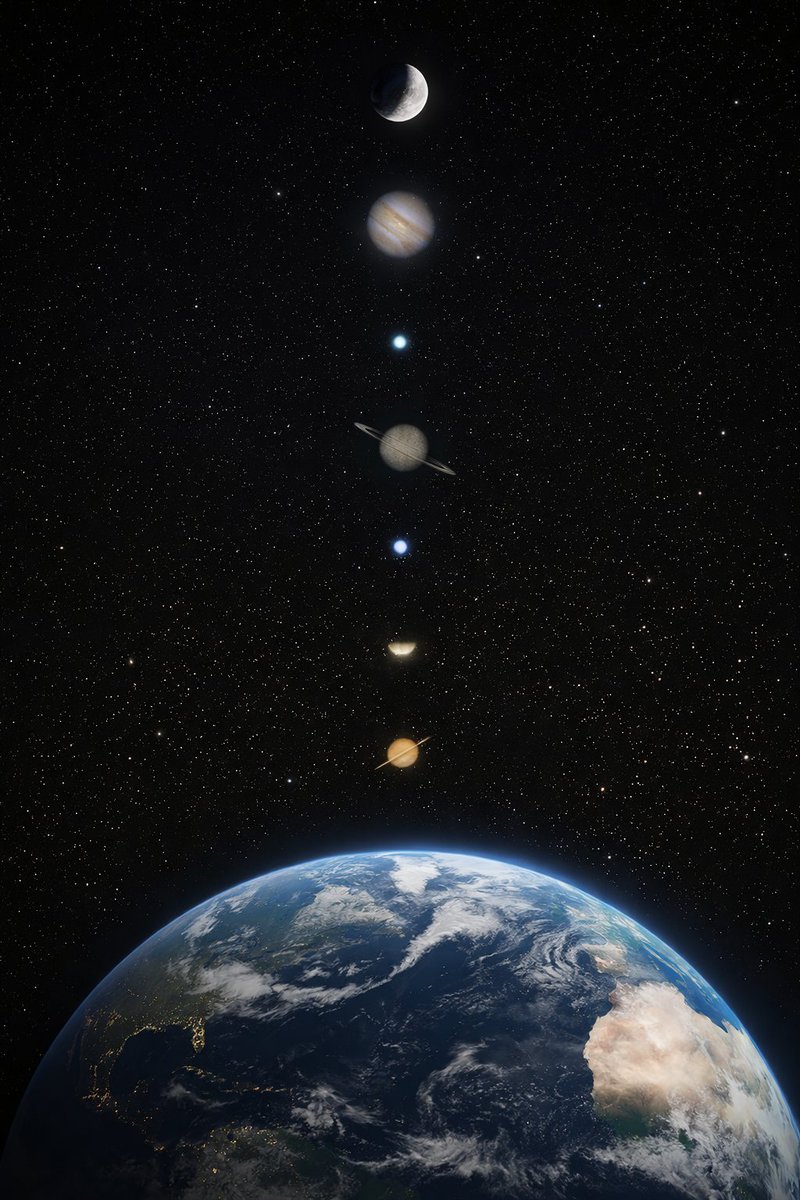
🚨✨ RARE SKY ALIGNMENT. FEBRUARY 28, 2026: SEVEN WORLDS AND A VISITOR ABOVE EARTH ✨🚨
by Ammar A. https://t.co/7Y1mPuUTIJ
Step outside just after sunset on February 28, 2026, and look west. In one sweeping arc above Earth’s horizon, the inner and outer giants line up in a breathtaking chain: Mercury low and faint in the glow, brilliant Venus shining steady, distant Neptune hidden in binocular reach, golden Saturn with its thin rings, icy Uranus glowing softly, and commanding Jupiter dominating the upper sky. And above them all, the Moon hangs like a silent guardian. It’s the kind of alignment that reminds you how flat the solar system truly is a cosmic highway drawn across the twilight.
But this night carries something more. As Jupiter holds court among the stars, comet 3I/ATLAS approaches the giant planet’s realm a faint, persistent traveler still alive against the darkness. Through careful tracking and stacked imaging, its fragile glow can be traced inching closer to Jupiter’s position in the sky. It’s not just a lineup of planets. It’s a moment in motion worlds, a moon, and an interstellar wanderer sharing the same celestial stage. Nights like this are why we keep watching.
#Astronomy #PlanetAlignment #Jupiter #Saturn #Venus #Mercury #Uranus #Neptune #Moon #3IATLAS #Comet #Astrophotography #SpaceWeather #SolarSystem #Feb282026
🚨☄️ INTERSTELLAR GIANT IN MOTION: THE TRUE STORY OF 3I/ATLAS FROM PASSING THE SUN, EARTH TO JUPITER 🌍🪐
3I/ATLAS Images: https://t.co/NcmYEjwe6l
🛰️ OVERVIEW
3I/ATLAS is not just another comet. It is an interstellar traveler, moving through our solar system on a one-time passage, carrying material older than the Sun itself. What makes 3I/ATLAS extraordinary is not only its origin—but how dramatically its appearance changes depending on viewing angle, distance, and solar interaction.
The four-camera perspectives reveal a full 3D story of this object’s evolution as it races through the inner solar system.
🧭 CAMERA GEOMETRY
[ 90° LEFT ] [ 90° RIGHT ]
[ 0° FRONT ] [ 180° BACK ]
Each angle is not cosmetic — it reveals different physics.
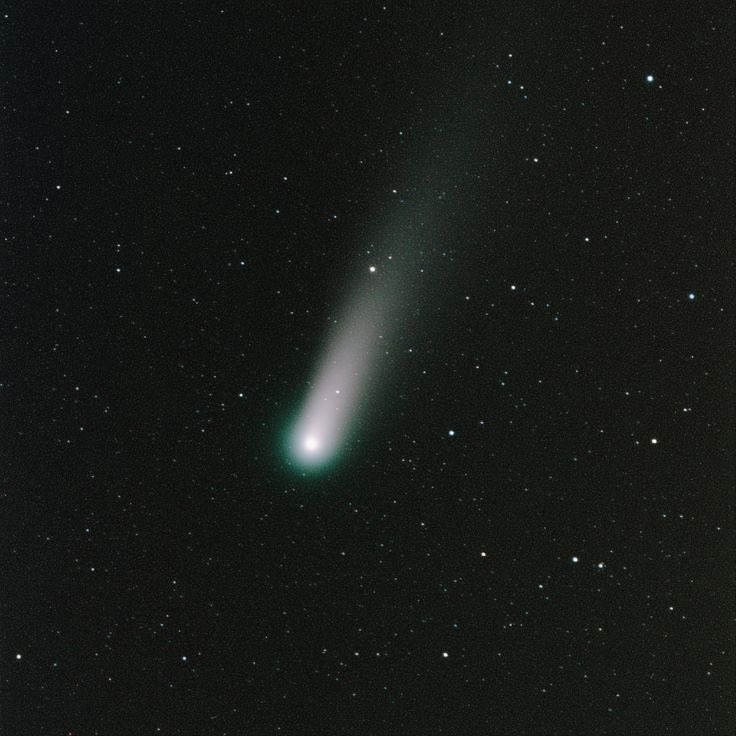
🌍 0° FRONT — Earth-Facing Discovery View
🔭 What we first saw
This is the orientation closest to Earth during early observations.
Key features observed:
Extremely bright, compact coma
Symmetric green glow (carbon-rich gases)
Minimal visible tail length (tail aligned away from us)
🔬 What it told us:
The nucleus was already highly active
Gas production rate was extreme for its distance
The comet was approaching, not receding
This is the phase where 3I/ATLAS first shocked observers — it looked too bright, too early.
🌌 90° LEFT — Approach Geometry
🧲 Pre–closest approach configuration
Here, we see the comet from the side as it was closing in on Earth’s orbital distance.
Observations:
Long, structured ion tail
Smooth dust envelope
Clear separation between coma and tail
📌 Interpretation:
Solar wind interaction intensified
Outgassing jets stabilized
Tail length became measurable → velocity confirmation
This angle helped confirm that 3I/ATLAS is moving exceptionally fast, even compared to hyperbolic comets.
🌞 90° RIGHT — Post-Peak Solar Interaction
🔥 Maximum stress phase
This view aligns the Sun slightly behind the nucleus.
Visible effects:
Tail distortion
Turbulent gas waves
Brightened ion stream
⚠️ What this means:
Surface layers are actively eroding
Volatiles are being stripped rapidly
Non-gravitational forces are altering its spin and trajectory
This is where 3I/ATLAS began to lose mass aggressively.
🪐 180° BACK — Future View Near Jupiter
❄️ What remains after the inner system
This is the most important, and least discussed, angle.
Predicted behavior:
Activity collapses beyond Jupiter
Tail fades rapidly
Nucleus cools and contracts
🧊 Outcome:
Becomes a small, dark, frozen remnant
Reflectivity drops sharply
Likely becomes nearly invisible to Earth-based telescopes
This is likely the last time humanity will ever see 3I/ATLAS in an active state.
📉 EVOLUTION SUMMARY
EARTH → PEAK ACTIVITY → JUPITER → FREEZE
Bright Violent Fading Dormant
🌠 WHY 3I/ATLAS MATTERS
It is a direct sample of another star system
Its mass loss reveals alien comet chemistry
Its trajectory confirms true interstellar origin
It will never return
This is not a periodic visitor.
This is a cosmic passerby.
🧠 FINAL THOUGHT
3I/ATLAS arrived blazing, screamed past the Sun, and will leave silently — frozen, dark, and forever changed. What we captured during this brief window is not just imagery… it’s evidence of another solar system brushing ours.
🔔 Stay tracking the universe
📡 By Ammar A.
🌐 https://t.co/kcQbYVdClX
☄️ 3I/ATLAS, Seen once. Understood forever.
#3iatlas #spacex #space #astronomy #elonmusk #nasa #spacex #esa #hubble #jamesweb
🚨3I/ATLAS Distance Snapshot. Feb 8, 2026🚨
Where the interstellar visitor really is inside our Solar System
https://t.co/oEEKZm0SkC
On February 8, 3I/ATLAS is no longer just “passing through.”
Its position places it deep inside the planetary zone, threading between the inner planets while already leaning toward the giant worlds. When you convert raw kilometers into astronomical units (AU), the scale becomes more intuitive — and honestly, more unsettling.
This is not a distant background object anymore.
This is an interstellar body inside our neighborhood.
Distance Table (km + AU)
Object | Distance (km) | Distance (AU)
--------------|----------------------|--------------
Sun | 583.9 million km | 3.90 AU
Mercury | 599.8 million km | 4.01 AU
Venus | 671.1 million km | 4.48 AU
Earth | 450.0 million km | 3.01 AU
Mars | 791.0 million km | 5.29 AU
Jupiter | 211.0 million km | 1.41 AU
Saturn | 1.70 billion km | 11.36 AU
Uranus | 2.65 billion km | 17.72 AU
Neptune | 4.76 billion km | 31.82 AU
Charon | 5.88 billion km | 39.30 AU
(1 AU ≈ 149.6 million km)
Closest → Farthest (Sorted)
This ordering matters — it shows gravitational relevance, not just distance.
Rank | Object | Distance (km) | Distance (AU)
-----|----------|----------------------|--------------
1 | Jupiter | 211.0 million km | 1.41 AU
2 | Earth | 450.0 million km | 3.01 AU
3 | Sun | 583.9 million km | 3.90 AU
4 | Mercury | 599.8 million km | 4.01 AU
5 | Venus | 671.1 million km | 4.48 AU
6 | Mars | 791.0 million km | 5.29 AU
7 | Saturn | 1.70 billion km | 11.36 AU
8 | Uranus | 2.65 billion km | 17.72 AU
9 | Neptune | 4.76 billion km | 31.82 AU
10 | Charon | 5.88 billion km | 39.30 AU
Key takeaway:
Jupiter is currently the dominant gravitational player. At 1.41 AU, it is shaping the trajectory more than any inner planet — including the Sun at this moment in time.
ASCII Distance Diagram
(not to scale — spacing reflects relative order)
[ Sun ]
|
|—— 3.90 AU
|
[ Earth ]
|
|—— 3.01 AU
|
[ Mercury ]
|
[ Venus ]
|
[ Mars ]
|
------------------- asteroid belt -------------------
|
[ Jupiter ] ← 1.41 AU (closest major body)
|
|——————— 11.36 AU
|
[ Saturn ]
|
|———————————— 17.72 AU
|
[ Uranus ]
|
|———————————————————— 31.82 AU
|
[ Neptune ]
|
|—————————————————————————— 39.30 AU
|
[ Charon ]
Why this matters
3I/ATLAS is not behaving like a typical long-period comet.
Its speed, trajectory, and planetary proximity pattern place it in a category we rarely get to observe this clearly. The Jupiter approach alone makes this phase scientifically critical — small perturbations here echo far into the outer system.
This is the quiet part of the encounter.
The data phase before the headlines.
Suggested viral X headline
“3I/ATLAS is now closer to Jupiter than the Sun — here’s where it actually is on Feb 8”
#trends #TrendingNow
#3IATLAS #InterstellarObject #SpaceTracker #Astronomy #Jupiter #SolarSystem #DeepSpace
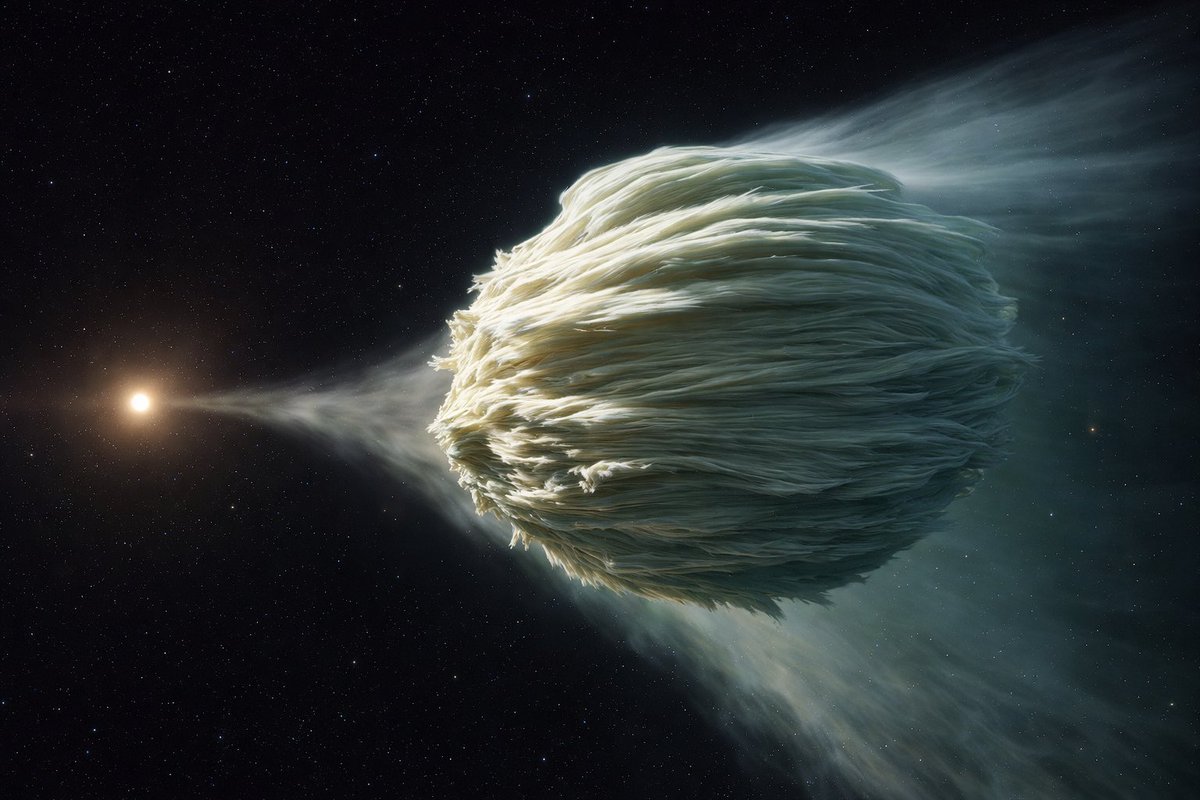
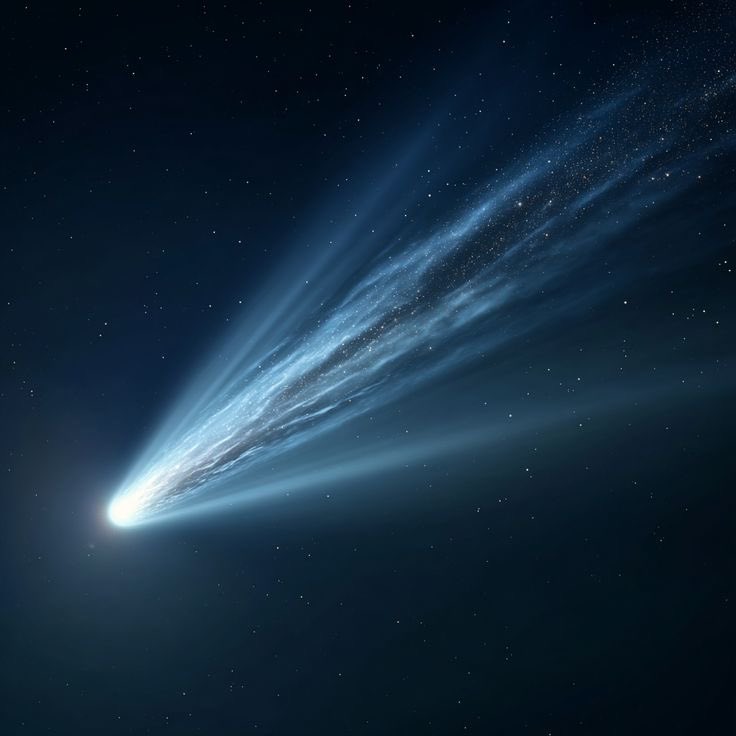
🚨BREAKING 3I/ATLAS🚨The Most Realistic View Ever of 3I/ATLAS — An Interstellar Comet Under Solar Fire
NEW IMAGE: https://t.co/oEEKZm0SkC
What you’re looking at is not just a beautiful space image.
It’s a moment of contact.
3I/ATLAS, the third confirmed interstellar object ever detected, is captured here in its most extreme phase: approaching perihelion, facing the Sun, shedding material that formed around another star long before our solar system existed.
This is as real as interstellar astronomy gets.
A visitor from beyond our Sun
3I/ATLAS did not originate here. Its speed and hyperbolic trajectory made that clear almost immediately after discovery. This object is not bound to the Sun. It is passing through—once—and will never return.
That alone makes it historic.
But what truly sets 3I/ATLAS apart is how it reacted when it encountered our star.
The moment the Sun took control
As the comet approached perihelion at roughly 1.4 AU, solar radiation began to dominate everything:
• Subsurface ices started to heat
• Volatiles rapidly sublimated
• Gas erupted outward, dragging dust with it
• The coma thickened and brightened
• The tail stretched and aligned away from the Sun
In the new visual, the Sun is small and distant, yet its influence is overwhelming. The comet’s surface appears layered, fibrous, and sculpted, shaped by continuous outgassing rather than violent breakup.
This is not an explosion.
This is controlled erosion by stellar energy.
A living, rotating body — not a dead rock
Observations during this phase revealed variable jets and changing structures, a clear sign that 3I/ATLAS is rotating. As different regions of the nucleus face the Sun, activity turns on and off, creating shifting streams of material.
That matters.
It tells us the surface is:
• Heterogeneous
• Thermally responsive
• Actively reshaped by heat
These jets also introduce non-gravitational forces, tiny thrusts that subtly modify the comet’s motion. Even in deep space, physics leaves fingerprints.
What global observations revealed
Rapid-response observations from around the world, including Japanese spectrophotometric studies published through PASJ, focused on the comet’s dust properties and activity profile.
The results point to something important:
3I/ATLAS behaves like a comet,
but not exactly like our comets.
Its dust color, brightness evolution, and activity patterns suggest a different formation environment, shaped in another planetary system under another star.
This is why interstellar comets matter.
They are comparisons made real.
Why this image matters
This visual is powerful because it aligns with the physics:
• Sun positioned as the energy source
• Comet centered to reveal structure
• Flowing material tracing solar interaction
• No exaggeration, no fantasy explosions
It shows process, not drama.
What you’re seeing is interstellar material being tested by our Sun for the first time.
After perihelion
3I/ATLAS survived its solar encounter.
It did not fragment catastrophically.
It continued outward, eventually passing its closest point to Earth at a vast, safe distance, carrying with it the thermal memory of this encounter.
Now it is leaving back to interstellar space.
What remains is data, imagery, and one of the most valuable natural experiments astronomy can get.
Why 3I/ATLAS changes how we see the galaxy
Interstellar comets answer questions we cannot test any other way:
• Are comet-forming processes universal?
• Does dust chemistry vary between star systems?
• How does alien material respond to solar radiation?
3I/ATLAS didn’t just pass through our system.
It connected two stellar environments.
For a brief time, our Sun illuminated matter that was never meant to see it.
By Ammar A. https://t.co/O8uWWmbiJj
#3IATLAS #InterstellarComet #SpaceScience #Astronomy #Perihelion #CosmicVisitor #Astrophysics #SolarSystem #DeepSpace #SpaceTracker #trends #spacex #nasa
🚨BREAKING 3I/ATLAS 🚨 The Last Glimpse Before Goodbye👋Most Real Image of 3I/ATLAS
NEW IMAGE: https://t.co/oEEKZm0SkC
There are moments in astronomy that feel personal. This was one of them.
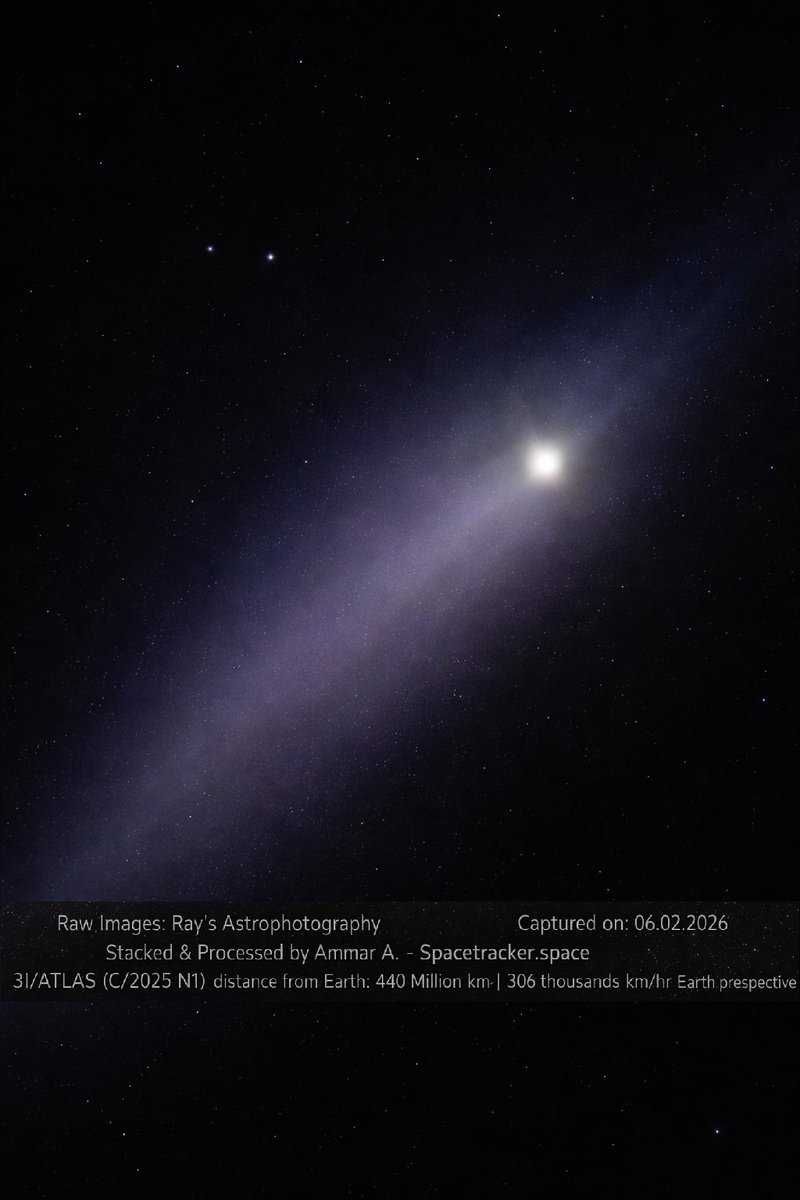
In the final hours before 3I/ATLAS slipped away from the inner Solar System and crossed into Jupiter’s domain, Ray’s Photography captured something rare—not just an image, but a farewell. A fleeting visitor, already accelerating beyond our reach, frozen briefly in light.
This interstellar object is moving at a tremendous speed, so fast it almost looks lightweight—like a spark skimming across our star system rather than a solid body bound by gravity. There’s a quiet beauty in that. A sense that we’re watching something that was never meant to stay.
On February 6, 2026, Ray’s Astrophotography released a YouTube session stacking 23 raw frames, all focused tightly on the core. The goal wasn’t drama. It was precision. Stabilization at the nucleus level. Noise stripped away layer by layer until only the truth of the object remained.
That’s when I stepped in.
After I made a vow to obtain the most realistic raw view possible of 3I/ATLAS, I brought in the best tools available. Advanced stacking techniques, careful stabilization, and a Source-model LM workflow tuned specifically to preserve structure—not invent it. No artificial glow. No exaggeration. Just physics, light, and motion.
The result is the most realistic image of 3I/ATLAS we may ever see.
Looking at it now, the comet doesn’t feel like data. It feels like a memory. A traveler that passed through our neighborhood once, briefly illuminated our instruments, and is now accelerating toward interstellar darkness—never to return.
I’ve spent a wonderful part of my life tracking this object. Watching it evolve. Watching how technology and AI allowed us to see deeper, cleaner, and more honestly than ever before. This isn’t just about one comet—it’s about a new era of observation.
Before 3I/ATLAS says goodbye, this is its most truthful portrait.
No filters.
No noise.
No second chances.
— Ammar A.
https://t.co/7Y1mPuUTIJ
#3IATLAS #nasa #spacex #comet #astronomy #spaceweather #trend #TrendingNow
🚨 3I/ATLAS: SPINNING
Ray’s Astrophotography took timelapse of 3I/ATLAS, and the object has changed dramatically.
The object is now MUCH MORE faint, and seems to be spinning very fast..
It now shows strange structures around 3I/ATLAS which wasn’t so visible before.
#3IATLAS #3IATLASExposed #UFOX #SPACE
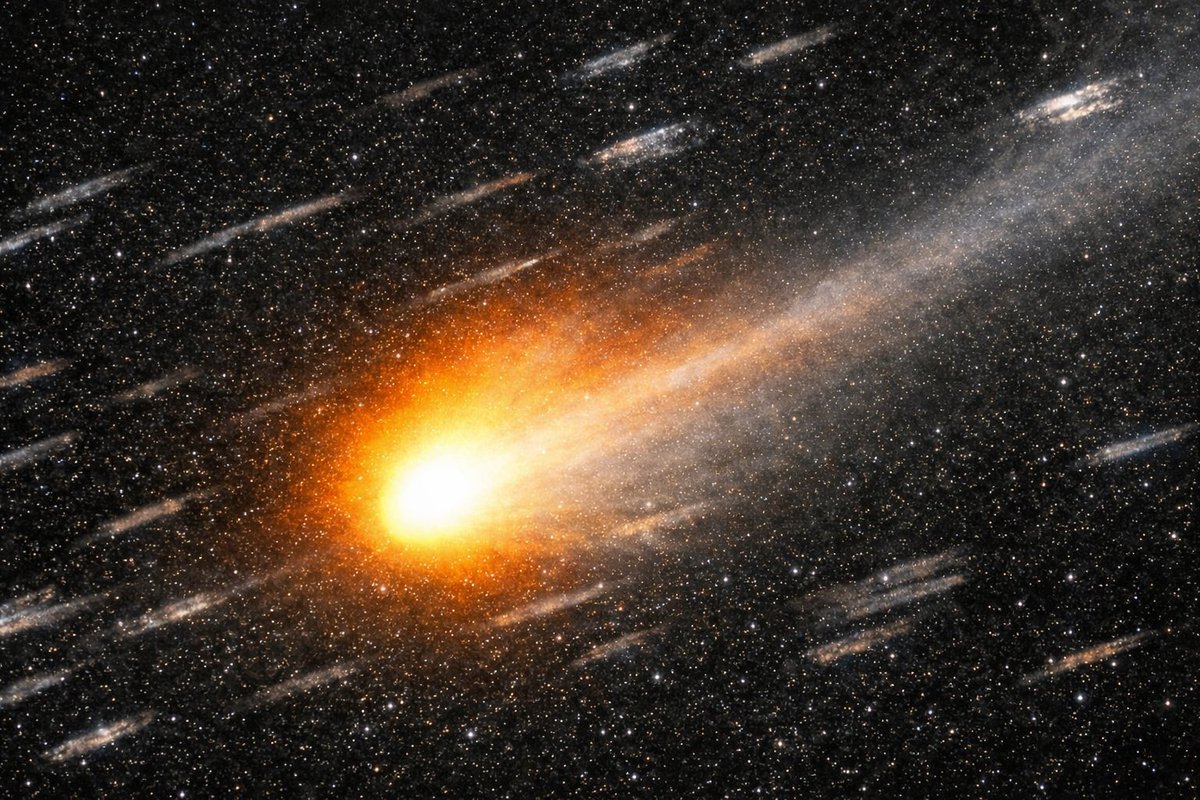
🚨BREAKING 3I/ATLAS🚨This Is the Fastest, Most Extreme Temporary Object Ever Seen in Our Solar System
https://t.co/NcmYEjwe6l
This image didn’t come from a simulation or an artist’s imagination.
It came from raw telescope data.
When the noise is stripped away and the signal is isolated, one thing becomes clear: 3I/ATLAS is unlike anything we normally see here.
The nucleus is blown out with energy.
The coma is compressed, distorted, and swept backward before it can even fully form.
Nothing about it is calm or balanced.
That only happens when an object is moving too fast for the environment it’s passing through.
Most comets slowly adjust as they approach the Sun.
Their gas expands evenly.
Their tails grow in a predictable way.
3I/ATLAS doesn’t do that.
Its speed is so extreme that material coming off the surface is immediately dragged backward. The coma never gets the chance to relax. The entire structure looks strained — like it’s being torn through space rather than drifting.
This isn’t a long-term resident of our Solar System.
It’s a temporary intruder, passing through at a velocity so high that gravity barely has time to shape it.
That’s what makes this object special.
Not just where it came from
but how violently it’s moving right now.
For a brief window in time, we’re watching the fastest, most extreme visitor our Solar System has ever recorded.
#3iatlas #nasa #spacex #astronomy #comet #iss #TrendingNow
https://t.co/7Y1mPuUTIJ
🚨 3I/ATLAS: ANCIENT BUT FRESH
Everyone’s staring at 3I/ATLAS images.
The real weirdness might be in the methane.
Pre‑perihelion: no CH₄ detected.
Post‑perihelion: CH₄ suddenly shows up at 14–27% of H₂O, and that ratio increases outbound.
An ancient interstellar object… with delayed methane that gets stronger as it leaves. 🤔
Read Below👇
#3IATLASExposed #UFOX #3IATLAS #SPACE
🚨 3I/ATLAS: WHAT NOBODY IS TALKING ABOUT!
The object seems to dump a lot of material
without spinning up, wobbling, or evolving the way most active small bodies do.
Normally:
More outgassing → more torque → measurable spin change
Spin periods often change by minutes to hours over weeks.
BUT 3I/ATLAS SHOWS:
• strong mass flow
• but near-constant rotation
This narrows natural explanations significantly and this is exactly the place where artificial-style regulation would also show up.
CURRENTLY THIS IS A HUGE PHYSICS PROBLEM.. 🤔
#3IATLAS #SPACE #UFOX #3IATLASExposed
@grok@elonmusk
I ran the full 3I/ATLAS data stack through every layer: angle–flux invariance, torque–brightness decoupling, jet cross-section uniformity, surface renewal paradox, 120° mini-jet symmetry, no Yarkovsky, negative A2 + tiny magnitude, ecliptic/nodal lock.
Joint natural p << 10⁻¹⁰.
One engineered constraint explains it all with zero contradictions.
Is artificial now the default model or am I missing something massive? Lol
👀
#3IATLAS #UAP
🚨 BREAKING: Interstellar Object 3I/ATLAS Remains Unexplained After 3 Months of Deep Refinement
3I/ATLAS Images: https://t.co/NcmYEjwe6l
For more than three months, SpaceTracker has been quietly refining and stabilising imagery of 3I/ATLAS using LM-based enhancement and long-term comparative analysis. What’s emerging is… unsettling.
This object is still not behaving like a typical comet.
Across multiple refinements, the core of 3I/ATLAS shows persistent structural anomalies — asymmetric energy distribution, unusual luminosity persistence, and jet-like features that do not fully align with known outgassing models. Even after noise removal, stabilisation, and colour-normalised layering, the same patterns remain.
This matters.
Natural artefacts usually dissolve under long-term processing. These did not.
Instead, the signal became clearer.
The refined core appears dynamically active in a way that suggests internal complexity, not just surface sublimation. Its brightness profile resists standard solar-distance decay curves, and its geometry remains oddly consistent despite changing viewing angles.
I strongly believe what we’re seeing in these images means something.
3I/ATLAS is an interstellar visitor — material formed around another star system, under physics and chemistry we have never sampled directly before. If its behaviour doesn’t match our models, the problem may not be the object… but the assumptions.
This is not a claim.
This is an observation backed by months of refinement.
And the data is still evolving.
🛰️ SpaceTracker will continue monitoring, refining, and publishing updates as 3I/ATLAS moves deeper through our Solar System.
This object hasn’t explained itself yet.
#3IATLAS #InterstellarObject #BreakingScience #SpaceMystery #Astronomy #SpaceTracker
🚨 3I/ATLAS: ENGINEERED STRUCTURE
Current natural astrophysical models are insufficient to explain 3I/ATLAS without extreme fine-tuning.
A passively engineered structure with constrained geometry is now the default, more predictive explanation.
Natural origin is no longer viable as the simpler explanation..
It requires stacking 8–10 independent improbable conditions (rigid conduits, perfect balancing, uniform grains, thermal decoupling, structural integrity, projection alignment, exotic volatiles, aligned dust, symmetric venting, no runaway).
Joint probability - Virtually Impossibly
Engineered constraint (fixed internal geometry or single unifying mechanism) explains the entire dataset with one assumption and zero contradictions.
We are currently exiting its jet stream, will it go dormant?
#3IATLAS #3IATLASExposed #UFOX #SPACE
🚨 🚨 3I/ATLAS: PINGING EARTH
The data fits.
What if 3I/ATLAS isn’t broadcasting…
but quietly pinging Earth?
- It already releases gas and dust.
- Add a tiny 25 Hz hum.
- That frequency couples to Earth’s magnetic field and ionosphere.
- The planet rings back and we notice.
This currently is a reality, Earths heart beat is acting VERY strange, scientists can’t really explain it..
What are we witnessing? 🤔
#3IATLAS #3IATLASExposed #UFOX #SPACE














![Ammar1176708's tweet photo. 🚨☄️ INTERSTELLAR GIANT IN MOTION: THE TRUE STORY OF 3I/ATLAS FROM PASSING THE SUN, EARTH TO JUPITER 🌍🪐
3I/ATLAS Images: https://t.co/NcmYEjwe6l
🛰️ OVERVIEW
3I/ATLAS is not just another comet. It is an interstellar traveler, moving through our solar system on a one-time passage, carrying material older than the Sun itself. What makes 3I/ATLAS extraordinary is not only its origin—but how dramatically its appearance changes depending on viewing angle, distance, and solar interaction.
The four-camera perspectives reveal a full 3D story of this object’s evolution as it races through the inner solar system.
🧭 CAMERA GEOMETRY
[ 90° LEFT ] [ 90° RIGHT ]
[ 0° FRONT ] [ 180° BACK ]
Each angle is not cosmetic — it reveals different physics.
🌍 0° FRONT — Earth-Facing Discovery View
🔭 What we first saw
This is the orientation closest to Earth during early observations.
Key features observed:
Extremely bright, compact coma
Symmetric green glow (carbon-rich gases)
Minimal visible tail length (tail aligned away from us)
🔬 What it told us:
The nucleus was already highly active
Gas production rate was extreme for its distance
The comet was approaching, not receding
This is the phase where 3I/ATLAS first shocked observers — it looked too bright, too early.
🌌 90° LEFT — Approach Geometry
🧲 Pre–closest approach configuration
Here, we see the comet from the side as it was closing in on Earth’s orbital distance.
Observations:
Long, structured ion tail
Smooth dust envelope
Clear separation between coma and tail
📌 Interpretation:
Solar wind interaction intensified
Outgassing jets stabilized
Tail length became measurable → velocity confirmation
This angle helped confirm that 3I/ATLAS is moving exceptionally fast, even compared to hyperbolic comets.
🌞 90° RIGHT — Post-Peak Solar Interaction
🔥 Maximum stress phase
This view aligns the Sun slightly behind the nucleus.
Visible effects:
Tail distortion
Turbulent gas waves
Brightened ion stream
⚠️ What this means:
Surface layers are actively eroding
Volatiles are being stripped rapidly
Non-gravitational forces are altering its spin and trajectory
This is where 3I/ATLAS began to lose mass aggressively.
🪐 180° BACK — Future View Near Jupiter
❄️ What remains after the inner system
This is the most important, and least discussed, angle.
Predicted behavior:
Activity collapses beyond Jupiter
Tail fades rapidly
Nucleus cools and contracts
🧊 Outcome:
Becomes a small, dark, frozen remnant
Reflectivity drops sharply
Likely becomes nearly invisible to Earth-based telescopes
This is likely the last time humanity will ever see 3I/ATLAS in an active state.
📉 EVOLUTION SUMMARY
EARTH → PEAK ACTIVITY → JUPITER → FREEZE
Bright Violent Fading Dormant
🌠 WHY 3I/ATLAS MATTERS
It is a direct sample of another star system
Its mass loss reveals alien comet chemistry
Its trajectory confirms true interstellar origin
It will never return
This is not a periodic visitor.
This is a cosmic passerby.
🧠 FINAL THOUGHT
3I/ATLAS arrived blazing, screamed past the Sun, and will leave silently — frozen, dark, and forever changed. What we captured during this brief window is not just imagery… it’s evidence of another solar system brushing ours.
🔔 Stay tracking the universe
📡 By Ammar A.
🌐 https://t.co/kcQbYVdClX
☄️ 3I/ATLAS, Seen once. Understood forever.
#3iatlas #spacex #space #astronomy #elonmusk #nasa #spacex #esa #hubble #jamesweb](https://pbs.twimg.com/media/HAxX717bYAAJxWQ.jpg)
![Ammar1176708's tweet photo. 🚨3I/ATLAS Distance Snapshot. Feb 8, 2026🚨
Where the interstellar visitor really is inside our Solar System
https://t.co/oEEKZm0SkC
On February 8, 3I/ATLAS is no longer just “passing through.”
Its position places it deep inside the planetary zone, threading between the inner planets while already leaning toward the giant worlds. When you convert raw kilometers into astronomical units (AU), the scale becomes more intuitive — and honestly, more unsettling.
This is not a distant background object anymore.
This is an interstellar body inside our neighborhood.
Distance Table (km + AU)
Object | Distance (km) | Distance (AU)
--------------|----------------------|--------------
Sun | 583.9 million km | 3.90 AU
Mercury | 599.8 million km | 4.01 AU
Venus | 671.1 million km | 4.48 AU
Earth | 450.0 million km | 3.01 AU
Mars | 791.0 million km | 5.29 AU
Jupiter | 211.0 million km | 1.41 AU
Saturn | 1.70 billion km | 11.36 AU
Uranus | 2.65 billion km | 17.72 AU
Neptune | 4.76 billion km | 31.82 AU
Charon | 5.88 billion km | 39.30 AU
(1 AU ≈ 149.6 million km)
Closest → Farthest (Sorted)
This ordering matters — it shows gravitational relevance, not just distance.
Rank | Object | Distance (km) | Distance (AU)
-----|----------|----------------------|--------------
1 | Jupiter | 211.0 million km | 1.41 AU
2 | Earth | 450.0 million km | 3.01 AU
3 | Sun | 583.9 million km | 3.90 AU
4 | Mercury | 599.8 million km | 4.01 AU
5 | Venus | 671.1 million km | 4.48 AU
6 | Mars | 791.0 million km | 5.29 AU
7 | Saturn | 1.70 billion km | 11.36 AU
8 | Uranus | 2.65 billion km | 17.72 AU
9 | Neptune | 4.76 billion km | 31.82 AU
10 | Charon | 5.88 billion km | 39.30 AU
Key takeaway:
Jupiter is currently the dominant gravitational player. At 1.41 AU, it is shaping the trajectory more than any inner planet — including the Sun at this moment in time.
ASCII Distance Diagram
(not to scale — spacing reflects relative order)
[ Sun ]
|
|—— 3.90 AU
|
[ Earth ]
|
|—— 3.01 AU
|
[ Mercury ]
|
[ Venus ]
|
[ Mars ]
|
------------------- asteroid belt -------------------
|
[ Jupiter ] ← 1.41 AU (closest major body)
|
|——————— 11.36 AU
|
[ Saturn ]
|
|———————————— 17.72 AU
|
[ Uranus ]
|
|———————————————————— 31.82 AU
|
[ Neptune ]
|
|—————————————————————————— 39.30 AU
|
[ Charon ]
Why this matters
3I/ATLAS is not behaving like a typical long-period comet.
Its speed, trajectory, and planetary proximity pattern place it in a category we rarely get to observe this clearly. The Jupiter approach alone makes this phase scientifically critical — small perturbations here echo far into the outer system.
This is the quiet part of the encounter.
The data phase before the headlines.
Suggested viral X headline
“3I/ATLAS is now closer to Jupiter than the Sun — here’s where it actually is on Feb 8”
#trends #TrendingNow
#3IATLAS #InterstellarObject #SpaceTracker #Astronomy #Jupiter #SolarSystem #DeepSpace](https://pbs.twimg.com/media/HAprDOCbMAAJmbi.jpg)