UN Human Rights issues an update of the database of businesses involved in activities in relation to illegal Israeli settlements in occupied West Bank, #Palestine.
A total of 214 companies from 11 countries are listed.
https://t.co/aM8asO9YrD
#HRC63
A Palestinian father in Gaza went to obtain birth certificates for his 4-day-old twins.
While he was gone, his wife and babies were killed by an Israeli air strike.
Nearly 40,000 Palestinians have been killed since the beginning of Israel’s war on Gaza.
Israeli infiltration of Palestinian networks and communities isn't just a concern, it is actual policy.
The Mista'arvim are Israeli undercover units that pretend to be Palestinian and work to disrupt, abduct, and arrest Palestinian opponents of Israeli occupation, apartheid, and now, genocide.
This 2017 Telegraph article headline shows how the Mista'arvim can operate in Palestinian communities. (Of course, the newspaper's headline bias is evident: only the Palestinians are described as "violent" -- not the Israeli occupiers.)
If this is what Israel does as a matter of policy in the Occupied Palestinian Territories, who knows what Israeli intelligence agents are up to in our solidarity communities outside of Palestine and in the West.
If someone is operating in a destructive or counterproductive manner in your activist network, it's okay to ask questions and to be wary. Of course, being too suspicious can tear us apart from within, but being naive can allow our efforts to be hijacked by those who want to defeat our campaigns for justice by sowing dissent or discrediting our efforts.
Mista'arvim:
https://t.co/iA2DeM0paH
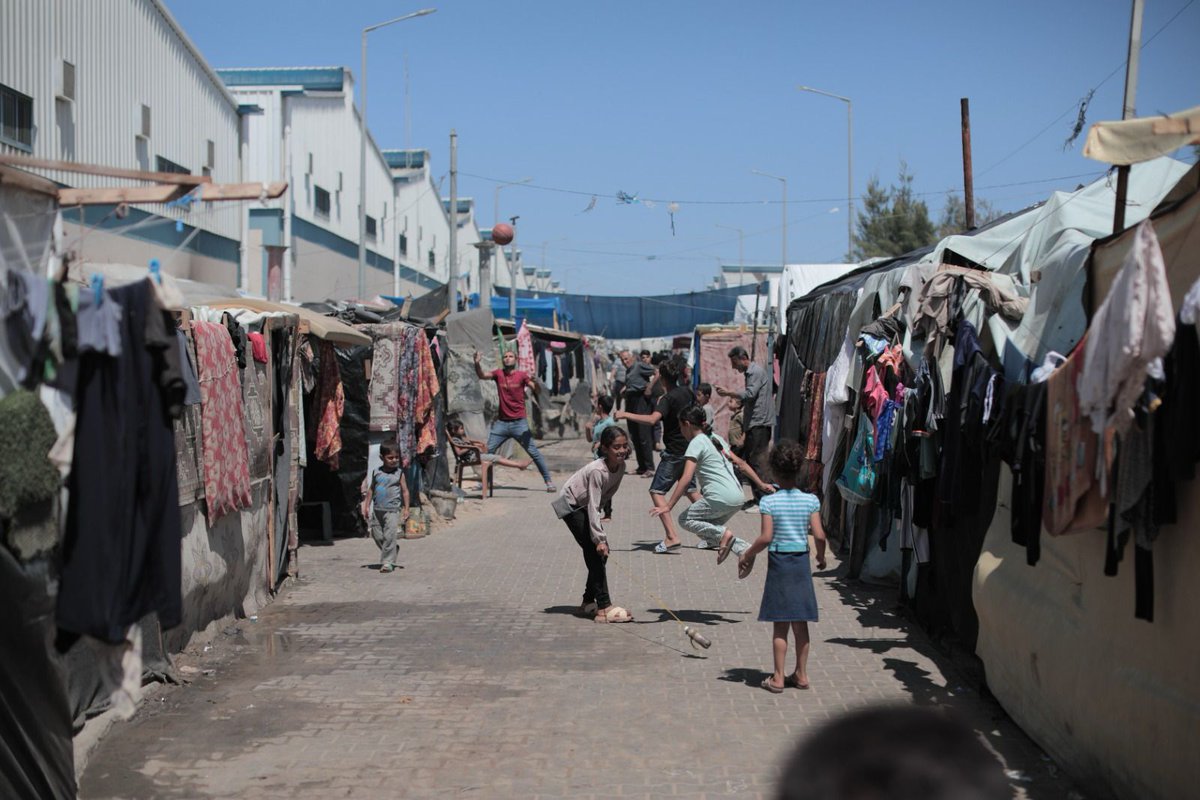
Families in #Gaza live in inhumane conditions, with minimal access to water & sanitation leading to an increase in skin infections and diseases
Gaza needs more humanitarian access to bring in on a regular basis fuel for clean water hygiene & cleaning supplies including soap 🧼🧽
“No place is safe and no one is safe. It’s time for the guns to be put down, it’s time for a ceasefire, it’s time to release the hostages.”
@JulietteTouma commented the desperate situation in the #GazaStrip on @CBC. We need a #CeasefireNow to save lives.
https://t.co/yr5ukgRPa7
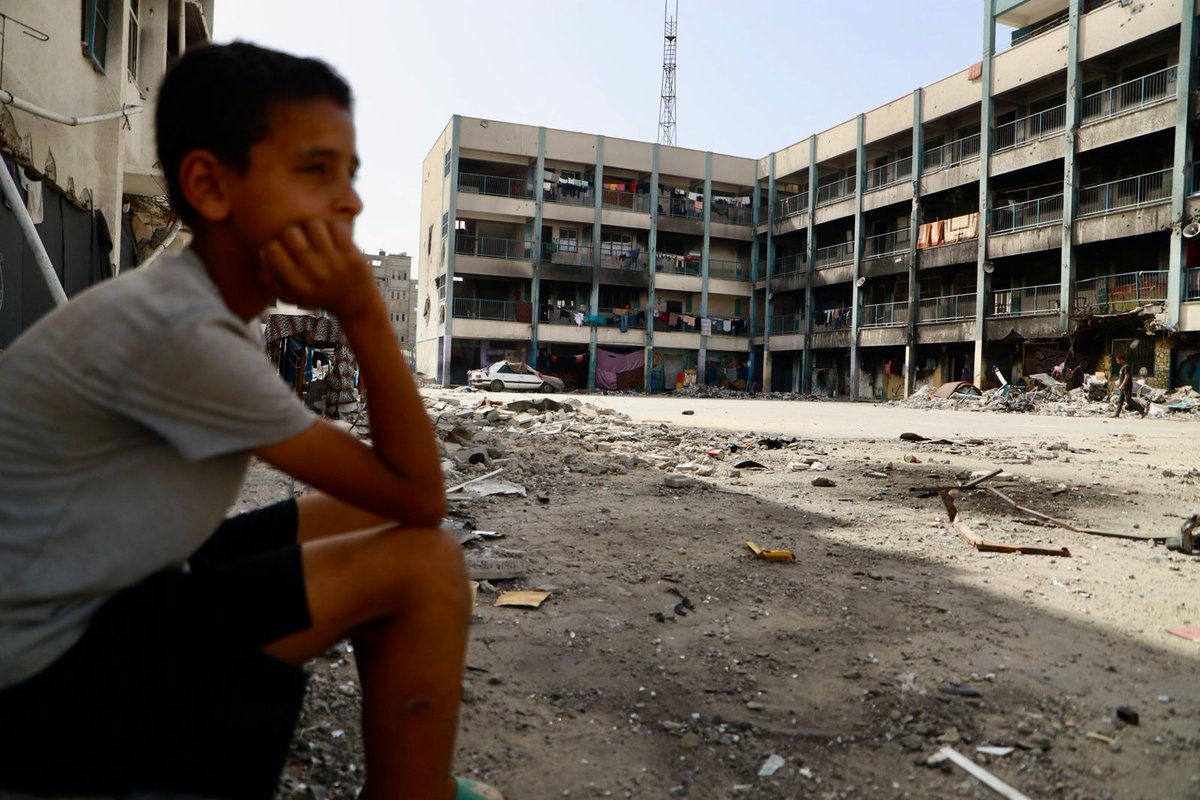
“This school is sheltering 14,000 people in classrooms and in makeshift shelters in the courtyard. […] The facility only has 25 toilets.”
@UNWateridge visited an @UNRWA school in Deir Al Balah, documenting the appalling conditions of displaced people in #Gaza. #CeasefireNow
How israel destroyed Gaza´s ability to feed itself
At the start of summer, Gaza's fields are usually bursting with ripening crops and fruits of all colours, scents and sizes.
But, nearly nine months into Israel’s war on Gaza, abundant harvests have given way to devastation and a dire humanitarian crisis.
A UN report says 96 percent of Gaza’s population is food insecure and one in five Palestinians, or about 495,000 people, is facing starvation.
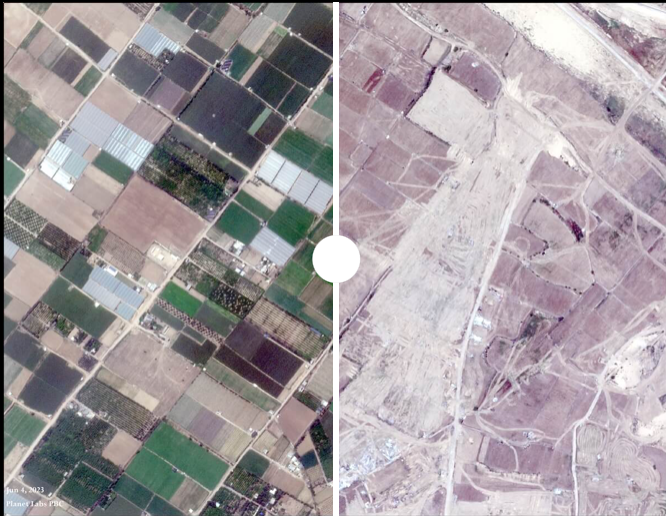
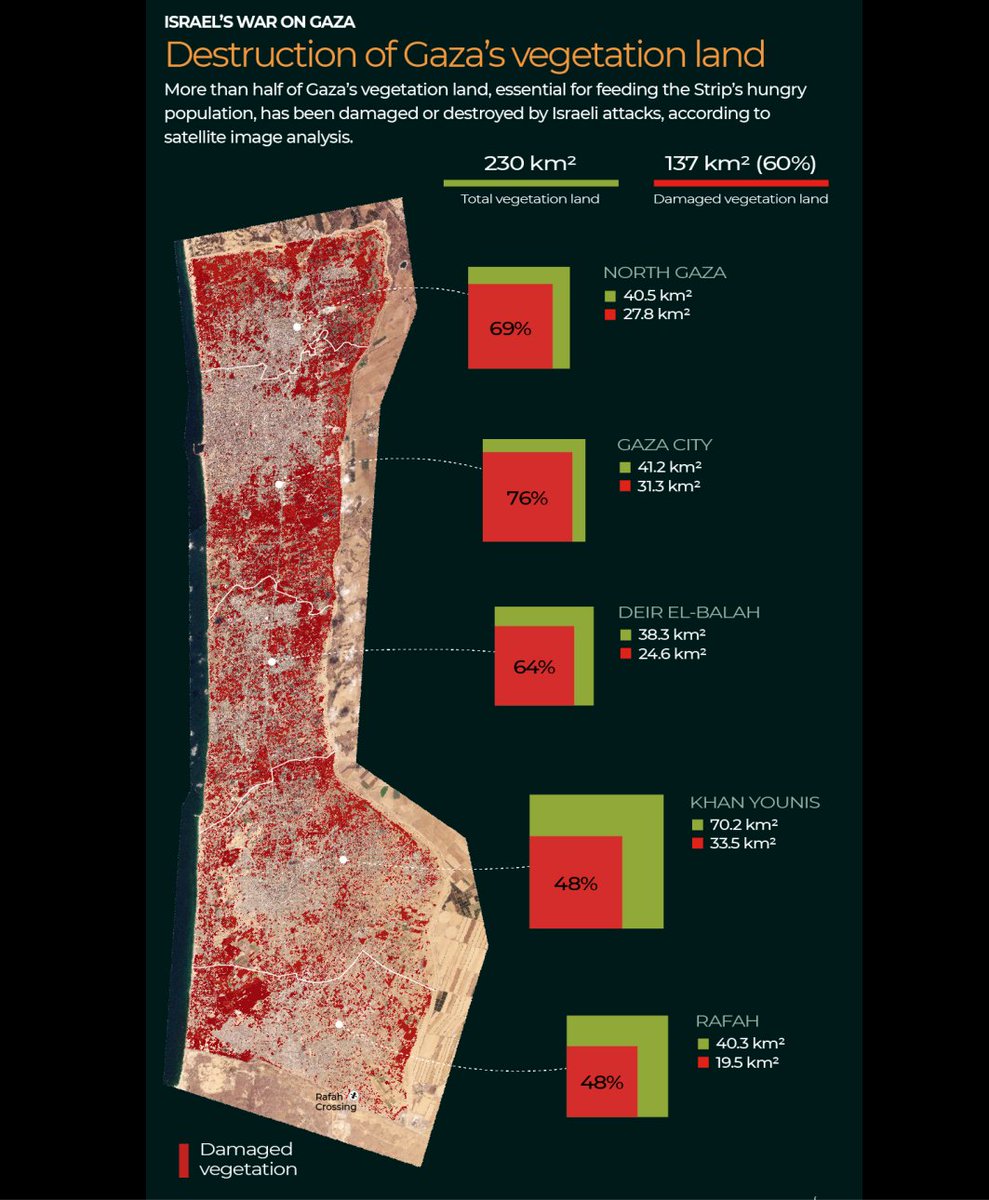
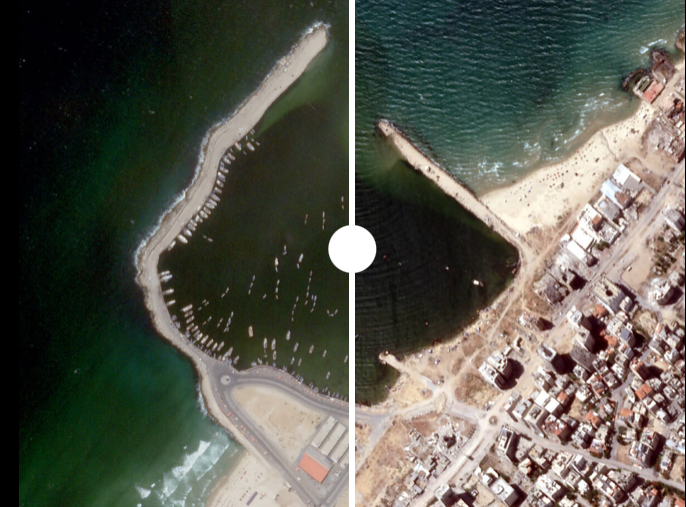
Satellite images analysed by Al Jazeera's digital investigation team, Sanad show that more than half (60 percent) of Gaza's farmland, crucial for feeding the war-ravaged territory’s hungry population, has been damaged or destroyed by Israeli attacks.
Israel has killed at least 37,900 people and injured 87,000 others in bombings, by destroying healthcare that could have saved them, and by starvation.
North to south, nowhere and nobody has been spared.
https://t.co/rRxBVTjQHd
North Gaza
In Beit Lahiya, once known for plump, juicy strawberries that locals fondly called "red gold", Israeli bulldozers and heavy machinery have systematically razed fields, reducing them to dirt.
Before the war, Gaza's strawberry industry employed thousands of people. Seeding and planting began in September, with harvesting from December through March.
Gaza City
Thriving garden patches and back-yard fruit trees once dotted Gaza City, home to about a third (750,000) of Gaza’s 2.3 million population before the war.
The olive tree is deeply beloved in Palestine, symbolic of Palestinian resilience against Israeli occupation.
During one short pause in fighting from November 22 to December 1, Palestinian farmers ran to harvest their olives and extract oil, because they do not know any other way to live, and because they needed the harvest.
Olive cultivation is crucial in the Palestinian economy and is used for everything from oil to table olives to soap.
South of Gaza City is Zeitoun, a neighbourhood named after the Arabic word for olive. Before and after satellite images show southern Zeitoun where nearly every last bit of greenery has been wiped out.
Deir el-Balah
Its very name meaning "House of Dates", the central governorate of Deir el-Balah is one of Gaza’s largest agricultural producers, known for its oranges, olives and - of course - dates.
The date harvest typically begins in late September and continues through the end of October.
Khan Younis
Khan Younis in the south used to produce the bulk of Gaza’s citrus, including oranges and grapefruits.
With its fertile soil and long hours of Mediterranean sunshine, it has the ideal climate as well as lots of space, being Gaza’s largest governorate - about 30 percent of the Strip’s 365sq km (141 sq miles).
Rafah
Rafah is Gaza’s southernmost district, with a pre-war population of about 275,000 people.
Rafah is also the name of the crossing with Egypt which used to be a vital link between Gaza and the rest of the world before it was destroyed by Israel in May.
In the southeast of Rafah is the Karem Abu Salem (Kerem Shalom) crossing where goods grown or produced in Gaza were shipped out of the territory.
Before and after satellite imagery shows how Israeli forces have flattened vital fields in eastern Rafah
Israel has imposed a land, air and sea blockade on Gaza since 2007 but the ingenious farmers of the enclave still managed to build a vibrant, mostly subsistence, agricultural sector before Israel's latest assault.
Faced with a lack of inputs because Israel controlled imports and exports, the farmers made it work anyway.
Like Mohammed Abu Ziyada, 30, who could not be more proud of the first crop of red corn he grew using seeds from China.
Abu Ziada, who farms in Beit Lahiya, decided to try red corn because it needs less water and fewer agricultural inputs than other corn varieties...
Continued: https://t.co/rRxBVTjQHd
Almost the entire population of Gaza is at risk of famine within the next three months as the war between Israel and Hamas continues, report says https://t.co/hTe5lKevZh
A high and sustained risk of famine persists across the #GazaStrip as long as the war continues, according to the latest report by @theIPCinfo.
Nearly 500,000 people in #Gaza are facing catastrophic levels of acute food insecurity.
#CeasefireNow
https://t.co/VDhsKepLiv
Gaza city |
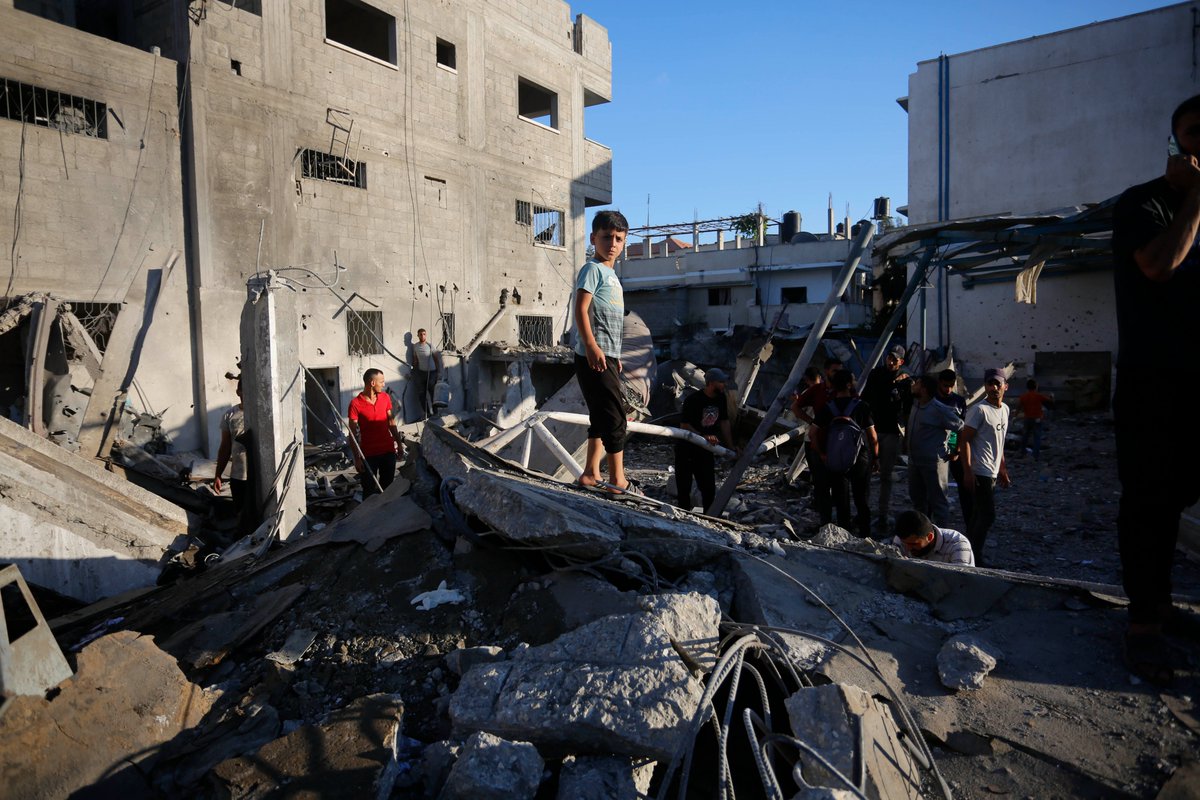
Israeli forces bomb the central aid distribution center in Gaza city at the entrance to the UNRWA HQ. 9 Palestinians killed including 4 of them are volunteers securing the aid
In Sabra Neighborhood, 9 Palestinians were killed in an Israeli attack on Shanbeer family
"While there has been a [unilaterally announced] pause, there's no meaningful ceasefire”
@UNRWA Sam Rose tells @BBCNews that every day the war in #Gaza continues, humanitarian operations become more difficult. Lack of supplies and breakdown in law & order undermine aid delivery
The Israeli army claimed that Al Mawasi area was safe and pushed the people form Rafah to it. Today the Israeli army bombarded Al Mawasi one more time and killed 14 Palestinian civilians.
In 2023, over 3,000 permits for Palestinian children to leave #GazaStrip & #WestBank for medical treatment were denied or delayed
Since the war began, Israeli authorities have further restricted humanitarian access. Children are once again paying the highest price. #CeasefireNow
"Most of the missiles that are being used to target us are the pride of the American industry."
The people in Gaza showing remains of American bombs, which were used by Israel to kill children and women in an UNRWA school.
“Up to 6,000 people had sought refuge & safety inside that school”
@TamaraAlrifai tells @democracynow this is a very predictable outcome of a strike on overcrowded facilities sheltering civilians. People have gone to @UN buildings for a safe haven, but nowhere is safe in #Gaza
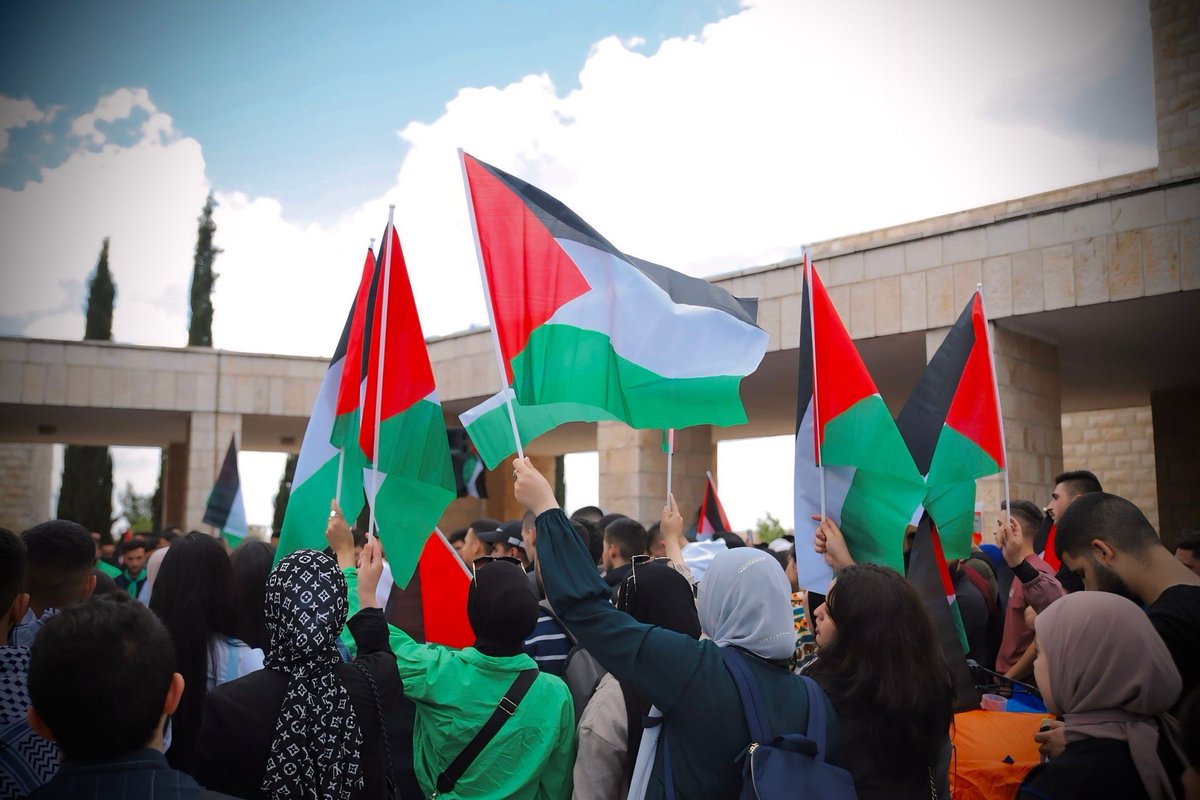
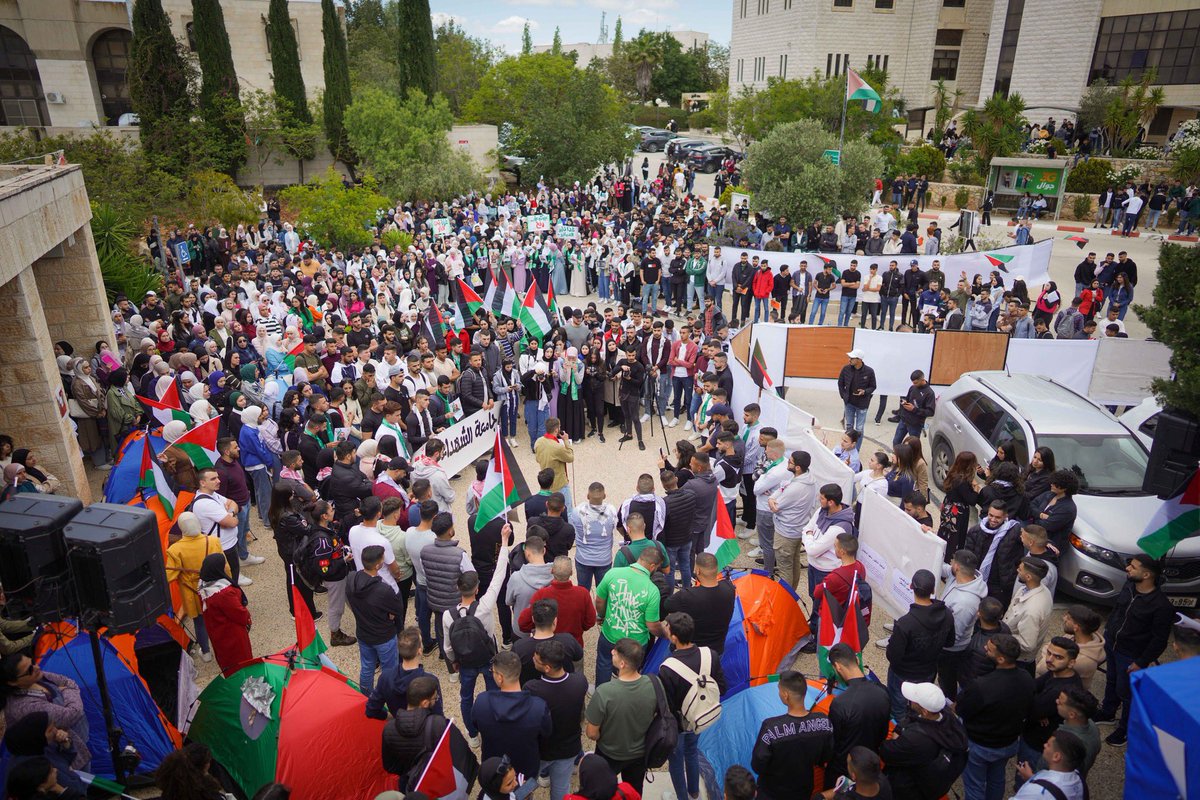
#BZU's students launches the " Martyrs University for #Gaza during protest for our peoples' sacrifices in #Palestine. The initiative comes in cooperation between the #student_factions and BZU's components.
#FreedomFlotilla is on the move: Breaking the Siege of #Gaza.
"Israel’s blatant noncompliance with these orders, and the failure of other governments to pressure the occupying power to comply, motivate us as civil society organisations to take action."
https://t.co/s3lsvyAJNB
“It is absolutely clear that a military operation in Rafah would entail grave violations of international humanitarian law.”
“All countries must demand an immediate humanitarian ceasefire. There can be no further equivocation.”
Statement by 🇮🇪’s FM on the situation in Rafah ⬇️