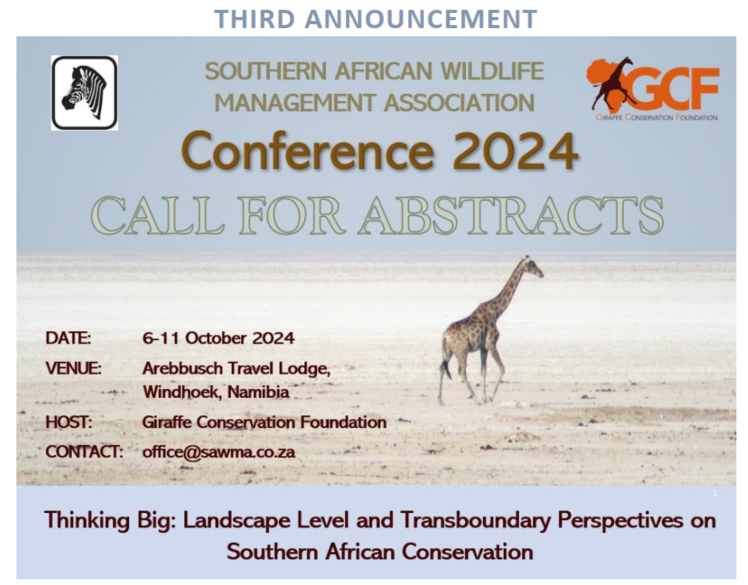
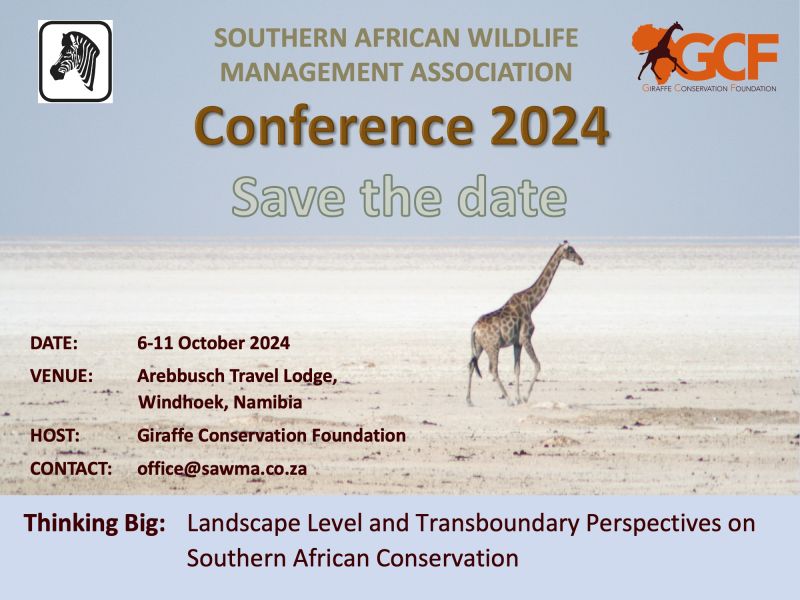
Join us in Namibia in October as we ‘Think Big’ and discuss landscape/transboundary perspectives on southern African conservation. Abstracts for the SAWMA 2024 Conference close in a week. See below for registration
https://t.co/vP95Yxrz8W
Technology allows us to look at ecological processes operating at scales that would otherwise be impossible for us to detect. Having the tools to monitor these behaviors, night-and-day for sometimes years gives valuable insights into how giraffe perceive and navigate their world.
Our work with @Save_Giraffe in Boma & Badingilo, South Sudan to track, study, and protect critically endangered Nubian giraffes has been featured in the @SmithsonianMag. Read how advancements in technology are helping us collect data: https://t.co/sJ6ZhzziGl
"SAWMA Conference 2024"
Researchers, come forth
SAWMA invites your abstracts
Namibia calls
For the first time ever, the Southern African Wildlife Management Association is holding its annual conference in Namibia. The call for abstracts just opened: https://t.co/vP95Yxrz8W
Save the date. For the first time, the Southern African Wildlife Management Association Conference will be held in Namibia. Cohosted by the Giraffe Conservation Foundation, the theme for this conference will emphasize landscape-level and transboundary perspectives on conservation
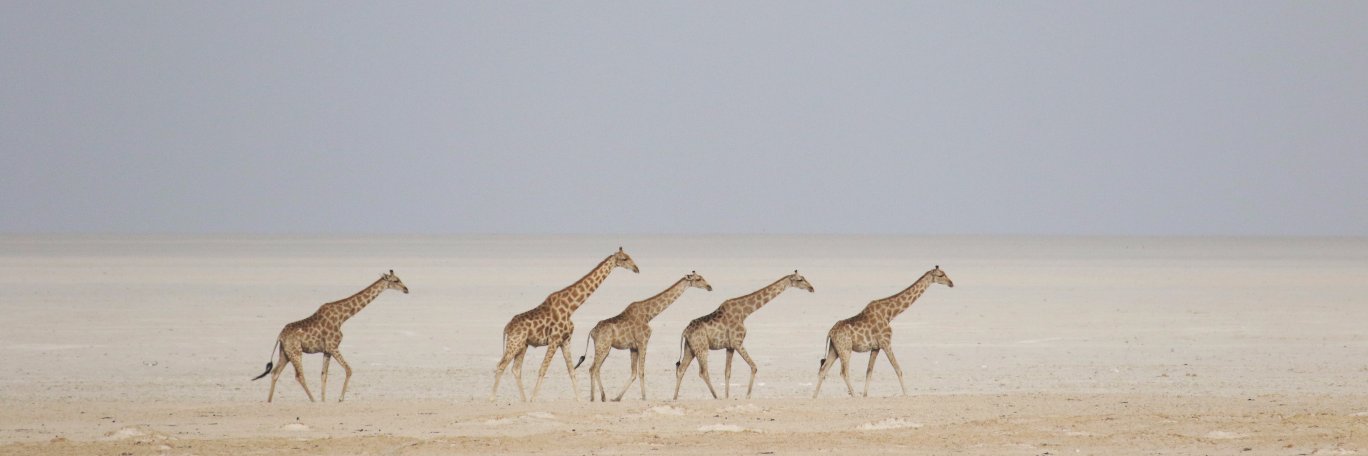
Did you know giraffes have a home range roughly the size of Philadelphia? Smithsonian-affiliated conservation biologist Michael Brown at @Save_Giraffe shares how researchers track these wide-ranging animals for @ConversationUS https://t.co/0HYCJ2hKmM #MovementOfLife
Last week @EarthRangerTech hosted a multi-day workshop for users in Namibia. EarthRanger has been a game changer for us in managing and sharing wildlife telemetry data. It's always great to keep up with the latest developments of great conservation technology tools.
A new publication sheds light on the species – examining the migratory behaviors of nearly 150 giraffes across 11 countries. The monumental study is the largest ever on giraffe movement ecology. Head to https://t.co/gtkKljxPj1 to learn more! 🦒 @Save_Giraffe
https://t.co/toGISxbPFd
A rare brown giraffe
I’m channeling Ira Glass
A voice for wild ones
This little brown giraffe born in a Tennessee zoo has been making headlines. I chatted with WBUR about the rarity of this occasion and how we can better conserve its wild cousins.
If you missed the talk, check out the paper at: https://t.co/WtDHbZm491. Even if you aren't interested in giraffe (which you should be), we present a meta-regression framework for continuous time movement models which should be useful for movement ecologists across all taxa!
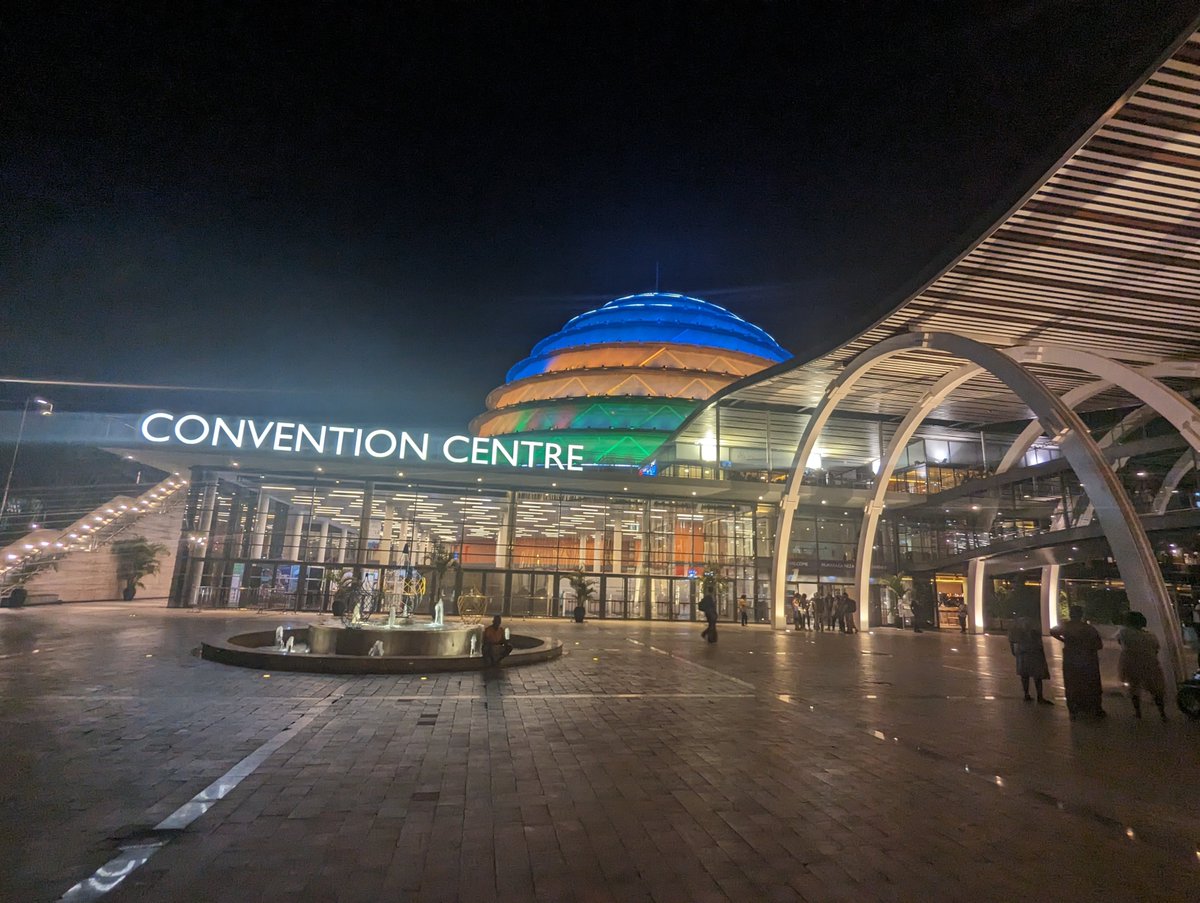
Gather in Kigali, conservation's big stage,
ICCB 2023, turning a new page.
Biodiversity's guardians unite,
To safeguard Earth's wonders, day and night.
#ICCB2023
Remote retics roam
Unknown lands may hold their hope
Conserved through Google's lens.
Another giraffe paper emerging from the Twiga Tracker dataset! Well done @RamiroCrego2 in leading this project. Although super important for reticulated giraffe its applications extend beyond.
Congrats @_rachael_clark !
Kordofan giraffe roam,
Zakouma Park their home,
GPS data revealed,
Their preferred habitats concealed.
Seasonal ranges wide,
Wet and dry they stride,
Outside park they tread,
Seeking open grasslands' spread.
My first paper is out! 🦒
Seasonal Dynamics Impact Habitat Preferences and Protected Area Use of the Critically Endangered Kordofan Giraffe (Giraffa camelopardalis antiquorum)
Read it here 👇🏼
https://t.co/ZLXrFp8HAM
@UofG_SBOHVM @Save_Giraffe @AfricanParks@UoABioSci
Tell yourself, tell your friends, tell it wide...
The Conservation Technology Award is providing two grants -- $15K each -- to organizations that are innovating for wildlife.
Get your application in here. Deadline is only a month away! https://t.co/3FusyNT21a #Tech4Wildlife
As human pressures increase and as climate change renders environmental conditions less predictable, understanding how giraffe respond to these changes is critical for designing forward thinking conservation management strategies.
In our newest paper published in Proc B, we co ducted the largest ever giraffe tracking study. Here's the gist of the paper in haiku format:
Giraffe tread the land
Nature's gifts and human touch
Shape their graceful steps
https://t.co/vY06wCBade
As human impact intensifies giraffe use less space since infrastructure and development restrict their ability to move. In heterogeneous environments, they typically move more to navigate inhospitable matrix between suitable habitat patches