Q2: In celebration of #earthday and my inquiry unit, I have found a link from the NEA that provides resources and activities on different environmental issues. I think it is important to talk to students about our planet, as we only have one! https://t.co/qvF38n1Drw #4011SS
Q1: I was most surprised that controversies can be looked at as "interesting problems to be solved rather than as win-lose situations" (Johnson & Johnson, 1988, p. 59). I never thought that all controversies, like religious ones, could be solved. #4011SS
@nghariby This is a part of geography that most of us never got to experience, but it is so powerful. Using geography to teach my students about diversity is something I look forward to doing in the future.
@LMKiehlbauch Pictorial maps would be an excellent resource for the lesson I looked at for Task 2, Many Ways to Name a Place. I also love the connections students make to every day life when looking at a pictorial map.
@JenniMSUDenver Although I enjoyed memorizing the names of the capitals in 7th grade, I would have enjoyed the interactive geography lessons much more!
3. This is the official Earth Day website, which can help with any lesson for the environment and society element of geographical thinking! Check it out! https://t.co/2EGPWrjGi3 #4011SS
2. The skills that students need to learn about maps can be contextualized to fit their lives, so they have more fun with it and they actually learn the skills. Interactive maps are a great tool as well! Who knew you could form meaningful geography questions either!? #4011SS
1. I learned that geography overlaps with science tremendously, especially in the environment and society element of geographical thinking. It's truly amazing how much the content areas overlap with one another. Geopgraphy is more than just maps and places, which rocks! #4011SS
Q2: Can you make similar claims about people/events in historical sources as you do with literature, even though a discussion of claims and evidence in English literature can be less constrained than in a history discussion? #4011SS
Q1: Students need to understand literacy strategies and practices that suit historical thinking (and the other disciplines) so they increase their ability to read historical documents. They should read historical information like historians to become informed citizens. #4011SS
I am wondering what each part of historical thinking- agency, perspective, and interpretation- looks like in the classroom at any grade and in any context. #4011SS
I learned that there are different types of evidence to look at- testimonies, artifacts, and relics. Testimonies are biased towards one perspective, so they are not as reliable as artifacts. It is important to look at the reliability and completeness of every source. #4011SS
@JenniMSUDenver This is such a cool artifact about William Bent that would be an amazing primary source to use for tours! It brings so much insight about what was important in Bent's life.
@LMKiehlbauch I think more people should be exposed to this library so that they utilize it's unique resources and learn a bit more about Colorado in a non-traditional way.
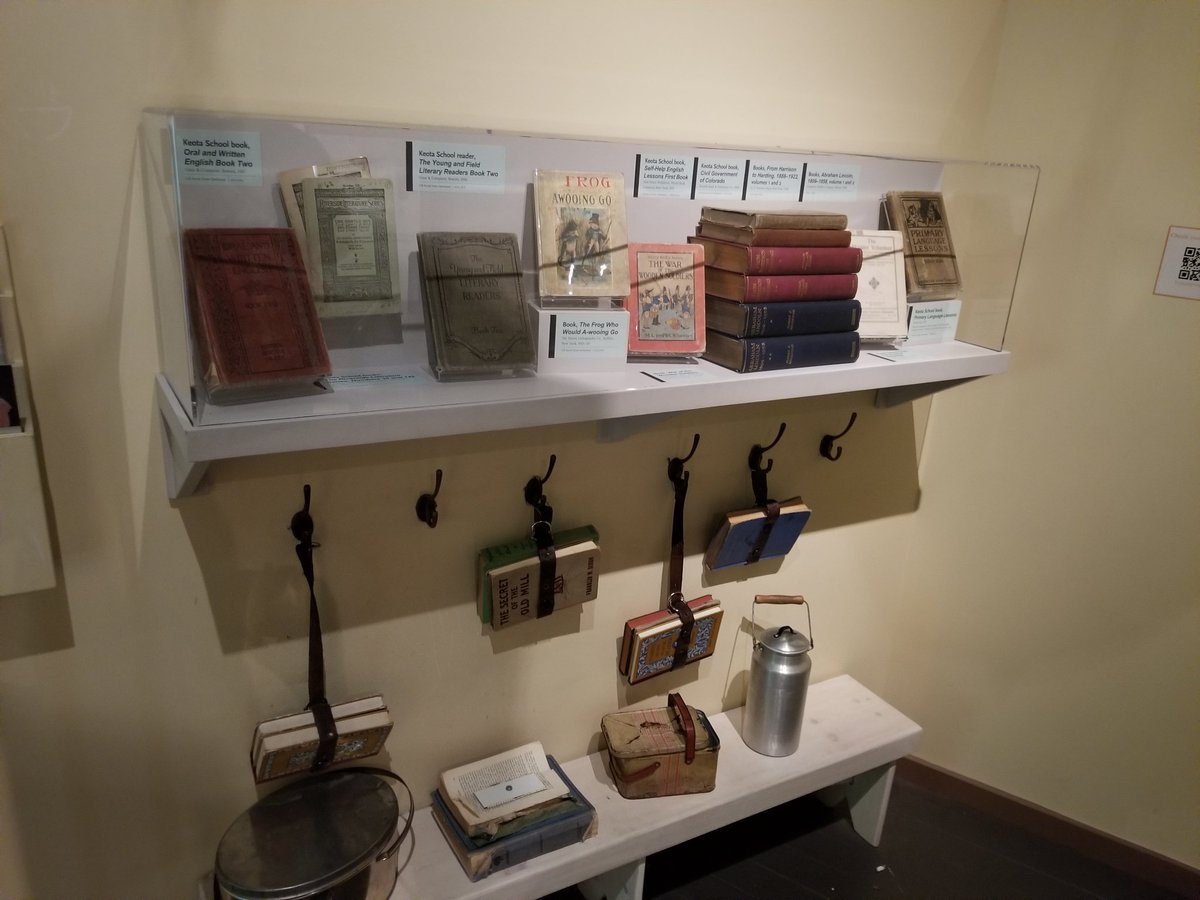
I never would have thought that the students of Keota would have experienced school in similar ways as I did! They had to read so many books, just like our students do today! #HCCfieldstudent
My heart broke after learning that mules who helped in the mines of Silverton never saw the light of day again. I wonder if they missed the sun as much as I would. #HCCfieldstudent
After experiencing Black Sunday for myself, I am much more grateful for all the brave men and women of Colorado who stuck through the horrors of the Dust Bowl. We wouldn't be the same wonderful Colorado without them. #HCCfieldstudent