Wichtige Intervention von @ReintGropp + @ufukakcigit vom @IWH_Halle zu den Aufbewahrungsfristen von Daten. Wenn die Politik nicht bald handelt, stehen wir vor einer beispiellosen Vernichtung von Wissen in 🇩🇪 (was bisher keinen in Berlin zu jucken scheint):
https://t.co/cMXIHbR7FO
After reading yesterday the new entry on Capitalism in the Stanford Encyclopedia of Philosophy by @chiaracordelli, I decided to buy her book “The Privatized State.”
I started reading it and, nearly right away, I bumped into Figure 4.1, reproduced here (from the Kindle edition).
There are a dozen reasons why this figure does not make sense. But perhaps the most glaring one is the units. In 2012, Federal Government Current Expenditures were $3.77 trillion:
https://t.co/wVfJiJ0lWn
Look at the Y-axis: annual federal spending (a loose way to refer to the data I just pointed out; that is fine) runs to a bit less than $40,000,000 trillion. This is absurd by seven orders of magnitude.
And the same mistake appears twice in the same figure. The dotted line, labeled “in millions,” sits at around 1.5 million on that very same axis, which would be 1.5 million million federal employees.
Let me be nice and assume that this is a “minor” typo, that the Y-axis should go from 0.5 to 40, and that there are six extra zeros. Even then, the figure is off by an order of magnitude: spending in 2012 is reported to be a bit less than $40 trillion. Any macroeconomist knows that U.S. GDP in 2012 was about $16.25 trillion (or at least carries the right order of magnitude in their head). Federal spending of $40 trillion in 2012 is again absurd.
In fact, no standard unit reproduces the numbers plotted. Federal outlays in 2012 were 3,774 in billions and 3,773,503 in millions. Neither is around 37,000,000.
The shape of the line is fine. It rises by a factor of about 5.4 between 1960 and 2012, which is roughly what inflation-adjusted federal outlays did over that period. So, somebody plotted a real spending series correctly and then mis-scaled it and mislabeled it.
My strong suspicion is that the units were off in the Excel file, and that the error then survived the writing of the book, its production, and a prize committee, without anybody stopping to ask whether the numbers on the axis could possibly be right.
And this matters beyond one book, because the Stanford Encyclopedia of Philosophy has just commissioned an entry on capitalism from the same author. I am not asking here for detailed knowledge of the economy. I am asking for an author who knows the orders of magnitude of the U.S. economy I learned when I was a junior in high school and took economics for high school students (“comercio,” it was called back then), and for the kind of scholarly care that would have caught an error I found in less than five minutes of browsing.
Now you are probably going to tell me: “typos happen to everyone.” Yes, but there is a “thinko” that runs much deeper. The author writes (page 143):
“Consider this striking figure: while federal spending in the United States increased very significantly between 1960 and the first decade of the twenty-first century, the number of civilian workers remained more or less unchanged (see figure 4.1).”
This is a key part of the argument that we have somehow “privatized the state”: we spend much more with roughly the same number of civilian workers.
You cannot make that statement from Figure 4.1. First, because most of the growth of federal spending since 1960 has been transfers, mainly Social Security payments, health, and interest payments, and federal grants to state and local governments.
You do not need many civilian workers to process transfers no matter how large they are. In fact, with modern computers, you probably need far fewer than in 1960.
In comparison, state and local employment, now paid for in a much larger part by federal grants, went from about 6 million to about 19 million, a fact not only ignored in the discussion but also leaving the reader with a completely wrong impression about the number of government employees. And this is not an obscure objection: Dilulio’s article, the very source cited for the figure, makes the point in plain prose: “the state and local government workforce roughly tripled.”
To be fair, transfers do not dissolve the puzzle entirely. Even setting them aside, real non-transfer spending still more than doubled while the federal headcount stayed flat. But the rise in the real wages of federal employees (real government wages need to keep at least roughly in line with private-sector wages and the latter grow with economic growth) and in the cost of equipment (an F-35 is between five and ten times as expensive as an F-105 in real terms, depending on how you count) means that federal spending will grow mechanically even when the number of civilian workers remains unchanged.
At the end of the day, the book is not just about political theory. It is about facts regarding the effects of privatizing government services.
Is it a bad idea to privatize government services? Perhaps. I do not know, and I am more than willing to listen to both sides of the debate. For example, I am quite skeptical that privatizing many activities of the U.S. armed forces, as the U.S. has done over the last decades, is a good idea.
After spending a few hours reading it, the book does not help me reach any conclusion. It treats the data as decoration, as Figure 4.1 makes plain, and a central empirical claim resting on a figure like this one will persuade only those readers who already agree with the conclusion.
Finally, a minor point. The caption of the figure says: “Published in ‘The Rise and Fall of the U.S. Government’ by John J. Dilulio Jr., Washington Monthly, January/February 2015,
https://t.co/WJYnVZmPnw.”
I clicked the link, and the figure is not there. I will give the author the benefit of the doubt, since webpages are not stable and the figure may have been removed. But the main text of the article does not cite the figure either.
And, from the same pen, we have, a few years later: “From all these exchanges, an ‘equilibrium,’ perhaps a ‘general equilibrium,’ spontaneously arises in a capitalist economy.”
“Perhaps” you could see this one coming.
3,5 Millionen Kunden hat Lottoland in Deutschland. Viele denken, sie würden dort tatsächlich Lotto spielen. Allerdings nehmen sie an illegalem Glücksspiel teil.
Uns als Gesellschaft entgingen dadurch 2019-2023 mutmaßlich über 400 Millionen Euro Steuern.
https://t.co/58CL2yH5Ce
NEW: an ideological divide is emerging between young men and women in many countries around the world.
I think this one of the most important social trends unfolding today, and provides the answer to several puzzles.
Ein wahnsinnig guter Text. Ein Text, auf den ich lange gewartet habe, der endlich ausspricht, was für ein Zivilisationsbruch der 7. Oktober war und wie moralisch verrottet Teile der westlichen Linken tatsächlich sind:
https://t.co/ed0Hn0dIqF
»Do you take us for fools? Do you think you can just completely remove the disguise and we won’t notice?«
#COP28 is going to be a disaster. And the whole COP process is in the hammerlock of the fossil fuel industry.
Al Gore exposes all their plans in a brilliant way! 👏
🧵 1/7
Here's a thread in pictures about the Atlantic overturning circulation #AMOC which is making headlines this week. I've studied this topic since 1991 and will show key data and models & some video.
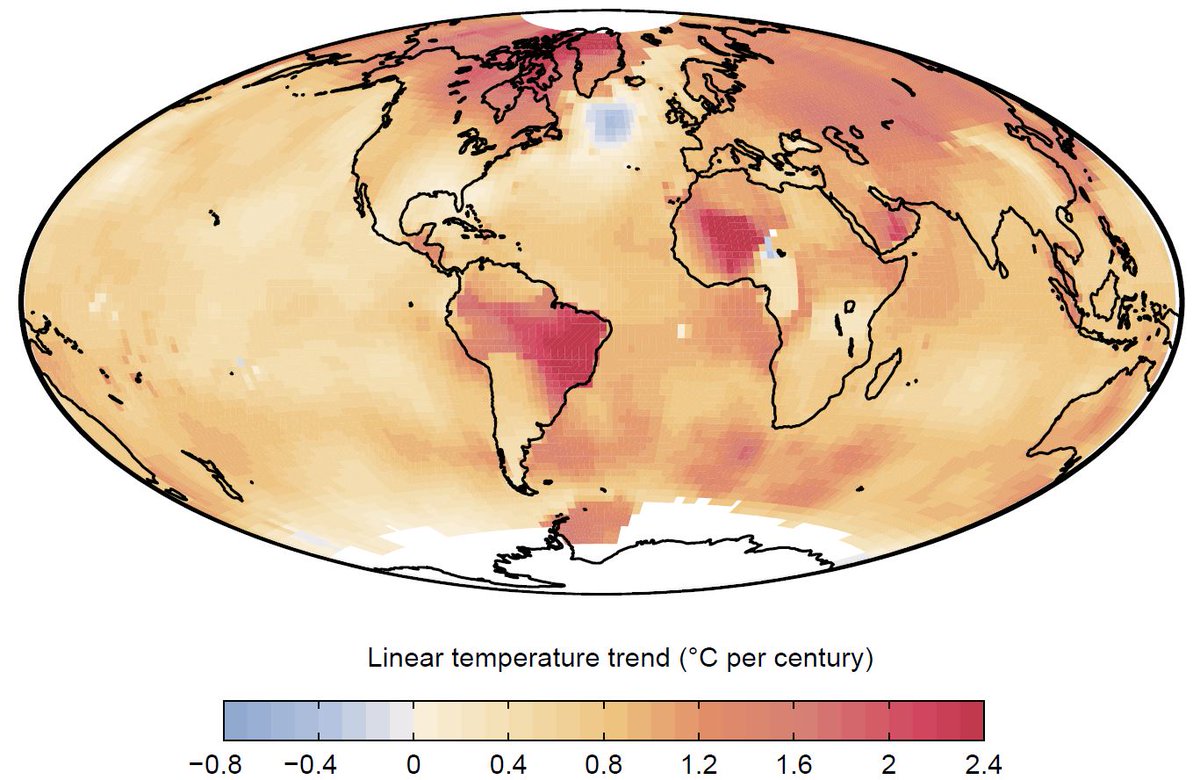
Let's go: observed temperature trend since 1901 from https://t.co/jGHxmrjzLG 🧵1/x
Warren Buffett said that great CEOs must MASTER capital allocation.
He also said, most are TERRIBLE at it.
Here’s how to allocate capital like a BOSS: 👇👇👇
Tja, liebe (Berufs-) Geheimnisträger, wenn ihr schon ein Nickerchen im Zug machen müsst, dann nutzt bitte eine Sichtschutzfolie und sperrt euren Rechner, es wäre doch schade, wenn die Öffentlichkeit vorab wüsste, welcher Verlag das Rennen bei den Memoiren einer BK aD machen wird.
Having survived two previous market resets (2001, 2009), people frequently ask me how this 2022 market reset is different and how it is the same. The obvious similarity is that valuation multiples have collapsed. We went from a "glass very full" mindset to one with many concerns.
A big shout out to the NUS MBA class of 2014 graduates! We are ranked #18 globally in @FinancialTimes MBA rankings - our best since 2006. Excellent news for a Monday! https://t.co/ikY5qjeixx 🤗
#ICE901#Erfurt Tolle Leistung @DB_Bahn den geplanten Anschluss einfach vor Einfahrt von #ICE593 losfahren zu lassen. Wenn die Einbindung des Knoten Erfurt auf dem Weg nach München weiter so gut funktioniert, nehme ich dann doch lieber das Flugzeug.