Ten years running my own business. The struggle is real. Fear and worry when things go wrong. And they have. The risk of making permanent decisions about temporary problems.
.@incentivising put it well: "Most people do not lack the skill to pull off a comeback. In most cases, they lack the rationality and clarity required to survive a crisis."
I have survived a decade by not quitting during the moments when quitting made perfect sense.
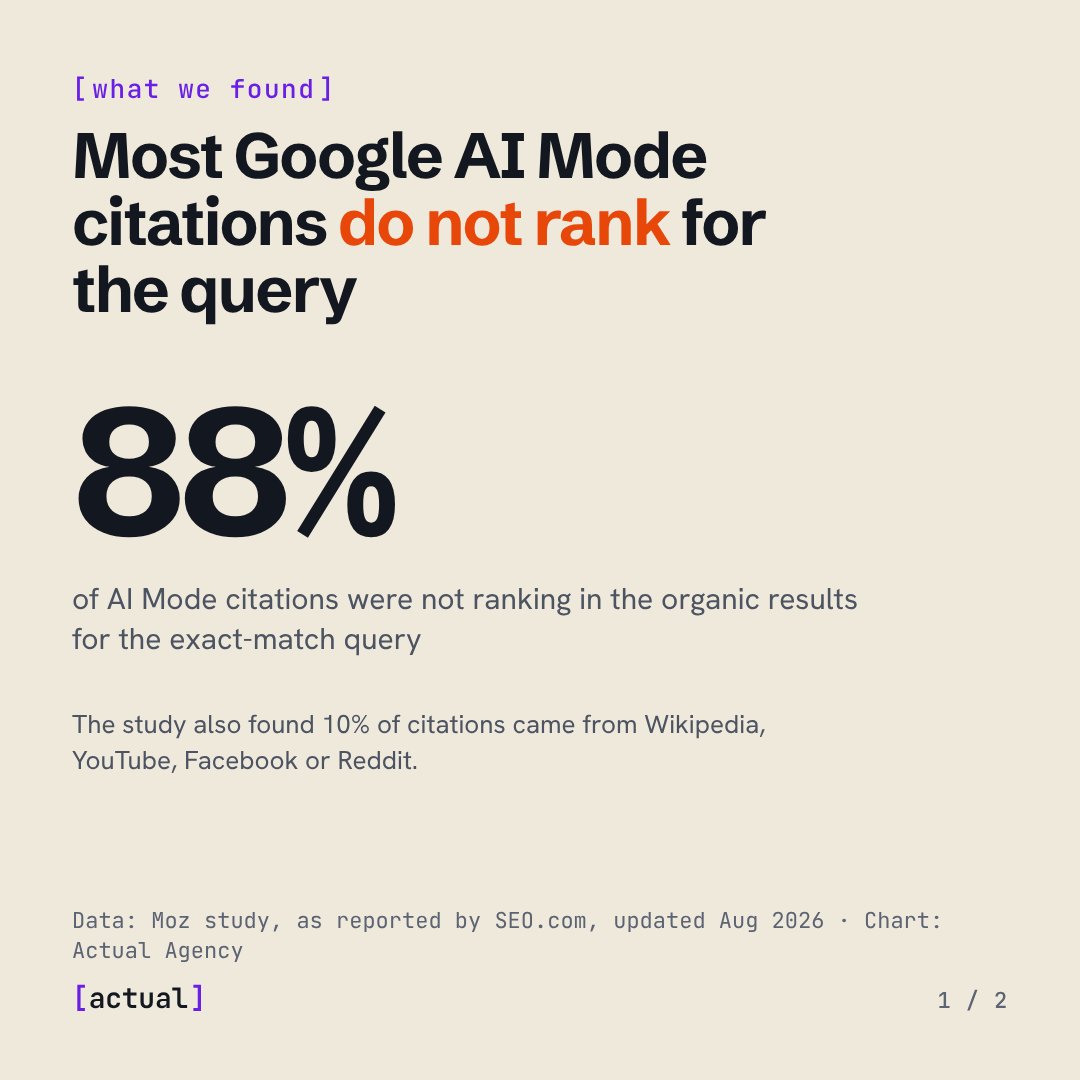
Rank on page one and you can still be absent from the answer.
Moz: 88% of Google AI Mode citations weren't ranking in the organic results for the exact query (reported by https://t.co/SA3cLyYtVC).
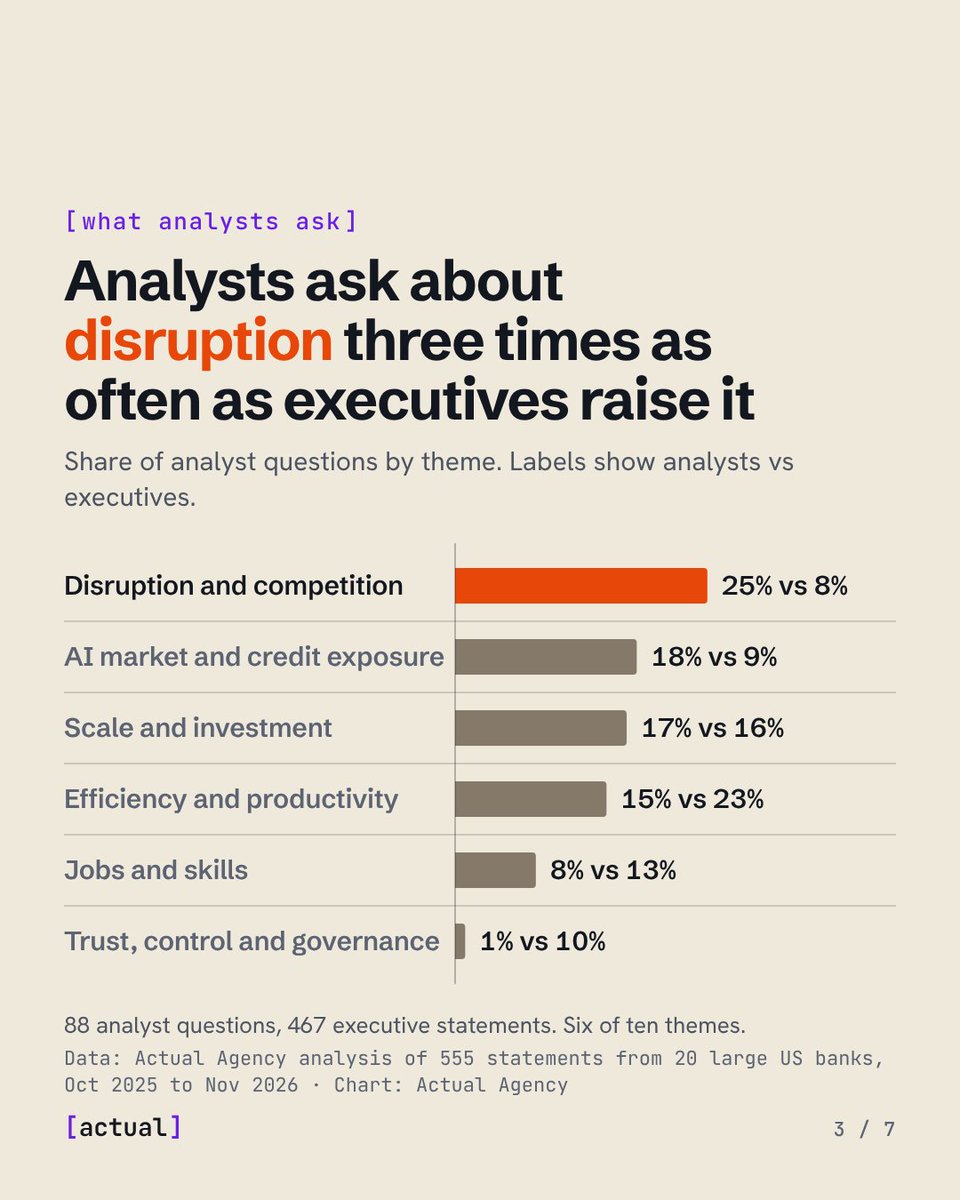
The gap that matters most: disruption is 25% of analyst questions and 8% of executive statements.
Prepare for the questions analysts ask, not just the ones you volunteer.
https://t.co/MoSErDI62U
What do 20 large US banks say about AI?
555 statements from earnings calls, analyst questions and press interviews. All 20 tell the efficiency story. Then they diverge.
The shortlist is forming in the answer box.
GetIntel looked at 469 B2B software searches in October. A Google AI Overview appeared on 98.2% of them and sat above the first ordinary result on 94.8%.
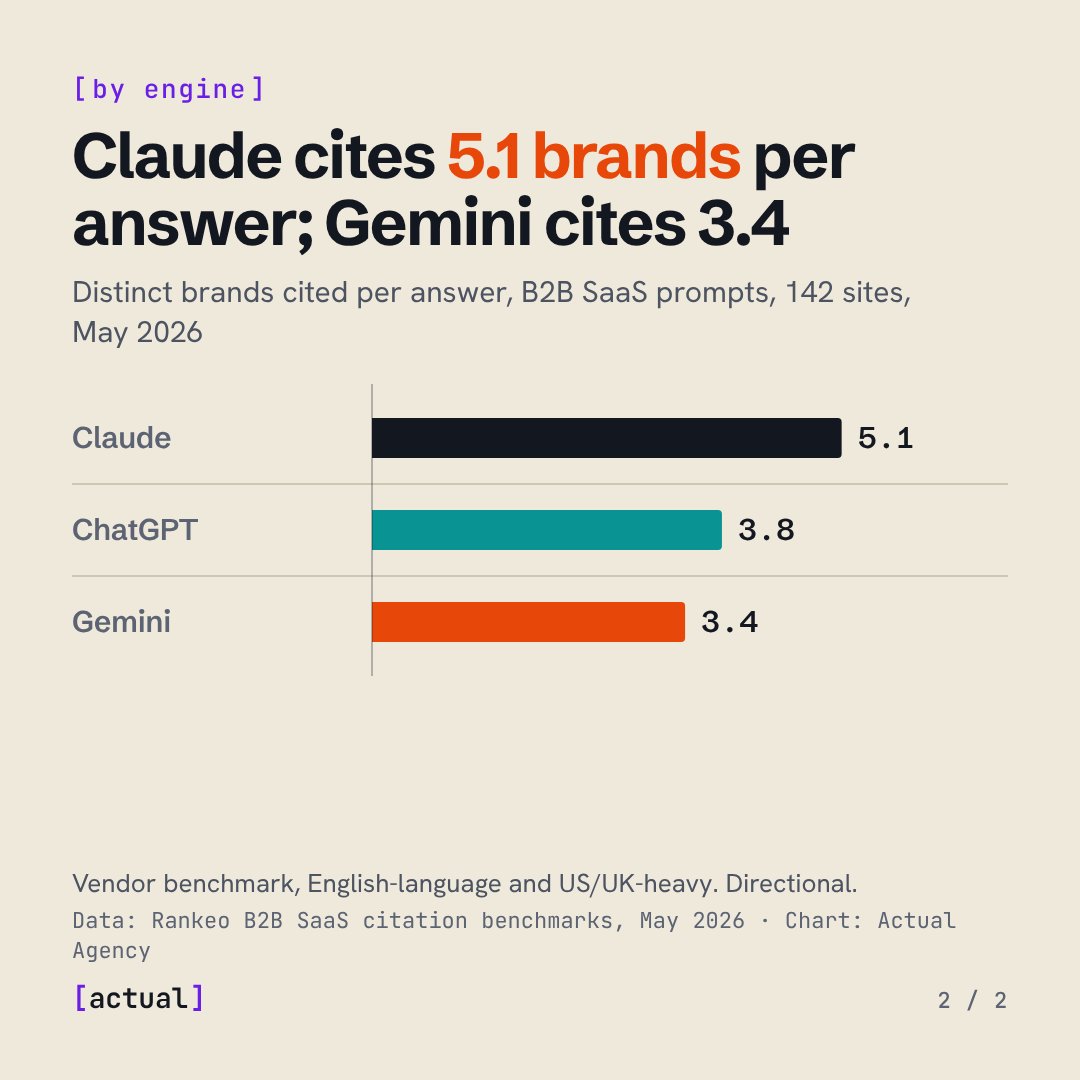
And the engines don't behave alike. Rankeo's benchmark of 142 B2B SaaS sites: Claude cites 5.1 distinct brands per answer, ChatGPT 3.8, Gemini 3.4.
Rankeo sells tracking software and skews US and UK, so read it as directional.
We read Anthropic's 421-page S-1 the way we read any corporate narrative.
The claim first. Then the number that has to be true for the claim to hold.
Part 1 of 4: growth.
What do 20 large US banks say about AI?
555 statements from earnings calls, analyst questions and press interviews. All 20 tell the efficiency story. Then they diverge.
Analysts ask about disruption three times as often as executives raise it: 25% of questions against 8% of statements.
64% of AI claims and promises describe a direction, not a result. 17% carry a number.