Seriously @Toyota Service website is horrible. "No scheduled service for 5000 miles on your new vehicle" on the websites. Course this ignores recommended schedule. From poor UI/electronics to this? BLEH! I understand - looks like non-company vendor doing this but UGH!
When I was a community college student (18) my International Communication Professor paired me with an older, VERY handsome fellow student (30s) from Bulgaria. Our assignment? To teach each other about our cultures, then share what we learned with the class. TW: trauma
i voted early for the one candidate who gives at least a single fuck about civil rights & liberties, & doesn’t grope women or treat us like disposable baby making machines. if you haven’t yet, please get out & vote.
Nutrient Levels in Retail Grocery Stores, or Why You Should Be Buying Your Groceries from Walmart
I've done some digging into nutrient levels in retail grocery stores (specifically where I should shop if I want nutritious food) and learned some insane things. Longest post I’ve done yet, so for readability this is also linked in my bio.
1) It's a well-documented phenomenon that nutrient levels in produce have been declining for decades. The average mineral content of calcium, magnesium, and iron in cabbage, lettuce, tomatoes, and spinach has dropped 80-90% between 1914 and 2018. (Image by Workinger et al., 2018)
There are several reasons for this, but most of them are due to modern agricultural practices. These reasons include: selective breeding, soil depletion, synthetic fertilizers that provide basic nutrients necessary for plant growth but not others that would make them nutrient-dense, higher CO2 levels in atmosphere diluting nutrient content in plants, over-irrigation washing away nutrients from soil, and long storage times.
2) If all you care about is nutrient content, SPEED is the only factor that matters. That means time between being picked and ending up in your mouth. Price doesn't matter, organic doesn't matter, marketing hoo-ha about how fancy the produce is doesn't matter. Literally just speed. Fresh spinach loses almost ALL of its vitamin C within 7 days of harvest when stored at 68°F (20°C). When stored at 39°F (4°C) which is about fridge temp, it loses 75%. The apples you buy at the grocery store can be up to a *year* old since they've been harvested, especially if you are not buying them in season.
Taste, texture, and smell are not good indicators of nutrient content, because you can't tell how long it has been since it's been harvested. Modern shipping and storage methods can be deceptive, combined with practices like spraying strawberry fragrance on otherwise bland strawberries so you think you're buying the good stuff (yes some places actually do this).
In general, it can help to eat in season, but due to the globalized supply chain...it's always in season *somewhere*. But how long did it take to get to you? You don't know. Even if it's in season where you are, how do you know if that's not from *last* season? Again, you have no idea.
3) Think for a moment: what store do you think sells the most nutritious produce? Your local farmers’ market? Whole Foods? Trader Joe’s must be decent, right? Nope, it’s Walmart. Because of their scale and insanely efficient supply chain, they can get things from the farm (wherever it is in the world it's growing in season) to the store where you can buy it, really really fast. Oh, and for the lowest cost.
I wanted to believe every time I splurged on fancier produce, I was actually getting something better. But this is what the data comparing 18 major US retailers showed – Walmart consistently outperformed.
I learned this from talking to Brent Overcash, co-founder of a startup called TeakOrigin, which specialized in testing nutrient content in groceries from retail grocery stores. For years, every week, his team would walk into grocery stores, buy thousands of produce items the way normal consumers would, and bring them back to the lab to assess nutrient content. They’d go to Whole Foods, Trader Joe’s, Costco, Wegmans, Sprouts, Waitrose, farmers’ markets, and many more retailers. The “winner” varied depending on the specific type of produce/brands/exactly what week it was, but Walmart tended to come out on top. The more important point is that price and taste and organic certifications had no impact on the actual nutrient density.
They raised ~$5M and did a decade of research with labs full of analytical chemists where they used a combination of molecular spectrometry, HPLC, GC/MS, TGA, and wet chemistry methods. With 800+ million data points, the USDA and FDA at one point told them they had the world’s largest dataset of dynamic nutrition data. They’re no longer around, but had branches in California, Boston, and the UK just a couple years ago.
It went out of business because no major grocery store wanted to partner with them, because the transparency would hold these retailers accountable for *so many things* the consumers aren't even currently aware of. Things like how Whole Foods centers their entire branding around fresher, higher quality produce that's better for you, but when he actually tested some expensive apples they were selling from a local orchard advertised with handwritten chalkboard signs, it had so little nutrient content it was barely detectable on their lab-grade machines. He called the orchard because he was curious, under the guise that he was interested in picking some apples for the season. They said, "Oh sure, you can do that, but our first harvest isn't for another 6 weeks." That means it had been a year since the apples he bought were actually picked. This is actually industry standard, made possible by storing them at low temperatures and spraying a gas called 1-MCP which blocks ethylene (a gas naturally produced by the apples that makes them ripen) by binding to the same receptors.
I asked him: Are farmers’ markets any better, since we're getting the produce directly from local farmers? And he said basically there's huge variance. If you walk into a booth and that vendor is selling over 5 types of produce, there's no way they all ripened at the same time. They may not even all be grown by them. Once, he actually saw a vendor at Boston farmers’ market selling carrots from Target! He could tell from the packaging because he used to work for them. Turns out when a produce delivery is refused by the grocery store, the truck owner is then responsible for getting rid of that produce, and they usually drive to a “food hub” where bulk produce is bought and sold just to recoup some of the costs. That is one possible source of the mysterious farmers’ market carrots they were pawning off as homegrown.
Now, I'm not saying you should *stop* shopping at non-Walmart places. There are a lot of factors other than nutrient density that influence a purchasing decision. The fancy, expensive produce might taste better, smell better, and be better for cooking. It may come from farms where there are better wages and working conditions. There might be fewer pesticides. But again, for nutrient content, speed is the only thing that matters.
I want to do something about this, but it’s an issue way bigger than I can tackle alone. From the way we do modern farming, to the complete lack of transparency on the retailer's end (and vested interests in keeping it that way), to the government's lack of interest in enforcing this transparency for the sake of consumers...the problem runs deep and I'm tired man. And so is Brent, who’s retired and doing woodworking in his studio these days, living the good life.
I see today re-implementing the same patterns of 20 years ago. The patterns haven't really changed much. New ways to solve them but same patterns. Every now and then I pause and wonder: What REALLY has changed? We're still clicking the mouse, typing the keyboard, what's next?
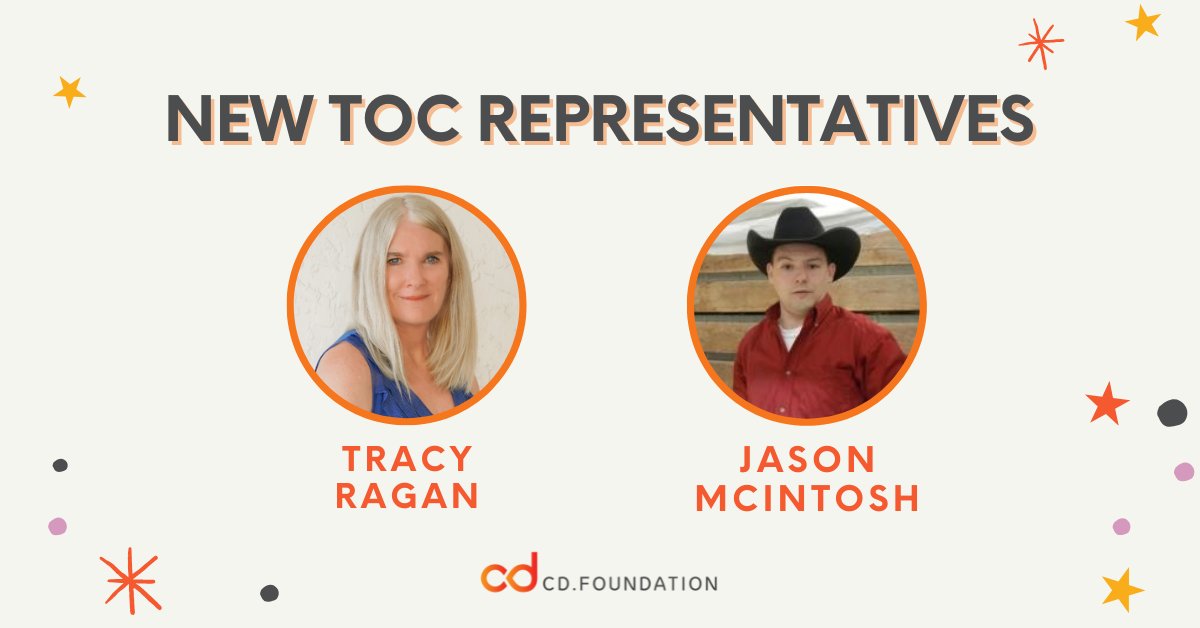
Welcome to the 2 newly elected Technical Oversight Committee (TOC) Project Representatives: Tracy Ragan (@OrteliusOs) and Jason McIntosh (Spinnaker)!
Read more: https://t.co/HQpttPCVE2
Donated to @MSF_USA Others can donate here: https://t.co/QfuzuS6xbY - I try to stay out of a lot of the discussion but support where I can. Stuff like doctors without borders, food pantries, shelters, etc. Give hope. Don't judge. Just provide what you can...
The more I see the more i think nothing has changed. Same problems as 20 years ago. Higher scale, micro improvements but what has TRULY changed? Speed a bit? but.. WHY, or WHAT are we really moving towards? AI isn't a change. Just faster delivery of the same answers.
Lab using Xen Ubuntu, MIcrok8s. Xen works well, but ubuntu & microk8s been crashing. Anyone have a preference/suggestion? Considering RH developer license (16 free), Suse? Cluster ONLY so max 6 nodes. Which solution & why? Repo linked https://t.co/ntv69zrvar
@jamescarr@TylerAYoung There are days I rather miss Fitnesse... it was a fairly solid for what it was framework, but it tried to be... too much of an end user vs. developer tool I think but i liked how it would keep history & the presentation of tests.
Please share this far and wide. As far and wide as you can. NIST Password Guidelines for 2024 are in the process of being updated.
This is a HUGE pet-peeve of mine (when vendors in particular are still operating like its 2017 and keep changing passwords every 60 days, STOP DOING THIS, it's outdated and has been shown to put you MORE at risk than less -- NIST explains why it does in this document, meticulously outlining user behavior**) so I'm sharing this in the hopes all of you will pass it along to your bosses.
The Special Publication series governing passwords is SP 800-63 "Digital Identity Guidelines".
The 2024 version is 800-63-4.
Here: https://t.co/oX8YEJHxXg
The companion docs are also on that link. They are 800-63A, 800-63B and 800-63C. These are different documents for different scenarios in play at your org.
The previous update was in2020.
The changes in the 2020 version from the 2017 version were numerous but one of them was that the password verification method should NO LONGER require passwords be changed at specific intervals (i.e. every 60 days) but in the following circumstances instead:
1. After a breach/compromise
2. User request
2024 repeats this and adds a bunch more guidlines but here is a screenshot of page 13 of the new 800-63-4 (note the # 4 after it) which outlines how your systems should now and moving forward, be handling passwords.
This goes for Active Directory, too. All your systems which have passwords should align with these guidelines provided there isn't another standard or framework you must adhere to which overrules this.
Most frameworks, however, have moved away from arbitrary password resets and complexity rules.
**We cybersec researchers and hackers use wordlists from breaches in a variety of different ways. Hackers use them in tooling to crack passwords whereas researchers use breach dumps to see the kinds of passwords users are creating and the psychology behind them.
Using complexity rules gets you the user psychology of:
Password1
Password2
and so on
Use phrasing instead and allow for spaces, which is important. Humans type phrases with spaces. They also mention phish-resistant methods and most vendors are on-board with MS going to be turning off all Legacy Auth next month, across all free accounts and tenancies.
I'm so excited for the new changes!
Ok I'm off my soapbox.
Share the love! Thank you!
So many different opinions in the world. So much hate and anger. So much using any excuse to justify bad behavior. I see way too much online. But also in person. What happened to respect, decency, not saying something if you don’t have something nice to say??
@mipsytipsy @austinlparker PRETTY much one frustration: The native support in various OTEL pieces. Currently OTEL collector documents traces/metrics/logs, but not "events". I'd like to see that change! (Maybe... ELK forwarder initially documented? Simple UI?) or something to help push this!
The KEY thing in an outage is NOT troubleshooting, not not metrics/logs/etc. Restoring service to your customers is PRIORITY. You use your observability data to help restore service by identifying the problems though hopefully it's rollback/site switch vs "The disk broke!"