1/ 🤲 LeRobot has made low-cost robot learning widely accessible — but most policies are still blind to contact.
Today we release LeFlexiTac: a tactile extension for the LeRobot platform using FlexiTac sensors. Make tactile robot learning as easy as possible.
Project page: https://t.co/6PY8oTmAjU
Code/docs: https://t.co/11HW0Zwrtb
𝗠𝗖𝗣 or 𝗔𝗴𝗲𝗻𝘁 𝗦𝗸𝗶𝗹𝗹𝘀?
You're asking the wrong question.
Short answer: they're not alternatives - they're solving different problems in the same ecosystem.
If you're building with AI agents, you've probably heard about both the Model Context Protocol (MCP) and maybe also Agent Skills.
Let’s break down what each does:
𝗠𝗖𝗣:
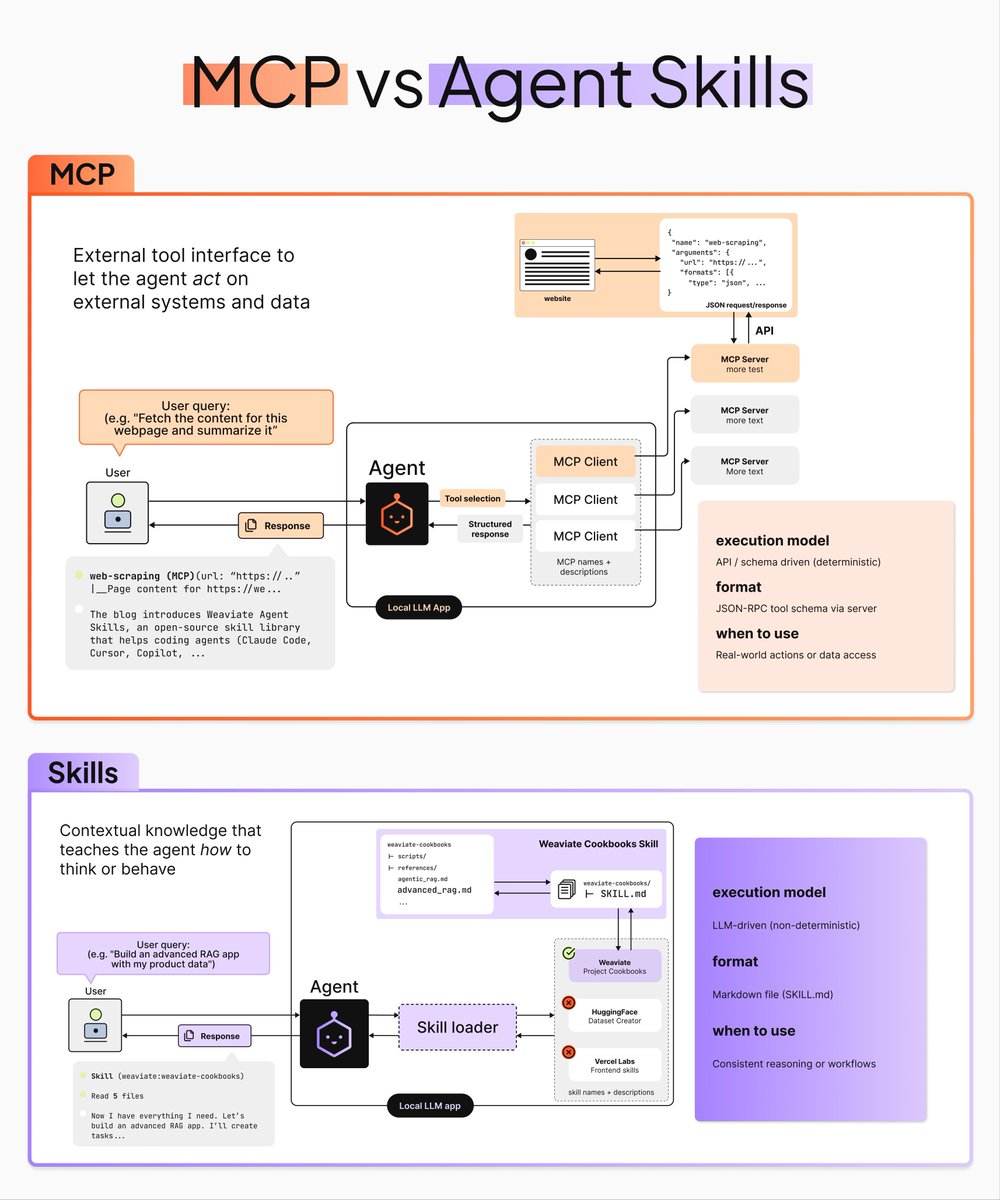
The Model Context Protocol, introduced by Anthropic in late 2024, is a universal standard for connecting AI applications to external data sources and tools. It’s basically a standardized API gateway. Your agent makes a deterministic API call with fixed input/output schemas and receives a deterministic response: clean and predictable.
𝗦𝗸𝗶𝗹𝗹𝘀:
These are something else. When an agent uses a skill, it's interpreting natural language instructions about 𝘩𝘰𝘸 to accomplish something. The agent decides which skill to use, when, 𝘢𝘯𝘥 𝘩𝘰𝘸 to execute it. Less "call this function" and more "here's how to think about this problem.”
𝗪𝗵𝗲𝗻 𝘁𝗼 𝘂𝘀𝗲 𝗲𝗮𝗰𝗵 / 𝗛𝗼𝘄 𝘁𝗵𝗲𝘆 𝘄𝗼𝗿𝗸 𝘁𝗼𝗴𝗲𝘁𝗵𝗲𝗿
Agent Skills leverages the standardization that MCP enables. So they 𝗯𝗼𝘁𝗵 have a place in agentic coding. Skills are great for behavioral guidance, MCP works better for the direct infrastructure calls.
Use 𝗠𝗖𝗣 when you're:
• Building broad integrations across multiple tools and data sources
• Creating custom MCP servers for your own systems
• Working with any MCP-compatible AI application
Use 𝗔𝗴𝗲𝗻𝘁 𝗦𝗸𝗶𝗹𝗹𝘀 when you're:
• Building specifically with specialized Weaviate tools/infrastructure
• Using coding agents like Cursor or Claude Code
• Need reliable, production-ready Weaviate implementations without debugging hallucinations
We just released our Agent Skills repository for Weaviate, serving as a bridge between your coding agent and Weaviate's infrastructure. The repository contains both granular Weaviate-specific scripts (schema inspection, data ingestion, precision search) and full end-to-end project blueprints (RAG pipelines, Query Agent chatbots, multivector PDF retrieval).
The best part is that you can get started with just one line of code in your terminal:
npx skills add weaviate/agent-skills
Learn all about Agent Skills in this release blog post: https://t.co/pHIsTQLjDr
BREAKING: Claude can now do SEO like a $10,000/month agency (for free).
Here are 7 insane Claude Cowork prompts that can take your biz to $100k/month : (Save for later)
`@cloudflare/codemode` v0.1.0 is now a modular runtime-agnostic SDK. Use `createCodeTool` to let LLMs orchestrate your tools and run generated code in a Dynamic Worker.
https://t.co/tT5Ab3sGIe
Cloudflare Containers & Cloudflare Sandboxes now both support Docker-in-Docker, allowing you to run a Docker daemon inside a container that is itself running on a Docker host.
An example use case for Docker-in-Docker would be running a fully sandboxed development environment.
Taken from the horse's mouth, this allows you to:
- Develop containerized applications with your Sandbox
- Run isolated test environments for images
- Build container images as part of CI/CD workflows
- Deploy arbitrary images supplied at runtime within a container
I believe this was a fairly highly requested feature, so I'm excited to see what people build with it!
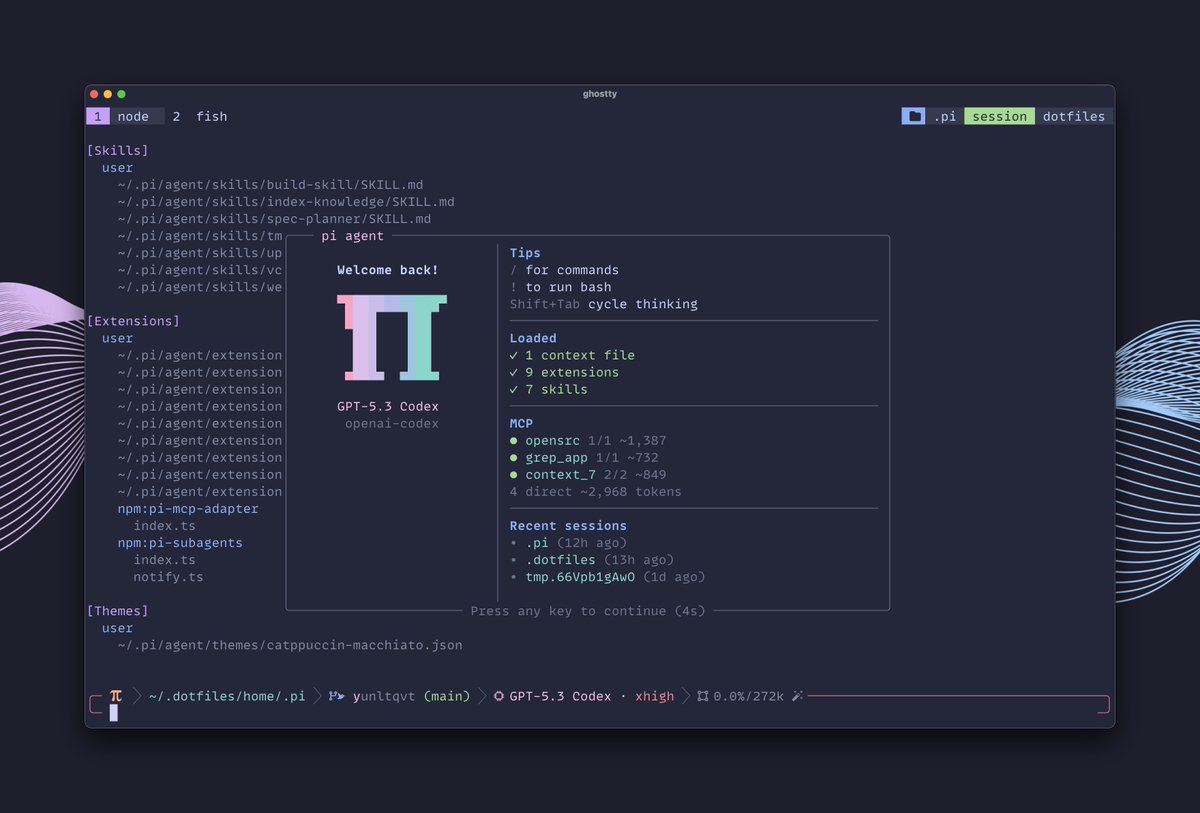
Sharing my opinionated setup for coding with agents. zellij + ghostty + codex, claude, pi & ∞ + lazygit
Enough insight at a glance as to whats changing, but still surfing tokens. Inbuilt sensible keybindings and sane defaults.
One command:
❯ sesh
https://t.co/nAHB4KpkOu
Unstructured intelligence = chaos
Most agent frameworks ship without a nervous system: deadlocks, context loss, vacuum hallucinations.
We built Common Ground to fix this, agents coordinate on a shared protocol.