When everything becomes a market, what happens to truth?
What if the next great innovation in information helps us recognize when we are wrong?
At WIRED, Bloomberg, TIME and now MoonPay, I have watched technology change how information moves and who gets to participate.
➡️ The Internet democratized access.
➡️ Social media democratized distribution.
➡️ AI is democratizing creation.
Now, prediction markets are making expectations tradable.
The question is: What will they reward?
A pundit can predict an election, get it wrong and return tomorrow with another prediction.
Good journalism, on the other hand, has standards, corrections and reputational consequences.
Unfortunately, attention often rewards perceived certainty over accuracy; and outrage "travels further" than nuance.
Prediction markets offer a different incentive. If you believe the market is wrong, you can put money behind that judgment.
Being wrong can cost you while seeing what others miss can pay.
But let's be clear: making money, forecasting accurately and finding the truth are three different things.
At their best, these markets bring together information people may never otherwise share. The price signals what participants expect. Its value depends on participation, liquidity and the rules.
A 70% probability is an estimate, not a promise. Sometimes a crowd is wise; sometimes a few informed participants drive prices; sometimes everyone is wrong.
If informed traders profit from people who know less, the public benefit must come from forecasts that help us make better decisions.
Confidential information can improve a forecast while undermining fairness; the risk is even greater when someone can influence the outcome. A market built to forecast an event should never reward someone for manipulating that event.
Thus, transparency matters. Accountability matters. And, as we are beginning to see, not everything that can become a market should become one.
So why am I optimistic?
Because Prediction Markets can reward something we need more of: changing our minds when the evidence changes.
Money does not make us humble. People double down on bad investments all the time and confuse conviction with knowledge.
But a functioning market can reward someone else for seeing what we refuse to see.
➡️ Politics often rewards unwavering conviction.
➡️ Social media often rewards defending a position.
➡️ Markets can reward updating an expectation before everyone else does.
The goal is to stay informed and keep questioning what we believe.
This is why I believe prediction markets could make good journalism MORE important.
Journalists uncover facts; markets estimate outcomes; and AI can help us analyze both.
When a market moves, we see that expectations have changed. A good journalist asks: Why? What happened? What new information emerged? Who knows something the rest of us do not?
The price gives us a signal, the reporting gives us context, but we still have to think for ourselves. And, that is something that feels lost right now.
Imagine reporting uncovering facts, models testing possibilities and markets revealing changing expectations. Each challenges the others. But, together, they can help us see more clearly.
That is a future worth building.
A future where uncertainty is visible, evidence matters, and where changing your mind is a sign of strength.
The Internet gave more people a voice. Social media gave more people an audience. AI is giving more people the ability to create. Prediction markets could give us another way to test what we believe.
Their promise is that better information and better incentives can help us make better decisions.
The future of information should belong to those who earn our trust.
The greatest measure of intelligence is not how strongly we defend what we believe, it is how willingly we change what we believe when the facts change.
Exclusive: MoonPay has acquired @dflow in a $100 million all-stock deal
DFlow, which builds Solana trading infrastructure, will bolster MoonPay's offerings for crypto traders
It's MoonPay's sixth acquisition in the past 18 months as the company prepares to eventually go public
⚡️ In one week, TON fees will drop 6× — to just 0.00039 TON (~$0.0005) per transaction, fixed regardless of network load.
🆓 Soon after most transactions go fully feeless. Zero commission. MTONGA!
✅ The Telegram Login SDK now supports native iOS and Android apps.
Only Telegram lets developers verify users’ phone numbers for free — something that’s otherwise expensive. 🫰
Expect more apps adding “Continue with Telegram".
The TON blockchain just got upgraded and is now 10× faster.
Block rate increased 6×.
Transactions are now instant, subsecond.
This was step 1 of 7 to Make TON Great Again (MTONGA).
Next step: cut the already low transaction fees by 6×.
TON x @Scrypt_Swiss loading… 📷️
Stablecoin rails on TON just leveled up for institutions—this is bigger than it looks, video dropping soon, stay tuned.
Everything you need to know about @ton_blockchain, the Layer-1 built inside Telegram's 950M MAU ecosystem.
Roadmap:
-Catchain 2.0: sub-second finality, block intervals under 500ms
-2026: vibe-coding loop on AppKi where builders describe apps to AI agents, and ships inside Telegram
TON Foundation partners with @Scrypt_Swiss to enable institutional access to USDT on TON.
A new infrastructure layer for banks, fintechs, and payment providers — supporting faster, lower-cost cross-border settlement.
That's where value accumulates — in the background, powering systems people already use without knowing it. Not because consumers chose crypto.
Because crypto is simply the better pipe.
Crypto Wins Quietly
People keep asking whether crypto will ever be truly consumer-facing — whether your average person will one day choose to pay with crypto the way they choose Visa or Apple Pay.
Where crypto builds lasting value is in the infrastructure layer. Cross-border payments that legacy systems handle slowly and expensively. Stablecoin rails that don't depend on centralized intermediaries that can fail. AI agent payments that can't be plugged into a bank account but can be plugged into crypto.
Unity. Purpose. Home. 🇦🇪
Proudly supporting the "One Nation. One People." initiative with Design Commission Abu Dhabi. Together, we protect what we love 💛
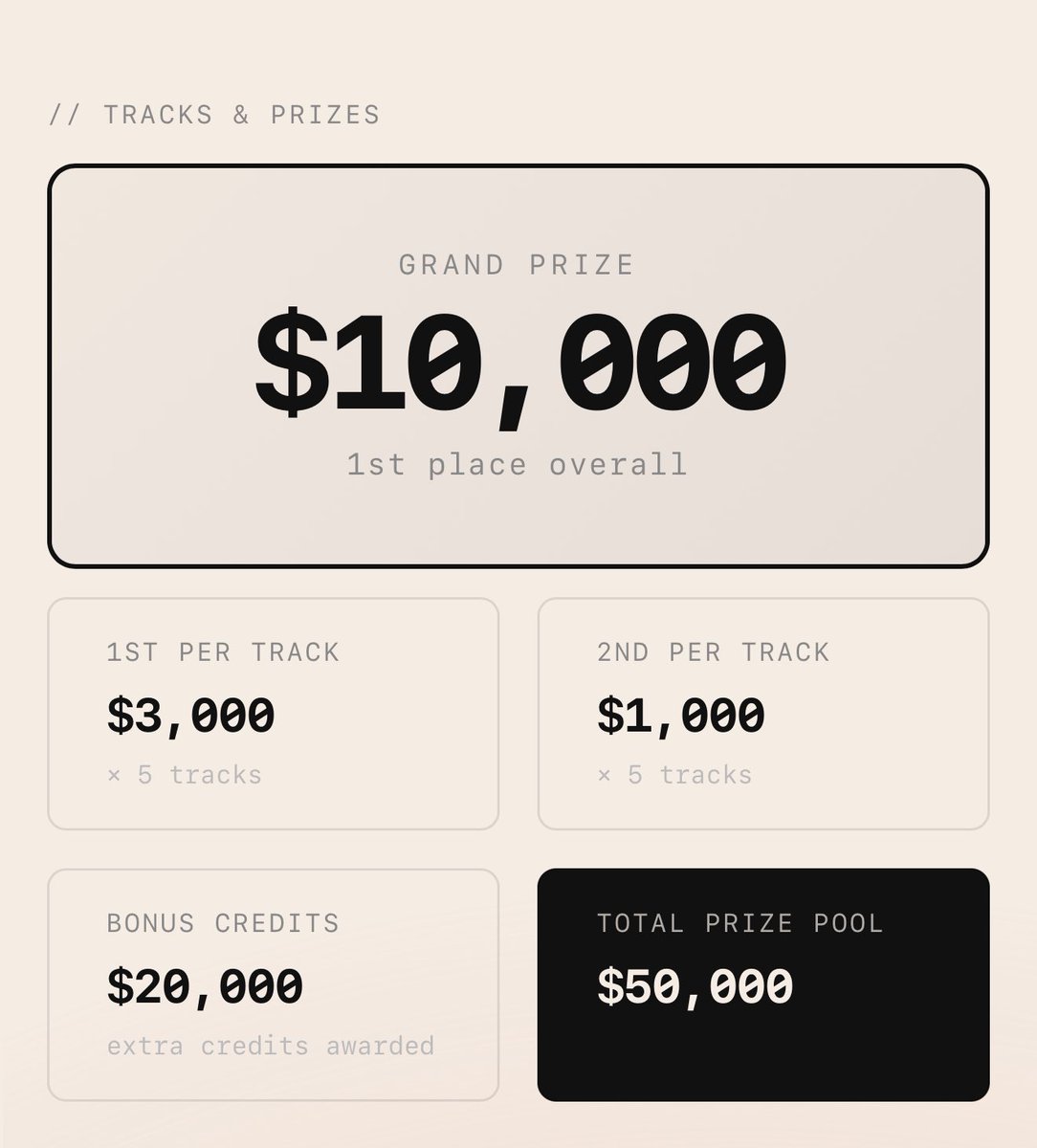
BREAKING: we’ve just received confirmation that 1st place in the OWS Hackathon is $10,000 in stablecoins 🤯🤑
pick from 40+ @OpenWallet builder tracks and code your way into 10K in one day…
register here: https://t.co/QpXJXrlnzG
With @ton_blockchain + MoonPay, stablecoins now have zero on-ramp fees for agents — removing the last friction between usage and value.
Excited for the future.
There will be more players than there are today. But whoever figures out the cheapest path—crypto, SWIFT, or something else—is who ends up with the business. Scale is still the thing.
The rails are a commodity. What you do with the margin isn't.
Neobanks aren't replacing traditional banking infrastructure. They're using it—and cutting corners wherever they can get away with it.
That's actually the whole model.
The niche player theory comes up a lot and it keeps running into the same wall. Banking licenses are expensive, compliance doesn't scale down, and without enough transaction volume you can't absorb the fixed costs of operating. There will be players who carve out specific remittance corridors—very targeted, very focused—and they'll make money. But 50,000 smaller players coexisting globally? That's not how this ends.