For anyone interested in reducing PCR reagent usage in resource-limited or resource-scarcity scenarios, here’s a very promising study suggesting that expired and reduced-concentration qPCR reagents can be used to save money and extend supplies 👇
The study, by Bustin et al. (2022), was inspired by the global shortage and increased pricing of molecular diagnostic testing following the onset of the COVID-19 pandemic. This contributed to major problems for testing in resource-limited areas, and for academic laboratories operating on shoestring budgets.
⭐To stretch out reagent supplies, the authors investigated whether six qPCR master mixes past their expiry dates (from 2014-2017) could produce comparable results to new qPCR master mixes.
Their results showed it was “patently clear to use master mixes that are considerably past their expiry date”, even amplifying larger amplicons (for qPCR) of up to 437 bp. They also found the same results regardless of conventional slow PCR cycling times or fast (e.g. a 10 sec extension step), or the type of qPCR instrument used.
⭐Bustin et al. (2022) then examined whether both new and old qPCR master mixes could be used at a range of dilutions from 0.8x to 0.3x their recommended concentration.
Here they were able to generate reliable sensitive results when diluting the master mixes to 0.8x concentration. Several master mixes could even be used at 0.5x or even 0.4x concentration, even if quite old!
⭐Finally, they investigated the impacts of freeze-thawing on one qPCR master mix that had only been defrosted and aliquoted once in 2014, to investigate whether unknown freeze/thawing could be a concern when reusing old reagents.
Their results showed that for this master mix at least, freeze-thawing was not a major factor in performance reduction.
Bustin et al. (2022) conclude that “with proper validation and appropriate protocols and instruments, master mixes years past their expiry dates can generate qPCR results that are as specific, sensitive and reliable as those generated by newly purchased ones”,
And also that “using reagents past their expiry date or at a lower than recommended concentration is a useful recommendation especially in a research context where resources can be scarce and the research budget tight.”
You can find their article here:
Bustin et al. (2022). Maximising the Use of Scarce qPCR Master Mixes. International Journal of Molecular Sciences, 23(15), 8486.
https://t.co/XimWDIGuDj
Additionally, even though this study focused on qPCR master mixes, there is no reason why the same resource-saving measures couldn’t be tested for standard PCR master mixes, especially for routine non-challenging targets. Even a 20% increase in samples per master mix tube (at 0.8x concentration) could make a big difference for many people.
Combined with other cost saving measures (such as using smaller PCR volumes, bulk pack tips, etc.) this approach could cut PCR costs considerably, making it more accessible to everyone from funding-poor academics and students, citizen/community scientists, and PCR beginners!
For anyone interested in teaching or learning PCR and DNA barcoding, here’s some recommended reading: four articles written by DNA barcoding educators describing lesson plans, learning objectives, and experiences running their courses.
For teachers, these articles might be useful to build, structure, or improve a course.
For learners, they might provide interesting insights into what to learn and practice from a “teachers’ lesson plan” perspective, going way beyond what a basic protocol might offer.
All of these studies had very similar aims but used different methodological approaches in terms of DNA extraction, software, and course length. So there are plenty of methodological options to look into and find out what suits you best.
⭐ The first article, by Erasmus (2021), describes DNA barcoding as a component of a third-year biochemistry course in British Columbia, Canada. The lesson plan involved a one-hour lecture and two three-hour laboratory sessions based on DNA barcoding stoneflies (Plecoptera).
The practicals used Chelex resin for DNA extraction; FinchTV for chromatogram inspection and editing; and the Barcode of Life Data Systems (BOLD) and NCBI’s GenBank for sequence identification:
Erasmus, D. J. (2021). DNA barcoding: A different perspective to introducing undergraduate students to DNA sequence analysis. Biochemistry and Molecular Biology Education, 49(3), 416-421.
https://t.co/xb7S4j8Oal
⭐ The second article, by Shevcenko et al. (2019) covers a course of 10 one-hour sessions framed around the DNA barcoding of caddis flies (Trichoptera) in New Jersey, USA.
Over this course the students learned about sample collecting; insect diversity; vouchering and photographing of collections; extracting DNA using the HotSHOT method; PCR of the COI barcode region; gel electrophoresis amplicon visualisation; Sanger sequencing; editing DNA sequences; uploading results to the Barcode of Life Data Systems (BOLD); and phylogenetic analysis.
Shevcenko et al. (2019). Undergraduate teaching of scientific concepts using DNA barcoding of Trichoptera. Zoosymposia, 14, 16-31.
https://t.co/EduppmkGNW
⭐ A third article, by Casanova & Shumskaya (2021), covers the DNA barcoding of fungi over three laboratory classes. The practicals used a spin column kit DNA extraction (Powersoil from Qiagen), and DNA analysis via NCBI’s BLAST search tool and free MEGA phylogenetics software:
Suárez Casanova, V. M., & Shumskaya, M. (2021). Exploring DNA in biochemistry lab courses: DNA barcoding and phylogenetic analysis. Biochemistry and Molecular Biology Education, 49(5), 789-799.
https://t.co/0lxO4v6heJ
⭐ And finally, for those short of time or for remote homework purposes, two simple exercises by Al-Deeb (2021) in basic BLAST searching and phylogeny construction using the online https://t.co/wgUd48aWz5 tool, designed as a basic introduction and to break through barriers arising from the fear of bioinformatics:
Al-Deeb, M. A. (2021). Using DNA Sequences and Phylogenetic Trees as Tools for Teaching Entomology to Undergraduate Students: A Simple Approach. Advances in Entomology, 9(4), 147-154.
https://t.co/FQT66Qun6c
If any of these are useful to you, please let us know. We’d also be very glad to know of any similar articles we can add to this list for future posts!
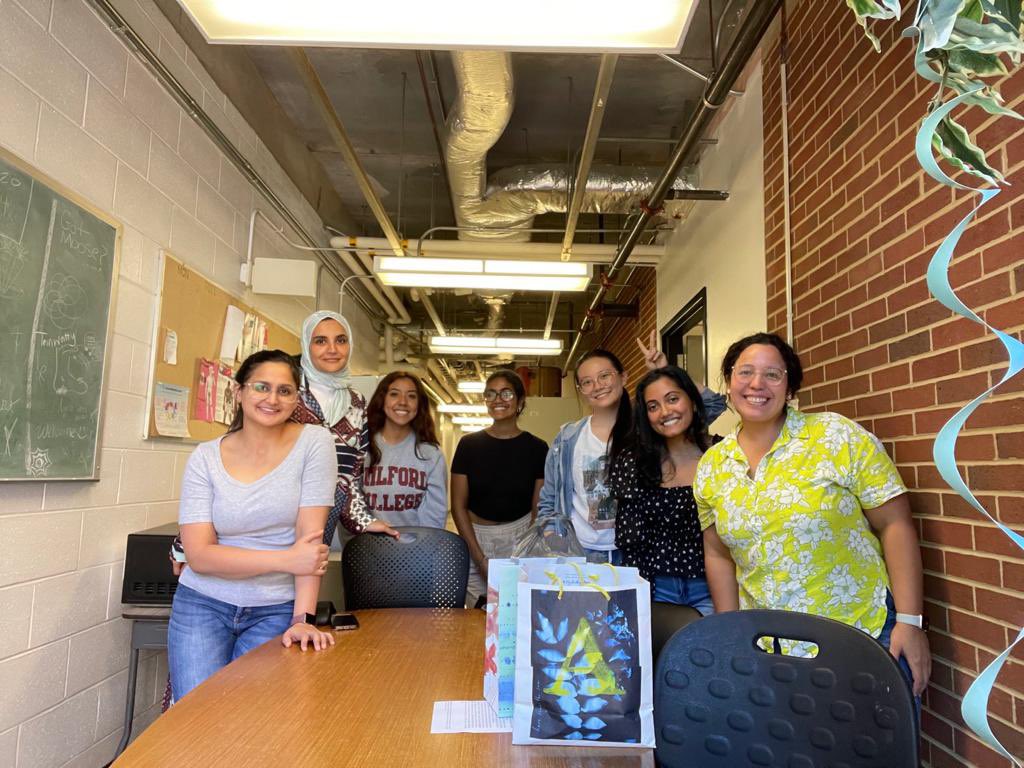
Farewell to our amazing postdoc Mara @mcuebs 😭We will miss her enthusiasm and dedication (and cakes). Mara worked on the Bacteroides project (congrats on those successful mutations) and her invaluable contributions in the core🦠🧪won’t be forgotten.
Wishing you all the best🚀
Tar Heels, your mental health and well-being are paramount and #UNC has resources available to support you now and in the days ahead. Unroll this thread to learn about resources available for students, faculty and staff
#UNC will open a hotline starting at 8 a.m. Tuesday for concerned parents, loved ones and community members who have questions. The number is 919-918-1999
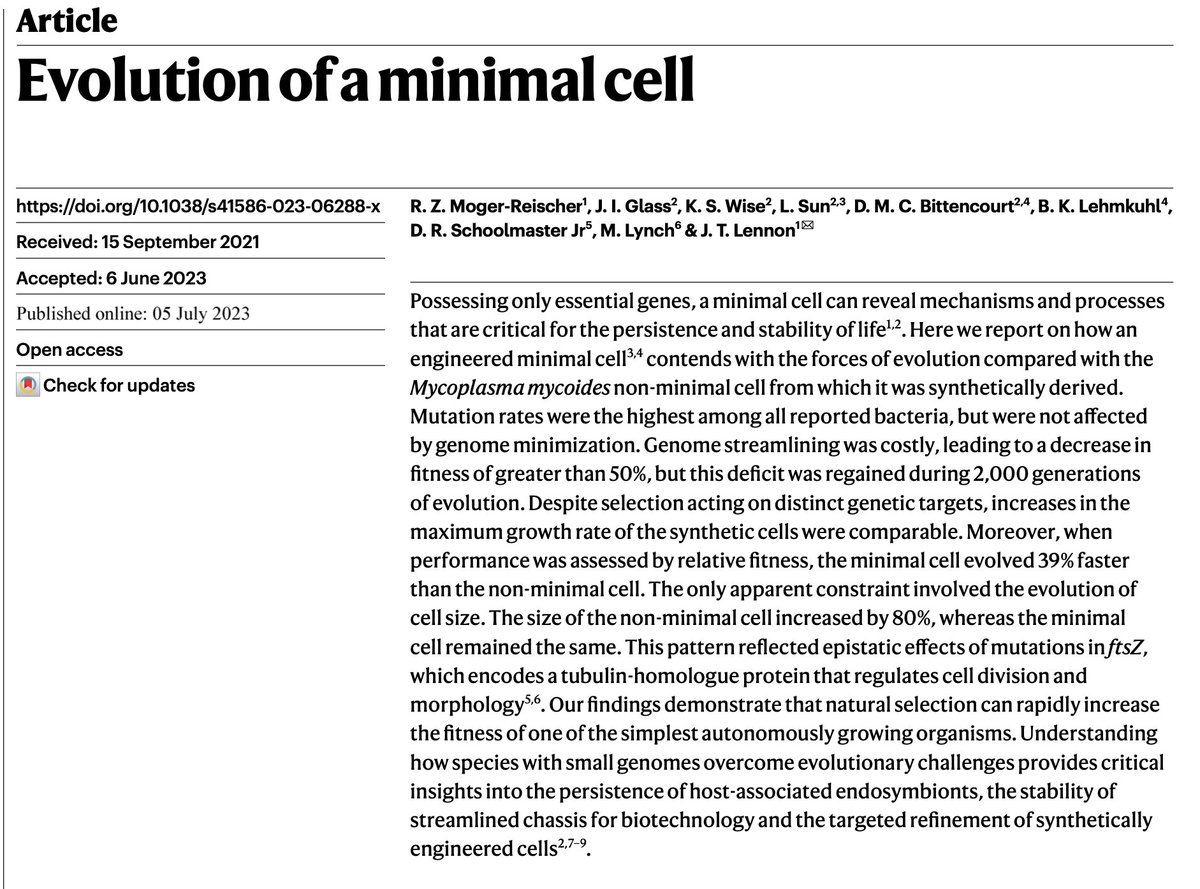
A mind-blowing paper has come out today in @Nature
In 2016, JC Venter Institute scientists trimmed a bacterial genome to its barest minimum required for life to synthesize what they called a "minimal genome" (https://t.co/Rk8oZJ0bUj).
Today, a group of scientists from Indiana University reports how that minimal genome evolved over 2000 generations in comparison to the non-minimal genome.
The authors found that even when you reduce a bacterial genome to its absolute minimum where every nucleotide matters, the genome undergoes mutational events generation after generation as much as the non-minimal genome. One simply cannot stop the evolution.
Just over 300 days of evolution (equivalent to 40,000 years in humans) the minimal cell has gained everything it lacked in fitness on day one in comparison to the non-minimal cell.
When comparing the evolved traits between the minimal and non-minimal cells, the scientists found something striking. The evolutionary process increased the cell size of non-minimal cells but not that of the minimal cell. But that is not the striking part.
The scientists were able to identify the key mutation that resulted in cell size evolution. And it turned out that the mutation that helped the non-minimal cells to grow bigger is the same that helped the minimal cells to stay smaller. Growing bigger had a survival advantage for non-minimal cells and not growing bigger had a survival advantage for minimal cells. So, the mutation had a context-dependent effect. This just demonstrates that the evolutionary effects on traits have no absolute direction. All that matter is what is beneficial for the organism's survival.
The conclusion of the paper is metaphorically a quote from the Jurassic Park movie:
“Listen, if there’s one thing the history of evolution has taught us is that life will not be contained. Life breaks free. It expands to new territories, and it crashes through barriers painfully, maybe even dangerously, but . . . life finds a way". (https://t.co/UlxRlb86CT)
https://t.co/zA9OAqSoAu
I was accepted to Stanford 100% bc of affirmative action. A 15 yo rez girl living w kids from royal families & trust funds. When I worked for Stanford Admissions, I had to answer does Stanford practice aff action? My response was always yes bc the playing field isn’t level! 1/
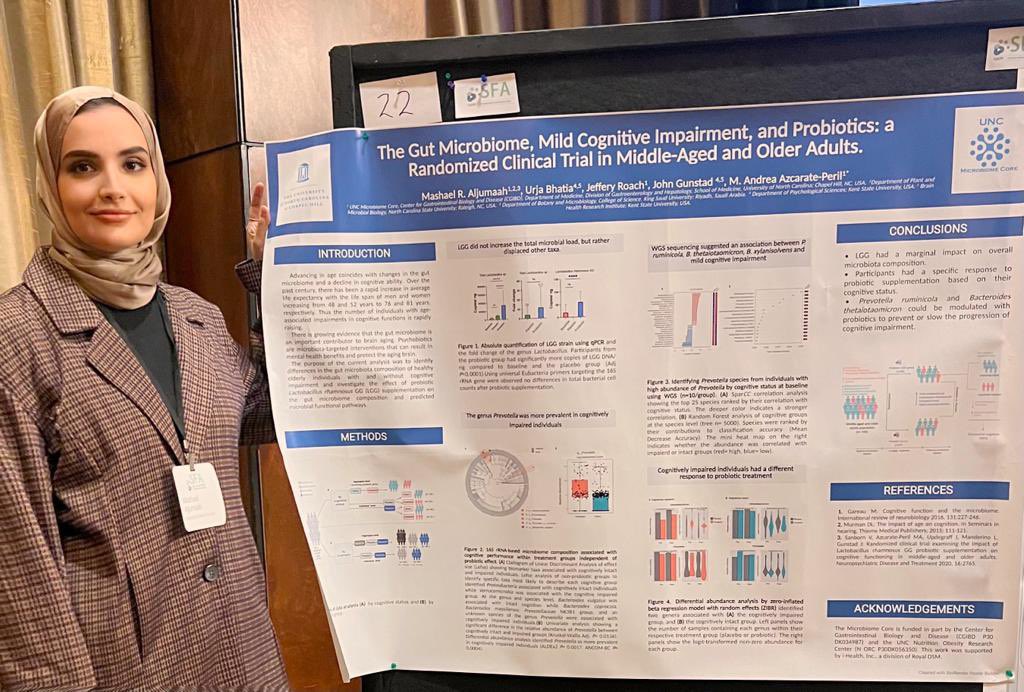
Congratulations to our Ph.D. candidate Mashael, who won the poster awards for #ISAPP2023 🏆
And many thanks to @ISAPPSFA, who organized this excellent conference and gathered a fantastic and talented cohort!
Let’s talk about Black physicians (5% of all physicians). We have statistically lower MCAT and Step scores. However, Black physicians taking care of Black patients decreases mortality. If we let less Black applicants into medical school, more patients will die.
Period.
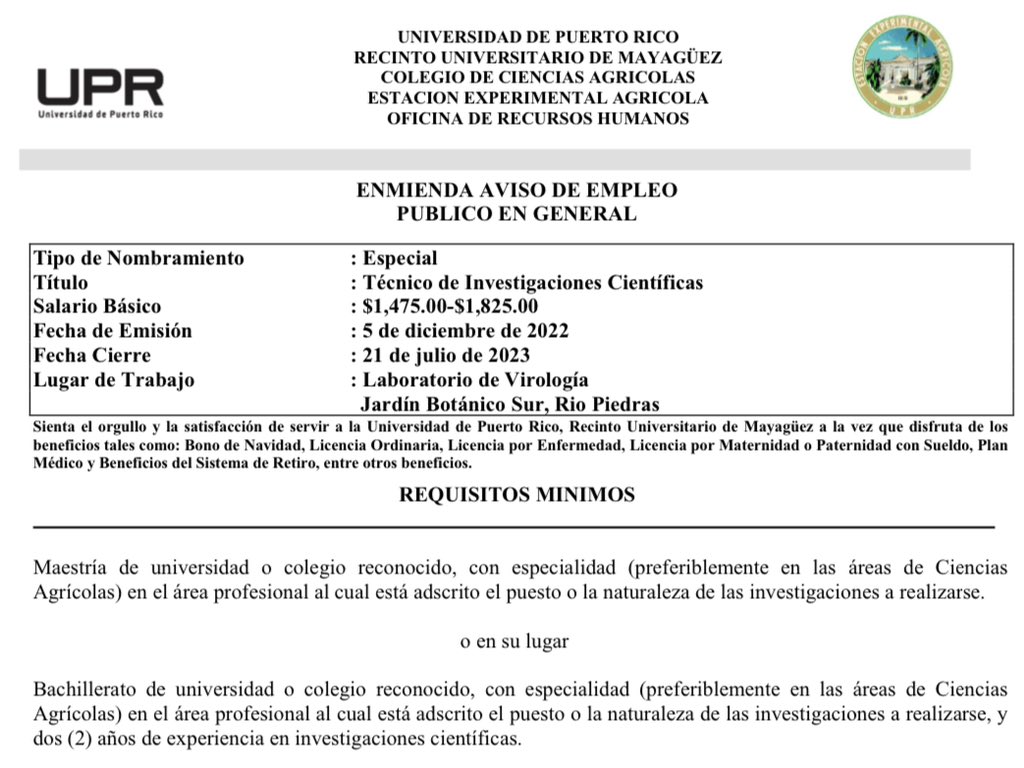
Requisito mínimo maestría. Salario aproximado de $8.80/hora. Estas son las políticas del presupuesto que promueve la @FOMBPR donde estrangula a la UPR. Que conste que ese salario se supone que de para vivir en Río Piedras.
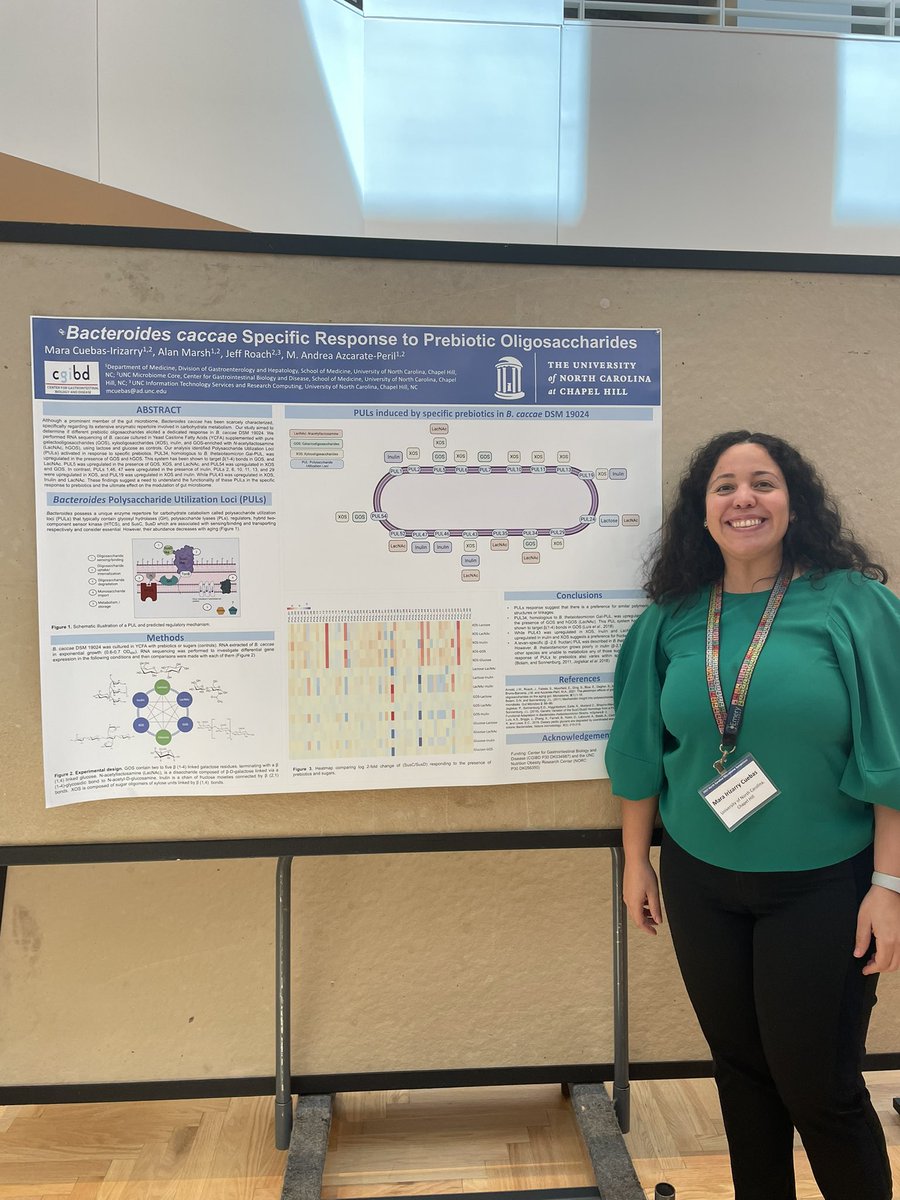
We are in the 2023 North Carolina Microbiome Symposium👏👏👏 So many exciting talks and also our four poster presentations from Mara, Mashael, Yunan, and Nivedita.
Being part of LASA can be a valuable experience for a number of reasons. You can network, develop your soft skills and advocate for the Hispanic community to mention a few!
If you think this association aligns with your interest and goals please see below: