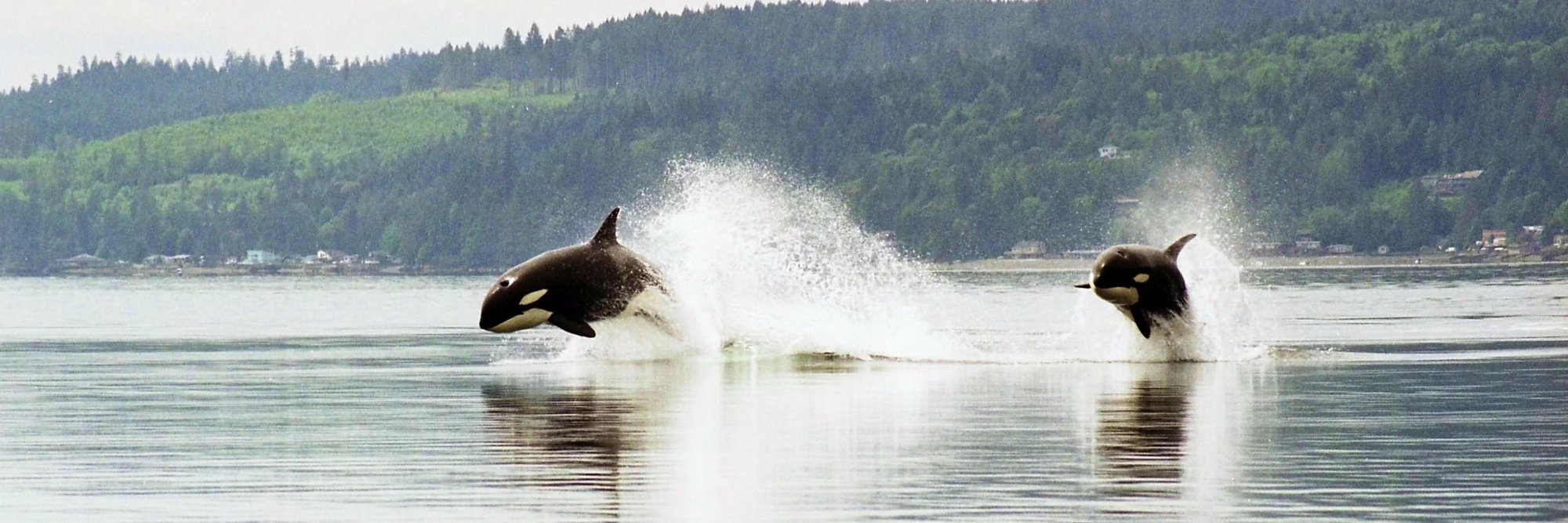
Recently @NOAA added the Rice’s whale to its short list of spotlight species. This could mean that potential conservation actions are on the horizon in the new year for the endangered species.
https://t.co/ksDaDIz6vw
Thank you @NPR for interviewing me for this fantastic investigative piece on NOAA's failure to protect the Gulf of Mexico Rice's whale from oil and gas activities: https://t.co/tjTf80V4KW
(3/3) It is unconscionable that this White House has punted the issue to the next administration, doing nothing to protect these endangered whales now.
(1/3) Today, the Biden Administration released their 5-Year Plan for offshore oil and gas lease sales. Incredibly, the administration has done nothing to protect the country's most endangered whale--the magnificent Gulf of Mexico whale.
(2/3) Those 50 remaining Gulf of Mexico whales lie in a narrow strip of habitat that is now exposed to further leasing... and seismic blasting... and dangerous drilling.
(4/4) "It’s also worth remembering, says Dr. [Lindy] Weilgart, that the fate of humanity depends on healthy oceans. “We pretend we are self-reliant,” she says. “But every second breath we take comes from the ocean.”"
(3/4) “I wanted to build the fastest, meanest container sailing ship I could make... The industry has an astronomical amount of inefficiencies that are not being addressed" - Danielle Southcott
(4/4) "They’re deserving of their sonic space, like we all are. They’re deserving of the space to make music, like we are... They have a right to culture, they have a right to pleasure, they have a right to play." - Cory Diane
(1/4) The Gulf has fallen in love with Rice's whales! Check out Lexi Nutkiewicz's interview with New Orleans-based composer Cory Diane to discuss their contemporary electroacoustic piece using degraded ocean soundscapes and Rice's whale songs: https://t.co/gScXmlKMEv
(3/4) "Communities are dealing with the effects of extractive economies from Cancer Alley in Louisiana to Rice’s whales in the Gulf. It’s important to draw out these interspecies connections from a loving, emotional, and intellectual place." - Cory Diane
(3/3) "(Noise) has increasingly well understood physiological consequences for animals, and if they are already having a hard time making a living in the ocean, then that is that is a stressor we have to address. We have to figure out ways to improve the quality of that habitat."
(2/3) "Large commercial ships, meanwhile, are the dominant human-generated contributors to low-frequency noise across ocean basins, which can interfere with animals’ ability to hear signals they need to detect." - Leila Hatch
"NOAA is required by law to not only protect this species, but recover it... There's no debating whether we're going to protect the whale or not. We are. It's the law. It's part of the values that Americans put in our laws when the Endangered Species Act was passed in 1973."
Christian Wagley featured in the Panama City News Herald about NOAA's responsibility to protect critically endangered Rice's Whales in the Gulf of Mexico: https://t.co/AERIMBEkf3
#SaveTheWhales#SaveTheGulfWhale
"The two new bills would thwart efforts to strengthen the [2008 right whale ship strike] rule with science-supported measures that NOAA scientists say are necessary to keep the species from extinction."
#SaveTheWhales#SaveRightWhales
It's critical that we protect North Atlantic Right Whales from extinction; however, new legislation threatens their survival. Read and share @FrancineKershaw 's latest blog: https://t.co/HuEXgKMdL0
#SaveTheWhales#SaveRightWhales