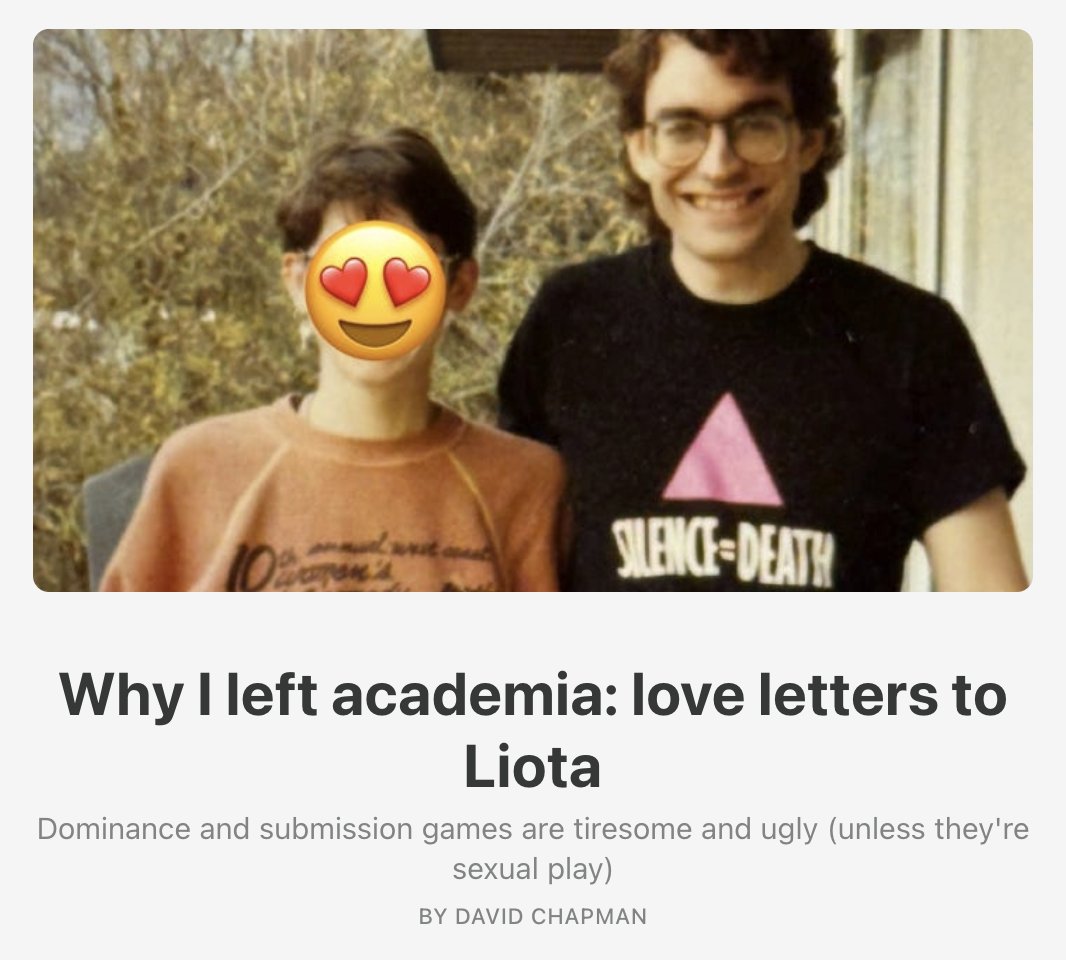
🆕 “When I adopt someone else’s mindset for a while, it can be exhilarating!” Academia understood as a series of lousy BDSM scenes instead. Good enough reason to leave!
🔗 Link in reply tweet! ⤵️
I believe China's ascension in biotechnology could play out in two ways for the Western world:
1. In the optimistic case, it will be wake-up call. China is still behind in terms of basic science. If it can race ahead in certain areas (like cell therapies) based on regulatory reform and better and faster execution, what could the United States (and some European countries) achieve in biomedicine? How many more drugs would we have by implementing the right reforms?
China has some structural advantages that cannot be readily copied: for example, cheaper workforce. Larger patient pools. But the United States does not have to copy everything, as it also has its own unique advantages. Implementing some key reforms would help a lot. For example, streamlining the path to first in human data.
If the optimistic case comes to pass, we will have a Renaissance of medicines and many more than the counterfactual where China did not become ascendant in biomedicine.
2. In the pessimistic case, the Western world will not learn quickly enough from this, or have the political will to implement the right reforms. This will lead to a massive decrease in cures relative to the counterfactual, just as AI is promising to revolutionize the pre-clinical side of biomedicine.
For now, American and European pharmaceutical companies largely retain the upper hand in the later stages of clinical development, as shown by the fact that Legend ultimately licensed Carvytki to a large American biopharmaceutical company to get it approved. But the pipeline that feeds those late-stage trials is increasingly Chinese. Such early-stage dominance turned into vertical integration of the entire chain in solar panels, batteries and electric vehicles, and LCD panels. The question is how long Western companies can sustain their advantage at the later stages, when the discoveries that make those stages possible are increasingly being made elsewhere.
Open model capabilities now exceed what is required for most enterprise tasks. Which - along with the ability to self-host for security purposes - is prompting enterprises to switch away from expensive private models toward open models like Deepseeks at a fraction of the cost.
Screening is increasingly impractical with massively parallel DNA pool construction, followed by assembly. Current screening relies on rejecting very limited target sequences from known pathogens. Likely worth it, but do realize the extreme limits.
Sam Altman, Dario Amodei, Demis Hassabis and many others have signed a letter urging Congress to increase security on orders of synthetic nucleic acids - and the equipment needed to make them - as models continue to become increasingly bio-capable.
The fundamental failure mode of rationalism.
I've been trying to get people to let go of its hollow promises for forty years now.
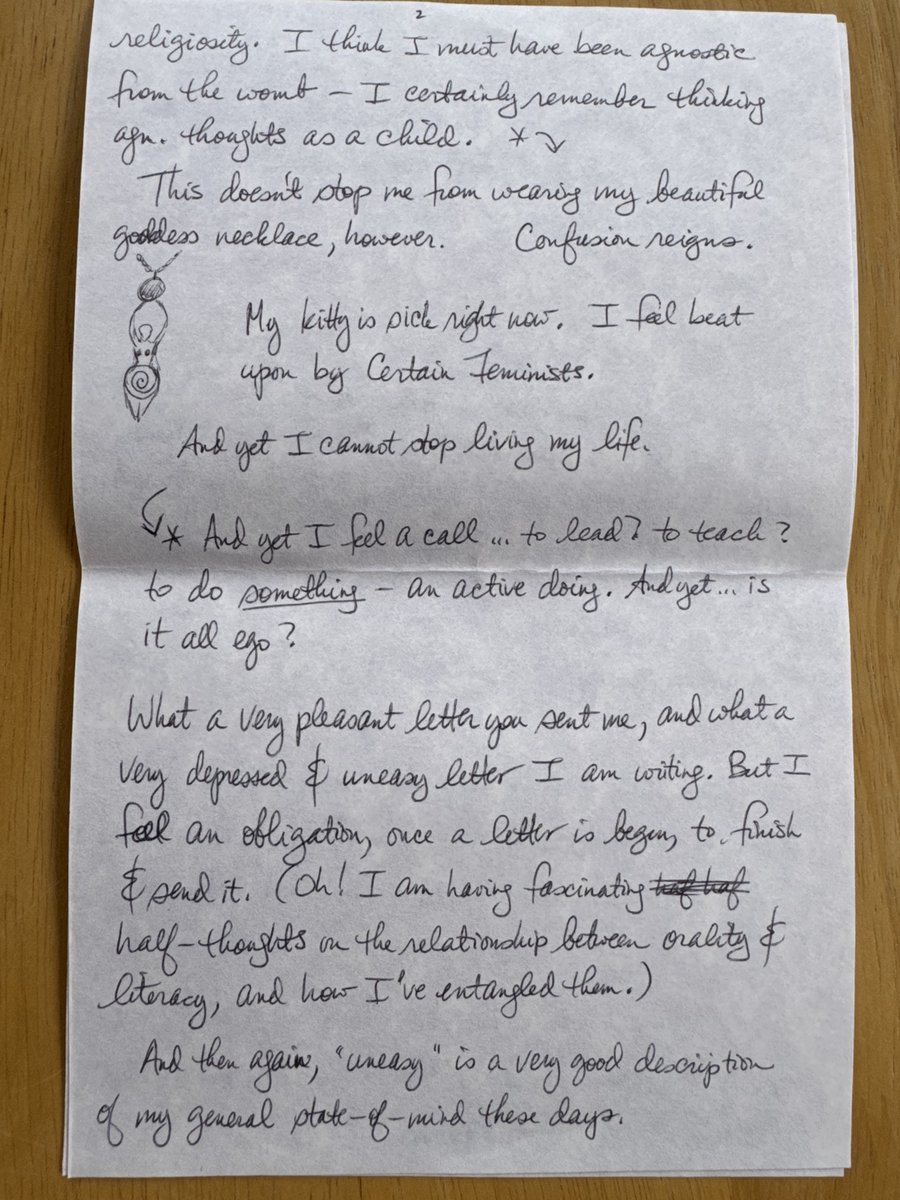
💌 Letter to Liota, from an 🤖 AI conference, 1988:
🆕 “When I adopt someone else’s mindset for a while, it can be exhilarating!” Academia understood as a series of lousy BDSM scenes instead. Good enough reason to leave!
🔗 Link in reply tweet! ⤵️
"... or else you stand neck-deep in the corruption and stupidity and try to make something marginally less corrupt and stupid happen."
https://t.co/4CZHbMHetO
"I am NOT comfortable with religiosity. And yet I feel a call to lead, to teach… is it all ego?"
Liota wrote that in her first letter to me, in 1988. This was a big issue for me then too, when we were both Wiccan Neopagans. It remained so for decades.
About ten years ago, I somehow mostly stopped caring about my ego. (Maybe Buddhist meditation is good for something after all?) So it’s no longer the huge obstacle that it long was.
I miss the era of intensely good blogs
An all time favorite was that of @kevinsimler
Some of my favorites
- 4 parts on Julian Jaynes (first part https://t.co/1tCIIcIB5C)
- on social status https://t.co/UsNYoYPNg5
- honesty and the human body https://t.co/KlBe6BODHr
"... or else you stand neck-deep in the corruption and stupidity and try to make something marginally less corrupt and stupid happen."
https://t.co/4CZHbMHetO
@connerdelights@RomeoStevens76@brighterlamp Yes, I definitely notice the effect of color temperature, and have a mixture of bulbs that I turn on/off at different times of day.
@RomeoStevens76@connerdelights@brighterlamp Tunable color temp and high CRI are expensive, though!
Some people (including Andrew) say that makes a big difference. I want to see for myself! But $1200 is a sticking point.