Jensen Huang, the CEO of leading AI company Nvidia, just said:
If an AI model will "damage the world — then I think the answer is that we have to shut the labs down."
My new bill to ban Artificial Superintelligence would do just that.
If you can't control it, don't build it.
Radiology used to have something that was almost invisible because it was so routine:
The reading room consult.
Rounding teams came down.
Surgeons pulled up their cases.
Internists brought the scan that didn't quite fit the clinical picture.
Sometimes the radiologist solved the problem.
Sometimes the clinician supplied one piece of history that completely changed how the images were interpreted.
And usually everyone simply walked away a little sharper.
But something else was happening during all of those conversations.
We were learning each other.
As a radiologist, I learned what individual physicians cared about.
I knew which findings mattered to a particular surgeon.
Which measurements an oncologist was following.
Which details a specialist wanted emphasized.
What questions they were really asking, even when the order just said "pain."
And they learned me.
They knew who was reading their study.
They knew they could walk in, point at something, challenge an interpretation, or ask, "What do you think?"
That relationship created context.
It created feedback.
It created trust.
And over years, it created a kind of institutional knowledge that never appears in the medical record.
When radiology becomes a report produced by someone hundreds or thousands of miles away, we don't just lose proximity.
We risk losing that entire feedback loop.
The report may still be technically excellent.
But the radiologist knows less about the physician.
The physician knows less about the radiologist.
The radiologist sees less of what happened after the report.
And both sides lose opportunities to make each other better.
The reading room was never just a room.
It was where imaging became part of the clinical conversation.
We should think very carefully before designing that conversation out of medicine.
Inspired by a conversation yesterday with @PaleoOnc . Also @909One and @brianchiong .
JAMA: Review of Adult Rheumatoid Arthritis
This JAMA narrative review is a follow-up to their 2018 publication, informed by 123 articles (46 RCTs, 28 cohort studies, 11 systematic reviews/meta-analyses, 15 guidelines) covering epidemiology, pathogenesis, diagnosis, and treat-to-target RA.
https://t.co/HlRVQMgLtC
RFK Jr saying "none of the 72 vaccines given to children have been tested against placebo "
The reality :
- Children are not given 72 vaccines
- The ones they are given have been tested against placebo
This serial liar is your HHS Secretary.
Want to build a better nation with a more vibrant economy? Roads, pipelines, ports and natural resource utilization are important but so are the rural hospitals required to support the essential workers in construction, mining, forestry, agriculture and fishing.
Time for a national discussion on rural ER closures.
Every year, I share this video of French caretakers who take sand from Omaha Beach in Normandy, and scrub them into the letters to give them the gold coloring.
They do this for all 9,386 US soldiers who died.
France also gave us this land as American soil. #MemorialDayWeekend
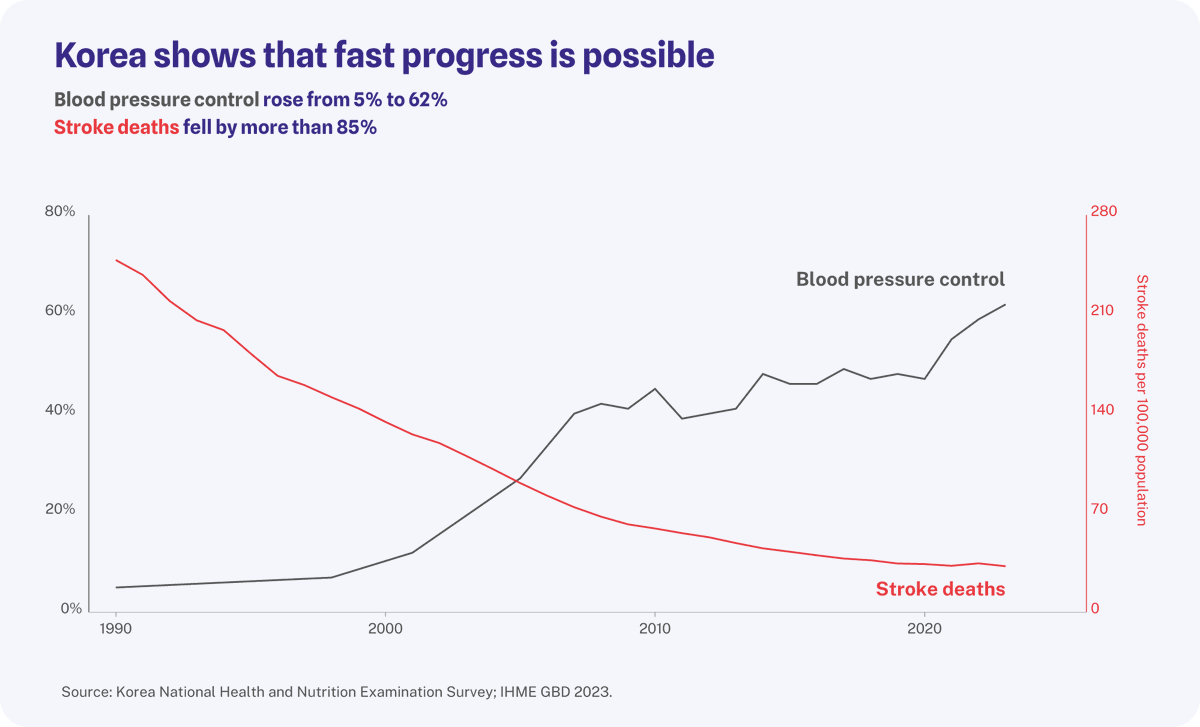
The story of how South Korea cut stroke deaths by 80% deserves to be much better known—both because they've earned the credit and because every country in the world can make progress at least this fast. Here’s what happened. https://t.co/0m0kV80f9e
Inflammatory myopathies are typically associated with a myositis-specific autoantibody that determines the diagnosis and prognosis. Myositis subgroups have distinct pathomechanisms that now allow for targeted therapies.
Learn more in the Review Article “Inflammatory Myopathies” by Yves Allenbach, MD, PhD, and Olivier Benveniste, MD, PhD: https://t.co/ZeCKdNe87v
The adoption of electric vehicles in Africa is great, and it illustrates the insanity of a U.S. policy to push wasteful and far more expensive internal combustion engine vehicles, which results in (1) people spending $20,000-$40,000 more for fuel than for electricity over 15 years of driving (2) the U.S. ceding the vehicle market to other countries.
Fuel shortages and high prices push adoption of EVs in Africa, led by Ethiopia
https://t.co/qMYS4j9gQL
Large hospital systems are profiting off Medicare rules that pay them more for the same service than independent practices.
That means a senior in my district can pay MORE for an X-ray at a hospital than at a local doctor’s office -- and the hospital makes MORE too.
Today I asked hospital system CEOs a simple question: should we equalize payments to lower costs and expand access? They said no.
Americans deserve affordable care, not a system that rewards higher prices.
Modern electronic health records are so dysfunctional at organizing information that many health systems now hire full time nurse practitioners or PAs just to “pre chart” before clinic. Their job is to dig through pages of clutter and produce a usable summary so the physician can safely see the patient.
Think about that.
Hospitals spend tens or hundreds of millions on an EHR that promises efficiency, integration, and better care. And then they turn around and pay six figure salaries to humans whose sole task is to manually summarize what the software should have been able to synthesize in the first place.