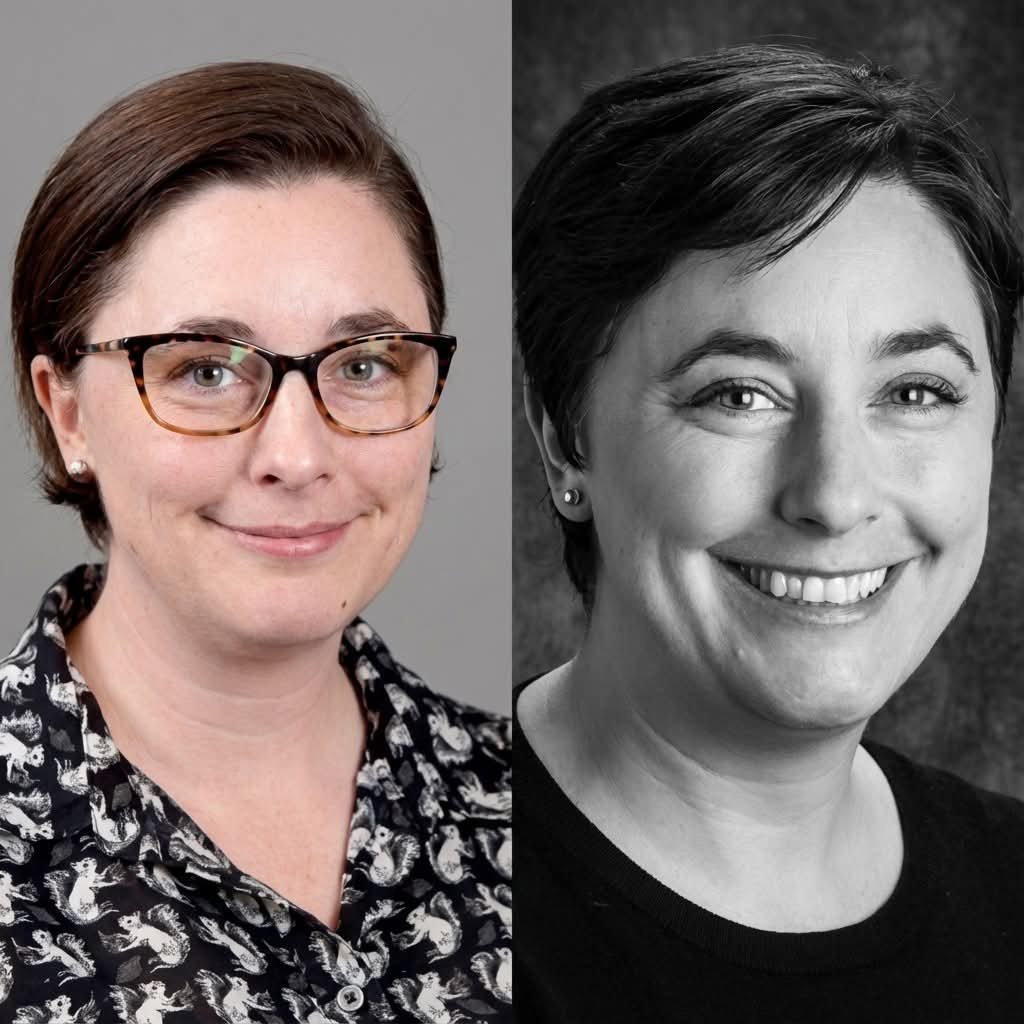
My parents were older when they had me and my sister. In the 1970s many people had children in their 20s. My dad was 42. By that time he was a partner in a major accounting firm. He had a big office, everyone called him Mr Wilson and he seemed to be a big deal in his workplace. My father is a modest man and made no conspicuous displays of wealth. But I realised when I was 11 or 12 that none of my school friends lived in my neighbourhood, few people had two new cars, very few owned a second house or skied in the winter and no-one else travelled overseas. When I was a teenager, I discovered he owned quite a lot of commercial property too, which paid a good amount of rent.
My father grew up in a working class family in the Great Depression. His father died during WW2. He left school early to support his family and eventually studied part-time at university. He’s pretty unassuming. People always thought he was a farmer or, at least, that he worked outdoors. In fact, he loves the outdoors and spent most of his leisure time outside. But he worked in an office.
I realised as an adult that my dad had a highly successful career and used the money he earned for the benefit and enjoyment of his family. We had things and experiences that most of our friends didn’t. But, really, his greatest success was in supporting and encouraging my sister and me. He always wanted us to do our best and didn’t much mind what our results were so long as we tried hard. I think this had an important effect on me. I have built a successful career too, equivalent to his but in an entirely different field. He never pressured me and I didn’t feel any sense of competition. But he encouraged and supported me and expressed his pride in my sister and me. He took us skiing and hiking, helped with homework, took us to the museum and aquarium at the weekend and always watched our sports.
My father is a successful man. He had a successful career but, more importantly, he’s an excellent father. I’m lucky to still have him at age 95.
Here is a recent photo of me and my parents.
By animal discovery
This mother, known as BB, is a remarkable Pallas’s cat from Mongolia with an impressive litter of six kittens, which is unusual since the average is typically 3 to 4 kittens. While only five kittens are visible in any single shot, she is actually nursing all six
On February 4th, 2000, Holly Stavola, received the MMR, the oral polio, and DTaP.
Holly was a completely healthy, bright, kind and beautiful 5 year old child.
The day she received her vaccinations at her 5 year well check-up Holly was not sick nor immunocompromised in any way.
She became very ill a week following the shots, which is within the expected time period for encephalitis.
(Encephalopathy is one of the potential reactions of the MMR as stated in the Merck insert. It can occur between 5-15 days after the vaccine.)
She suffered 65 hours before becoming brain dead. Her first symptoms were a 107 degree fever and seizure that happened in the home before calling 911. She was shivering because hypothermia set in due to them trying to cool down her 107/108 fever. She was naked, vomiting, could not speak. Holly died from encephalopathy.
How many children suffered this fate that we never hear about?
I hope you will read Dave Ramsey’s comments about going cashless. It’s a two minute read and NO one has explained it better.
Please take 2 minute's and read!
Dave Ramsey repost:
HERE'S WHAT NO CASH ACTUALLY MEANS:
A cashless society means no cash. Zero. It doesn’t mean mostly cashless and you can still use a ‘wee bit of cash here & there’. Cashless means fully digital, fully traceable, fully controlled. I think those who support a cashless society aren’t fully aware of what they are asking for. A cashless society means:
* If you are struggling with your mortgage on a particular month, you can’t do an odd job to get you through.
* Your child can’t go & help the local farmer to earn a bit of summer cash.
* No more cash slipped into the hands of a child as a good luck charm or from their grandparent when going on holidays.
* No more money in birthday cards.
* No more piggy banks for your child to collect pocket money & to learn about the value of earning.
* No more cash for a rainy day fund or for that something special you have been putting $20 a week away for.
* No more little jobs on the side because your wages barely cover the bills or put food on the table.
* No more charity collections.
* No more selling bits & pieces from your home that you no longer want/need for a bit of cash in return.
* No more cash gifts from relatives or loved ones.
What a cashless society does guarantee:
* Banks have full control of every single penny you own.
* Every transaction you make is recorded.
* All your movements & actions are traceable.
* Access to your money can be blocked at the click of a button when/if banks need ‘clarification’ from you which will take about 3 weeks, a thousand questions answered & five thousand passwords.
* You will have no choice but to declare & be taxed on every dollar in your possession.
* The government WILL decide what you can & cannot purchase.
* If your transactions are deemed in any way questionable, by those who create the questions, your money will be frozen, ��for your own good’.
Forget about cash being dirty. Stop being so easily led. Cash has been around for a very, very, very long time & it gives you control over how you trade with the world. It gives you independence.
If you are a customer, pay with cash. If you are a shop owner, remove those ridiculous signs that ask people to pay by card. Cash is a legal tender, it is our right to pay with cash. Banks are making it increasingly difficult to lodge cash.
Please open your eyes. Please stop believing everything you are being told. Almost every single topic in today’s world is tainted with corruption & hidden agendas.
Pay with cash & please say no to a cashless society while you still have the choice.
Copy and paste to your profile if you wish.
Sharing is caring 👊🏼❤️
“The school psychologist said my daughter would probably never work independently. She was seven when we got the autism diagnosis, and I watched other parents get this news and fall apart. I just nodded and thought about all the ways I'd prove them wrong, which is probably its own kind of falling apart.
She's eleven now and barely speaks some days. Other days she'll talk for an hour straight about fondant techniques and buttercream ratios from whatever baking show she's rewatching. Her teacher asked if I thought this obsession was healthy. I said it's the first thing she's ever loved that didn't involve me translating the world for her.
Last Tuesday she told me she wanted to make a cake by herself. Not with me hovering and fixing things, actually alone. I stood outside the kitchen door for two hours listening to her talk to herself, narrating every step like the contestants on Kid's Baking Challenge. The same show she's watched 47 times, I'm not exaggerating, I counted. I heard her drop something and waited for the meltdown that didn't come. Just "okay, trying again" in that flat voice she uses when she's concentrating.
When she finally let me in, this mermaid cake was sitting on the counter. Every single flower piped by her hands that can't tie shoelaces yet, that still struggle with buttons. The tail she'd rosette-piped in layers looked better than anything I could've done. She didn't look at me when she said "Do you think people would buy this?" I wanted to lie down on the floor and cry but instead I pulled out my phone and listed it on my shop where I sell my own crafts. It sold in forty minutes. The woman who bought it sent a message saying it was for her niece's birthday, that it looked professionally done.
My daughter read that message seventeen times. Asked if she could have her own shop someday. I set one up for her on my shop that night, helped her photograph three more practice cakes she'd made. She already has two custom orders and a waiting list I'm trying not to think about too hard because what if this is too much, what if I'm pushing her, what if the psychologist was right. But then she comes home from school where she eats lunch alone and barely speaks, and she puts on her apron and becomes someone who knows exactly who she is. That's worth more than every expert opinion I've ever received. Her hands shake when she's anxious but steady completely when she's piping flowers. I don't know what that means for her future, but I know it means something.”
Credit: Maisie Charlton
Encephalitis...
This is brain inflammation. If it doesn't stop swelling then it will cut off the oxygen to the cells and the infant will die.
This is called ‘SIDS’
If it does stop, it causes brain damage which they call 'autism'.
If they called it what it really was then you would ask too many questions and they can't have that. Far easier for them to name it something else, blame it on 'genetics' and call it a 'gift'
This is enough to pacify you and suppress the truth.
In 2008, evolutionary anthropologist Katie Hinde began studying breast milk from rhesus macaque mothers. What started as a routine study turned into a groundbreaking discovery. She found that mothers raising sons produced milk richer in fat and protein, while those raising daughters had different nutrient balances. This led Katie to a radical conclusion: milk is not just nutrition—it’s information.
Her research revealed that milk shapes behavior, not just growth. For instance, first-time mothers produced milk with higher levels of cortisol, influencing their babies to grow faster but also become more anxious. Katie also discovered that milk changes based on the baby’s immune needs. When a baby is sick, the mother’s milk quickly adapts by producing more white blood cells and targeted antibodies.
Katie’s work, which challenged the scientific consensus, was largely ignored. She launched a blog, Mammals Suck Milk, to spark discussions, and her findings, including that every mother’s milk is unique, gained widespread attention. In 2017, she took her research to a TED stage, and in 2020, her work was featured in Netflix’s Babies. Today, as a professor at Arizona State University, Katie continues to revolutionize our understanding of infant development and lactation.
Katie Hinde didn’t just study milk—she uncovered a living, responsive communication system, revealing that nourishment is intelligence. Her discovery shows that sometimes the biggest revolutions begin by listening to what others ignore.
The neighbors call the cops on my dad every six months. They think he’s running a fighting ring or flipping pets for profit. For years, I wasn't sure they were wrong.
My father, Frank, is a man of few words and even fewer friends. He lives on a fixed income in a small, weathered house just outside of town. He’s 68, walks with a limp he got in ’71, and spends most of his day in his garage.
But his most controversial habit involves the local animal shelter.
Like clockwork, Dad brings home a dog. Not the cute puppies everyone wants. He picks the "unadoptables." The three-legged pit bulls, the senior labs with gray muzzles, the curs that cower in the corner. For six months, that dog lives like royalty. I’d visit and see Dad hand-feeding them steak scraps, walking them for hours, talking to them in a soft voice he never used with me.
Then, six months later? Gone.
The dog vanishes. No photos, no collar left behind. Just an empty bowl and Dad driving his rusted pickup truck to the shelter to get another one.
"Where’s Barnaby?" I asked last Sunday. Barnaby was a one-eyed Golden Retriever mix he’d had since spring. That dog worshipped the ground Dad walked on.
"Moved on," Dad grunted, staring at his coffee.
"Moved on? Did you sell him, Dad? The neighbors are talking. They say you’re sick."
"Let them talk."
I couldn't take it anymore. I loved Barnaby. The thought of my father selling that sweet soul to some stranger for a few hundred bucks made my stomach turn. So, when I saw him load a bag of high-grade kibble and a new leash into his truck the next morning, I followed him.
I expected him to drive to a breeder or a shady parking lot exchange. Instead, he drove two towns over to a drab apartment complex near the VA hospital.
He pulled up to a ground-floor unit. I watched from my car, phone ready to record evidence, as he knocked on the door.
A young man answered. He couldn't have been older than 25, but he looked 50. He was missing his right arm, and the way he stood—tense, scanning the perimeter—screamed PTSD. I recognized that look. I’d seen it in Dad’s old photos.
Dad didn't say a word. He just whistled.
From the passenger seat of Dad’s truck, a dog jumped out. It wasn't Barnaby. It was "Duke," a German Shepherd he’d had last year. Duke looked incredible. Focused. Calm. He trotted right up to the young man and sat by his left leg, leaning his weight against the boy’s thigh.
The young man crumpled. He fell to his knees, burying his face in Duke’s fur, sobbing. Duke didn't flinch. He just held his ground, anchoring the boy to reality.
Dad handed the young man a thick envelope. Not money—paperwork. Vaccination records. Training logs.
I got out of my car. "Dad?"
He jumped, looking more terrified than I’d ever seen him. He walked me away from the boy, lowering his voice.
"You weren't supposed to see this."
"You trained him," I realized. "You didn't get rid of them. You trained them."
Dad sighed, lighting a cigarette with shaking hands. "A fully trained PTSD service dog costs anywhere from fifteen to thirty thousand dollars. The insurance doesn't cover it. The VA has a waiting list a mile long. These boys... they come home, and they can't sleep, they can't go to the grocery store, they can't breathe."
He looked back at the young man, who was now smiling through tears, throwing a ball for Duke with his left hand.
"I can't give them money," Dad said, his voice cracking. "I don't have any. But I know dogs. And I have time."
"But why the secrecy? Why every six months?"
"Because that’s how long it takes to turn a scared shelter dog into a soldier’s lifeline," he said. "Basic obedience, task training, desensitization. I take the broken dogs nobody wants, and I turn them into the partners these kids need."
"And Barnaby?" I asked, my throat tight.
"Delivered him yesterday to a female marine in Ohio. She hadn't left her house in two years. She went to the park this morning."
🐾 on my ❤️ Please share if this moved you.
"My name's Leonard. I'm 74. I answer phones at Murphy's Plumbing. Been here six years, ever since my knees gave out and I couldn't crawl under sinks anymore. Now I just sit at this desk, take calls, dispatch the younger guys. Most people are angry when they call. Burst pipes, backed-up toilets, water everywhere. I get yelled at a lot.
But sometimes, I hear something else in their voice.
Like the woman who called at 11 p.m. on a Tuesday. "My kitchen sink's leaking," she said, voice shaking. "How much for an emergency visit?"
"$250 minimum, ma'am. Plus parts."
Silence. Then crying. "I can't. I'm sorry. I'll just… put a bucket under it."
Something in her voice reminded me of my daughter during her divorce. That same defeated exhaustion. "Ma'am, how bad's the leak?"
"It's... I don't know. A lot? It's dripping fast."
"Could you text me a photo?" I gave her my personal cell. Against policy, but whatever.
The photo came through. Loose coupling under the trap. Five-minute fix if you know what you're doing. I talked her through it. Step by step. Where to find the wrench, which way to turn it, how to check if it's tight.
Twenty minutes later: "It stopped! Oh my God, it stopped!"
"You did good," I said.
"How much do I owe you?"
"Nothing. You fixed it yourself."
She cried harder. "I'm a single mom. Three jobs. I've been trying to fix everything alone for so long. Thank you for not making me feel stupid."
After that, I started doing it more. When someone called panicking about a small problem, I'd walk them through it instead of sending a truck. Running toilet? Adjust the chain. Clogged drain? Try baking soda and vinegar first. Not everything needs a plumber.
My boss noticed. "Lenny, you're costing us jobs."
"I'm saving people money they don't have," I said. "The big jobs still come. But the single moms, the elderly folks on fixed incomes, they don't need to go broke over a loose washer."
He grumbled. But didn't fire me.
Here's what changed everything. A man called last month. "You walked my wife through fixing our sink two years ago. I'm a lawyer now, used to be unemployed. That night, we had $30 to our name. You saved us. I want to pay for someone else's emergency repair. Who needs it?"
I had a list. Always do.
Now? People call asking to sponsor repairs. "Pay it forward," they say. We've fixed problems for 60 families this year. No charge. Because someone else remembered what being broke felt like.
I'm 74. I answer phones most people curse into. But I learned something. People don't always need an expert. Sometimes they just need someone who believes they can figure it out themselves. Who doesn't make them feel small for not knowing.
So teach instead of charging. Explain instead of dismissing. That panicked person on the phone? They're not stupid. They're just scared. And a little patience costs nothing.
Sometimes the best fix isn't the wrench. It's the voice on the other end saying, "You've got this. I'll walk you through it."
.
Let this story reach more hearts....
.
Credit: Grace Jenkins
Let's talk about how long it takes for obviously wrong medical advice to change.
1950s: Doctors recommend smoking to pregnant women.
"It calms the nerves. Helps with stress."
Evidence of harm: Mounting.
How long until doctors stop recommending it: 20+ years.
1960s: Thalidomide prescribed to pregnant women for morning sickness.
Causes severe birth defects. Thousands of children born with missing limbs.
Evidence of harm: Immediate and catastrophic.
How long until it's banned: Took 5 years in some countries. US narrowly avoided approval.
1970s: DES (diethylstilbestrol) prescribed to prevent miscarriage.
Causes cancer and reproductive problems in daughters of women who took it.
Evidence of harm: Mounting throughout the decade.
How long until discontinued: 11 years after first concerns.
1990s: Margarine recommended over butter for heart health.
Evidence: Trans fats in margarine actually cause heart disease.
How long until trans fats banned: 25 years.
2000s: Vioxx approved for arthritis pain.
Causes heart attacks. Killed an estimated 60,000 people.
Evidence: Existed before approval. Company hid it.
How long until withdrawn: 5 years. Only after public pressure.
2010s: Opioids prescribed freely for pain.
"They're safe! Not addictive!"
Evidence: Massively addictive. Destroying lives.
How long until restrictions: 20+ years. Only after epidemic is undeniable.
The pattern is clear:
Medical establishment recommends something.
Evidence of harm emerges.
Establishment ignores evidence.
Years or decades pass.
Harm becomes undeniable.
Establishment slowly reverses course.
Never admitting they were wrong. Just "updating based on new information."
So when modern doctors say:
"Seed oils are heart healthy!" "Statins for everyone!" "Cholesterol is the enemy!" "Saturated fat causes heart disease!"
Remember: They've been catastrophically wrong before.
For decades.
And they never admit it until the damage is done.
How long were doctors wrong about cigarettes? Decades.
How long wrong about trans fats? Decades.
How long will they be wrong about seed oils and statins?
We're finding out in real time.
But if history is any guide: They'll be wrong for decades before admitting it.
And millions will suffer following their advice in the meantime.
The question isn't: "Are doctors right this time?"
The question is: "Why would you assume they are, given their track record?"
A little girl asked her mother,
"How did the human race begin?"
The mother answered, "God made Adam and Eve and they had children, and so all mankind was made."
The next day, the little girl asked her dad the same question, "How did the human race begin?"
The father answered, "Many years ago, there were monkeys from which the human race evolved."
The confused girl returned to her mother and said, "Mom, how is it possible that you told me the human race was created by God, and dad said they developed from monkeys?" 🐒
The mother answered,
"Well, dear,
it is very simple. I told you about my side of the family and your father told you about his.”
Bam a lamb 🤣🤣🤣
In a new 4:45 interview clip, Dr. Sherri Tenpenny just said out loud what she’s been warning about for 25 years — and it’s absolutely chilling.
She now refuses to call the childhood schedule a “vaccination program” any longer.
Her exact words:
“It’s the Pediatric Poisoning Program.
For adults it’s the Adult Assault Program.”
Here’s the timeline she lays out that will make your blood run cold:
1986 – Congress passes the Vaccine Injury Compensation Act giving pharmaceutical companies total liability protection.
At the time there were ONLY three vaccines routinely given to American children: DTP, MMR, and polio.
Lawmakers thought they were protecting a handful of shots.
They had zero foresight.
Then the floodgates opened.
1991 → Hep B given on the day of birth + Hib
Then chickenpox, Prevnar, Gardasil, rotavirus, Hepatitis A, four different meningitis vaccines…
Today U.S. infants can get up to 28 injections by their first birthday.
Dr. Tenpenny showed a chart that tracks autism rates against new vaccine introductions.
Every single time a new shot was added, the autism line shoots almost vertically upward.
2000 → 1 in 150 children
2025 → 1 in 30 nationally (some states 1 in 22)
And we’re still told “we don’t know what causes it — probably genetics.”
She says by age 2 — before kidneys are mature enough to excrete aluminum — American children following the CDC schedule will have received roughly 4,700 micrograms of injected aluminum that can cross the blood-brain barrier and accumulate in brain, bones, liver, and kidneys.
Recent large studies she references:
- Cleveland Clinic 2024–2025 (millions of patients): people who got the flu shot were more likely to catch influenza.
- Brand-new pneumonia vaccine study: recipients were more likely to get pneumonia and die.
After a quarter century of being dismissed, Dr. Tenpenny says the cracks in the wall are finally spreading.
Whether you’ve followed this debate for years or this is the first time you’re hearing these claims, this 4:45 clip is one of the most direct, unfiltered explanations ever put on record by a physician.
Watch it. Save it. Research every claim yourself.
Parents and grandparents all over the world — this one is worth your time.
Full segment below (sound on).
Let’s get this in front of every concerned parent on the planet.