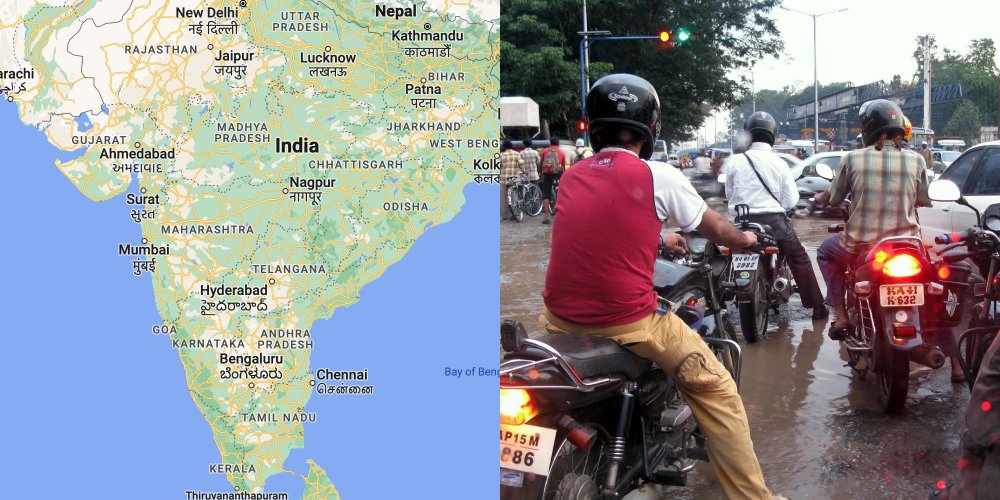
In 2008, Google Maps launched in India.
But we quickly ran into a problem:
Nobody used street names.
And street names were the foundation of Google Maps.
The team had to make some big adaptations.
15 years later, the changes have stood the test of time.
Here's how the team came up with creative solutions to adapt Google Maps to work in India:
–––
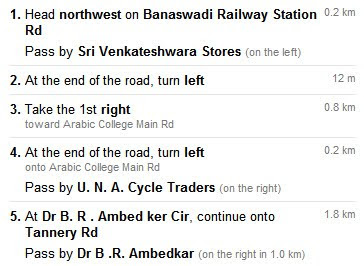
When Google Maps launched in India, turn by turn directions were unusable.
Because there were no road names, directions looked like this:
This was before real time, accurate GPS in phones had become mainstream.
In short, directions were pretty much useless in India.
–––
We could have left the product as it was.
We could have assumed it was good enough, would get better over time, or that eventually people would adapt.
But India was a massive potential market and we wanted the product to thrive.
The solution wasn’t just a case of acquiring and cataloging street names.
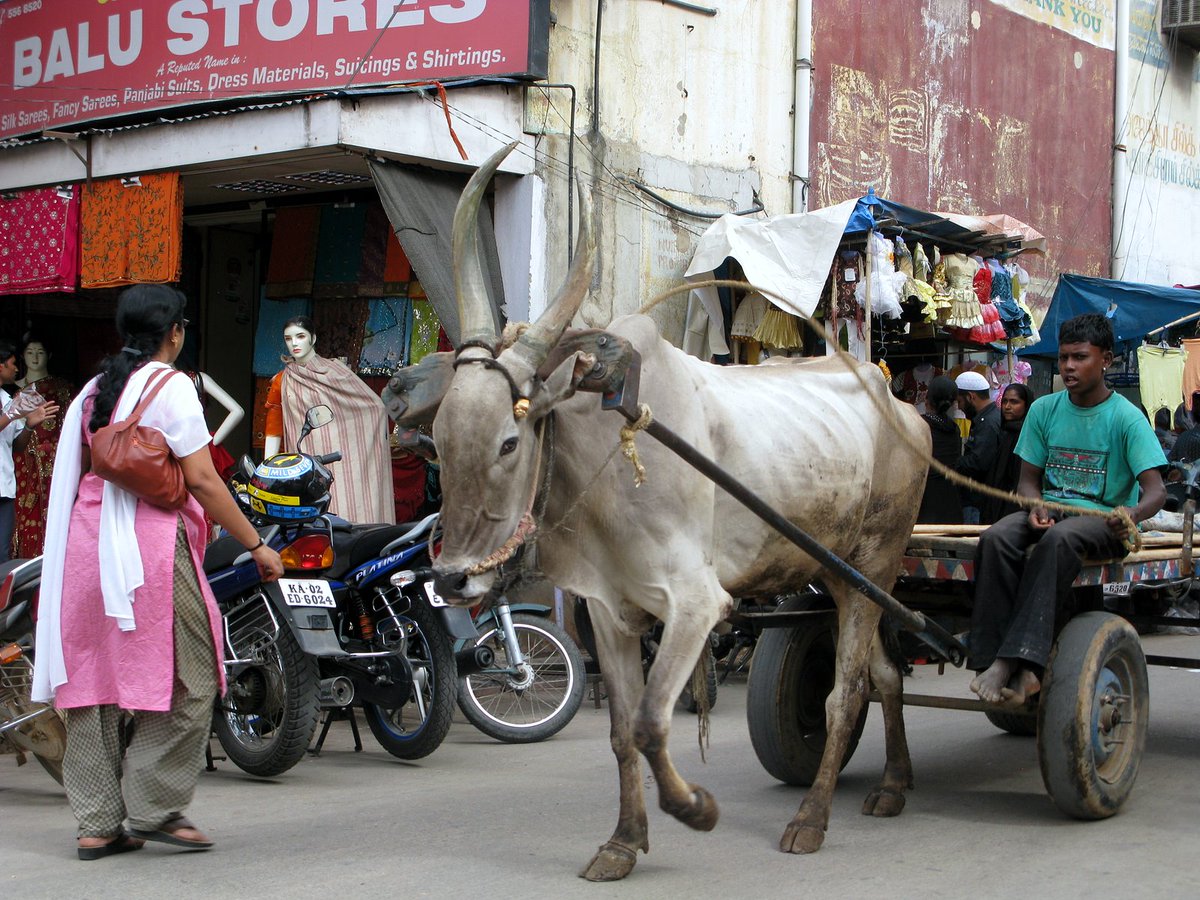
Many streets either didn’t have names, had multiple names, or weren’t known by their official names.
So we had to find an alternative.
We already knew that many communities around the world relied on landmarks (rather than street names) for navigating.
e.g. “Turn left at the park, head towards the water”
We knew this was also true in India.
But we had to confirm landmark based navigation would work.
And if it did, how we could make it work.
–––
So we dove in.
We started to explore how Google Maps could work if it oriented around landmarks.
But we needed to understand 2 key questions:
1. How did people use landmarks to navigate in India?
2. What types of landmarks were good for navigating?
This is where user research came in.
At the time, Google had robust support for user research.
There were research labs on campus with eye tracking technology and one-way mirrors.
There was a team dedicated to recruiting research participants.
But in this case, my friend and researcher extraordinaire, Olga (@okhroust) simply focused on how she could best answer these key questions.
She put together a creative and scrappy research plan.
And then she and Janet, the designer, hopped on a plane to India.
–––
What followed was nimble, on the ground field research to understand, first-hand, the answers to these questions.
They creatively explored various approaches including:
• Calling businesses and asking them for directions to their stores
• Asking people to draw diagrams of routes to familiar places
• Following people around as they navigated unfamiliar places
• Recruiting people to keep track of directions they gave or received + later interviewing them on their experiences
• Sharing early designs of landmark based directions and asking for feedback
Rather than relying on sophisticated technologies or being bounded by formal research methods, they creatively tried several different tactics to understand how locals navigated their way through India.
Olga and Janet found that people used landmarks to navigate in a few key ways:
• Orientation: “Head towards the water”
• Description of a turn: “Turn just past the Big Bazaar”
• Confirmation of the right path: “You'll see a petrol station on the right”
• Error correction: “If you get to the roundabout, you've gone too far”
Landmarks that were used for navigating included parks, monuments, shopping centers, notable buildings, stores, petrol stations, roundabouts, etc — basically anything that anyone would notice while on the road.
And so the team reworked turn-by-turn street directions to include navigational landmarks to help orient people, signal turns, confirm direction, and error correct.
The team worked through several iterations before landing on a final solution that emphasized landmarks, but also subtly included road names (when available):
–––
The research drove the product changes that helped transform Google Maps into the dominant navigational product for India.
A lot has changed in the last 15 years with the pervasiveness of location-enabled mobile phones, cheap mobile data, and generally how locals navigate in India.
But the use of landmarks to help people navigate through India has stood the test of time.
–––
What I love about this story and my 2 biggest takeaways are:
1. Research is a critical tool for ensuring you’re building a good product
2. Research can be as simple as just talking to people to answer your questions
tl;dr: If you are looking for answers, go talk to people.
For more on design + tips for early stage founders, follow @elizlaraki
Our recent roundtable on "Launching at Trade Shows Differently" featured a diverse group of panelists sharing insights on everything from post show marketing campaigns to #wearabletech👚💻
Check out the highlights on @TSNN_com_US https://t.co/fSlBU7F2De
It pays to be brave. After a successful pilot earlier this year, Art Düsseldorf will be reaping the rewards of a hybrid model again in 2023 with Ribbon as their tech partner. Read more @YahooFinance#eventprofs#ContemporaryArt#ecommerce#ShowCourage
https://t.co/aiBI3MbFOm
How has e-commerce reshaped the trade show landscape? Award winning journalist @DanicaTormohlen gave us the opportunity to share our vision: a hybrid sales platform where technology merely enhances the human touches we love.
#showcourage#tradeshow#SaaS#salestech#ecommerce
Check out my latest article: How trade shows like Shoppe Object are deploying ecommerce for B2B. Watch, listen or read my interview with @meetribbon's Vinit Patil & Jimmy MacDonald. https://t.co/Wce9LRfZkw via @LinkedIn
Shoppe Object celebrates high attendance. Sales through online increased by 35% and lead gen via QR code scanning increased by 30% WooHoo! https://t.co/aK094qn8Eu #eventprofs#tradeshow
Marshall’s latest brand campaign poses wholesale buyers as celebrities! (Rachel from Friends was a wholesale buyer). #marshalls
https://t.co/Hr7ZKrQXNp
Done deal: Trade show platform Ribbon partnered with IMC to support its newly acquired show, #ShoppeObject. Ribbon will facilitate all registration, end to end e-commerce & order writing at the venue; continuing IMC's omni-channel approach to markets.
https://t.co/mjV6YgoPdv
Our partnership with Florida Swimwear Association to bring a paperless experience to @swimshow
"Today's retailers are focused on sustainability, from the brands they work with to the shows they attend,"
-Vinit Patil, CEO, Ribbon
https://t.co/GakkWpVeIE
#ShowCouragewCourage
Our partnership with Florida Swimwear Association to bring a paperless experience to @swimshow
"Today's retailers are focused on sustainability, from the brands they work with to the shows they attend,"
-Vinit Patil, CEO, Ribbon
#ShowCourage#eventprofs#tradeshow # event
Announcement: Jimmy MacDonald founder of the London Design Fair is now on our #team. "I considered building my own e-commerce platform until I discovered Ribbon, which goes even further than I imagined." -Jimmy MacDonald FRSA
Welcome to Ribbon, Jimmy!
https://t.co/7y4xDoHd6j
Face-to-face interactions make tradeshows special but #shoppeobject chose to take it further. They introduced e-commerce to grow sales and meet their exhibitors expectations. Unconventional but they chose to go for it! #ShowCourage#tradeshow#eventprofs#events
We feel honored to swim in the same lane as @SAFSwimShow as their digital partner for the upcoming show in July, hoping to rise to new expectations from exhibitors for connections, leads and sales pre-show, at show and well beyond show dates. See you in Miami!
#event#tradeshow