Please take a moment to acknowledge and appreciate the extraordinary progress and success of over 37,000 infrastructure projects during the Biden Administration, led by Secretary Pete Buttigieg.
🚨Share this widely, before Trump takes credit for it.
Voting is how we protect our families, our rights, and our future. Let’s make history, and show up in record-breaking numbers. Vote early and lead the way!
#WinWithBlackWomen#storiesthatmatter
I always talk about how important it is to get messaging out to people who aren’t news junkies through pop culture and alternative messengers. This is how it’s done.
This all started because a Black man embarrassed him at a correspondents dinner. And now all these years later a Black woman has humiliated him in front of the world.
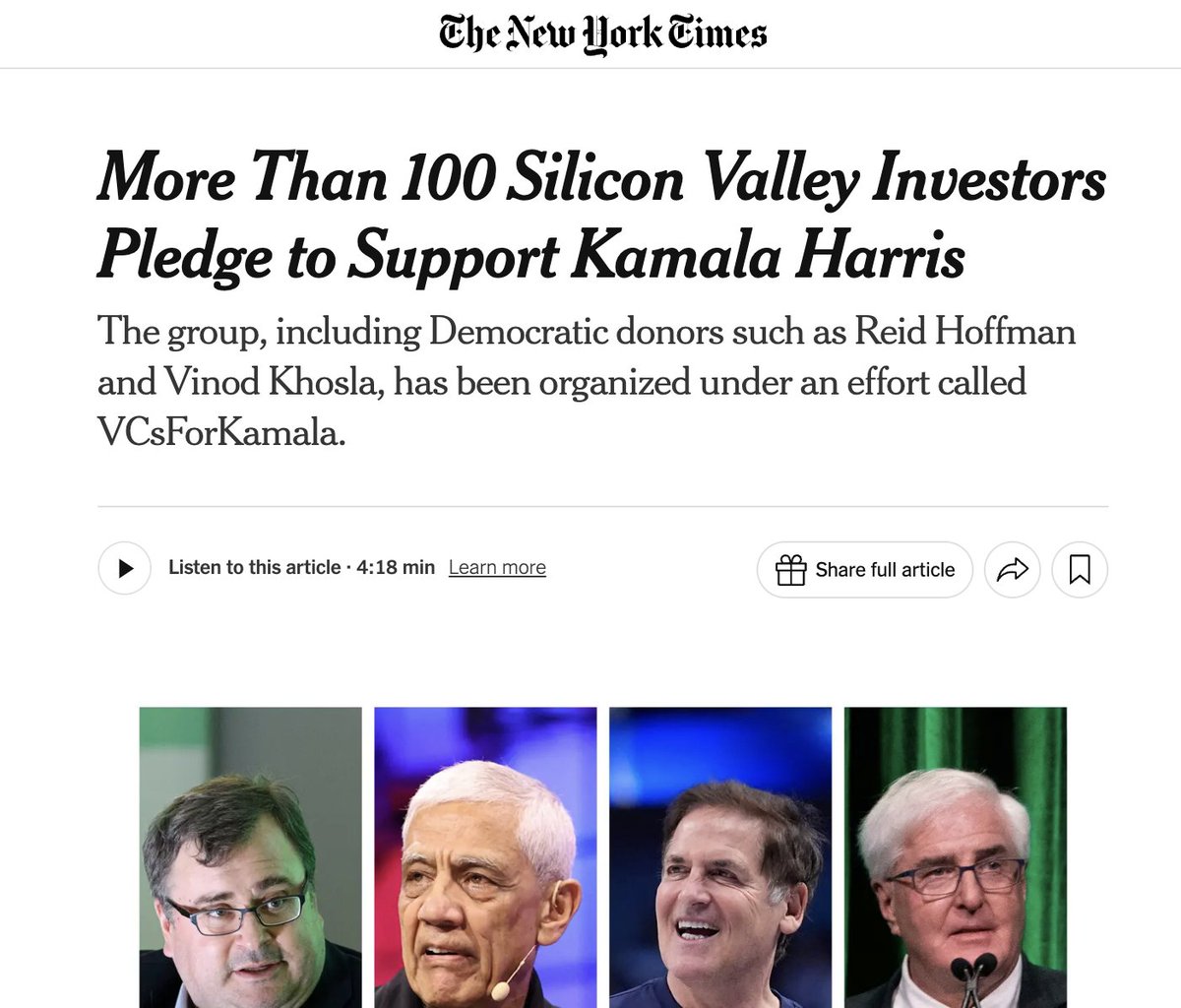
The shift toward Harris in silicon valley is very real. Seeing more momentum in this direction each day from founders, vcs, and more. Growing view that Trump was chaotic and unpredictable, and Harris can be a more stable, pro tech, pro business President.
Brilliant. No notes. I will fight for women’s rights until my dying breath. This rogue court still has no idea what it has unleashed. Believe me when I say it’s about to find out.
#WeAreNotGoingBack
Former Georgia Republican Lt. Gov. Geoff Duncan endorses Kamala Harris for president: “I don’t agree with Kamala Harris on everything….I’m willing to eat a little bit of humble pie here to do the right thing. And the right thing is to beat Donald Trump…He’s reckless on a good day and dangerous on a bad day.”
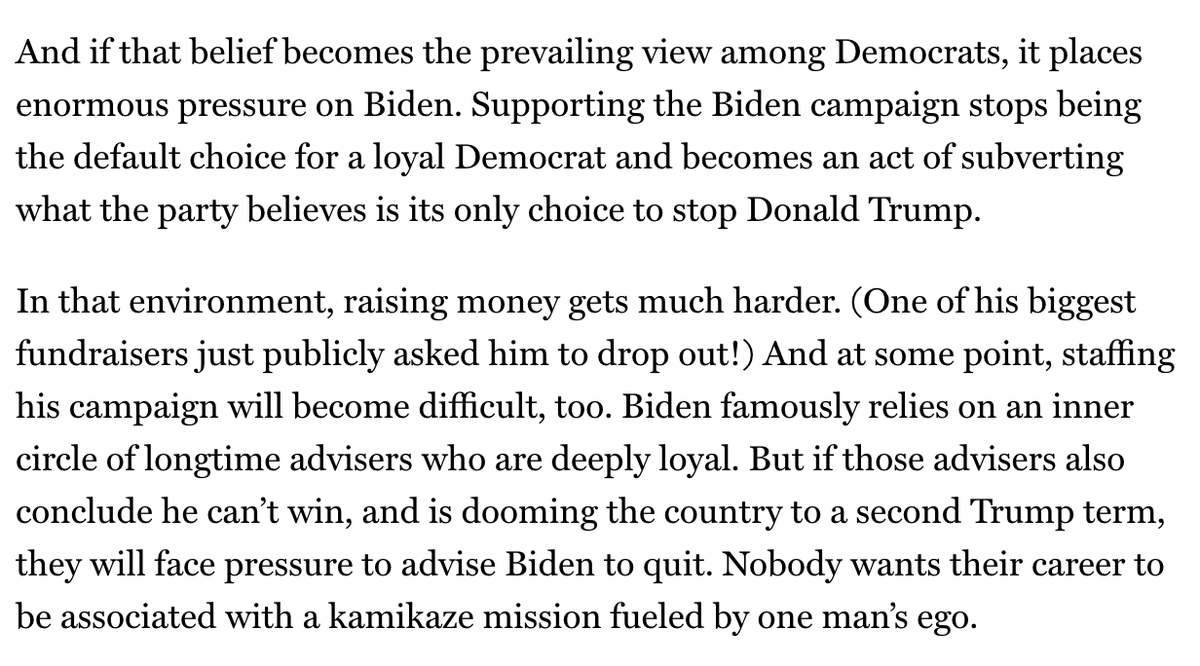
The reports today follow the scenario I described yesterday for Biden getting squeezed out: Democrats conclude Biden can't win, eventually his own staffers agree. https://t.co/e3JVMjFiVj
AI Agents have the potential to democratize knowledge work in the same way that SaaS democratized software. And as we've seen in the past couple of decades with software, every time you make a service cheaper and more available, you dramatically increase the size of the total addressable market.
Let's take, for instance, what happened in the early days of SaaS. The biggest mistake that most people and investors made was looking at the market sizes of traditional on-prem software to see how big the market could be for this new crop of companies. In fact, some even felt the markets would actually be *smaller* because the software may be cheaper to run for an enterprise. All these theories were wrong, by an order of magnitude.
What we actually saw happen was not that SaaS initially replaced or went after traditional incumbent software products for existing customers, but instead, the biggest early customers were actually smaller businesses or teams in large enterprises that previously didn't have access to traditional on-prem enterprise software. On-prem software, from CRM systems to ERP platforms, were notoriously expensive, hard to manage, and required significant IT teams and partners to operate. This meant only the largest enterprises in the world could actually implement best-in-class technology for their enterprise.
Enter SaaS. Starting with Salesforce and NetSuite, for the first time small businesses had access to effectively the same tech stack that a large enterprise had. This led to a gold rush of software. AWS ushered in an era where a one person startup could build an app and scale it without ever visiting a datacenter. Box let businesses of all sizes manage documents and content securely. Shopify let anyone have access to a powerful ecommerce system, leading to a huge boom in direct-to-consumer product companies and other retailers being able to sell successfully online. Stripe gave any developer a full payment stack. All of these new services --and thousands more-- led to a 10Xing (or more) the size of traditional markets by serving customers that previously didn't have access to these types of tools.
Now, if you extrapolate out what we're seeing in the earliest days of AI, the same dynamic could hold true for AI Agents. While large enterprises have traditionally had access to nearly every specialized form talent or an abundance of labor, the vast majority of businesses don't have this same luxury. For most small startups just getting going, they often don't have the resources to do outbound sales, full customer support, specialized legal work, and so on. And as a startup scales, you're constantly making resource trade-offs that are less driven by what's best for the business, but instead driven by how much capital you have.
In the future, by making the barrier to entry to getting knowledge work done as simple as a website signup or API call, we will likely see a massive increase in usage of “services” that previously were near-impossible to access easily. And what's amazing is the vast majority of the usage of these AI Agents will likely come from previous areas of "non-consumption". That is to say, these will be customers that would not have spent anything on similar labor categories in a pre-AI world. Now, of course, in many cases, AI will start out worse on some dimensions than traditional forms of solving these problems, but as tooling gets better, models get cheaper and higher quality, we know the capabilities will improve over time dramatically.
We're in only the very beginning of this new era of AI-driven work, but the scale of the opportunity and the market will be massive.