New Episode Alert! 🎧 In the latest episode of #NextStepsForward, @MegTuszynski, Managing Director of the Bridwell Institute for Economic Freedom (@SMUCoxBridwell) at @SMU, joined me for an insightful conversation about the power of economic freedom.
From understanding the causes and importance of economic freedom across nations and localities to exploring the intersection of economics, public policy, and individual liberty, Meg brought a wealth of knowledge to the discussion💡
And you guessed it! We talked about the hot button issue of TARIFFS and what they mean for the American people. Check out the video below to skip right to her thoughts on this topic and more.
https://t.co/azqo01WrcW
Don't miss this engaging conversation on how economic freedom drives growth and fosters opportunity. Tune in now! 🎙️💼
#NextStepsForward #EconomicFreedom #publicpolicy #Entrepreneurship #WomenInEconomics #podcast #fiscalpolicy #tariffs #TariffsImpact
The Mackinac Center for Public Policy is pleased to announce the addition of eight new members to its Board of Scholars: @WarrenAnderson9, @TomKrannawitter , @MegTuszynski, Dr. Timothy G. Nash, Dr. Alex Tokarev, Sutirtha Bagchi, Hannah Kling, and Tyler Watts.
https://t.co/xENYQMKcDg
Great presentation by @MegTuszynski talking about women and economic freedom!
Don’t miss her on my Let People Prosper Show: https://t.co/au7G31hxiq @SMUCoxBridwell
Our @DeanStansel & @MegTuszynski in Dallas Morning News discussing their latest academic research on immigration & economic policy, which, along with election poll results, indicates that fears of the California-cation of Texas seem to be overblown. https://t.co/gyLLIMxwsL
The latest edition of the Cato Journal has three articles co-authored by four different members of the O'Neil Center. @CatoInstitute
https://t.co/HzxSnKYx2V
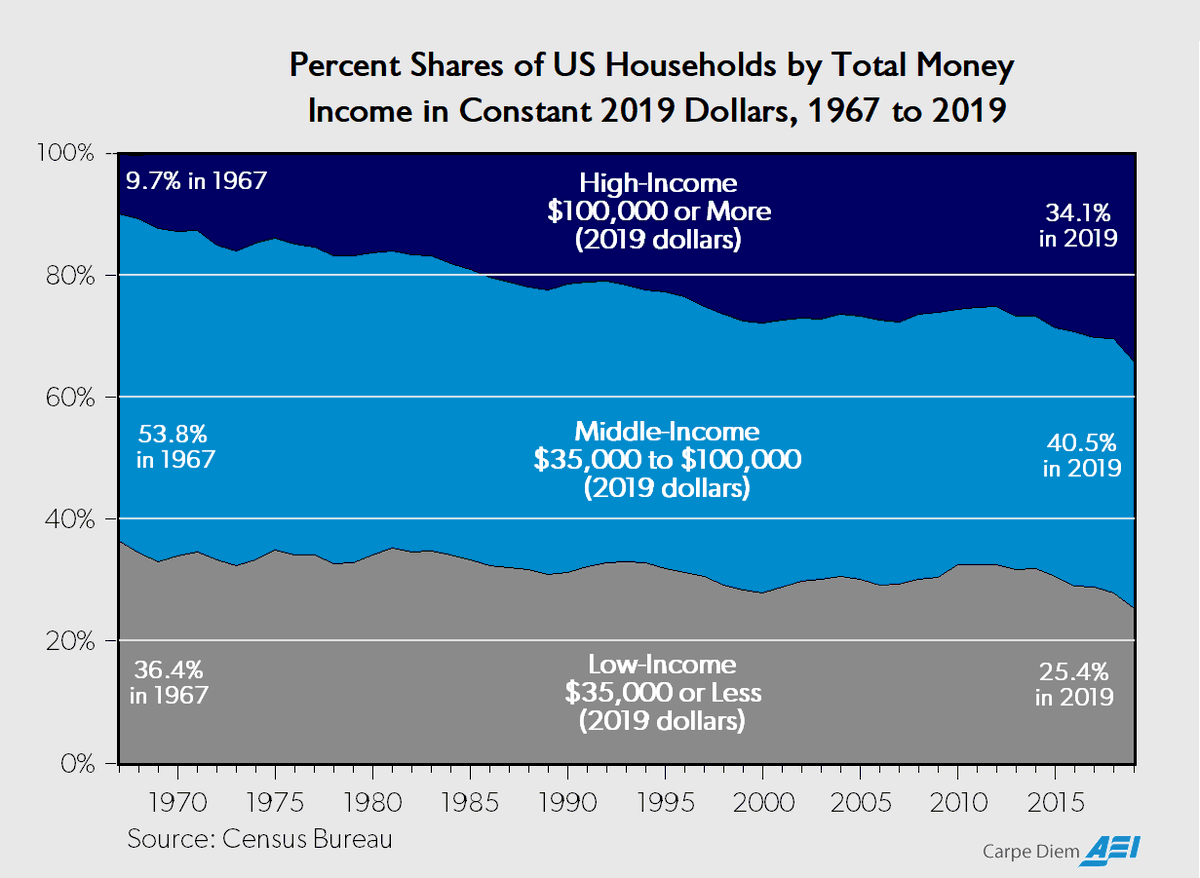
More evidence from today's Census report that the US middle class IS disappearing - UP into higher income groups. Share of US households earning +$100K increased to 34% last year as the share of low/middle income households fell. @MichaelRStrain@swinshi@wesbury@JonahDispatch
Lemme explain how trade deficits work: We send them 71 billion more dollars than they send us. In return, they send us $71 billion more worth of stuff than we send them.
If we stop sending them the extra dollars, they'll stop sending us the extra stuff and we'll be no better off https://t.co/WEGZ1ywIVr