Having access to multiple AI models usually means managing multiple integrations.
Zyloo takes a different route. According to its documentation, a single OpenAI-compatible API can be used to access various model families through the same integration flow.
saw a duel embedded in a random feed today that small detail changes the whole thesis
prediction is finally breaking out of its own interface meeting users where they already exist
no context switching just instant consensus
@duel_duck stops feeling like a destination and starts feeling like the internet's prediction layer
where do you want to see a wager button next?
watched a live market react exactly when a tweet dropped prices adjusted instantly before the liquidity even settled
that wasn’t capital moving it was pure information velocity
on @duel_duck you aren't just betting on outcomes you're betting against how fast others process reality
it turns narrative into a tradable asset which headline made you move fastest today?
scrolled the leaderboard earlier the fastest climbers weren’t the loudest
they were just the ones aligning over time on @duel_duck it feels less like betting more like reading a tide instead of chasing a wave
impulses fade but calibration stays
your wallet isn't just a ledger of luck it’s a signal of judgment
which duel forced you to think the hardest?
Some updates land quietly but change how the whole system feels and this Thanksgiving move does that in a very grounded way. The cashback isn’t a gimmick because the fee flow inside the terminal is already tied to how trades route across chains. When a user executes a swap the engine breaks the action into routing steps gas estimates slippage checks and revenue share points. Normally that fee stream stays inside the platform but for this event the entire path is redirected outward half to the trader and half to food drives.
The interesting part is how seamless it is. You don’t toggle anything or switch modes. The same non custodial pipeline handles the trade the scanner confirms the route and the reward module forwards the fee split. It fits into the flow without slowing anything down which shows how flexible the internal architecture actually is.
What @lute is doing here is showing that technical design can support generosity without changing how people trade
there’s a different level of confidence that comes when the infrastructure behind a tool grows stronger and today’s update shows a shift in how security sits inside the ecosystem. The announcement that @borghq is now protecting the flow brings a new layer of assurance since they’re known for catching exploits before they spread and already trusted by a massive base across crypto. Seeing that kind of protection move directly into the trading terminal means users keep full control of their wallets while gaining oversight from a system built to react faster than any individual can
this integration matters because on chain trading depends on trust in the underlying rails. When the environment feels safer people trade with more intention and the social layer can focus on reading movement instead of worrying about hidden risks. It also strengthens the community since everyone benefits from the same protective baseline
@lute teaming up with @borghq show real commitment to keepin fund safe
solid move for trust
Information about how a project positions itself often explains more than any marketing line and the latest privacy policy update makes the picture around this one a lot clearer. It states that Lute Labs Inc is a Wyoming based company building a non custodial trading terminal that blends social features with analytics in one environment. That detail matters because it confirms the platform never takes custody of user funds and every action stays tied to the user’s own wallet across chains without middle layers.
Non custodial tools are becoming essential as more traders shift toward setups where they keep control while still needing shared context and this terminal leans directly into that trend. The combination of wallet based movement reading tools and a social layer means users can follow patterns across their circle without giving up security or ownership along the way.
What stands out is how @lute positions transparency as part of its structure. Clear policies give users confidence that the social and analytic features support on chain autonomy instead of replacing it and that foundation shapes how communities choose to grow around the platform.
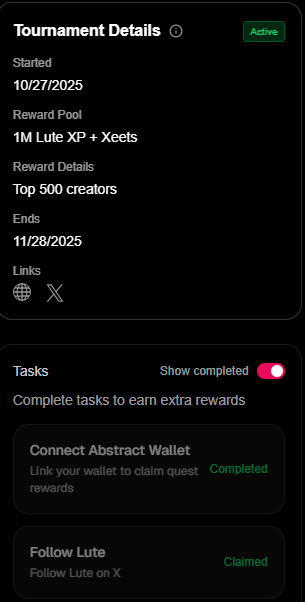
When I first opened the Creator Tournament page this morning, I saw that the task list is positioned directly next to the reward flow, serving as a subtle reminder that participating here isn't about earning points but rather establishing a presence with the other players. Connecting the wallet and following the feed seems simple, yet it anchors you into the same loop everyone else relies on, and the structure makes the whole experience feel lighter.
What caught me was how the progress line reflects community rhythm more than individual output. watching creators move through the same steps creates this steady pulse that keeps the space active without forcing anyone to sprint. it turns the tournament into a coordinated layer where each action ties back into shared momentum.
That’s where @lute stands out. it builds systems that let people grow alongside each other, turning effort into something collective instead of exhausting.
🧪 TIME TO BREAK TESTNET 🧪
Smart contracts and DeFi on Bitcoin Layer 1 are ready for you to explore, test, and push to the limit🍊💊
https://t.co/gxUhbQ6UYz
🎉 100,000+ OP_WALLET Downloads!
Thank you to all builders, testers and believers in Bitcoin-native DeFi who are part of this ride 🧡
OP_WALLET is your gateway to smart contracts, swaps, staking & yield all on Bitcoin Layer 1.
We’re redefining what’s possible on Bitcoin🍊💊
The $ROOM token underpins the entire ecosystem — powering access, content curation, and governance mechanisms.
📅 June 17: Genesis Sale
📅 June 18: Community Sale
🌐 https://t.co/zUi1YQJ7pT
No connections needed — just own the Key.
@useBackroom
Backroom introduces a new way to access high-value insights in the Web3 space.
Information that once circulated only in private groups like Telegram or Discord is now accessible through tokenization.