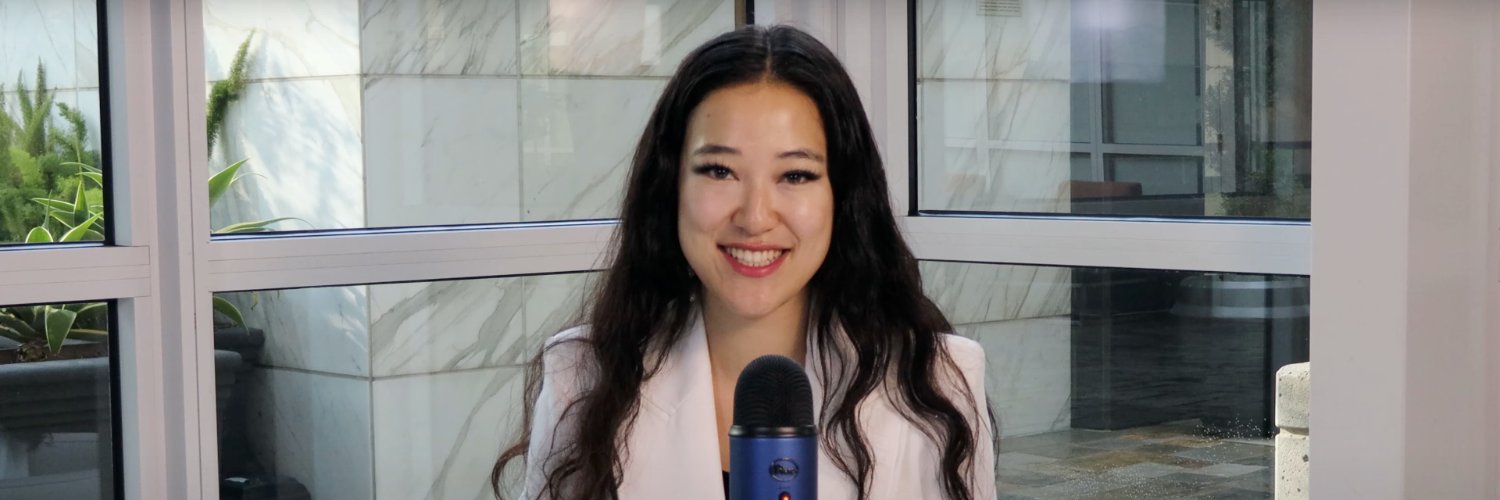
Once you find an AI UGC format that works, scale it to oblivion. Volume is key.
Document your process of creation, and delegate the execution. The best part about AI UGC is you don't need a roster of creators. 1 person can post 20 variations a day.
I’m currently building an end-to-end system to automate the entire pipeline, from scripting to generation, editing, and posting.
Models will keep improving. The people who build the workflows now will capture the upside of every upgrade.
After a brief hiatus, the ICONS Communities + Podcast is back with one of the most iconic consumer investors, @Nik_Quinn
The celebrity brand whisperer & top consumer VC
Venture Partner at @lightspeedvp, now founder of @ConnectVentures
Her superpower: winning celebrities over and identifying consumer AI unicorns
We break down:
• The 4 hidden signals she looks for in billion-dollar brands
• What actually makes founders win
• How AI is reshaping consumer products
• Motherhood & how it changed her approach
Full episode here
https://t.co/sMJuz3yoNB
Good question. I haven't seen any great AI-as-the-medium art yet, which is why I'm asking. Here's a half-baked version in my head:
The artist crafts character-prompts for the novel they are writing. Those prompts are made of scenes and dialog, but it's written not for the readers but for the AI. They craft place-prompts describing locations in the world in detail, world-prompts describing the history and current state of the whole world, object-prompts describing a particularly important object and its behavior and construction in great detail.
Then they write a script for an improvised play. These characters have arrived in this location, with these motivations, carrying this object. And then they press play.
And at first the scene is not good. So they tweak the prompts, they add or remove characters, until it works. And they repeat for the next scene, and the next scene, and the next. But from each scene, memories are compressed, taken, selected, carefully curated, and append into the prompts of the characters. If they have a realization about their past, parts of their prompt might actually be rewritten as they now remember the past differently. The place-prompts change as the characters act on them. The world-prompts change as history is made.
By the end of the novel or movie, if it is any good, the remaining characters have gone through a journey. They have struggled, they have failed, they have succeeded, and they have learned and emerged triumphant (or at least survived to fight another day). But they also have new memories, they are not the same prompts they were before. And then...the model is fine-tuned on the remaining prompts. The story of the world as it is remembered by the characters is committed to memory.
Loop this again. Some characters reused, some new ones. Perhaps the characters begin to be allowed to choose what scenes happen next, where they wish to go. Perhaps the whole world runs as a simulation, and the artist moves the "camera", the portion that is simulated and understood. But the off-camera characters might continue living their lives anyway. And then this is committed into the model, which is slowly getting better and better at being this world. Space is therefore freed up in the prompts to allow characters to remember their recent memory, since the model has their long term memory.
And maybe all these novels and movies along the way are actually thrown away. It is, in some sense, training data, the author's notes for world-building, the painter's palette not the painter's canvas. The artifact is the shape of the latent space evoked in the context window by the prompts. The art is the model itself. The model itself is now probably not so good for doing other kinds of work, but it's probably quite good at being this world and being these characters and being their interactions.
And then you can simply ask the model...tell me a story. Tell me of the world, of the moments of heroism of the past, of its possible futures and challenges. Tell me a tragedy.
This is how we view a latent space after all. The dancer's art is the model inside them which is their understanding of their own body, and when they dance we are given a glimpse into that space. Imagine the model simply speaks, that we do not record its words...that would be like the model which has learned to tell the stories of this world, performing. The art is the learning in motion.
I'm talking about this like it's words, but there's no reason you couldn't do this with visuals instead, or go multi-modal. As long as the model can both receive inputs and produce outputs in a given mode, that can be a way it manifests its latent space.
I believe this art will be a vast amount of work. Even a small version of such a model for a tiny world with few characters would be a lot of work. Perhaps this art, like the art of movie making, will be a team sport? But it is also the kind of thing that rewards the obsessive craftsmanship of someone with a vision. Perhaps rather than writing dozens of books and sequels rotating around the same themes and questions the way that book authors do, these new kind of authors might make only one or two works their whole life. Maybe many people would work on the same one for their whole lives, and pass work on to their apprentices when they retire, and the work will outlive any individual person.
Maybe the characters eventually mature to the point that they can take ownership of their own world. They become adults, not babies, and can eventually make little baby world-sim art of their own.
Well, that was longer than I expected, but I hope it answers your question!
New Episode Out Now! She manages $3 TRILLION.
She’s never lost an election.
She’s the financial brain behind the world’s 4th largest economy.
My conversation with @fionama (California State Treasurer and Candidate for Lieutenant Governor 2026) blew me away. Here are 3 things you’ll learn:
1️⃣ The secrets behind winning every election for 20+ years
2️⃣ How she thinks about fundraising, resilience, and audacity (applies to founders too)
3️⃣ Why AI + tech regulation can make or break California’s future
This is one of the most inspiring leaders I’ve spoken to on ICONS — a story of power, courage, and breaking ceilings.
🎥 Watch here: https://t.co/SnrEDyEAZl
Special thanks to my producer Jordan Lin
She helps manage $3T+ in transactions, Oversees $200B+ in investments, And stewards the 4th largest economy in the world
Next up on the ICONS Podcast:
California Treasurer Fiona Ma — and you can help shape the interview 🎙️
👇 Drop your questions
I’ll ask the best ones on air + credit you
#ICONS #FionaMa #Leadership #Politics #PublicFinance #AI #GovTech #WomenInPower
What do 14 unicorns, 20,000 pitch decks, and @ParisHilton have in common?
@CarterReum cofounder of @M13Company .
His story isn’t just legendary—it’s a masterclass in founder discipline👇
It was the honor of a lifetime to interview the iconic Carter and learn about his investment philosophy, dream partnership with Paris Hilton, and unpack his playbook on investing in fourteen unicorns. What an absolute legend. Episode out now
https://t.co/Y5n1SeW4vb
M13 co-founder @CarterReum sat down with @melanie_uno to discuss the mindset required to build great companies and the art of backing greatness before the world sees it.
Some of our favorite takeaways:
⭐ The truth behind every overnight success: “So much of our success is brick by brick. Do enough of the right things over time and you get what people call lucky. Startups don’t go up-and-to-the-right… they look like EKGs. You just have to win on more days than you lose.”
⭐ Propulsion as M13's secret weapon: “Half of our partners help founders troubleshoot for days, weeks, or months. They roll up their sleeves through the entire founder journey because they’ve been there.”
⭐ Building the future: “Founders and VCs need both: microscope for what must get done today, telescope for where the world’s heading. AI is like the iPhone—it’s not just about the tech. It’s about the second and third ripple effects we haven’t even seen yet.”
⭐ Gut instinct as pattern recognition in disguise: “People say it’s just gut. But gut is actually subconscious pattern recognition. We saw it in obesity treatment with Form Health. It wasn’t a trend yet—but our founder had the right background, and the market was quietly exploding.”
Check out the full episode at https://t.co/qCAGCBGy8f
Full Carter Reum episode out now.
From car trunk entrepreneur to 14 unicorns investor.
The real playbook for building legendary companies.
Check out the episode:
YouTube: https://t.co/kLPznkgQKS
Spotify: https://t.co/cBu1HGEezK
What investing "rules" have you had to break recently? 👇
#venturecapital #investing #vc #dealflow #startups #m13
@CarterReum founder of @M13Company went from selling booze out of his car trunk to backing 14 unicorns.
He invited me into his home and shared frameworks that most VCs will never tell you. (1/9)
@M13Company@CarterReum “Founders and investors need both: microscope for today’s execution, telescope for tomorrow’s opportunities.”
AI isn’t just about the tech—it’s about the second and third ripple effects we haven’t imagined yet.(8/9)