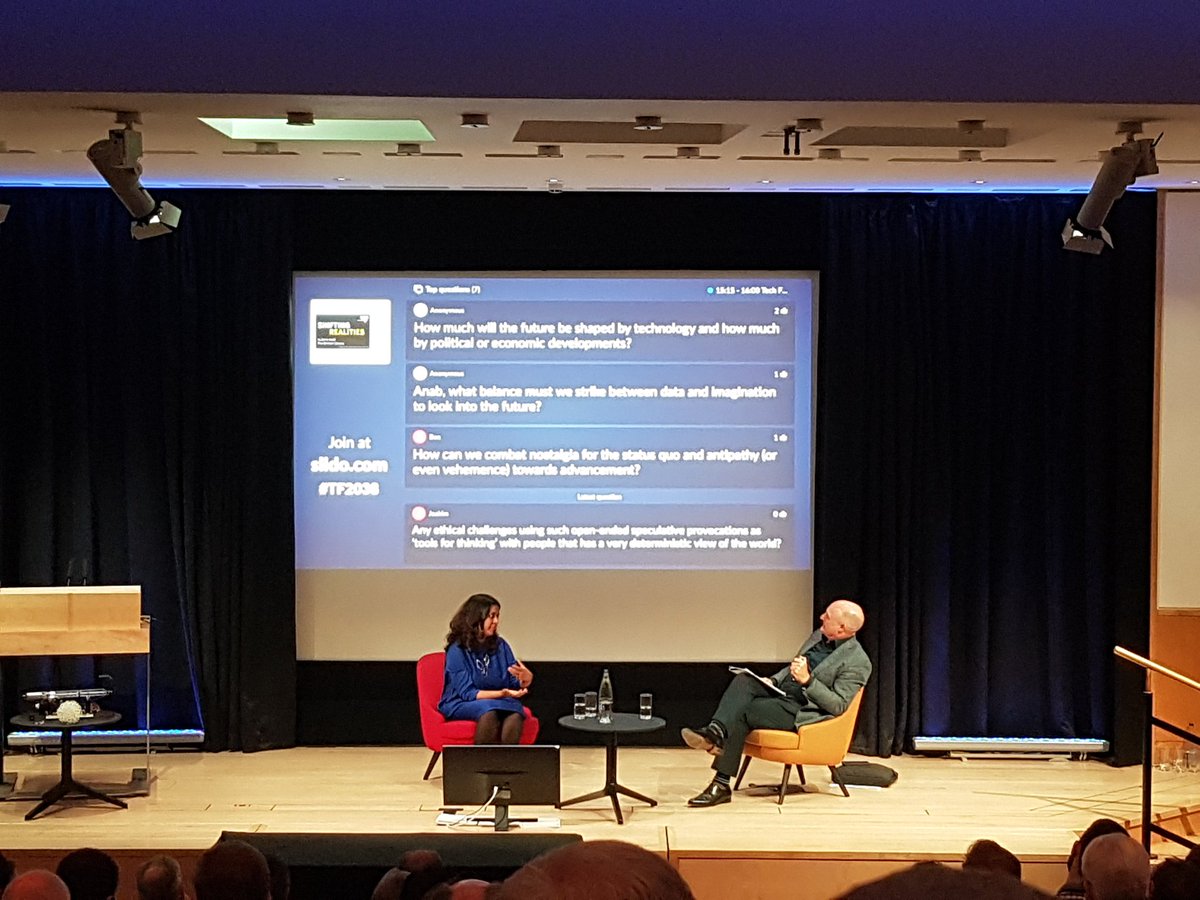
What might Melbourne be like in 50 years? Find out 110502018. Part of @knowledgeMelbourne #MKW18#KnowNextNow provoked by @incognitosum @kirkday333 @SwinDesign
Researchers from Universidade da Coruña in Spain have drawn from nature to write an #algorithm that ...uses historical and economic data from an #urban area to predict what its future #skyline will look like. https://t.co/RQADnfROnz via @dezeen
@croakeyblog If you cross match this ⬆️ article with this one ➡️ https://t.co/TJdVHddZLr & the recent report from the Aust Human Rights Commission demonstrating the lack of diversity in leadership of Australian banks, businesses, parliament, universities & institutions, this says so much!
Learning from #Mumbai's "informal" development might lead to more vibrant city #design. @urbz_ is doing some really interesting work in studying Dharavi, arguably one of Mumbai's most nuanced communities. https://t.co/8WJqLkWbJb #UrbanDesign#Communities
“It’s good that we’re seeing some action around this stuff, but I don’t think we have our arms around the problem in any significant way.” - Samuel Woolley of our DigIntel Lab talks with #botsandbullets podcast: https://t.co/P6iPdyM59l
@yahoonews#botsandbullets
A notable omission from The Field in 1968 was the work of women artists – only Janet Dawson, Wendy Paramor and Normana Wight were included. We were acutely aware of this imbalance when recreating the original exhibition for its 50th anniversary in 2018: https://t.co/iTkWd2NyIs
A whole evening looking at some of the range of things that branched out from the WHOLE EARTH CATALOG fifty years ago. (Starts about 6 minutes in, goes for 1.5 hours.)
https://t.co/UJBz9izstZ
Here is a little film made about a session I did at Harvard with Gail Taylor and Patricia Shaw on Emergence. They do a nice job of discussing Warm Data & Symmathesy! #WarmData#symmathesy#complexity#emergence
https://t.co/MOHdThwFAq