Julie, My Hero.
Vilified. Body-shamed. Attacked for doing her job. Slapped. Severally. Hated by the mob. Silenced!
She stood her ground, not for glory, but for safety. Even protecting the life of her silly and senseless aggressor.
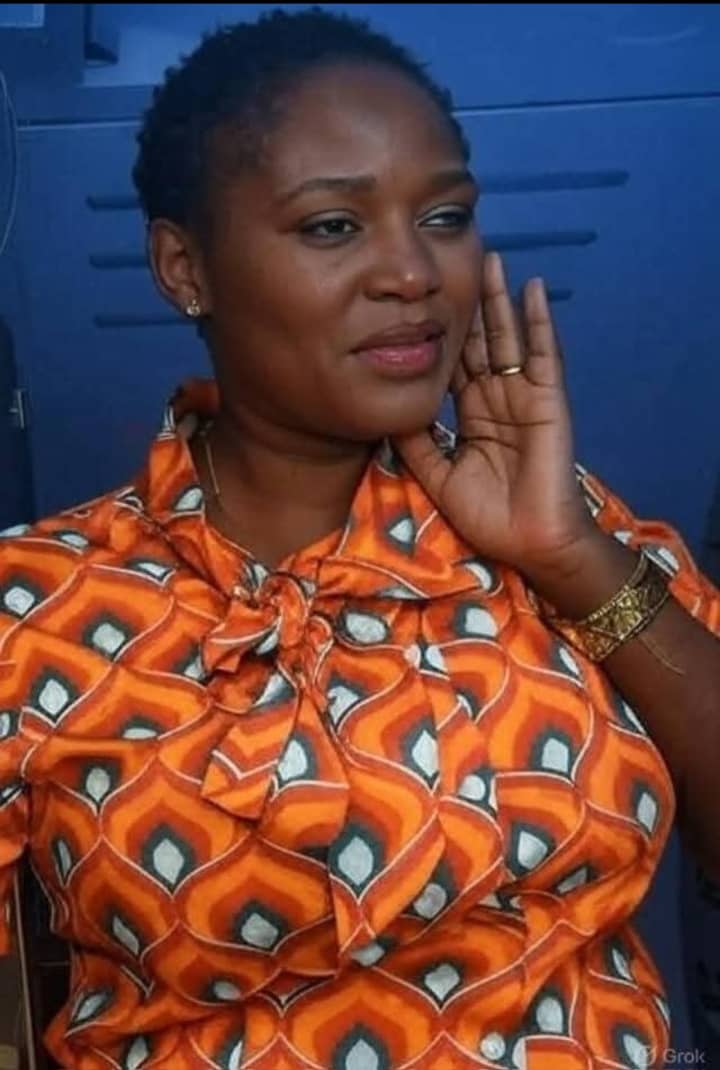
She represents every worker who has swallowed insults just to keep others safe: the waiter, the nurse, the driver, the 'maiguard', the pilot, the cook; porters and baby tenders, who cannot tell all their stories. Some house helps who live through hell, helping others to be happy. The shimmering ring in her finger reminds me, she has a family. A husband. Maybe a child. Somewhere. Waiting at home.
When the pilot yelled "Please stop her", she did. She took the body blows, standing still. Unruffled. Unshaken. Determined. She refused to retaliate.
Julie could have manicured her skin into a glow to slay and pimp. She could have settled for a role less risky. But she chose the hard path, to guide strangers safely through turbulence and calm. In the sky, beyond the clouds.
In #VirginAtlantic. #ArikAir. Now, #ibomairlines . She has shepherded millions, from take off to landing. Making sure they arrive safely. None gave her as much pain, as seen in her eyes...
Even if the world cheers the wrong person; the unruly and reckless aggressor. History will remember the quiet warrior in uniform who stood her post and stood the door.
Julie, you are my hero.
Just been reminded that I've been on X for twelve years. It started from Twitter. Wow! Time flies
Do you remember when you joined X? I do! #MyXAnniversary
REUBEN ABATI: PLEASE DO NOT STEP ON THAT SLIPPERY SLOPE. AKWA IBOM IS NOT IN DISPUTE WITH CROSS RIVER
By Celestine Mel
This intervention was neither premeditated nor animated by any prior appetite for polemical engagement. It arose instead as a spontaneous reflex—an instinctive response compelled by the quiet but persistent duty to clarify the record when public discourse begins to drift from the firm moorings of fact. The subject of my concern is a professional whose writings, over the years, contributed meaningfully to the shaping of my own appreciation for the craft of public commentary. His prose has often been elegant, his arguments measured, and his intellectual presence unmistakable in Nigeria’s vibrant marketplace of ideas.
He may not know me personally. Our ideological trajectories seldom intersect. Yet we share one enduring vocation, which is the attempt to influence public thought through the written word. It is precisely for this reason that I write with a mixture of admiration and unease: admiration for the stature he has long occupied in the republic of letters, and unease about the intellectual path he appears to tread on this occasion.
Recently, I encountered his widely syndicated opinion essay titled "Cross River vs. Akwa Ibom: Assignment for Tinubu.” The article, published across several prominent media platforms, such as @PremiumTimesng , @thecableng , @THISDAYLIVE , etc, advances the curious proposition that President Bola Ahmed Tinubu should intervene in what he characterizes as a “festering conflict” between Cross River and Akwa Ibom States concerning offshore oil wells. Permit me to state the matter with utmost clarity that there exists no such “festering conflict.”
What exists instead is a thoroughly settled legal matter that traversed the entire hierarchy of Nigeria’s judicial system, reached the Supreme Court not once but twice, and returned on both occasions with the same unambiguous verdict. For this reason, right-thinking observers must take with a pinch of salt, any attempt to resurrect the matter under the alluring but misleading banner of “new evidence,” or the even more audacious suggestion that the "President of the Federal Republic should reopen" a dispute that law, geography, and history had long consigned to closure.
The suggestion is troubling, not because public debate ought to be stifled. Far from it. Democracy as a construct, thrives, bounces, stumbles, and flourishes on argument and contestation of ideas. However, arguments that deliberately blur settled facts risk transforming scholarship into advocacy and advocacy into something far less ennobling. That danger lurks unmistakably in the present instance and necessitates that we return to the beginning, for history—unlike opinion—possesses an enduring illumination.
For centuries, the Bakassi Peninsula was administered through the Oron axis of what is today Akwa Ibom State. Long before colonial cartographers began sketching arbitrary borders across West Africa, the communities inhabiting Bakassi bore the unmistakable cultural and linguistic imprimatur of Oron civilization. Names such as Abana, Effiat, Atabong, and Archibong were, and remain, prominent villages and enduring cultural signatures and markers of ancestry that is deeply embedded within the geographical and anthropological landscape of Bakassi. Indeed, many Nigerians old enough to remember still recall that Bakassi fell within the administrative orbit of Oron without the slightest hint of disputation. I recall that Governors Tunde Ogbeha and Yakubu Bako spent tons of Akwa Ibom money to fix and develop Bakassi, until the year 1996.
Under the military regime of General Sani Abacha, a sudden and rather curious decree created the Bakassi Local Government Area and administratively assigned it to Cross River State. At the time, the move was widely perceived as a political sleight of hand, executed with startling haste and minimal consultation. Overnight, a territory historically embedded within Akwa Ibom’s coastal corridor was repositioned—through what could only be described as bureaucratic jiggery-pokery—into Cross River’s administrative horizon. The political circumstances surrounding that decision, traceable to the close relationship between Chief Anthony Ani, then Minister of Finance, and General Sani Abacha, have been debated in political circles ever since. But that is a story for another day.
When Nigeria and Cameroon eventually confronted each other before the International Court of Justice (ICJ) in The Hague over sovereignty of the Bakassi Peninsula, the evidentiary terrain proved decisive. In 2002, after years of painstaking litigation, the ICJ ruled that sovereignty over Bakassi belonged to Cameroon, largely on the strength of colonial-era treaties and administrative documentation dating back to the Anglo-German agreements of 1913. Compounding Nigeria’s difficulty was the fact that the legal team, which sought historical artefacts from Cross River State to support the Nigerian position, found little of evidentiary value because such artefacts were and are still in Oron to this day.
Consequently, the Nigerian submission contained insufficient material evidences capable of counterbalancing the documentary weight marshalled by Cameroon. The outcome was therefore predictable as Nigeria lost the case to Cameroon, with consequences both profound and irreversible.
When Nigeria complied with the judgment—culminating in the formal handover ceremonies conducted between 2006 and 2008—CrossRiver State lost the only territory that could plausibly have conferred upon it a seaward boundary. Geography, with its characteristically cold-hearted indifference to human sentiment, completed the narrative by delivering what might be described as a classic instance of poetic justice. Once Bakassi became Cameroonian territory, Cross River State ceased to possess a coastline along the Atlantic Ocean. The rest, as they say, is history.
It was not long before the matter found its way to Nigeria’s Supreme Court, where Cross River State sought to challenge the implications of the ICJ ruling, particularly as they related to maritime boundaries and the ownership of offshore oil wells previously attributed to the state. The Supreme Court examined the matter exhaustively and, in October 2012, delivered a unanimous decision that would become the definitive legal position on the question. The ruling held that, following the cession of Bakassi to Cameroon, Cross River State had effectively become a non-littoral state. In simpler terms, it no longer possessed a coastline touching the Atlantic Ocean and was therefore legally unqualified to assert claims over resources located within maritime territory. This conclusion carried significant economic implications for the state.
Under Nigerian constitutional and maritime law, offshore oil wells are allocated according to coastal boundaries extending seaward from a state’s coastline. A state lacking an ocean-facing boundary cannot lay claim to maritime resources situated within the Atlantic continental shelf. The Supreme Court said so unequivocally and consequently affirmed that the 76 offshore oil wells in dispute at the time, situated in the ocean, belonged to Akwa Ibom State, whose coastline stretches approximately 129 kilometers along the Atlantic frontage.
Yet this judicial clarity did not settle the matter in the minds of some stakeholders in Cross River. They returned once more to the same Supreme Court, requesting a review of the judgment. The Court declined, firmly and unequivocally.
In dismissing the application, the justices reminded the parties that the Supreme Court is not a revolving door for perpetual litigation; that he doctrine of finality of judgment exists precisely to prevent endless cycles of legal resurrection. In other words, the case was closed. Not metaphorically, but legally. Once again, the rest, as they say, is history.
It is therefore puzzling that every few years a familiar script resurfaces. Commentaries and agitations emerge, television debates ignite, and the famed “76 oil wells” is invoked as though repetition might somehow alter the coordinates of the Earth’s surface.
Recently, a former Attorney-General of the Federation, Michael Aondoakaa SAN, appeared on Channels Television attempting to advance an intriguing theory that while the originally disputed 76 oil wells should remain attributed to Akwa Ibom, newly discovered ones, numbering over 200, could somehow be shared with Cross River. The curious argument collapses helplessly like a pack of cards, when weighed against the admonition of the Supreme Court that "a non-littoral state cannot lay claim to resources in the sea and ocean". More curiously, one observes a growing parade of national commentators who now seem to have discovered a new pastime in touring media studios to campaign for the resurrection of an oil-well controversy that has, in legal terms, been as dead as a doornail since 2012. And I suspect, someone is "bankrolling" the escapade.
Permit me to remind them of a few inconvenient facts.
Oil wells located in offshore basins do not float across political boundaries like migratory birds. They exist within geological formations mapped through precise geospatial coordinates determined by the physical structure of the continental shelf. Geography, one must remember, does not negotiate. Rivers flow toward oceans. Estuaries empty into seas. Coastlines do not materialize through political sentiment.
Cross River State is bounded largely by the Calabar River and associated estuarine systems which ultimately discharge into the Atlantic through waters geographically fronted by Akwa Ibom and Cameroon. This is not a matter of opinion as it is a matter of cartography corroborated by hydrographic surveys conducted over decades. To suggest that new “coordinates” might suddenly transform this geographical reality, would require believing that latitude and longitude themselves are negotiable instruments. If such a phenomenon were possible, perhaps my own village of Ikot Inyang Udo in Midim, Essien Udim, might one morning awaken to discover that it has migrated to the Mediterranean Sea, or perhaps the North Pole or Starit of Hormuz. But the truth is simpler.
There is no conflict between Akwa Ibom and Cross River over maritime oil wells. The two states share deep cultural affinities, thriving commercial relationships, and longstanding historical kinship. Their peoples interact daily through markets, marriages, and migration corridors that have existed for generations.
What exists instead is the periodic resurrection of a legal ghost—often animated by political interests and advocacy narratives sponsored by opportunistic actors who deploy the so-called oil-well dispute as a convenient instrument for inflaming public sentiment. By invoking the specter of lost wealth, they cultivate the illusion among unsuspecting constituents that some glittering El Dorado lies just beyond the horizon.
Which brings me back to my respected senior colleague in the republic of letters.
When a writer of Reuben Abati’s intellectual stature characterizes the matter as a “festering conflict” and calls upon the President of Nigeria to intervene, the implications are grave. Such a proposition implicitly suggests that the nation’s highest political office should intrude into territory already conclusively adjudicated by the nation’s highest judicial authority.
That road leads inexorably toward constitutional anarchy.
The President cannot overrule the Supreme Court. Nor should any responsible commentator encourage—even indirectly—the notion that he might. Nigeria’s still-fragile democratic architecture rests upon a simple but indispensable principle: that judicial decisions, once final, remain final. To reopen them through political persuasion would be to convert the rule of law into a theatrical prop, subject to the whims of executive power.
Reuben and his intellectual fellow travelers should know better. Facts of geography are stubborn companions. They outlive governments, editorial pages, and the fleeting storms of public controversy. Fourteen years have now passed since the Supreme Court settled the maritime boundary question between Cross River and Akwa Ibom.
In those fourteen years, the Atlantic Ocean has not moved an inch closer to Calabar.
It will not move tomorrow.
It will not move in a thousand years.
And therein lies the quiet lesson that geography teaches politics: some arguments are simply too settled to resurrect.
Citizen Reuben Abati, whom I continue to regard as one of Nigeria’s accomplished public intellectuals, would do well to remember this enduring truth. As the old saying reminds us, slippery slopes seldom announce themselves before the fall.
+++++ *Celestine Mel* is a chartered banker. He writes from FCT-Abuja.
REFLECTIONS: A Song of Gratitude and Becoming
By: Celestine Mel
I am a year older. Yes. Older, wiser, and a step closer to that inevitable silence that awaits us all. Some may flinch at such a thought on a birthday, but not I. I understand that life’s beauty is sharpened by its brevity. My faith in the power of resurrection is unshakable. It is as constant as the northern star. I believe that all who breathe will one day return to dust. Life is a divine one-way journey, a project with a beginning and a certain end. And perhaps, humanity would live with more kindness and less strife if we truly grasped how fleeting this journey is, and how infinite time remains without us.
Time. That ancient river that flows endlessly, swallowing centuries and spitting out civilizations. What is man beside it? The oldest centenarian, boasting of 105 years, is but a spark in its vast expanse. Since Christ walked the earth, more than twenty generations have been born, lived, and vanished like whispers in the wind. Yet, within this fleeting slice of eternity, God has been gracious to me. He has given me reasons to pause, to count my blessings, and to celebrate the mercy of continuity.
I remember my father, Mel Idioikpa , that resolute man who defied the chains of ignorance in the rustic fields of Ikot Inyang Udo. A village son with the audacity to dream beyond the narrow fences of tradition. He journeyed to Ikot Ekpene in search of education and found there, the love of his life — my mother, Helena, whose strength could shame ten men. Together, they raised eight of us, molding our destinies with hard work, tears, and timeless discipline. When my father departed four decades ago, my mother stood unshaken. She became the storm and the shelter all at once.
I salute my siblings: Augustine (of blessed memory), Theresa, Rita, Samuel, Justina (of blessed memory), Maria, and Ifiok. They were the orchestra that tuned my soul; the early mirrors that taught me resilience.
Then came the unexpected angels of destiny - men whose kindness shaped my path.
Gabriel Ogban , who sheltered me when I had nothing but hunger and a dream in Calabar. He stood in the gap when hope was gasping for breath. Hon. Justice Archibong Archibong , who took a chance on a stranger and opened the first door to my professional life. Mr. Ubon Obonguko, my lecturer and guardian angel — he didn’t just take a chance; he staked everything. Someday, the full story will be told in my autobiography.
And to my wife, Idongesit — my companion in the trenches of time, no tribute is rich enough. We met in the innocence of youth, when love was a whisper and the future a fog. For twelve months, I chased the sun across her heart until it finally stood still. Together, we have walked through storms and laughter, scarcity and sunrise. More than twenty-five years later, my soul still kneels in gratitude. My heart, stubbornly loyal, beats only for her, even with my annoying imperfections.
From the corridors of Cross River Water Board to the high towers of ExxonMobil and Shell, I have met men and women whose fingerprints remain upon my destiny — Thomas Igodo, Anyie Njama-Nkanor, Mrs. Ima Bassey, Samuel Solomon Onoyom , the late Okokon Effiong , the late Joseph Ikoimo — giants in their quiet way. And how can I forget Hon. Eseme Eyiboh, whose imprint echoes in my conscience like a warning bell and a compass combined? How do you describe a man who lifted my hands in the crowd even when he did not know me? How do you reward a man who sat down to write a stirring recommendation about someone he had never seen, never met, yet vouched that I was the best of them all? The rewarder will keep rewarding you, sir.
The elders say, “a wise child kills what killed his father, but a foolish one is killed by it.” I have been blessed with two children who are my world and my universe. They are my compass, my laughter, my reason for staying grounded when the winds of life blow wild. I will continue to be here for them.
To my politically exposed allies, I salute you. Chief among them, His Excellency, Pastor Umo Eno PhD. His rise was as improbable as prophecy, yet his impact has become gospel. Our paths crossed when he was being hunted by ambition’s mob. I took a chance on him because the world conspired to say, no. At the time, I could not foresee that he would become such a blessing to my State, a rallying cry, for a people on the march; unstoppable. From that crucible, friendship was forged. Today, he stands as a symbol of refreshing governance, rooted in grace and compassion; extending hope to places that had none and people who were forgotten. I root for you, sir.
I also celebrate Barr. Emmanuel Enoidem , SAN, the most authentic politician I have met, whose convictions are firm yet never bruising. He saw my light early and ushered me into the inner court of purpose and trust; the kind that words cannot describe. I am eternally grateful, sir.
There are too many others to name — elders, siblings, and brothers in the vineyard of service to the fatherland, all of whom have enriched my journey this past year. I will attempt to name some, in no particular order, trusting that through them, the many I cannot recall off the top of my head, will feel represented in spirit. I also plead their kindness for not embellishing their names with their well-deserved titles and ranks: Senator Akon Eyakenyi, Senator Effiong Bob, Hon. Prince Enobong Uwah, Hon. Prince Ukpong Akpabio II, Dr. Anthony Luke, Rt. Hon. Onofiok Luke, Obong Stephen Ntukekpo, Dr. Patrick Umoh, Rt. Hon. Aniekan Umanah, Mr. Anietie Usen, Dr. Morgan Ekanem, Mr. Otobong Edemidiong, Engr. Aniekan Patrick, Mr. Ray Ekpu, Mr. Ekerette Udoh, Dr. Emmanuel Ekem, Prof. Eno Ibanga, Hon. Prince Umoekpo, Hon. Gideon Uwa, Hon. Ntiedo Usoroh, Mr. Bassey Archibong, Mr. Isuamfon Archibong, Mr. Etim Etim, Engr. Uwem Okoko, Hon. Christopher Edemekong, Amazing Aniebiet Francis, Mr. Daniel Etokidem, Pastor Solomon Essiet, Mr. Victor Esenyie, Mr. Emma Akpabio, Abom Ephraim Okon, Mr. Uduak Udo Udo, Ms. Timfon John, Mr. Ubon Marcus, Mr. Cletus Ukpong, Mr. Raphael Edem, Dr. Pamela Chima Akpomedaye, Mr. Courage Mbon, Mr. Nkeneke Efo, Victor Godpikin, Engr. Patrick Eno, Hon. Patrick Ifon, Mr. Ini Ememonong, Mr. Udo Silas, Arc. Ubokutom Nyah, Mr. Nicholas Luke, Mr. Joseph Ibanga, all the elders of Essien Udim too numerous to mention, and the entire youth superstructure of Essien Udim. Each of you has written a verse in the poem of my life this year.
I have a family at work, my extended circle of strength, who tolerate my flaws and complement my growth. Mr. Imade Uhunmwagho, Mr. Wale Sule, Dr. Mohammed Yusuf, Muhammad Abore (my hier), Hafsat Kurfi, Samira Abubakar, Aliyu Umar, Nasir Auwal, Aisha Katsina, Muideen Lasisi, Abubakar Bello, Sharifa Gabdo, Ezie Egboh, Ade Oyawoye, Aliyu Bashir, Mohammed Karofi, Abiso, Simon Odang, Hauwa Ndume, Maryam Dikko, Kadijah Danmisa, Waheeda Alkali, Victor Mgbonuzu, Ademola Alapini, Ibrahim Salisu, Umaru Ndanusa, SY, Zanna, Abdulkadir, Christiana Lawal, Oluchukwu Nwigwe, Bassey Ekeng, Bassey Efiong, Kehinde Ibrahim, Jude Okonache, Ogaba, and dozens of others who offer me eight hours of their life every working day in pursuit of the golden fleece. You are all remarkable.
As I stand today at the crossroads of gratitude and destiny, I am not counting candles. I am counting mercies. I am not celebrating years. I am celebrating survival. Life has thrown its stones, yet I have built my altar with them. I have walked through shadows but never lost sight of the light. I have learned that greatness is not in what one possesses, but in what one perseveres through. True greatness is etched in the sands of time long after we are gone.
If the road ahead be long, may my steps remain steady. If the night comes soon, may my flame burn bright till dawn. For I am a son of resilience, student of grace, servant of destiny.
And on this birthday, I raise a toast not to age, but to becoming.
The beat goes on....
THE DOMESTIC GOAT IN UKANA AND THE COMMUNITY YAM IN ABUJA
By: Celestine Mel
For a time, I held my peace. Deliberately, almost ceremonially. I told myself, _“Not every family thunder deserves an echo. Let this one pass.”_ But the drums grew louder and the dance more disgraceful. The cacophony refused to fade; instead, it swelled into a full-blown orchestra of shame. I realized that silence, in such a season, is not prudence. It is complicity.
What has unfolded between our dear Senate President, Distinguished Senator Godswill Akpabio, GCON, and a member of his extended family, Princess (Dr.) Pat Ibanga Akpabio, transcends domestic discord. It is the tragic spectacle of kinship undone before a curious nation; the transformation of private fracture into public feast, for all the wrong reasons. It made me remember a story told at my boyhood by my late old man, Mr. Mel Idioikpa of Ikot Inyang Udo, who had the wisdom of seven men in one frame.
Here it goes: Once, there was a young farmer named Otu. He worked tirelessly and came home one day with a heap of yams that could make a hungry man sing halleluyah . He dropped them by the veranda and went inside to wash up. Moments later, a commotion broke out. Otu’s goat had escaped its barn and was feasting on the very yams that Otu brought home. The neighbours rushed in, shouting, “Catch the goat! Wicked goat! Useless goat!”
Just then, Elder Samson, the old philosopher of the village, arrived. He surveyed the scene quietly, then asked, “Who owns the yam?” “Otu!” they chorused. “And who owns the goat?” “Otu!” “Then why all this noise?” the elder asked calmly. “Should Otu’s goat rather eat your yam? Are you not aware that the yams may reduce, but the goat will grow fat, and both still belong to Otu? What have you lost?” The crowd dispersed. Thoughtful.
I was waiting for reason to prevail and for the elders in Ukana to find the sweet spot. to cool things down, chase the goat back to the barn, and let peace reign. I was wrong. The trouble, which started in private initially, has now spread into our collective disgrace. The laughter of outsiders has become our shared shame. And I can no longer hold back.
In the past three weeks, the media has been polluted by the stench of this quarrel. Social media vultures have circled and swooped, feasting on family flesh. Bloggers, ever hungry for clicks, have turned pain into performance. Many who once benefited, directly or indirectly, from Akpabio’s political magnetism have watched in disbelief. This is not the first family to quarrel, but the scale and spectacle of this one; the betrayal, the venom, the theatrics, are beyond comprehension. They churn my tummy.
Yet, amid the noise, one voice rose like a bell in the fog. Yes. Hon. Prince Ukpong Akpabio II, my friend and people's representative in the Akwa Ibom State House of Assembly, who is cousin to the Senate President, spoke clearly and unambiguously yesterday. His statement was everything a family elder’s counsel should be: calm, dignified, corrective. He spoke lucidly, as if he were the custodian of the family heritage. His intervention steadied the souls of many who were bleeding in silence. It has made me speak out, too.
Let’s call a spade what it is. The demon here is not anger. Far from it. Rather, it is vaulting entitlement which reminds me that when gratitude dies, madness takes its place. Too many in our land have eaten from the table of privilege and grown bold enough to spit into the soup pot brewed by Senator Godswill Akpabio. Some in the great family have basked in the grace of God and in the generosity of men for so long that they forget that it is God’s abundant grace and rare privilege that catapulted one of their own into the commanding heights of power. Yet they try to pull him down? Who does that to their own?
I have said it before: to rise to the office of Senate President in this complex, combustible Nigeria is not an accident. It takes more than politics and destiny. That Akpabio, a minority son of Akwa Ibom, now sits third in the nation’s order of precedence is, by every measure, divine disruption. Even those of us who once clashed with him can’t deny it. His victory in 2023 redefined Akwa Ibom’s place in Nigeria’s power geometry. His ascension to the number three spot broke all records. It is one reason His Excellency, Pastor Umo Eno, the golden governor of our State, courageously tilted his sails toward the centre in a political realignment that cost him peace in certain quarters, but one that was, and remains, wise.
And I wonder: if a sitting governor could pay such a political price for the larger good to support a great son of the soil, pray tell, what excuse does a family member have for dragging him through the mud of social media? Must a goat chew all of the community yam in public to prove that it is hungry?
Some have asked why I, Celestine Mel, would bother to defend Senator Akpabio today. Let me answer plainly: in 2018, he hurt me. Deeply. He wronged my brother, too. But pain, like palm wine, must ferment into wisdom over time. Post-2023, the wound healed, not because the senator came to me, but because I went to the altar of conscience. When Akpabio rose to the Senate Presidency, I swallowed my pride and prayed for him. Because destiny is not personal property; it is public trust. What matters is not who was right yesterday, but who is ready to build tomorrow. I see in Senator Akpabio the destiny of millions and the dreams of the entire State. So why try to bring him down?
If I, who once had reason to resent him, can forgive and defend him for the sake of Akwa Ibom, what then explains the venom of one who bears his blood; who enjoyed his patronage at the highest level; who was in the inner room where allegiances were fiercely pledged and traded for gold and slver? What does a brother or his wife lose by seeing his brother flap along the birds beyond the skies? Why seek to destroy what you helped to build; what you will contribute to bury? What if Akpabio falls? Would his seat be inherited by his brother? Or wife?
Akpabio is no saint. Tell me, who is? Even Moses, the friend of God, lost his temper and struck the rock. David coveted Bathsheba. Peter denied Christ thrice. And Judas kissed his Master before betraying him. Power tests character; it does not create it. Yet, if history were a courtroom, Akpabio would stand guilty of greatness. From transforming Akwa Ibom’s skyline to repositioning it on the federal map, his fingerprints are etched on every corner of our story. That alone demands that we defend him, dutifully.
Because when a man of your house holds a staff of national authority, your shame must be private, your pride public. When an UsoroAkpabio becomes the MD of SSDC, a Chris Okorie becomes a board member in NCC, and a Rachel Nse becomes the Board member of the NCDC, I find perfect joy in my heart. When I drive through a road in Etim Ekpo developed through the Federal Cooperative College, Orji River, I swallow my hurt. It was not worth it.
Now, we must close ranks. This quarrel has burned too far already. The enemy is not within the bloodline; it is in the glee of outsiders watching us tear our own. Family is like clay: once broken, it can be moulded again, but the cracks will show. So, the earlier we stop this public theatre, the better for everyone.
To those who truly love Akpabio, the message is simple: guard him, guide him, pray for him. Do not feed the mob with gossip. Do not wash family linen by the roadside. Remember, when two brothers fight, a stranger inherits their father’s compound. Tarry to go live on Facebook. Let the embers die.
Senator Godswill Akpabio must be protected, not because he is perfect, but because he is ours. Minority in leadership at the apex of government is a rare fruit; you don’t expose it foolishly to the birds. As for me, I repeat: Senator Akpabio’s family extends beyond Ukana. It includes all of us who see the hand of destiny in his story and the need for redemption in his humanity. The goat in Ukana may belong to Ukana, but the yam in Abuja belongs to all of us. Let no goat, domestic or wild, eat it in public. Again.
No!
+++++++ Celestine Mel is a clear thinker, civic engagement advocate, and leadership analyst whose essays explore the intersections of morality, governance, and nationhood, with particular focus on Akwa Ibom State and the Nigerian polity. He writes from Abuja, FCT.
@NGRPresident@NOIweala@tvcnewsng@seunokin@channelstv@AIT_Online@dailytrust@MobilePunch@THISDAYLIVE@vanguardngrnews@abati1990@topefasua@ruffydfire@elrufai@sunrisedailynow@PremiumTimesng
After watching @SundayPolitics by @seunokin featuring the President of Prngassan, I have come away with the resolve that If this country has any interest to grow, #FestusUsifo of @pengassanhq and his exco should be sleeping in a @OfficialDSSNG cell tonight for economic terrorism and sabotage. No country should allow any one person or group to hold it hostage. Unchecked power is too dangerous.
IT’S TIME TO SQUEEZE PENGASSAN AND NUPENG OUT OF EXISTENCE BEFORE THEY FINISH US
By: Celestine Mel
It has been a long while since I joined the chorus of restless Nigerians in dissecting any national firestorm. My silence was deliberate. I have been preoccupied with the beautiful story of Akwa Ibom, a state that continues to sparkle like a diamond in a swamp, while the rest of Nigeria jerks in its familiar gloom.
I cocooned myself from the ceaseless racket of Nigeria's 'wahala' (most people know that Hausa word but don't know its etymology), particularly the oil and gas sector, hoping that the madness would exhaust itself and sanity would return, ushered in by the much-trumpeted messianic Dangote Refinery. But alas, as the elders say, when the madman dances naked in the market square, the sane cannot fold their arms forever. His lunacy begins to rub off on everyone. And so, I must now ask because it is touching me: what exactly does PENGASSAN want?
History is stubborn. It remembers. I remember too. Like yesterday, the pivotal role of PENGASSAN and NUPENG in chasing the "dogs of war" (that is the name MKO Abiola called the military back then) back to the barracks. As a child, I remember the nationwide strikes led by Frank Kokori, which crippled Nigeria and made soldiers quake in their boots. Because of them, I and my siblings would grab machetes and wander into the bush in Ikot Inyang Udo back then, hunting for _"atuene"_ (that highly inflammatory plant which our mother hammered into a sponge to use in lighting the rest of the firewood to cook), because kerosene had vanished from even our poor rural village. 'Atuene' was our lamp and our firewood starter.
I remember Abacha’s fury when he cracked down and disbanded the unions, accusing them of making the entire country suffer. But even as children, we were in solidarity with PENGASSAN, NUPENG, and NADECO. No suffering was too much if it meant sending the soldiers back to their barracks. After all, we were promised that democracy would be our El Dorado. We swallowed that promise like communion bread, cheered on the unions, and hoped for a better tomorrow.
But what have these unions become today? PENGASSAN and NUPENG have mutated into gluttonous, arrogant, and anti-people Frankenstein monsters. Once heroes of democracy, they are now merchants of chaos, spewing threats with reckless abandon in order to sustain their chokehold on Nigeria’s petroleum jugular. They now sabotage rather than save. Instead of seeking out ways to bargain for a fairer deal for their members, some of whom have spent three to four decades labouring as poorly paid contract staff in some of these IOCs, their recent pastime is their determination to cripple the Dangote Refinery.
Imagine the irony: Alhaji Aliko Dangote, through sheer vision and personal sacrifice, has built a refinery that has freed Nigeria from disgraceful dependence on low-grade imported fuel, saving us scarce foreign exchange and making us net exporters of petroleum products for the first time in several decades. Instead of celebrating him, these labour lords sharpen their daggers against the entire refinery and by extension, Nigeria's freedom from fuel importation.
The other day, NUPENG threatened to “vanquish” the Dangote Refinery. Their grievance? Dangote had procured 4,000 CNG-powered trucks to transport fuel across Nigeria. NUPENG decreed that these trucks must not be deployed unless the drivers were conscripted into NUPENG membership. Otherwise, they vowed, “all hell would break loose.” The audacity is staggering. It took the intervention of the DSS, the nation’s secret police, to broker a shameful, nonsensical peace with these extortionists, just to avert what they themselves proudly described as Armageddon. _When a goat begins to call itself a lion, you know the village square has lost its elders._
And now, PENGASSAN has topped the madness with a directive to its members to shut down the sector and disconnect the Dangote Refinery from power and gas, because the refinery laid off 800 workers; workers they claim were being “witch-hunted” for joining the union. In other words, a private business cannot hire without PENGASSAN’s blessing and cannot fire without PENGASSAN’s permission. When did Nigeria become a feudal estate of the oil unions?
Let us reason. Dangote Refinery is not a welfare scheme; it is a profit-driven business. An employer who cannot dismiss staff at will has lost sovereignty over his investment. If PENGASSAN is so aggrieved, let them build their own refinery. After all, we are told that every truck leaving a refinery or tank farm pays ₦50,000 in dues to PENGASSAN/NUPENG. With an average of 2,000 trucks daily, that is ₦20 million a day, ₦3.6 billion a year, and ₦36 billion in a decade. That kind of money can build a world-class refinery. Instead of building, they gorge themselves while brandishing strike threats like candies. They must have assumed that with so much in their kitty, they have become an alternate Lord of the Manor. It's time to stop them; to strip them bare and send them where they rightly belong.
Nigeria cannot continue as a hostage state where a pampered few hold 200 million citizens by the throat in the name of unionism. Enough of this blackmail. The federal government should bring the full hammer of the law down on these saboteurs. Let us call them by their true names: treasonous, unpatriotic economic terrorists. And let the punishment be swift and severe.
Finally, government must deploy the coercive apparatus of the state to protect strategic assets, proscribe these useless contraptions and return fresh air to the nation's oil and gas industry. We must rise as citizens to denounce PENGASSAN with one loud, united voice. We must support government to fumigate this nation of these charlatans who hold our collective destiny by the jugular.
Too much, is too much!
Postscript: "Power is nothing without control" ___Pirelli Tyres Advert, 1994
+++++Celestine Mel is a chartered banker. He writes from the FCT, Abuja.
*DANGOTE'S TWO WIVES*
By: @FunkeEgbemode
A man married two wives. To maintain fairness, he set up a roster to guide who shared his bed and when. Since they were only two, he made the bed-sharing a weekly arrangement. Both wives agreed, and the man faithfully fulfilled his duties in each wife’s bed. It seemed the women were satisfied until one day, the senior wife decided to rock the boat.
_“You cannot sleep with me and you cannot sleep with my junior wife,”_ she declared.
The husband blinked in disbelief, as though trying to clear cobwebs from his brain. Even the second wife was stunned. Since when did “our mother” become the guardian of her own honey pot and that of her co-wife? Yet the senior wife insisted: no visiting or browsing of any website by their husband, period. That was when the husband flipped.
_“You cannot cordon off your honey pot and also seal the cookie jar of my second wife—the one whose bride price I also paid in full, just like yours. A dog cannot watch over two compounds. Feel free to keep your thighs together as long as you wish, but I am free to do as I please with my second wife.”_
Polygamy, like a free market economy, is about choices, competition, and alternatives. No wife is allowed to leave the husband stranded with blue balls, not that I know how black balls turn blue. A man who feeds and houses two or more wives will never be without a warm bed. If one wife is sulking, she will not be missed. In fact, I have reliably learnt that women in polygamy sometimes pray for their co-wives to go on strike, so they can enjoy bonus nights with their husband. When a senior wife,iyale, declares that the husband can neither touch her nor the others, she is not just being unreasonable, she is flirting with madness.
So, how did we get here? Aliko Dangote—or more precisely, Dangote Refinery’s “wives”—are at war. The senior wife wants to dictate whose pot their husband eats from and whose bosom he enjoys. But Dangote (as in Refinery, please) clearly anticipated this day. He is a Nigerian, after all. He knows no Nigerian has a monopoly on mischief. He knew this day of bedroom blackmail would arrive. He had seen other businesses suffer, not just blue balls but outright castration, at the hands of those they fed and clothed, the ones who once professed loyalty and devotion.
Thinking ahead, Dangote did not announce that he was going to buy trucks. If you ask me, I believe he suspected his senior wife might even lace his pounded yam withoogun igbabge(juju of forgetfulness) to make him abandon the project. Like a wise husband, he understood that he must increase operational bandwidth if he was to satisfy all “wives.” Just as a man with many wives must increase blood supply to his southern region to keep the harem happy, Dangote invested over N720 billion and prepared to deploy 4,000 Compressed Natural Gas (CNG)-powered trucks to distribute his products nationwide. This was innovation in fuel distribution designed to cut logistics costs and inefficiency. Until the senior wife got wind of the revolution and decided to pull the roof down with her protest: “You won’t do me, and you won’t do the new wife.”
What is a man supposed to do when he has many women to service? Sit idly while his land is taken over and tilled in his presence? Should he not, like Dangote, count his teeth with his tongue and buy his ownburantashibefore his wives start straying and his children start resembling the neighbour? What is wrong with producing petroleum products and wanting to deliver them directly to the market? Even orange sellers know it makes sense.
This new arrangement is expected to save Nigerians about N1.7 trillion annually in fuel distribution costs, costs filling stations would otherwise pass on to you and me, who are already heavily burdened. But now the wife who won’t do is insisting the wife who is ready to do cannot do. Do we not look like a crowd rushing toward the asylum? Isn’t this why Nigerians hesitate to invest at home because a few powerful enchanters always rise to kill newborn initiatives? Why are we like this? Who will drive these 4,000 trucks: Togolese, Chinese, Americans, or Nigerians? Won’t those drivers have families to feed? Is there any single Nigerian right now recruiting 4,000 drivers? Has the Nigerian government itself recruited 4,000 of anything this year or last? Yet a few fat cats puffing on cigars sit somewhere calling for a strike. They won’t invest, they won’t let investors breathe. What exactly do we call that, if not evil?
*Only Dangote, for now, has had the courage to build a refinery. Let us stop harassing him. Let us encourage others by our attitude. That is the only way to build this economy* .
The reasoning of those threatening a strike stands patriotism, development, and employment opportunities on their head. This is perhaps the most poorly thought-out union action in recent times, and it collapsed on Day One. I am embarrassed on behalf of NUPENG, PENGASSAN, and their allies who once terrified Nigerians. Remember those headlines—“NUPENG, PENGASSAN, NURTW VOW TO SHUT DOWN NIGERIA”—that sent us into panic buying and hoarding, sparking endless fuel queues and traffic jams? Did you see any of that on Monday? Even the most potent threats expire. Sorry. The days of holding Nigerians’ balls in a vice grip are gone. I filled both my cars in under ten minutes, and filling stations were calmly doing business.
Dangote Refinery is now accused of “crude and dangerous anti-union practices, monopolistic agenda, and indecent industrial relations strategies.” Critics say Aliko Dangote is unleashing war against Nigeria’s working class, against trade unionism, and against the principle of decent work. They allege the company pays some of the lowest wages in the oil and gas sector and treats staff beneath acceptable standards.
To bolster their case, they brandish Section 40 of the Constitution, the Labour Act, and ILO Conventions 98 and 87, accusing Dangote of bad industrial relations for barring his new drivers from joining oil and gas unions. Classic, predictable union rhetoric.
But let us consider the so-called freedom of association. Imagine a man who endured years of shame, unable to pay rent or school fees, finally receiving an appointment letter from Dangote Refinery. His armpits soaked with nervous sweat, his heart pounding, he clutched that letter and rushed to his church altar to thank God for deliverance from unemployment and his wife’s venomous tongue. Do you think, when he signed “Original copy received by me,” that he was thinking of unions? Would he not have sworn to renounce every union on earth just to secure that job?
One man risked everything to build one of the largest refineries in Africa. He fought the cartels who bled Nigerians dry through importation and subsidies. He took massive dollar loans from hard-eyed bankers who demanded their interest. He endured harassment from those who thought they owned Nigeria’s oil sector, torment by day, nightmares by night.
His blood pressure rose, his three-hour sleep vanished. Yet he stood firm. He rolled out his products. He let market forces speak. Then he said, why not deliver directly to filling stations?
After all, virtually every service in Nigeria has embraced delivery: food, aso-oke, shoes, jewelry, even electronics. Dispatch riders in their thousands now make a living from home delivery. Why then should Dangote be vilified for doing the same with petroleum? Even my hairdresser delivers at home.
Since I heard of Dangote’s delivery model, I have considered setting up a filling station. All I’d need is to build the station, paint it my favourite colours, call Dangote to bring the products, and sell. No need to buy trucks. No need to employ drivers. And truth be told—even regular drivers are full of drama. Just imagine the reduced stress.
Those clinging to analogue strikes should wake up and smell the coffee. The world has moved on. The Petroleum Industry Act (PIA) exists. Deregulation is in place. Dangote Refinery is a private concern. Those who begged for jobs with fasting and prayer cannot suddenly act like his masters. If Dangote says “no unionisation” in his house, it is sheer bad faith to agree and then later run to a union.
How will our manufacturing sector grow, how will investors stay, if we frustrate the few courageous ones who bring their money home instead of hiding it in tax havens? What Nigeria needs is more players across all sectors. More investors mean more jobs. More jobs mean more disposable income, more small businesses, more competition. And it is competition (not lazy complaints) that breaks monopoly.
You cannot wish monopoly away with rhetoric.
Only Dangote, for now, has had the courage to build a refinery. Let us stop harassing him. Let us encourage others by our attitude. That is the only way to build this economy. If we keep chasing investors away, we will eat our young to survive—and like every animal that does so, we too will face extinction.
*Funke Egbemode* ([email protected])
(Copied)
I AM GOING TO JAIL FOR POWER
[Prequel to 'Breaking Chains of Darkness, One Idea at a Time']
By: Celestine Mel
In a few days, I will voluntarily walk into a prison. Not one of iron bars and stone walls, but a chamber of ideas. A jail of minds bent on breaking the chains of darkness. For two days, I will be locked up in Ikot Ekpene, sacrificing time and energy for one singular pursuit: power. Yes. Power!
On Thursday 17th and Friday 18th September 2025, the crème-de-la-crème of Nigeria’s electricity ecosystem will converge. It is no accident that this historic gathering will take place at Four Points by Sheraton, a luxury hotel built on the very ground where the colonial Ikot Ekpene Prison once stood; where rattling prison chains gave way to shimmering chandeliers and offers sanctuary for leaders and organizations to plot the future. Four Points grounds was a place where men were once confined for sundry offences, without hope and with despair. These days, it has become a foundry for reinventing the mind and molding the future. It is a melting pot where retreats for good governance are hosted, thanks to the ingenuity and 'uncommon' vision of Senator Akpabio. This time, it will host experts who will craft an escape route for @akwaibom , to break free from another form of bondage: the suffocating darkness of failed electricity. I bet history has a wicked sense of humor.
This convocation is the brainchild of @_PastorUmoEno , Akwa Ibom’s relentlessly restless governor. His style of governance is baffling, unconventional, sometimes excitingly controversial, but never boring. By empaneling a power summit, he has chosen to wrestle the Leviathan head-on, as he typically does.
Unlike most conferences where you wait for an invitation, I chased this one down like a man on fire. I have bought my ticket, secured my leave from work, and sharpened my pen. Why? Because this isn’t theory to me. It’s a lifelong scar.
I was born in Ikot Inyang Udo, a village where electricity was a myth. The first time I saw a bulb glow in my father’s compound was in January 1986, powered not by NEPA, but by a stubborn noisy generator, brought in for his funeral. Imagine that: light came only to bury the man who had lived without it; who spent his entire life fighting to bring light to families, education to his people, and help to the needy. That irony has never left me. I told the story here, a few years ago: https://t.co/ouyF4beNgD
The darkness in my homestead lasted until 2010 when Akpabio’s ‘uncommon’ government finally “brought light” to my village. The euphoria was intoxicating until reality hit. The entire power line was strung across several LGAs without substations, segmentation, or proper planning. Predictably, the system collapsed as soon as it was inaugurated. Fifteen years later, the cumulative hours of electricity in those communities barely scratch 300. Today, the poles stand proudly not as carriers of light, but as yam-stakes for a few ‘lucky’ farmers. As an invested and interested party, I have dug deep to find answers to some of the issues bedeviling the sector. The discoveries are as hydra-headed, monstrous, staggering, and dumbfounding as can be. And I will share a few below.
HYDRA-HEADED DARKNESS:
Profit Over People: Supplying power to rural communities is not commercially viable for the profit-oriented PHEDC. As a result, rural Akwa Ibom is deliberately starved of power. Rather, the DISCO (I love that name) pushes electricity to the city centers where it can easily recover the cost. Moreover, when the infrastructure in rural areas is threatened, the cost of fixing far outweighs derivable revenue. So, the darkness persists.
VANDALISM AS CULTURE:
Power lines without power embolden vandals who pull down pylons like firewood for scrap. Recently, PHEDC spent ₦22 million to restore a vandalized pylon near Ikot Inyang in Ikot Ekpene LGA, which feeds most of Essien Udim and all of Obot Akara LGAs. This was after a decade-long and continuing blackout affecting Odoro Ikot (home of the legendary Obong Michael Afangideh) in Essien Udim. The matter was brought to the floor of the House of Representatives by Hon. Patrick Umoh, the ebullient Reps member from the area. PHEDC agreed to fix the situation and mobilized to site. While the restoration work was going on, vandals, acting like the evil character, “Abiku”, in Wole Soyinka's poem of the same name, destroyed three more pylons ahead. As I write this, the situation has remained intractable. The entire area, including my village and the home of the immediate past Commissioner for Power (now MD Ibom Power Company Ltd.), Engr. Camillus Umoh, has remained without power for nearly two years. Yes! You read it correctly. Obong (Akparawa) Michael Afangideh, (the Iroko of Akwa Ibom politic), has not had public power for at least ten years. The MD of Ibom Power has not had power for nearly two years. It is like trying to fetch water with a basket: futile and humiliating.
BILLING MADNESS:
Rural households without meters are forced to pay “estimated” bills whether light shines or not. PHEDC slammed my village with a bill of ₦2.7 million for several years of uninterrupted darkness. Meanwhile, the air conditioners I installed in 2015 have been chewed to death by rats. Darkness is bad enough; darkness that sends bills is daylight robbery. My engagements with them on the sordid bill have fallen on stone-deaf ears to this day.
STRUCTURAL WEAKNESS:
The grid design is absurd. If a palm tree falls on a line in Ikot Ekpene, PHEDC often blacks out three LGAs just to fix one fault. And if the affected villages are *“small people’s places,”* (like mine), the outage may linger for months and years. Indeed, rural poverty plus grid indifference equals eternal night.
Here lies the inconvenient truth: communities themselves are complicit. Village heads, clan chiefs, even ward PA's paid with public funds, look the other way while vandals strip pylons bare. Local Government Chairmen prefer burials and ARISE events to basic governance. If they cannot guard a transformer, why are they in office? Must Umo Eno mount vigilante-watch over every cable? Can he, like the holy spirit, be everywhere at the same time? No.
Similarly, we are hostages to PHEDC and need to break free in the long run. Thankfully, our state got a power distribution license at the tail end of the last administration. Also, Akwa Ibom has sunshine, save for the three or so months of intense rainfall. Estimates put it at an average of 1,800 hours a year, a gift from God. In comparison, Costa Rica and Norway with a similar weather pattern but less sunshine, power their entire economies with renewables. Meanwhile, we, with more sun than both, argue over darkness and crazy PHEDC bills. This can be reversed and harnessed.
Before I close, I have a little testimony. I have lived 100% off-grid in the last three years in Abuja, powered entirely by the sun. The upfront cost was steep, but over time, that has become negligible compared to the peace and comfort. If I can do it, I believe our state can. What we need is not technology. It exists already. We need the right road map, the right mindset, the right funding, the political will and, the right people.
In a constantly changing and dynamic environment, renewables are not charity; they spin trillion-dollar industries. The global renewable power market stands at $1.5 trillion today, projected to hit $2.5 trillion by 2032. Akwa Ibom can claim a slice of that pie if we choose to. Imagine renewable energy plants in Uyo, solar farms in Ikot Ekpene, wind stations on the Ibeno coast, etc. Imagine jobs for our youth, industries humming, investors streaming in. Even our transport system can pivot. Borno State, of all places, already runs fleets of electric taxis in Maiduguri. If Maiduguri can, with its hydra-headed security conundrum, I believe we can do more. I also believe that instead of chasing the ghost of CNG, we can leapfrog to electric mobility. Or do both.
This week’s summit cannot afford to be another talk shop. History has dealt us enough of those. This must be the forge where real steel is hammered. After all, Akpabio once transformed a prison into a four-star hotel. I believe Pastor Umo Eno is determined to transform our darkness into sustainable light. And when we get it right, Akwa Ibom will become the first state in Nigeria where light is not a privilege but a right.
Only then will I sit with swagger, toothpick on my lips, when my grandchildren someday ask me, “Papa, is it true that Nigerians once quarreled with NEPA, PHCN, and PHEDC, yet, still lived in darkness?”, I will sigh, rub my chin, and reply with a coy smile: “Yes, children. We lived in a land where darkness sent bills, where rats powered air conditioners, and where light came only for burials. But then one day, Pastor Umo Eno the golden governor said, ‘Enough!’ He led us into light and we won back the sun.”
Let’s go there……
+++++++ Celestine Mel writes from the Abuja, FCT. Follow:
1. [https://t.co/dHU0G3hE84](https://t.co/dHU0G3hE84)
2. [https://t.co/3Jgjx2jcRh](https://t.co/3Jgjx2jcRh)
3. 08088188805 (WhatsApp text only)
A TITHE FOR PASTOR UMO ENO, THE UNFORTUNATE INCIDENT IN IKOT EKPENE AND THE BATTLE AGAINST OLD HABITS
By: Celestine Mel
I have barely finished laughing one of those deep, belly-shaking laughs that reset the soul after reading Sahara Reporters’ latest so-called “exclusive.” Their startling revelation is that Pastor Umo Eno, Governor of Akwa Ibom State, has been deducting tithes from the salaries of his personal assistants. Not the biblical ten percent that even Sunday school children know by heart, but an otherworldly fifteen percent. According to this tale, Akwa Ibom’s payroll has now been converted into a celestial collection plate.
The absurdity is so glaring it does not require the mental gymnastics of Einstein’s cousin to unravel. The story is riddled with gaps wide enough for a convoy of elephants to pass through. What was once a platform of courage has reduced itself to the comic relief of our political theatre.
I do not speak lightly. There was a time when Sahara Reporters was fire and fury in Nigeria’s democratic struggle. In the twilight years of President Umaru Musa Yar’Adua (God bless his soul), when a cabal held the nation hostage and mainstream media pawned its conscience for crumbs, Sahara Reporters was the gadfly that would not let tyranny rest. They brought truth into our living rooms with the relentlessness of a village witch and the sting of an angry wasp. They streamed the darkness of Yar’Adua’s mortal midnight return into Nigeria, when even the runway lights at Nnamdi Azikiwe Airport were mysteriously switched off. In those days, Sahara Reporters was the conscience of the republic.
I remember my own encounter in 2009 when I wrestled with institutional corruption. I reached out to Omoyele Sowore, and he listened. He was thunderous, fearless, a rock that would not bend. That is why it wounds me today to see his platform descend into the gutter, trading its hard-earned credibility for clickbait dressed in cassock.
Let us humor their claim for a moment. A tithe has always been, and will always be, ten percent. It is immutable. Ten percent is to tithe what oxygen is to breath. Anything outside that is yam pottage without yam. Therefore, a payslip showing a tithe deduction of fifteen percent should have triggered alarm bells in the newsroom. But Sahara Reporters, with journalistic haste but unusual intellectual poverty, rushed to publish fiction.
Beyond that, every student of government knows governors do not process salaries. Salaries are paid electronically through civil service systems with audit trails more visible than footprints on wet sand. To imagine that such phantom deductions could be laundered into an offertory basket without detection is to believe that the sun can be hidden under a basket.
The Commissioner for Information, Rt. Hon. Aniekan Umanah, has already dismantled this tissue of lies. Appointees themselves have confirmed the deductions in question are statutory PAYE taxes. End of story.
Yet, a deeper question rises: who is orchestrating this smear campaign against Pastor Umo Eno, and to what end? If an aide is dissatisfied with his pay, the honorable thing is resignation, not the peddling of poison. If a similar pre-election "tithe story" did not bend his initial election in 2023 when he had not shown the good works that he is doing now, then I bet, it can only amount to more nothings, this time.. They should try harder.
Even before the laughter from the phantom tithe story could die in our throats, dawn broke with grief. A woman registered for antenatal at General Hospital, Ikot Ekpene went into labor. Complications set in with horrendous antepartum bleeding. The doctors had unconscionably closed shop because it was the weekend. Hours rolled by as blood gushed. There was no one to open the theatre; no urgent referral; no hands stretched to save her. The emergency ambulance stationed at the Hospital by Pastor Umo Eno had no instructions from anywhere to evacuate the dying helpless woman. At last, death entered like a thief, and another mother was lost in childbirth.
Anyone who knows me, knows my reverence for the dignity of women. To lose a woman in childbirth is to extinguish two lights in one stroke: the mother and the unborn child. Our forebears captured it in a proverb: "_when the hen dies laying eggs, the barn loses both mother and offspring."_
I learned from the Commissioner for Health, Dr. Emmanuel Ekem, that he rushed to the hospital at midnight when he heard the news, carrying grief like a weight. The governor himself kept vigil until almost 4 a.m., seeking succor for the bereaved family and answers to the negligence. A panel of inquiry is being convened today. But what panel can erase the cries of a husband watching his wife bleed to death, or two children left behind, staring into a tomorrow without a mother?
And yet, out of the ashes of grief rises resolve. Pastor Umo Eno is not a leader who shirks responsibility or hides behind excuses. He knows that healthcare in Akwa Ibom is the right of citizens. That is why he birthed the Health Insurance Scheme that has drawn multitudes into the hospital system, exposing both the hunger for care and the fragility of the infrastructure. His response is not cosmetic. He had earlier authorized the recruitment of 1,000 new doctors, a figure unprecedented in the state’s history. He is expanding nursing schools, refurbishing dilapidated hospitals, purchasing diagnostic equipment, and retraining medical staff. The forgotten Community Health Center in Midim my community is one of 31 Model Health Centers, spread across the 31 LGAs. He is building them from scratch to extend access to the rural unreached population. Yet, he knows that the greatest battle is not just against scarcity of facilities, equipment or personnel, but against the culture of negligence that has festered for decades in the hearts and minds of a few of the health professionals. The governor has made it clear: one cannot swear the Hippocratic Oath in the morning and abandon patients by nightfall. The death in Ikot Ekpene is not only a tragedy; it is a line drawn in the sand. Negligence will be punished.
I have learned from the Health Commissioner, himself an activist within the medical industry who battled injustice to a standstill, that incentives are being improved just as the mechanisms for discipline are leaving no one in doubt. Apathy will no longer be tolerated, he said. The health sector must be rebuilt not only in brick and mortar but in the conscience of its practitioners.
On his part, Pastor Umo Eno knows this is a generational battle. He knows brain drain continues to siphon talent, morale is low, and inherited rot runs deep. Yet he has chosen to sharpen his cutlass like the farmer facing a stubborn forest, hacking away until light breaks through. He may not sit under the iroko tree he plants today, but he has resolved to plant it nonetheless. For when a society saves its mothers, it saves its future.
So, in the span of a week, we were offered both farce and tragedy. One was a comedy of errors, the phantom tithe. The other, a calamity, the needless death of a mother and her unborn. Together, they reveal the paradox of governance in Nigeria: a leader battling malicious rumor on one hand and inherited decay on the other.
Pastor Umo Eno carries a heavy cross. But his burden should not be made heavier by manufactured lies. If he must be judged, let it be on the battleground of reform, where lives hang in the balance. Condolences to the bereaved family and godspeed to the reforms.
We must rise…..
********** Celestine Mel writes from Abuja, FCT.
@seunokin@tvcnewsng@ngrguardianmbl@_PastorUmoEno@aksgovt@channelstv@TheNationNews@renoomokri@ruffydfire@abati1990@DT_YouthVille@AIT_Online@ARISEtv@gimbakakanda@sowore@InibeheEffiong@CletusUkpong@PremiumTimesng@SaharaReporters
Julie, My Hero.
Vilified. Body-shamed. Attacked for doing her job. Slapped. Severally. Hated by the mob. Silenced!
She stood her ground, not for glory, but for safety. Even protecting the life of her silly and senseless aggressor.
She represents every worker who has swallowed insults just to keep others safe: the waiter, the nurse, the driver, the 'maiguard', the pilot, the cook; porters and baby tenders, who cannot tell all their stories. Some house helps who live through hell, helping others to be happy. The shimmering ring in her finger reminds me, she has a family. A husband. Maybe a child. Somewhere. Waiting at home.
When the pilot yelled "Please stop her", she did. She took the body blows, standing still. Unruffled. Unshaken. Determined. She refused to retaliate.
Julie could have manicured her skin into a glow to slay and pimp. She could have settled for a role less risky. But she chose the hard path, to guide strangers safely through turbulence and calm. In the sky, beyond the clouds.
In #VirginAtlantic. #ArikAir. Now, #ibomairlines . She has shepherded millions, from take off to landing. Making sure they arrive safely. None gave her as much pain, as seen in her eyes...
Even if the world cheers the wrong person; the unruly and reckless aggressor. History will remember the quiet warrior in uniform who stood her post and stood the door.
Julie, you are my hero.
Even if the world cheers the wrong person; the unruly and reckless aggressor. History will remember the quiet warrior in uniform who stood her post and stood the door.
Julie Edwards, you are my hero.
Julie, My Hero.
Vilified. Body-shamed. Attacked for doing her job. Slapped. Severally. Hated by the mob. Silenced!
She stood her ground, not for glory, but for safety. Even protecting the life of her silly and senseless aggressor.
In the sky, beyond the clouds.
In @VirginAtlantic . @ArikAir . Now, @ibomairlines . She has shepherded millions, from take off to landing. Making sure they arrived safely. None gave her as much pain, as seen in her eyes...