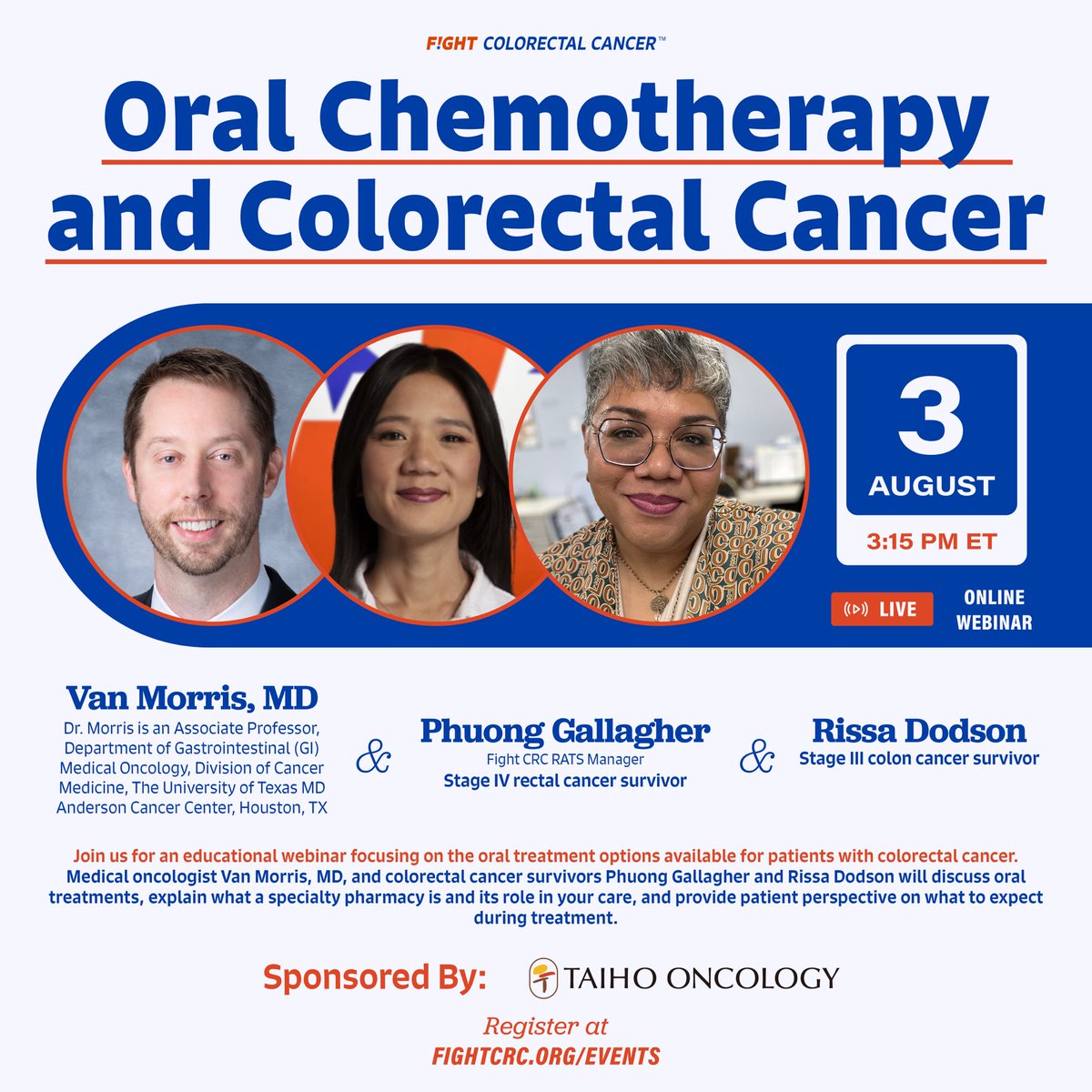
Join @FightCRC for a #CRCWebinar with @VanMorrisMD, @CancerInsider , and Rissa Dodson on the oral treatment options available for patients with colorectal cancer. Register here—> https://t.co/ELj76Qeqoe
Thank you to our sponsor, @TaihoOncology for help in making this happen!
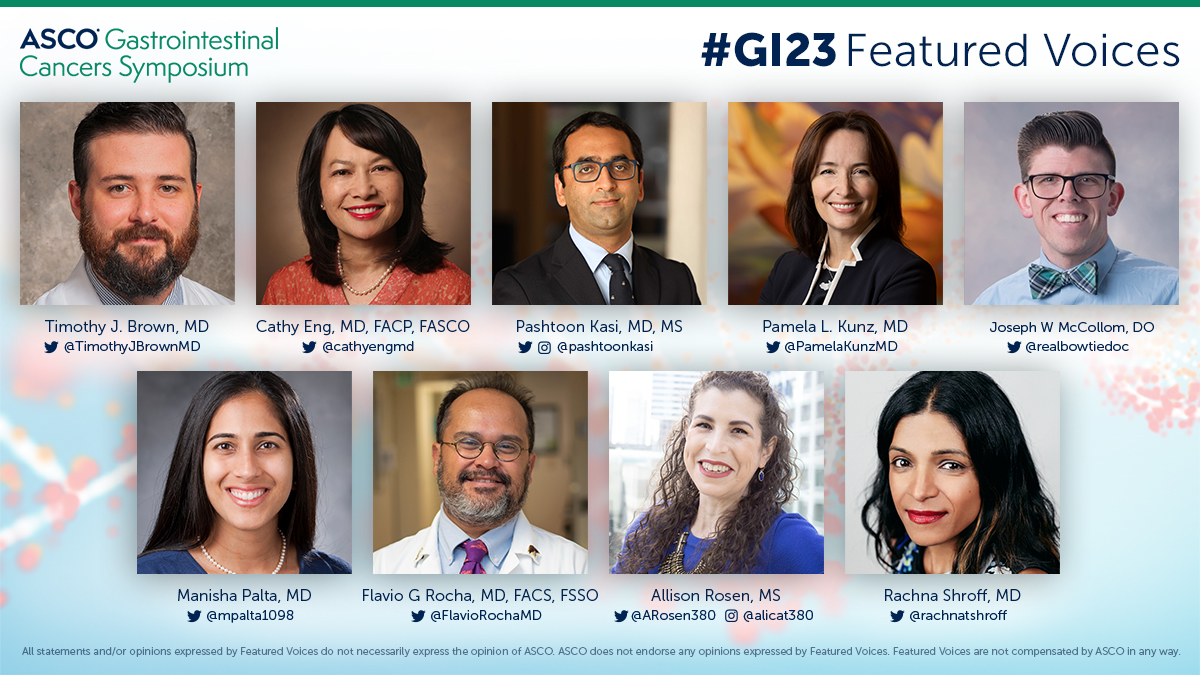
Watching @FightCRC's #CRCWebinar where @CathyEngMD and @ARosen380 are unpacking GI ASCO 2023 abstracts and highlights. You still have time to check it out!
https://t.co/WGcwb838ci
What is Lynch Syndrome❓Lynch syndrome is the most common form of hereditary #colorectalcancer affecting more than 1.2 million people in the United States. Learn more: https://t.co/yxFrhzqP1a
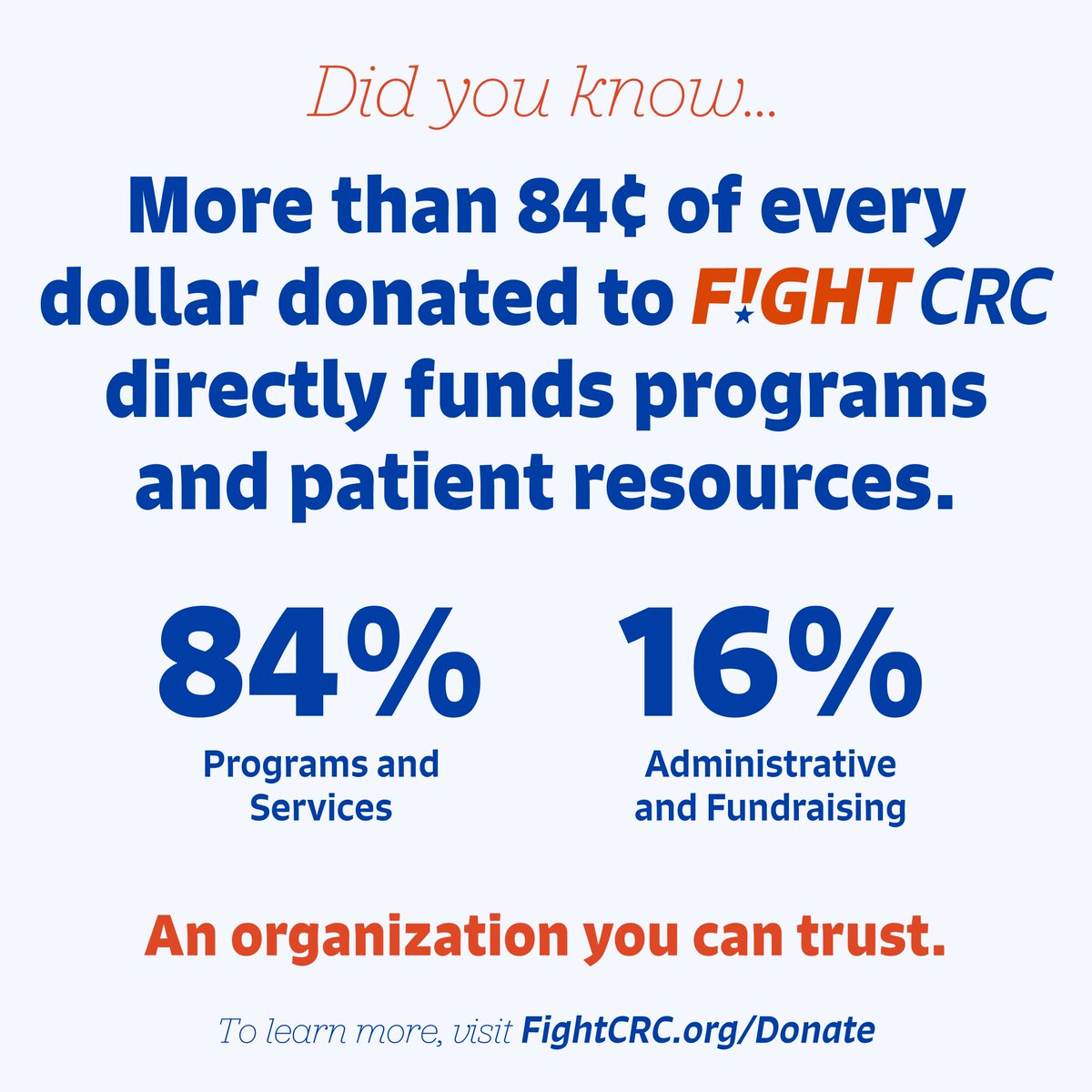
Our high-impact research helps support survivors, caregivers, & loved ones. Fight CRC has funded more than $1 million in colorectal cancer research, but it's not enough. We need YOUR help today on #GivingTuesday to keep funding our Path to a Cure: https://t.co/swYT99hBYy
A: Sometimes, large trials have regional hospitals and smaller clinics as some of their locations. In addition, other trials cover traveling and/or lodging for patients who participate. #CRCTweetChat
A: If you use a curated tool like the #FightCRC Clinical Trial Finder, https://t.co/KNfL8Uojer, or any similar tools, your doctor can help to narrow down your clinical trial options after you have compiled a shortlist. #CRCTweetChat
A: The standard of care may only work for a period of time; clinical trials may offer the chance of long remission that can be worth exploring. #CRCTweetChat
A: “Trials are my last option.” FACT: There are many trials available to patients with different stages and along the cancer continuum, not just those who have not responded to treatment. #CRCTweetChat https://t.co/Pc8xmc2nzJ
A: (1) Tell your doctor you’re interested in learning about clinical trials. Your doctor can help identify trials that may be a good fit for you. #CRCTweetChat
A: While it is not impossible to find clinical trials, it can be challenging because clinical trials often have a limited window of opportunity. This means people need to be persistent & continually search for clinical trial options to discuss with their doctor. #CRCTweetChat
A: Ensuring translations and interpretations are available for resources & materials are culturally appropriate. #FightCRC provides our Clinical Trials Mini Magazine in Spanish, which shares real experiences & tips. #CRCTweetChat https://t.co/AHfGFBj06n
A: For clinical trials to benefit the populations they are intended for, racial and ethnic diversity among participants must be increased. As a community, we must share our stories and raise awareness for clinical trials. #CRCTweetChat https://t.co/aCJo7FNaHY
Q: What can researchers, advocacy orgs, and others in the cancer sphere do to reduce barriers and make it easier for minority communities to find and enroll in clinical trials? #CRCTweetChat
A: Distrust in the medical system, lack of access to healthcare and quality insurance, and provider perception (bias and false perceptions). #CRCTweetChat
People who are underrepresented in health care are generally likely to also be underrepresented in clinical research. Today's #CRCTweetChat starting right now will address “Increasing Diversity in Clinical Trials.”
Clinical trials are arguably the most important step to transition research into the real world, providing benefits across disease states and improving health outcomes throughout various populations.
Join our #CRCTweetChat addressing "Increasing Diversity in Clinical Trials."