NE&Y GLH Rare Disease Service Lead (Mitochondrial Disease)
NIHR fellow - diagnosis of paediatric mitochondrial disease
Now CharlotteAlston where skies are blue
📢 Lovely piece of work from @taylorlabncl @mitocollier @MitoMonika @Pagliarini_Lab and others characterising a novel complex I assembly factor. Preprint out now!! 🎉🎉
Excited to share our latest preprint, led by @MitoMonika Rachel Guerra & @mitocollier in collaboration with the Wittig lab & @Pagliarini_Lab
https://t.co/PnFtk6HlFT
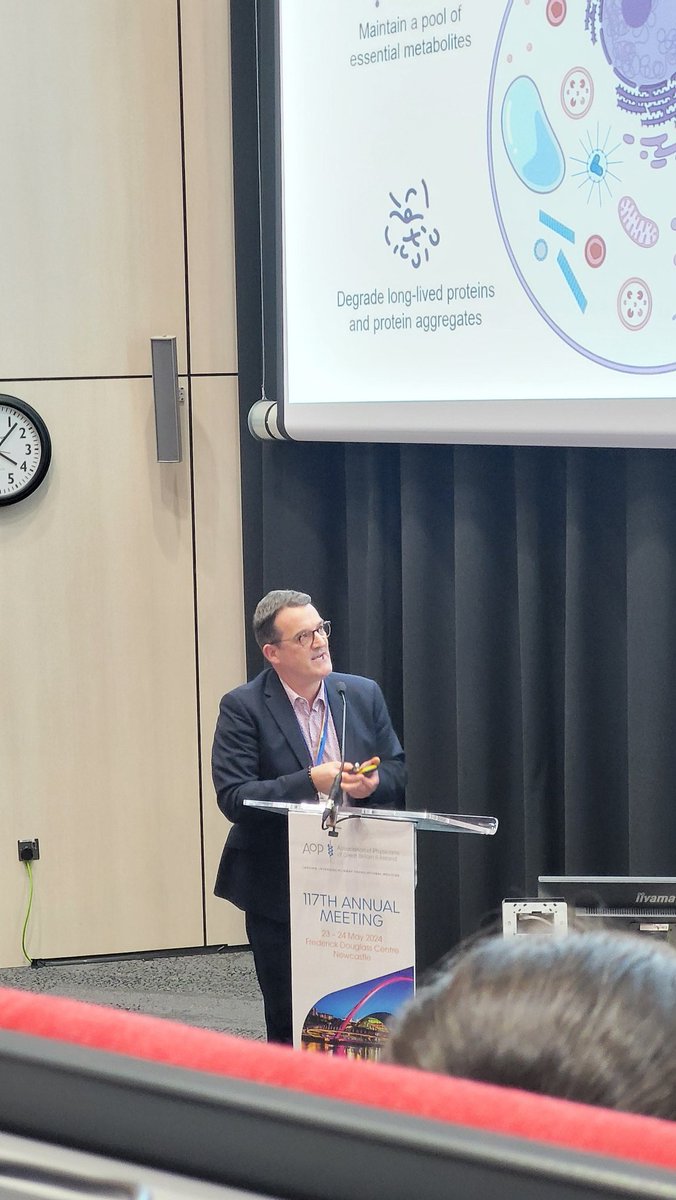
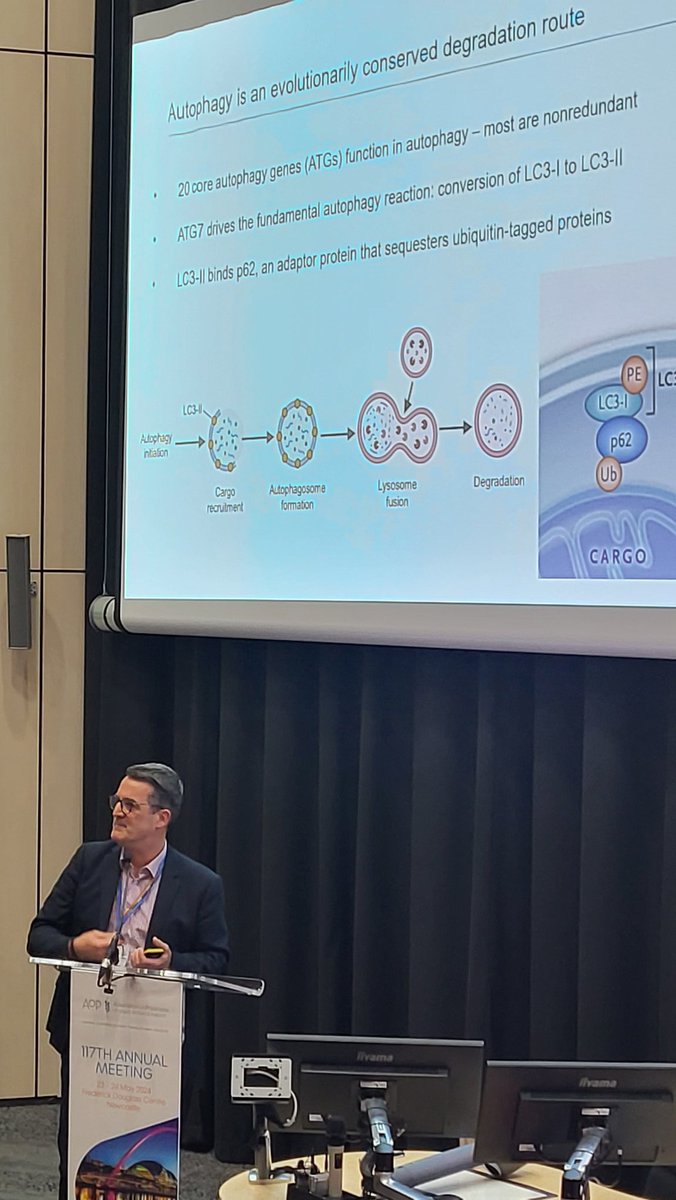
@taylorlabncl delivering a great talk on macroautophagy defects at the #APAM2024@AoPgbi meeting in Newcastle. Shout outs to @mitocollier and @Jameslambton1 who did much of the heavy lifting :)
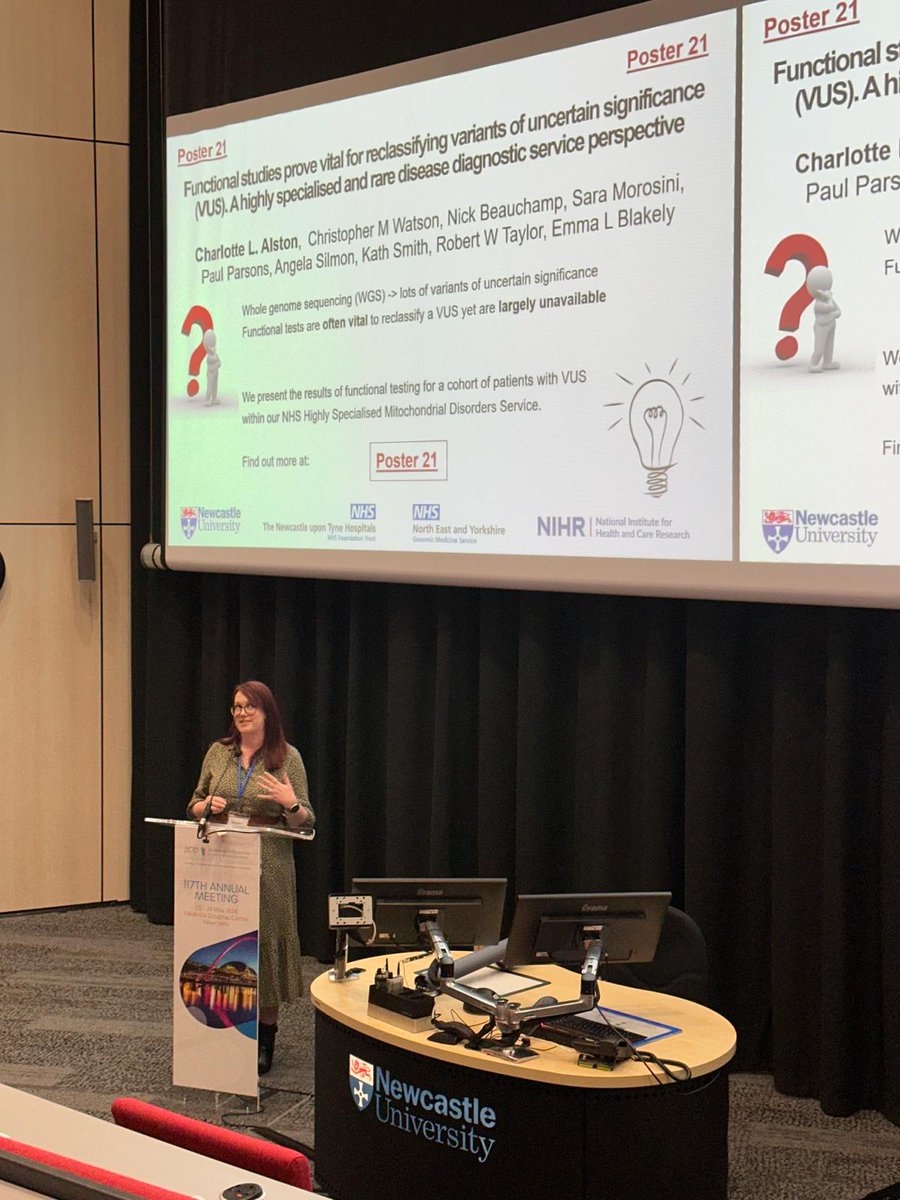
Alot of food for thought after day one of the @AoPgbi meeting in Newcastle. Great to see some of the best local translational research being presented #APAM2024. If you're here, come find me at the posters tomorrow!
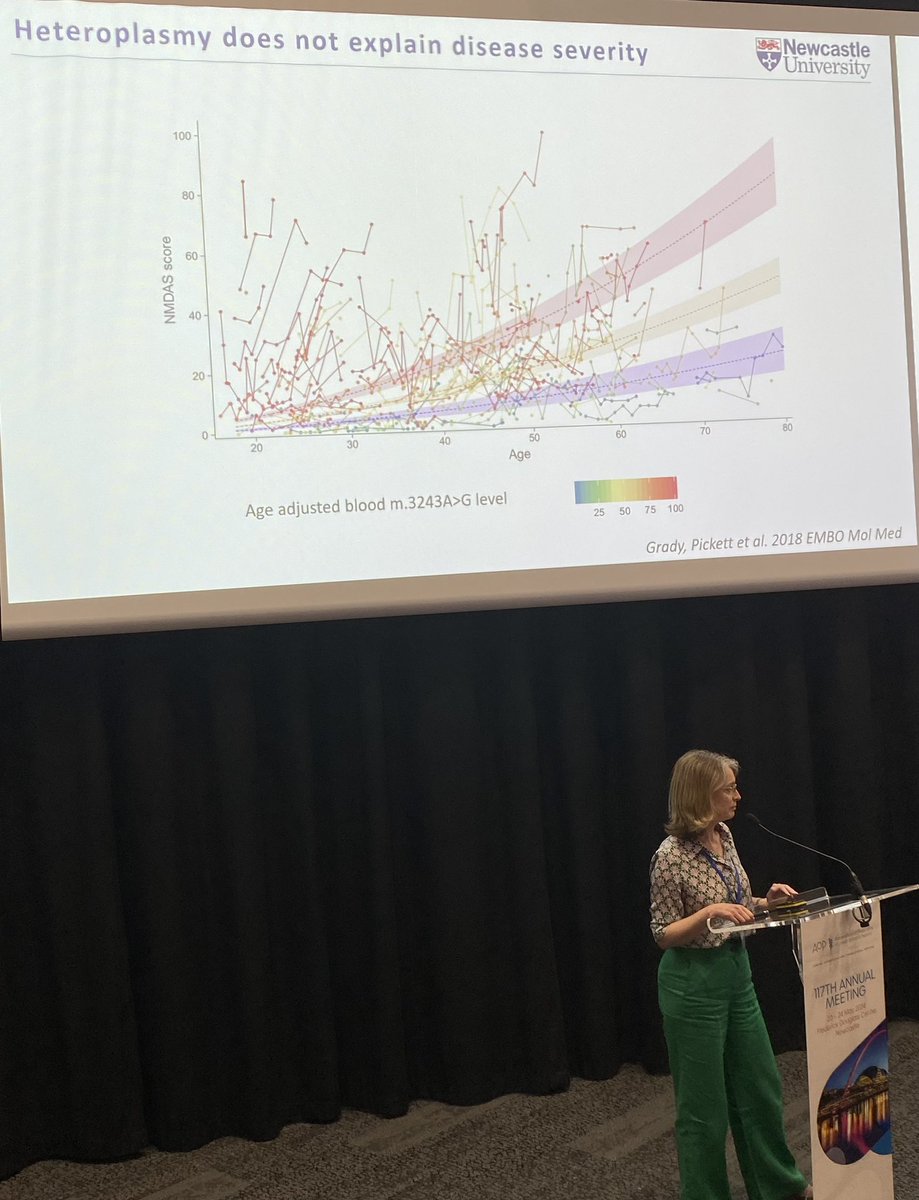
@sarahjpickett from @MitoResearch outlining her team’s research to understand the role of nuclear genetic variation in shaping mtDNA disease phenotypes @AoPgbi in #newcastle
📣 I’m looking for a postdoc to work on exciting computational projects in mitochondrial genomics @YaleGenetics! Interested in human genomics, #mtDNA & improving our ability to link genetic variation to disease? Reach out or find me at #ESHG24!
Details 👉 https://t.co/DBM32sUuMS
Proud to have been a part of this collaborative effort with @andrew_sung@Pagliarini_Lab and @taylorlabncl - through DMS, a diagnostic resource to predict the functional consequence of NDUFAF6 variants has come to life.
Mitochondrial complex I construction relies on a patchwork of poorly defined "assembly factors." In work led by @andrew_sung, we used deep mutational scanning to elucidate NDUFAF6 function and predict variant pathogenicity.
@taylorlabncl@melogrammatical
https://t.co/0cFzaamamF
@mancunianmedic I wrote two cheques only this morning 😂😂 It was for school photos, the only time I ever use my chequebook because it's easier than filling out all the digits of my credit card. Twice.
Each year, around 6,000 children are born in the UK with a genetic condition that will likely remain undiagnosed.
Today on Undiagnosed Children's Day, we're highlighting @SWAN_UK, a support community for families affected by a syndrome without a name.
https://t.co/ADJkP9Z9WQ
Today, April 26, is Undiagnosed Children’s Day, an annual awareness day founded by @GeneticAll_UK@SWAN_UK to spread the word about what it means to be affected by a syndrome without a name, also known as an undiagnosed genetic condition https://t.co/eo1tpMsXZ8
We had the opportunity to join DxNE last week to talk about the work we do as the highly specialised Mitochondrial diagnostic service. Thanks for having us! ❤️
Did you enjoy last weeks conference? We certainly did! 🙌Our post event report is now on our website with photos below. #DxNEConf24. Don't forget to give feedback!
Read our report 👇https://t.co/X8HmWpRobe
Feedback form 👇 https://t.co/Wmmw612oc9
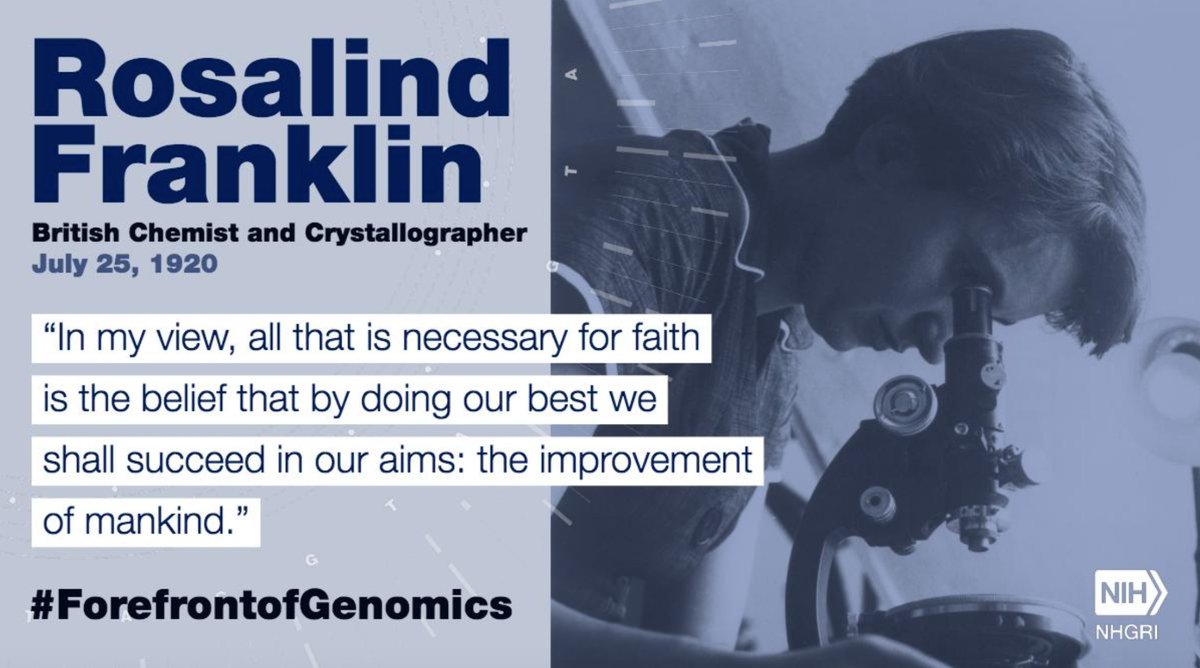
As part of #DNADay24, we celebrate Rosalind Franklin for her work and influence in science. Thanks to Franklin, we have the historic Photo 51, which revealed that DNA indeed has a double helix shape!