🔸Dr. Micaela Sinibaldi🔸talks about her research at Karak Castle #Jordan
Excerpt👉https://t.co/uv8L0RX0Hh
The video is a History Hit production. The full episode of 'The Great Crusader Siege: Karak' can be seen on the subscription service of History Hit: https://t.co/0FMm2pEHJH
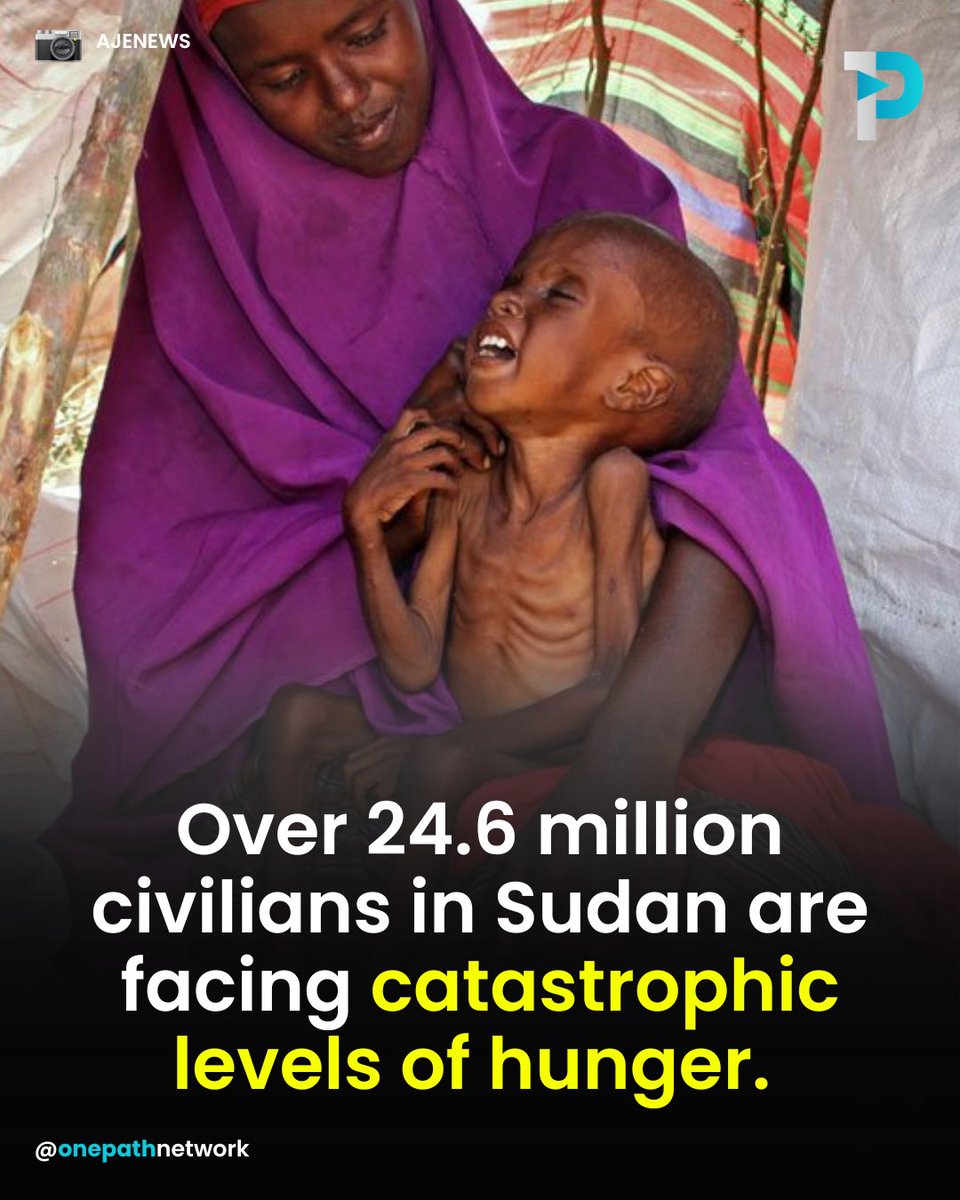
Do not forget Sudan.
Sudan is facing a catastrophic famine, described by the UN as the world’s worst humanitarian crisis in 2025. Nearly 30.4 million people, more than half the country, now depend on emergency aid, while 24.6 million are trapped in acute food insecurity. Among them, over 637,000 people are enduring famine conditions (IPC Phase 5) in some of the hardest-hit regions, including Zamzam, Al Salam, and Abu Shouk IDP camps in North Darfur, as well as the Western Nuba Mountains. Children are bearing the brunt of this man-made disaster: 522,000 children have already died from hunger-related causes. Despite the scale of the tragedy, aid deliveries remain dangerously inadequate.
The suffering in Sudan is unfolding largely out of sight. Twelve million people are internally displaced, and over four million refugees have fled to neighbouring countries, where food aid is also running out. Entire communities in Darfur, Kordofan, and the Nuba Mountains are on the brink of starvation, surviving on foraged leaves and contaminated water. This crisis is not a distant tragedy; it is a daily reality of preventable death, the direct result of siege tactics and neglect. Do not forget Sudan. Every share, every donation, and every voice raised can push this silent catastrophe back into the world’s conscience and pressure governments to deliver the food, medicine, and safe passage that millions of Sudanese need to survive.
The world's worst humanitarian crisis is being ignored, with over 8 million people displaced, 500,000 children dead from hunger. Cholera and war crimes spreading in silence.
This is not just a Sudanese issue — it is a test of our shared humanity. 🇸🇩
Watch our (Maël Crépy, Marie Bourgeois & Julien Cooper) talk on nomads: "Nomads of the Eastern Sahara: from footnotes to full page"
https://t.co/0xmhCWvbdL
Shukran to the @ifaocaire for hosting an amazing conference and workshop, and everyone that attended #Egypt#sudan#History
A soldier from the armed forces stands in front of the National Museum in Khartoum, saying that most of its contents were looted, while the remaining artifacts that the militias were unable to smuggle were destroyed. #Sudan
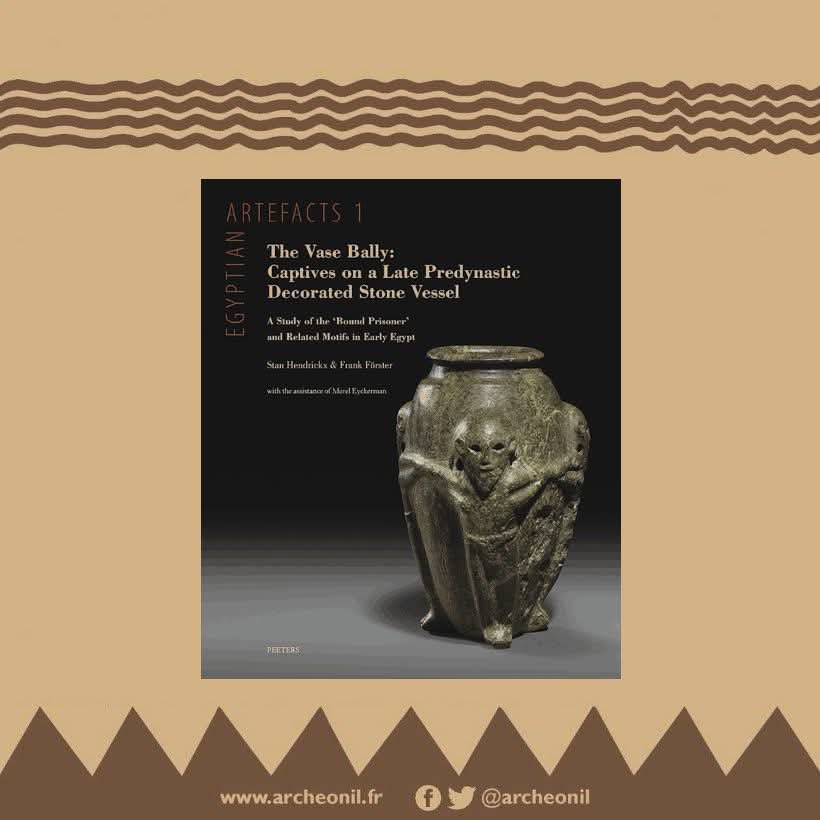
📖 Publication disponible!
Le premier numéro de Egyptian Artefacts, intitulé “The Vase Bally: Captives on a Late Predynastic Decorated Stone Vessel”, a été publié aux éditions Peeters. Co-écrit par F. Förster et S. Hendrickx, sa table des matières est disponible en ligne.
Today marks twenty years since our first field season in Aswan ended. It was ten days filled with exciting work, plenty of sun, sand, and archaeology. There is still so much work to be done in the field that we may be there for another twenty years!
Auschwitz was at the end of a long process. We must remember that it did not start from gas chambers.
This hatred was gradually developed by humans. From ideas, words, stereotypes & prejudice through legal exclusion, dehumanization & escalating violence... to systematic and industrial murder.
Auschwitz took time.
Andrea Zerboni @andzerb@LaStatale opens the Annual Italian Prehistoric Conference in Florence @IIPP_Preistoria with a keynote on Climate-Environment-Culture