🚨 "Mi marcapasos está por apagarse y sigo esperando la cirugía"
Julio César García Arvayo, de 49 años, denunció que lleva dos años esperando que el @Tu_IMSS le reprograme el reemplazo de su marcapasos, pese a que su vida está en riesgo por el desgaste del dispositivo.
El paciente aseguró que la intervención fue suspendida primero por una reacción al medicamento y posteriormente por la falta de presupuesto e insumos.
Ahora solicita al IMSS que su cirugía sea atendida con carácter de urgente, al advertir que su estado de salud continúa deteriorándose.
Vía @uniradiosonora
🔴 “¿Qué es lo que ya no estamos viendo como sociedad?”: Arely Fabián, de tan solo 10 años, fue víctima de agresión sexual por un adolescente de 13 años en Tabasco.
La menor permanece en estado crítico. Su abogada, Julieta Garza, cuestiona qué está pasando con nuestros niños y con la sociedad.
Buscará presentar una iniciativa en Zacatecas para marcar un precedente y evitar más casos como este.
Se puede seguir el caso y su trabajo en las siguientes páginas en Facebook: Julieta Garza, Gela Espinoza, Efrén Espinoza, Sory Rodríguez, Tabasco al día y la región, TRT.
#AzucenaxFórmula
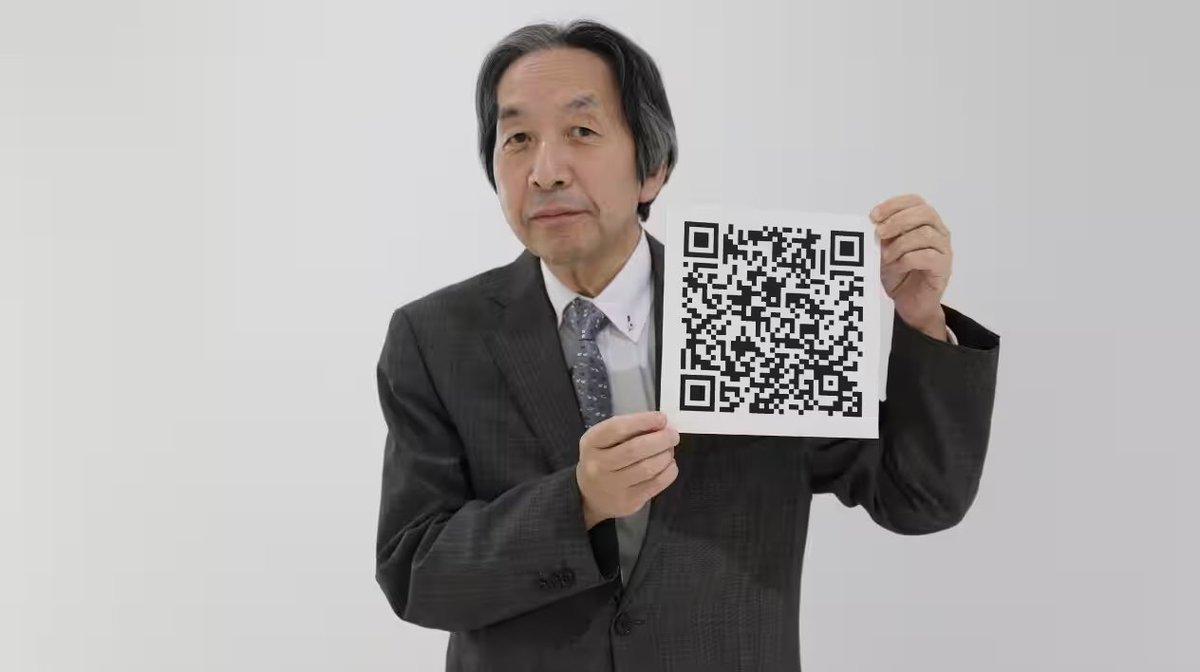
A Japanese engineer invented the QR code for one job, tracking car parts on a Toyota line, then his company chose to give the patent away for free, which is the only reason it ended up on every restaurant table on Earth.
His name is Masahiro Hara. The company was Denso Wave, a parts supplier owned by Toyota.
In 1992 the problem landed on his desk, and it was not glamorous. Workers on the factory floor were drowning.
Every car part had a barcode, but a barcode can only hold about twenty characters, so to track one component they had to stick five or ten barcodes on it.
A worker would stand there scanning a single part ten times in a row. Some of them were scanning close to a thousand barcodes a day. The job had stopped being about building cars and turned into pointing a scanner at stickers all day long.
And there was a second problem nobody upstairs cared about. This was a factory. Oil got on everything. A smudge of grease across a barcode and the whole thing became unreadable, and the line stopped.
Hara was asked to make the scanner faster. He looked at it for a while and realized the scanner was not the problem. The barcode itself was the ceiling. A line of black bars can only hold information going one direction, left to right.
He decided to build something that held information in two directions, up and down as well as across, so it could store hundreds of times more in the same little square.
Then came the part that sounds made up but is not.
Hara played Go on his lunch breaks, the old board game with black and white stones sitting on a grid. He was staring at the board one day and it clicked.
The grid of black and white stones was already a way to store information in two directions. That was the shape of his code.
But building the code was the easy half. The hard problem was speed, because the whole point was to be fast, and a scanner wastes most of its time just trying to figure out where the code is and which way it is turned.
The fix came to him on a train. He was looking out the window at buildings, and one building stood out from all the others because of its shape against the sky. That was the idea.
He put three little square targets in three corners of the code. The moment a scanner sees those three squares, it knows instantly where the code is and how it is rotated, even upside down, even at an angle.
Now here is the detail that shows how far he was willing to go. Those three corner squares only work if nothing else on the page looks like them.
If a magazine ad or a cardboard box happened to have the same black and white pattern nearby, the scanner would get confused and grab the wrong thing.
So Hara and his tiny two-person team went and surveyed printed material. Magazines. Flyers. Cardboard boxes. Piles of it, for days, reducing every picture down to its ratio of black to white area, hunting for the one ratio that almost never shows up in print anywhere. They found it. One to one to three to one to one.
That exact rhythm of black and white is baked into every corner square of every QR code on Earth, and it is there because it is the pattern the printed world almost never produces by accident.
Then he solved the oil.
He built the code so it carries a backup of its own information, spread mathematically across the whole square. You can tear off, smudge, or scratch out up to thirty percent of a QR code and it still scans perfectly, because the code rebuilds the missing piece from the copy it kept of itself.
A worker could get grease on a third of the label and the line would keep moving. This is the same math that lets a scratched CD still play and lets a spacecraft send data back across the solar system without asking to repeat itself.
He finished in 1994. He named it Quick Response, after what it does for the person using it, not after what it is.
And then Denso made the decision that actually mattered.
They held the patent. They could have charged a fee on every single scan, and given how many billions happen now, that would have made someone unimaginably rich.
Instead they announced they would not enforce their rights to collect royalties, and they published the specification openly so anyone could use it. Hara later said it was not even a big argument inside the company.
That one choice is the whole story. A code that costs nothing to use is a code everyone builds on. Airlines put it on tickets. Phone makers built readers into cameras.
Then a pandemic hit and the world needed a way to hand someone information without touching anything, and the free little square that a Toyota engineer built for greasy factory workers was suddenly on every menu, every payment, every door.
Hara still works there. He has said, more than once, that he never imagined it would spread this far, and that the part he is proudest of is that it got used to keep people safe.
The man built it to survive oil on a factory floor. It ended up surviving everything else too.
You have scanned his work a hundred times this year. Now you know whose it was.
She joined Japan's Self-Defence Forces after watching soldiers help survivors of the 2011 earthquake and tsunami. She wanted to defend her country.
Instead her colleagues assaulted her daily for over a year. In 2021 three of them pinned her down in front of dozens of watching laughing colleagues. She reported it up the chain of command. Two investigations launched. Both dropped for lack of evidence. Every male colleague who had watched refused to testify. TV stations ignored her. So she posted her story on YouTube.
The video went viral. 100,000 people signed her petition. The Ministry of Defence issued a public apology. Five soldiers dishonourably dismissed. An investigation uncovered over 1,000 other harassment complaints across the entire military. Three soldiers convicted in December 2023. Japanese government settled her civil lawsuit in January 2026.
She was named on the BBC's 100 most influential women in the world. Time magazine put her on their Next 100 list.
Her name is Rina Gonoi. She was 24 years old when she brought Japan's military to its knees.
ADHD is fundamentally a neurodevelopmental disorder of the brain’s executive functioning system, rather than a simple behavioral problem or a lack of moral willpower. At the heart of this condition is a profound alteration in dopaminergic signaling network, which are responsible for regulating motivation, anticipating rewards, and initiating tasks. While a neurotypical brain can generate the necessary chemical activation to begin a mundane or uninteresting task through sheer discipline, the ADHD brain operates on an interest-based nervous system. When an individual with ADHD encounters a subject that genuinely fascinates them, it triggers a surge of dopamine that unlocks an intense state of “hyperfocus”—a deeply absorbing and sustained attention span where they can perform at incredibly high cognitive levels. The neurological underpinnings of these executive control variations and their relation to structural fronto-striatal networks have been extensively documented in neuroimaging literature as seen in studies like PMID:15062632 & 10827919
Conversely, when a task lacks novelty, urgency, or intrinsic interest, the ADHD brain faces a debilitating chemical barrier. Because individuals with ADHD exhibit lower baseline levels of dopamine transporters and receptors in their reward pathways, their brains fail to recognize the future utility of an uninteresting task, making task initiation nearly impossible. This phenomenon is known as executive dysfunction, a complex neurological paralysis where a person desperately wants to complete a task but cannot physically force their brain to execute the first step. Tragically, because this barrier is invisible, neurotypical society often misinterprets this intense internal battle as a character flaw, unfairly labeling these individuals as “lazy” or “unmotivated”. This chronic misalignment between a person’s cognitive intent and their chemical capability frequently leads to severe psychological distress, lower self-esteem and general life disruption.
-Thefarmacyreal
Interesting new trend: foreign tourists are now helping Chinese people discover fun places in China that we Chinese didn’t even know.
This is what happens when inbound tourism surges.
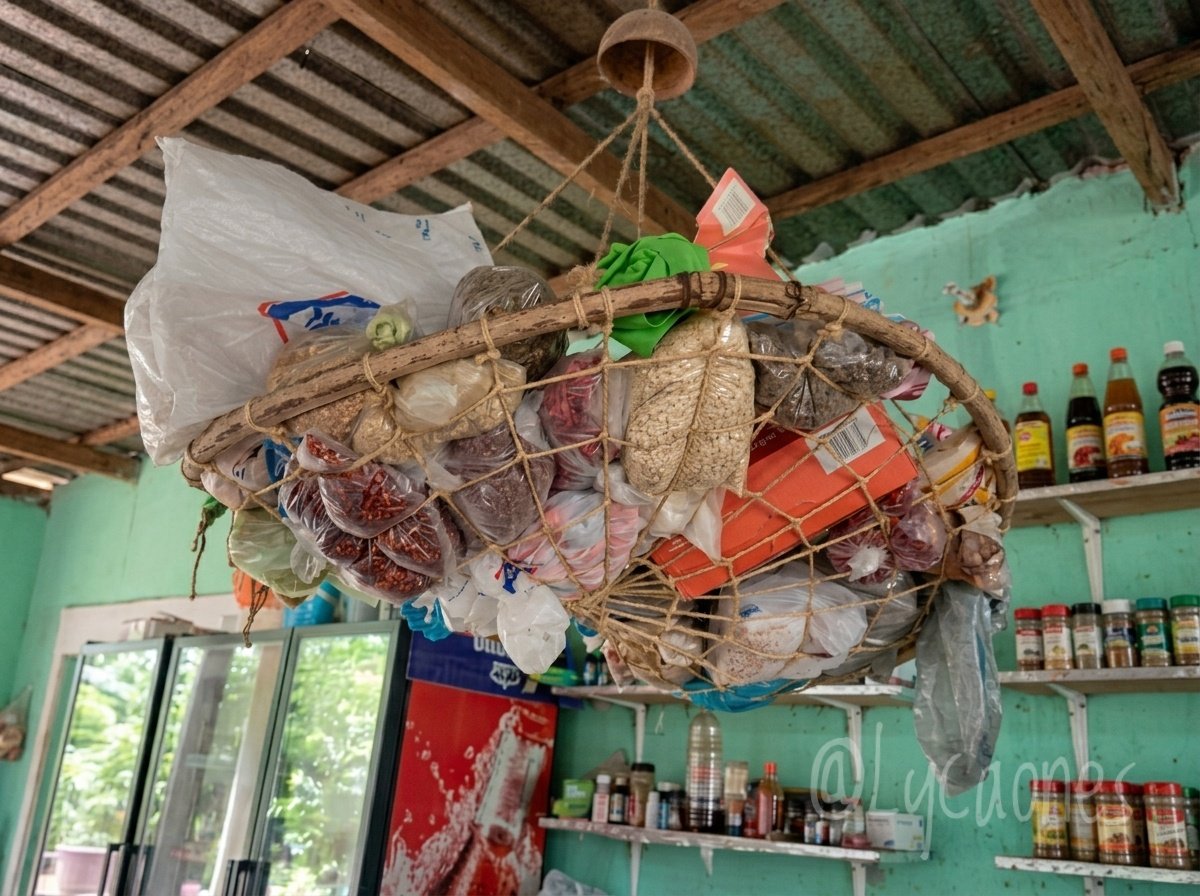
tlacahuililli en náhuatl es «espacio o lugar vacío, ordenado y preparado para recibir objetos».
En algunas zonas de la Huasteca aún se denomina wililli a una canastilla elaborada con ixtle que se sostiene mediante un aro hecho de bejuco, sujeta al techo con cuerdas.
Este artefacto, cuyo uso ha disminuido notablemente, servía para mantener frescos y ventilados ciertos alimentos. Permitía conservar carne seca y salada, así como tortillas excedentes que, tras endurecerse, se destinaban a la preparación de chilaquiles. Asimismo, solía colocarse piloncillo o jabón en su interior para que el humo los secara y prolongara su vida útil.
En ciertos pueblos y haciendas del Bajío este dispositivo recibía el nombre de garabato. Tenía la misma función, y de esta práctica proviene el refrán popular «un ojo al gato y otro al garabato», empleado para advertir la necesidad de cuidar los alimentos de los animales domésticos.
La presencia del wililli era habitual en las viviendas de la Huasteca; actualmente su uso es escaso debido a la proliferación de los sistemas de refrigeración.
No obstante, algunas cocinas huastecas aún lo conservan.
El capitán de Infantería de Marina Christian Tello perdió la vida en Mazatlán, Sinaloa, durante un operativo donde elementos navales acompañaban y protegían a un colectivo de madres buscadoras.
De acuerdo con reportes periodísticos, el grupo realizaba labores de búsqueda en una zona rural entre El Recodo y El Tecomate de Siqueros cuando ocurrió una explosión, presuntamente provocada por un artefacto o mina.
Christian Tello resultó gravemente herido y perdió la vida mientras era trasladado al Hospital Naval Militar de Mazatlán. Otros elementos de la Marina lamentablemente también resultaron lesionados.
Su partida deja un gran dolor ya que ocurrió en una de las misiones más tristes que existen en este país: cuidar a madres que salen a buscar a sus hijos porque la desaparición les arrebató la paz, la vida y hasta el derecho a descansar.
Ese día, Christian Tello no solo llevaba un uniforme, sino que también llevaba la responsabilidad de proteger a mujeres que ya han perdido demasiado. Perdió la vida acompañando una búsqueda y tratando de cuidar a quienes se niegan a rendirse.
Gracias, capitán Christian Tello, por su valentía, por su entrega y por cumplir con su deber hasta el último momento. Su memoria vivirá en el reconocimiento de las madres buscadoras a las que protegió y de un país que necesita más hombres y mujeres como usted.
Que México recuerde que detrás de cada operativo, de cada madre buscadora y de cada elemento caído, hay familias rotas por una v10l3nc1a que no debería ser normal.
Misión cumplida, puede descansar en paz, Christian, que Dios lo reciba en los jardines eternos.
#triste #madres #mexico #Sinaloa #heroe
China has officially launched the process of replacing plastic with bamboo in urban areas. The latest technological invention developed by Chinese scientists enables bamboo powder to be used to produce all kinds of plastic substitutes.
Bonita escena: algunos tipos de ranas usan las flores densas como refugios para cuidar su delicada piel, al mismo tiempo que se protegen de depredadores
🔴 “Más de 133 mil personas desaparecidas”: así la lona que extiende un grupo de activistas al pie del Ángel de la Independencia.
📹🗞️ @LizHernandezE | @Radio_Formula