Asimov is a design you build robots from, so it has to be modular.
We believe progress in robotics has never come from a single perfect machine. It comes from a shared foundation that many people and agents can build on, each solving the problem in front of them, each making the next build a little better.
An open system with known parts lets a student, a lab and a factory start from the same place and go in different directions. That is how a field grows, and that is why Asimov exists.
Get the interfaces right and everything else becomes buildable. Asimov is designed around clear mechanical, electrical and software interfaces, so anyone who comes after us can take it further. The wheeled version is the first test of that idea.
- Legs to climb
- Wheels to cover ground
- Grippers for simple work
- Dexterous hands for fine work
- Your own modules for whatever comes next
The robots will look different, and they should. The design underneath is what holds them together.
First it walked, now it rolls, next it grips.
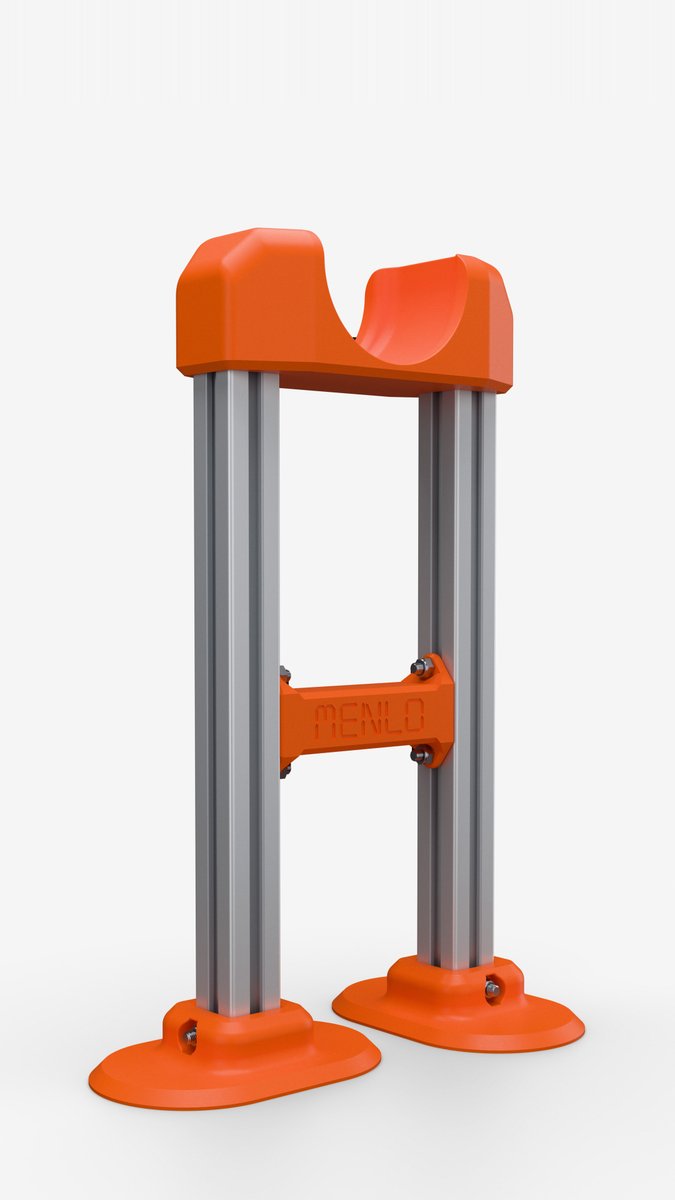
We're open-sourcing a few Asimov 1 accessories.
- Display Hands
- Shoes
- Chair
Print and build them yourself.
Get the files on GitHub: https://t.co/OwL0Az0x0B
We gave an AI agent our humanoid robot and one task.
Looking through Asimov 1's own cameras, it picked a knee motor off the shelf and put it back.
Day 385 of building Asimov 1.
It took me ~21 hours to build @asimovinc from @menloresearch 🤖
Ever wondered what it takes to go from a pile of parts to a walking humanoid? Watch it !
Full timelapse in the reply 👇
Built at @huggingface with heart 🤗