One of my favorite aviation phrases:
“Superior pilots use their superior judgement to avoid having to demonstrate their superior skills.”
It’s true for any proceduralist btw.
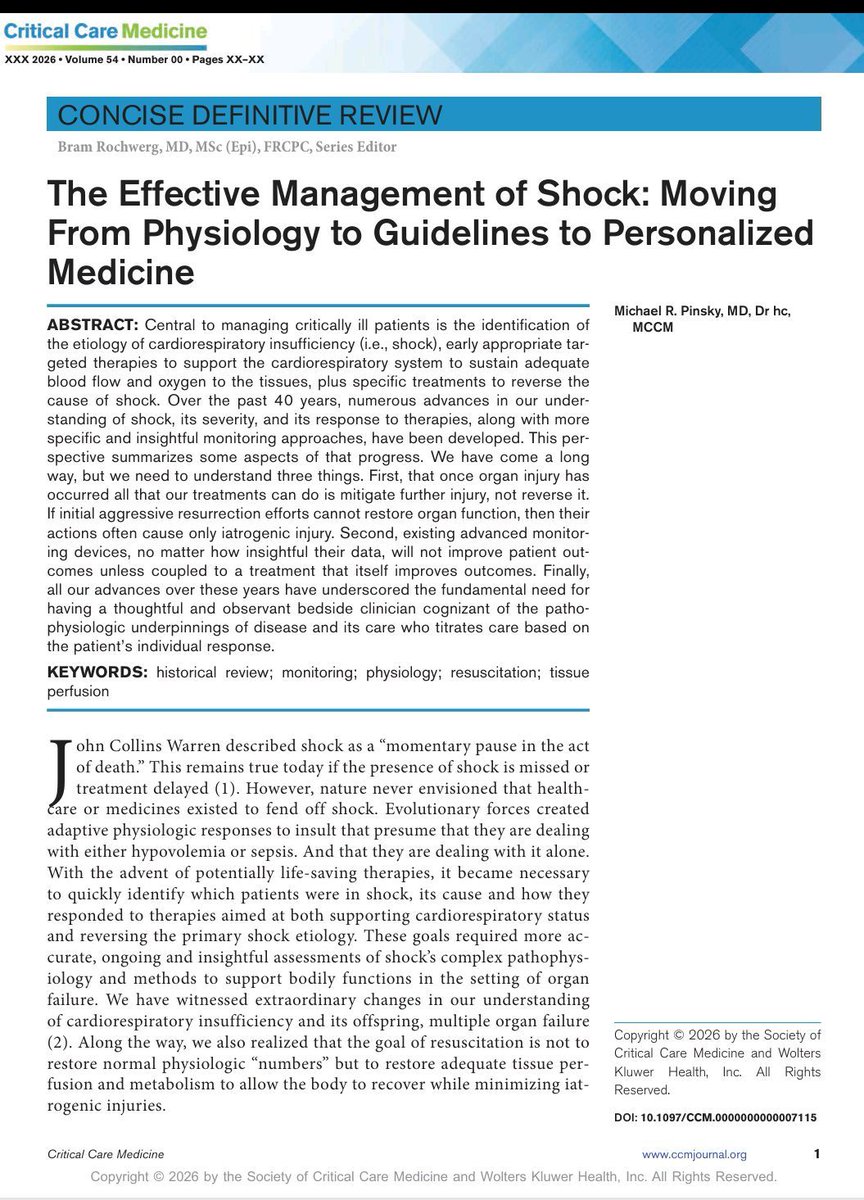
I just read this outstanding review by Prof. Michael Pinsky:
👉 “The Effective Management of Shock: From Physiology to Guidelines to Personalized Medicine”
🧠 Key paradigm shift:
👉 Shock is not about numbers
👉 It is about tissue perfusion and cellular metabolism
⚠️ Three brutal truths (often ignored in daily practice):
1️⃣ Once organ injury occurs → we cannot reverse it
→ We can only limit further damage
2️⃣ Monitoring alone does not improve outcomes
→ Only actions linked to effective therapies matter
3️⃣ Guidelines ≠ patient care
→ The clinician’s physiologic reasoning remains central
📊 Why many “standard” approaches failed:
Targeting DO₂ “supranormal” levels → ↑ mortality
EGDT bundles → not superior to good early care
Fixed 30 mL/kg fluids → harmful in non-responders
👉 Lesson:
One-size-fits-all resuscitation is physiologically wrong
🫀 Modern hemodynamic thinking:
✔️ Fluid responsiveness matters (PPV, SVV, PLR)
✔️ MAP alone is not enough
✔️ Focus on:
Tissue perfusion pressure
Critical closing pressure (Pcc)
“Vascular waterfall” concept
👉 Increasing MAP ≠ improving microcirculation
🔥 Game-changing concept:
👉 Shock = failure of microcirculatory flow regulation
Even with:
Normal CO
Normal MAP
➡️ Tissue hypoxia may persist
🧬 The real goal of resuscitation:
❌ Normalize numbers
✅ Restore effective tissue perfusion early
✅ Avoid iatrogenic harm
💡 Where we are going:
Capillary refill time (CRT)-guided resuscitation
Personalized MAP targets
Dynamic physiology-based decisions
AI-driven precision resuscitation
📌 Take-home message:
👉 The future of shock management is NOT:
More fluids
More drugs
More devices
👉 It is: Better understanding of physiology + individualized care
🧠 And maybe the most important sentence in the paper:
👉 “The thoughtful bedside clinician remains the gold standard.”
#CriticalCare #Shock #Hemodynamics #ICU #Sepsis #PersonalizedMedicine #Resuscitation #Pinsky
I actually like this. PCT, like everything else, is a tool in the toolbox. I have used it both ways- check it up front with the intention to use it to deescalate abx in a few days, but if negative up front then it’s time to take a diagnostic pause 🛑
The results of the PRONTO RCT of procalcitonin in people with suspected sepsis are absolutely fascinating.
Mortality was significantly lower in the procalcitonin-guided care group: 13.6% (372/2738) vs 16.6% (450/2715) (p=0.0009) but there was no difference in antibiotic initiation, narrowing, or days of therapy!
So apparently procalcitonin saves lives even if it doesn’t change antibiotic prescribing? 🤔
1/
@nickmmark I actually like this. PCT, like everything else, is a tool in the toolbox. I honestly have used it both ways- check it up front with the intention to use it to deescalate abx in a few days, but if negative up front then it’s time to reevaluate ddx assumptions 🧐
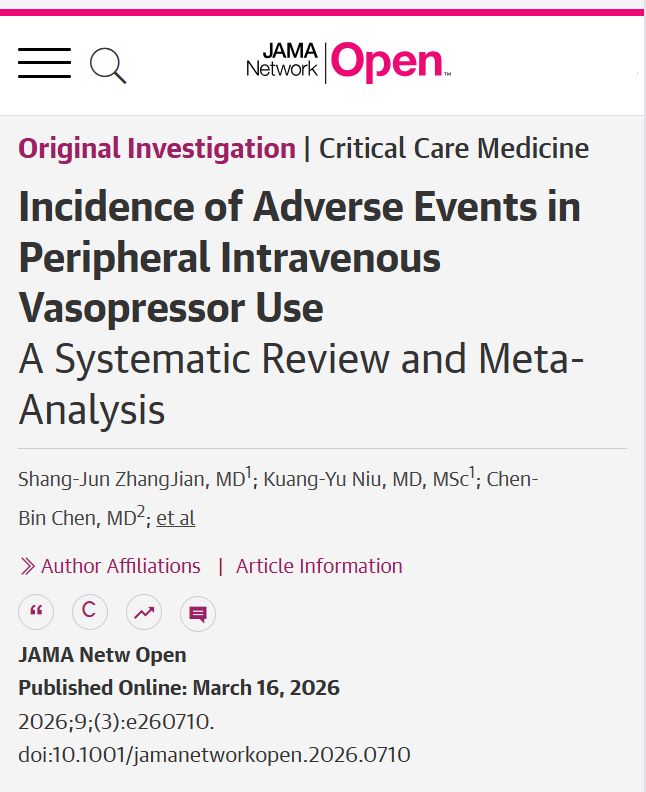
Peripheral vasopressor administration in critically ill adults was associated with a low incidence of adverse events—major events were rare using short peripheral intravenous catheters, and use avoided central venous catheter placement in 60% of cases.
https://t.co/cInCBzu8x8
Ready or not, AI is here. 🤖 So proud to have co-authored this piece with the brilliant Dr. Ashna Manhas in @CHESTPhysician!
Predictive models and LLMs are moving from the "black box" to the bedside. 🏥 🩺
🔗 https://t.co/gPd9WyayFG
#MedTwitter#CriticalCare#AI#MedEd
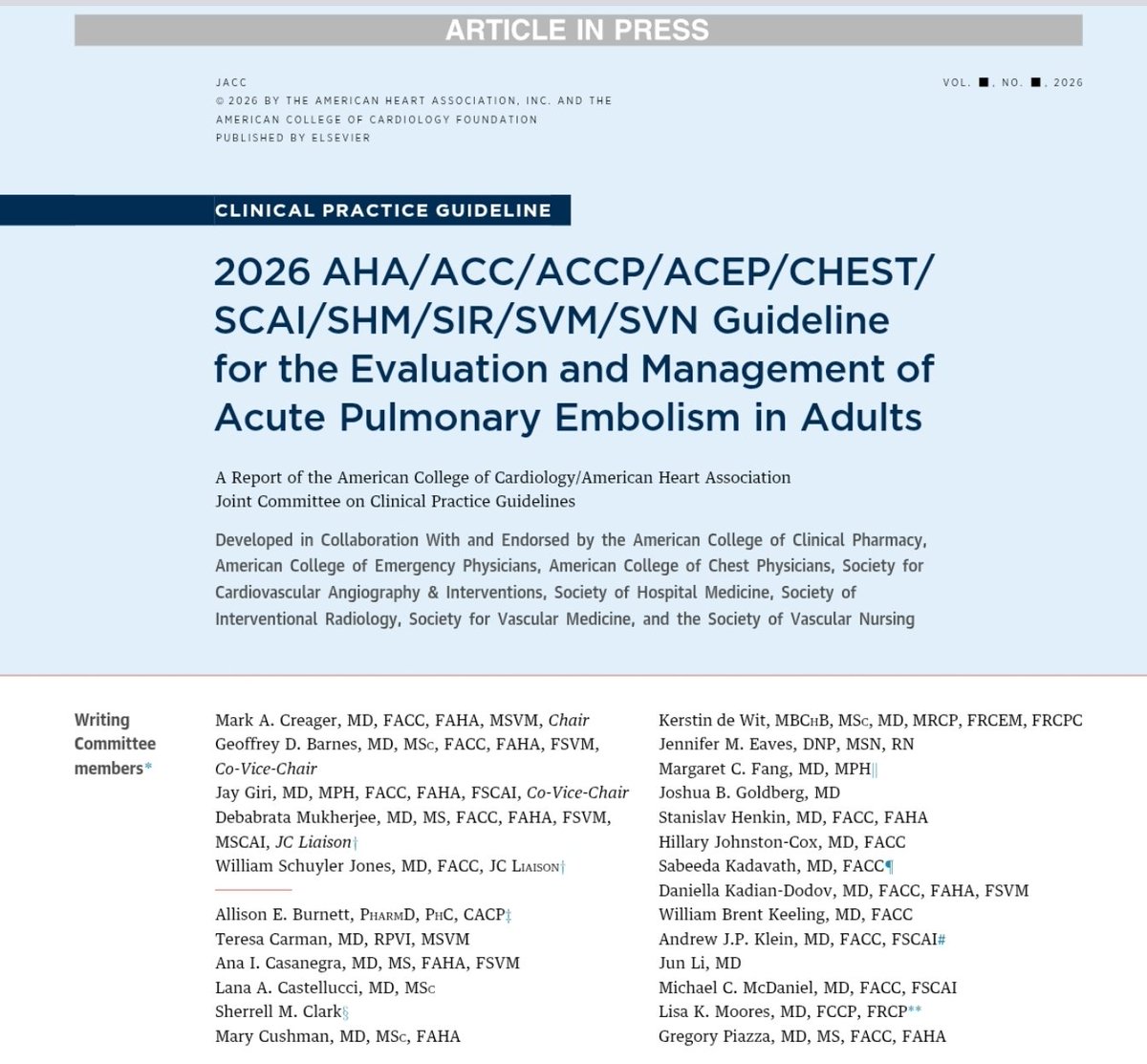
🚨 The 2026 AHA/ACC PE guidelines changed how we think about pulmonary embolism.
Not just new treatments — a new clinical framework.
Say goodbye to “massive vs submassive.”
Meet A–E PE Clinical Categories 🧵👇
I just saw a headline that said “Doctors Don’t Owe Society Anything”. I am affected by the same public skepticism and loss of trust in the medical establishment as every other provider, but I disagree 👇