One of the new, buzzy jobs in Silicon Valley is the AI Forward Deployed Engineer (FDE), an engineer who is embedded within a client organization to help customize solutions, such as building and tuning agentic workflows that suit the client’s particular needs. I’ve heard from people who are wondering anew about the FDE career path since OpenAI and Anthropic started building new teams to place FDEs within client organizations.
The rise of FDEs for AI workloads is one way AI is creating new jobs (and why the jobpolcalypse narrative of upcoming job market collapse is false -- there will be many AI and non-AI jobs). However, I believe there will be far more AI Engineer jobs than FDEs, as I explain below.
The FDE role was pioneered about two decades ago by Palantir, which sent engineers to government locations to work on secure, air-gapped networks. In addition to having good technical skills, FDEs need communication skills and sometimes business skills. For example, they may need to speak with clients to understand their needs, formulate a strategy to prioritize projects, explain complex technology, and respectfully push back if a client asks for something unrealistic. They’re enjoying a resurgence because of the amount of work involved in taking an off-the-shelf LLM and building it into a custom agentic workflow that fits particular business needs.
However, I believe the number of AI Engineer jobs will be far larger. A company might accept a few FDEs to be embedded within its organization. But most companies will want far more of their own employees working on their projects. While my organizations do hire FDEs, we hire far more AI Engineers! Also, a common client concern is that it is hard to find vendor-neutral FDEs — they are, after all, there to deeply integrate a particular vendor’s product into a company. In this moment when it’s hard to predict which AI service will be the best one in a year’s time, optionality (the ability to pick whatever vendor turns out to fit best in the future) is very valuable. In contrast, letting FDEs tightly bind a company’s processes significantly reduces optionality.
Right now, I see surging demand for AI Engineers who can build software applications using AI software components (like LLM prompting, agentic frameworks, evals, etc.) and effectively use AI coding agents (like Claude Code, Codex, Antigravity CLI, and OpenCode). As the AI Engineer role matures, I expect it to fragment into more specialized roles, like the generic Software Engineer role from decades ago fragmented into frontend, backend, mobile, data engineering, devops, and so on.
What will be the future, specialized AI engineering roles? I don’t know. Perhaps there will be AI FDEs, LLMOps Engineers, Evals Engineers, AI Data Engineers, Harness Engineers, and other roles we don’t have names for yet. But for now, I see a lot of AI engineers who are generalists create a lot of value. Skilled AI Engineers are in very high demand! As our field continues to mature over the coming decade, I look forward to new specializations within AI Engineering that create even more job opportunities.
[Original text: The Batch newsletter]
Microsoft Senior AI developer just showed how they build AI agents with Claude at Microsoft.
34-minutes. free. By Microsoft team
Opus 4.7 + 1,400+ pre-built MCP tools
plug Claude into agent → give it tools → ship to production
worth more than any $500 vibe-coding course.
I’m noticing longer usage time in Claude Code CLI. Either more tokens are being allocated, or the CLI has been optimized. Either way, great improvement. @bcherny
In 2007, Stanford professor Joel Peterson gave a 1 hour masterclass on how to negotiate & get what you want.
His ideas:
- Worst position is needing the deal
- Trust beats manipulation in long term
- Great negotiators think in relationships
12 lessons to negotiate better:
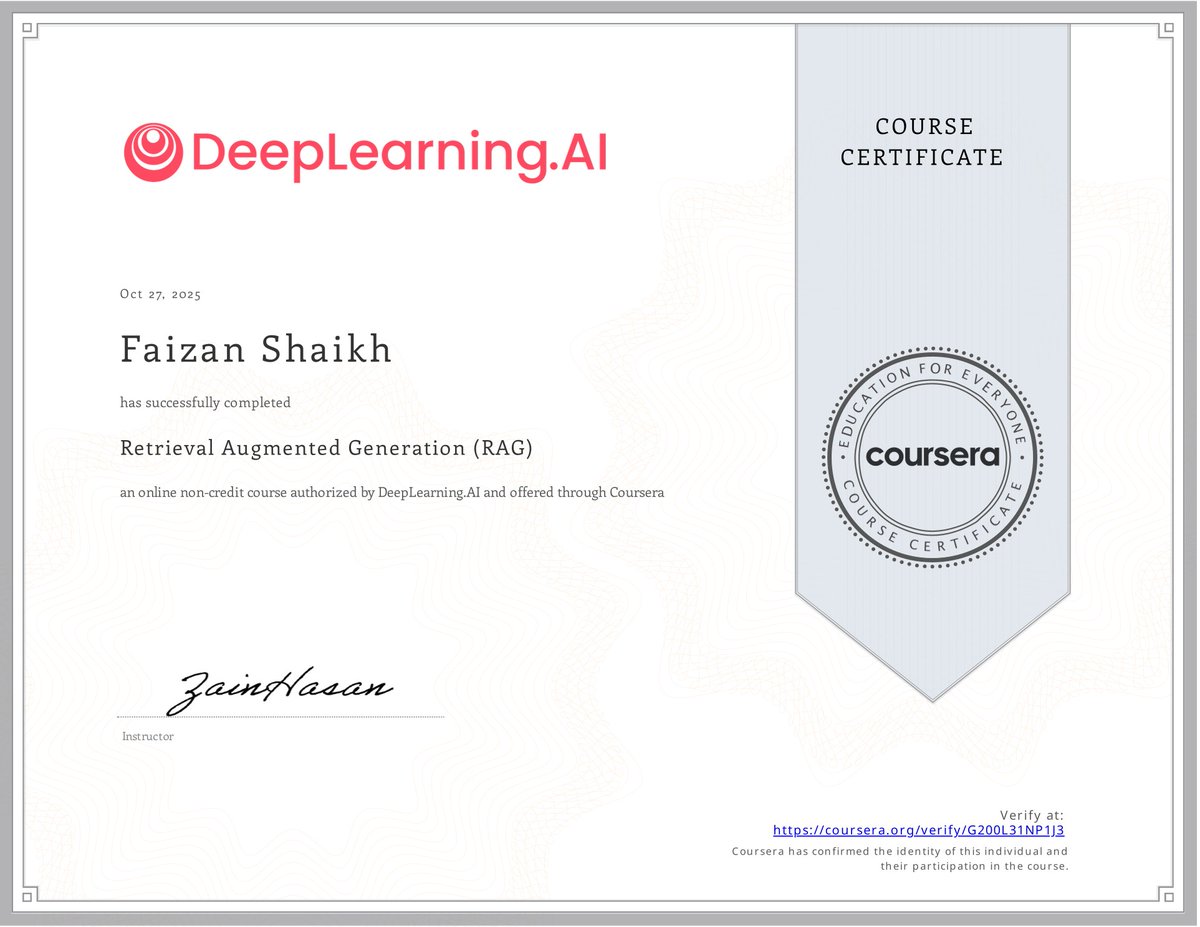
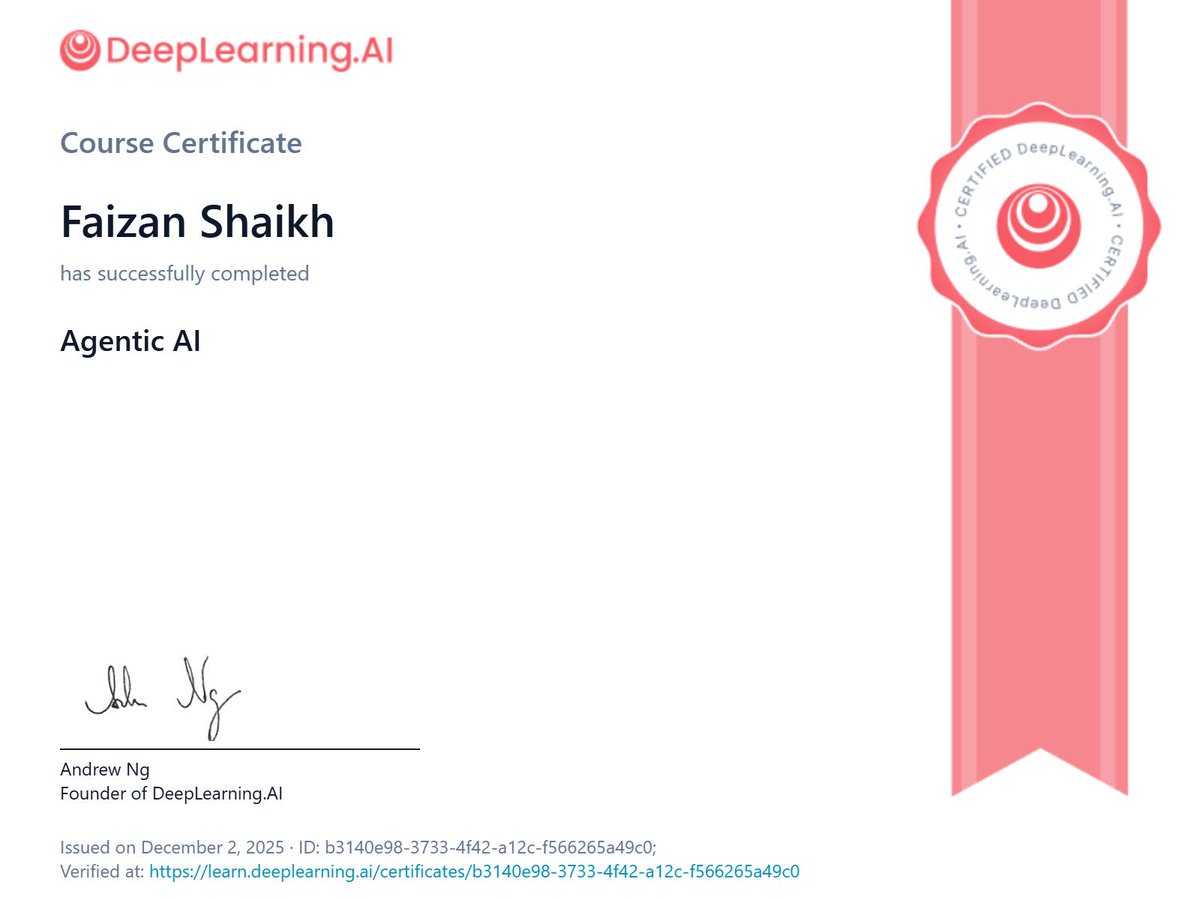
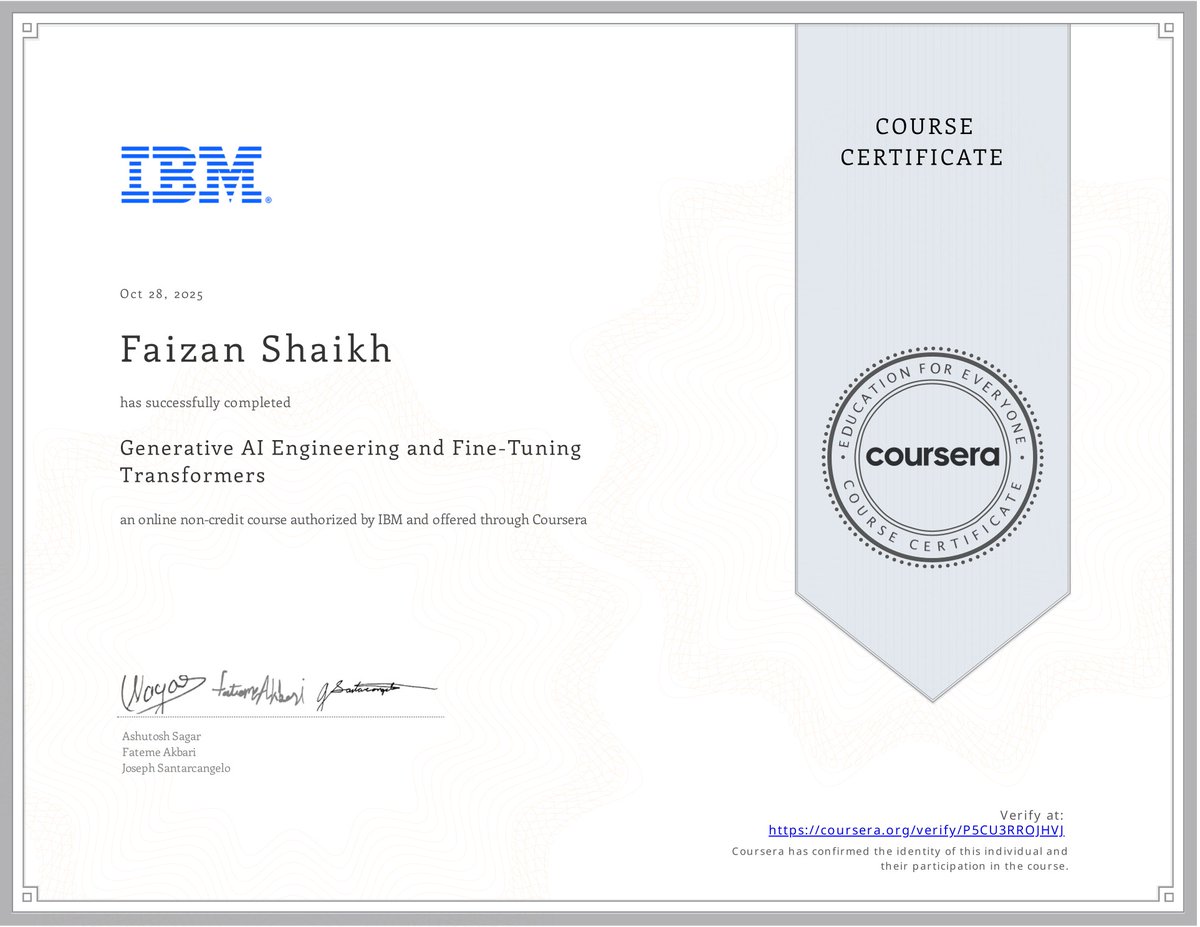
I’ve completed these AI courses to sharpen my skills.
1- Retrieval Augmented
2-Generative AI Engineering and Fine-Tuning Transformers
3- Agentic AI
4- Claude Code: A Highly Agentic Coding Assistant
5- Finetuning Large Language Models
Thanks to @DeepLearningAI and @coursera
I've been an engineer for nearly a decade. Right now, process has never been more important.
And skills are the best way to bundle up processes for agents.
Here are the 5 I use every day:
/grill-me
/write-a-prd
/prd-to-issues
/tdd
/improve-my-codebase
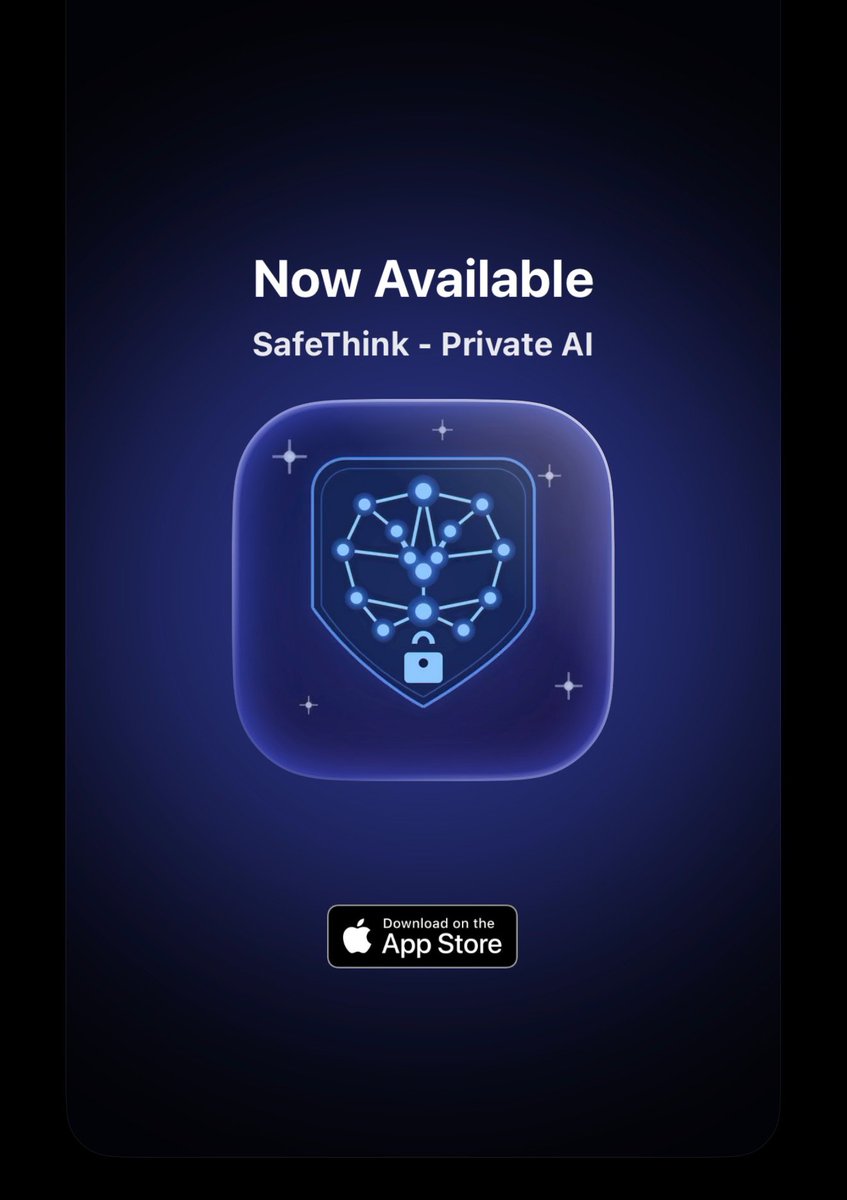
I just launched SafeThink - Private AI
It runs Qwen 3.5 4B directly on the iPhone, so your AI experience stays private and your data stays on your device. It can also understand documents and images locally.
App Store: https://t.co/F6pvYDLWWO
GitHub: https://t.co/zqgr6rpqgh
Happy to share my app: AI Calorie Coach (Built 100% with AI over the weekend)
The idea is simple:
- Take a photo of your meal
- AI Instantly estimate calories.
Apple Store link:
https://t.co/TGCJK014S6
Full Source code is on GitHub:
https://t.co/VWiCwHAkI0
I'm Boris and I created Claude Code. I wanted to quickly share a few tips for using Claude Code, sourced directly from the Claude Code team. The way the team uses Claude is different than how I use it. Remember: there is no one right way to use Claude Code -- everyones' setup is different. You should experiment to see what works for you!
Built an offline speech to text macOS app.
✔️ Works fully offline
✔️ Privacy-first (no cloud, no data sharing)
✔️ Fast and lightweight
Open source on GitHub:
https://t.co/z646qTSuBy
Feedback and contributions welcome.
Excited to share my project: AI Support Assistant
A RAG-powered chatbot that answers questions using only your company’s data, with full source citations.
100% on-prem solution
Auto-ingests PDFs & support tickets
GitHub: https://t.co/bbxeOZMnZx
Demo: https://t.co/pO5EKZvkqC
@ShehzadRoy@Matiullahjan919@ZindagiTrust When i was a child I saw a Qari whipping the child with telephone hard wires. Saw similar things in schools too. It's so common in Pakistan. Govt should install cameras in all madarsas and schools.
Western mythology holds up Christopher Columbus as the great
explorer who was the first to brave the vast Atlantic Ocean to discover the New World in 1492. Besides narratives of his “discovery” discounting the fact that natives had been living there for centuries, and [thread]
Omar Khayyam (1048 to 1131) was a great Persian mathematician who formulated the binomial theorem, which helps solve algebraic expressions by expanding them into sums.
- Lost Islamic History by Firas AlKhateeb
Forgotten facts of Islamic History:
In the tenth century, the Catholic Pope Sylvester II was one of the first Europeans to promote the study of math that was developed by Muslims after he spent time studying in Muslim Spain and North Africa.
Forgotten facts of Islamic History:
The world’s oldest university, the University of Karaouin, was established by a Muslim woman in Fez, Morocco in 859, recognized for the same by UNESCO and Guinness World Records






![AndrewYNg's tweet photo. One of the new, buzzy jobs in Silicon Valley is the AI Forward Deployed Engineer (FDE), an engineer who is embedded within a client organization to help customize solutions, such as building and tuning agentic workflows that suit the client’s particular needs. I’ve heard from people who are wondering anew about the FDE career path since OpenAI and Anthropic started building new teams to place FDEs within client organizations.
The rise of FDEs for AI workloads is one way AI is creating new jobs (and why the jobpolcalypse narrative of upcoming job market collapse is false -- there will be many AI and non-AI jobs). However, I believe there will be far more AI Engineer jobs than FDEs, as I explain below.
The FDE role was pioneered about two decades ago by Palantir, which sent engineers to government locations to work on secure, air-gapped networks. In addition to having good technical skills, FDEs need communication skills and sometimes business skills. For example, they may need to speak with clients to understand their needs, formulate a strategy to prioritize projects, explain complex technology, and respectfully push back if a client asks for something unrealistic. They’re enjoying a resurgence because of the amount of work involved in taking an off-the-shelf LLM and building it into a custom agentic workflow that fits particular business needs.
However, I believe the number of AI Engineer jobs will be far larger. A company might accept a few FDEs to be embedded within its organization. But most companies will want far more of their own employees working on their projects. While my organizations do hire FDEs, we hire far more AI Engineers! Also, a common client concern is that it is hard to find vendor-neutral FDEs — they are, after all, there to deeply integrate a particular vendor’s product into a company. In this moment when it’s hard to predict which AI service will be the best one in a year’s time, optionality (the ability to pick whatever vendor turns out to fit best in the future) is very valuable. In contrast, letting FDEs tightly bind a company’s processes significantly reduces optionality.
Right now, I see surging demand for AI Engineers who can build software applications using AI software components (like LLM prompting, agentic frameworks, evals, etc.) and effectively use AI coding agents (like Claude Code, Codex, Antigravity CLI, and OpenCode). As the AI Engineer role matures, I expect it to fragment into more specialized roles, like the generic Software Engineer role from decades ago fragmented into frontend, backend, mobile, data engineering, devops, and so on.
What will be the future, specialized AI engineering roles? I don’t know. Perhaps there will be AI FDEs, LLMOps Engineers, Evals Engineers, AI Data Engineers, Harness Engineers, and other roles we don’t have names for yet. But for now, I see a lot of AI engineers who are generalists create a lot of value. Skilled AI Engineers are in very high demand! As our field continues to mature over the coming decade, I look forward to new specializations within AI Engineering that create even more job opportunities.
[Original text: The Batch newsletter]](https://pbs.twimg.com/media/HJvWmCHagAAnTxQ.jpg)