This is one of the best threads I have ever seen posted in terms of accurately capturing the realities of opioid policy over the last two decades from a patient viewpoint. 👏🏼👏🏼👏🏼
All that I would add is that there were bad-faith, anti-opioid actors who capitalized on evolving pain care policy to line their pockets with expert witness and legal fees from MDL settlements.
Today, even though life will be hard and people will press your buttons, pray like David: "Create in me a clean heart, O God, and renew a right spirit within me." (Psalm 51:10)
Of course, there are days when I do desire the Lord and he truly is the strength of my heart. But how can I be more consistent?
I think the answer is simple: ASK FOR DAILY GRACE.
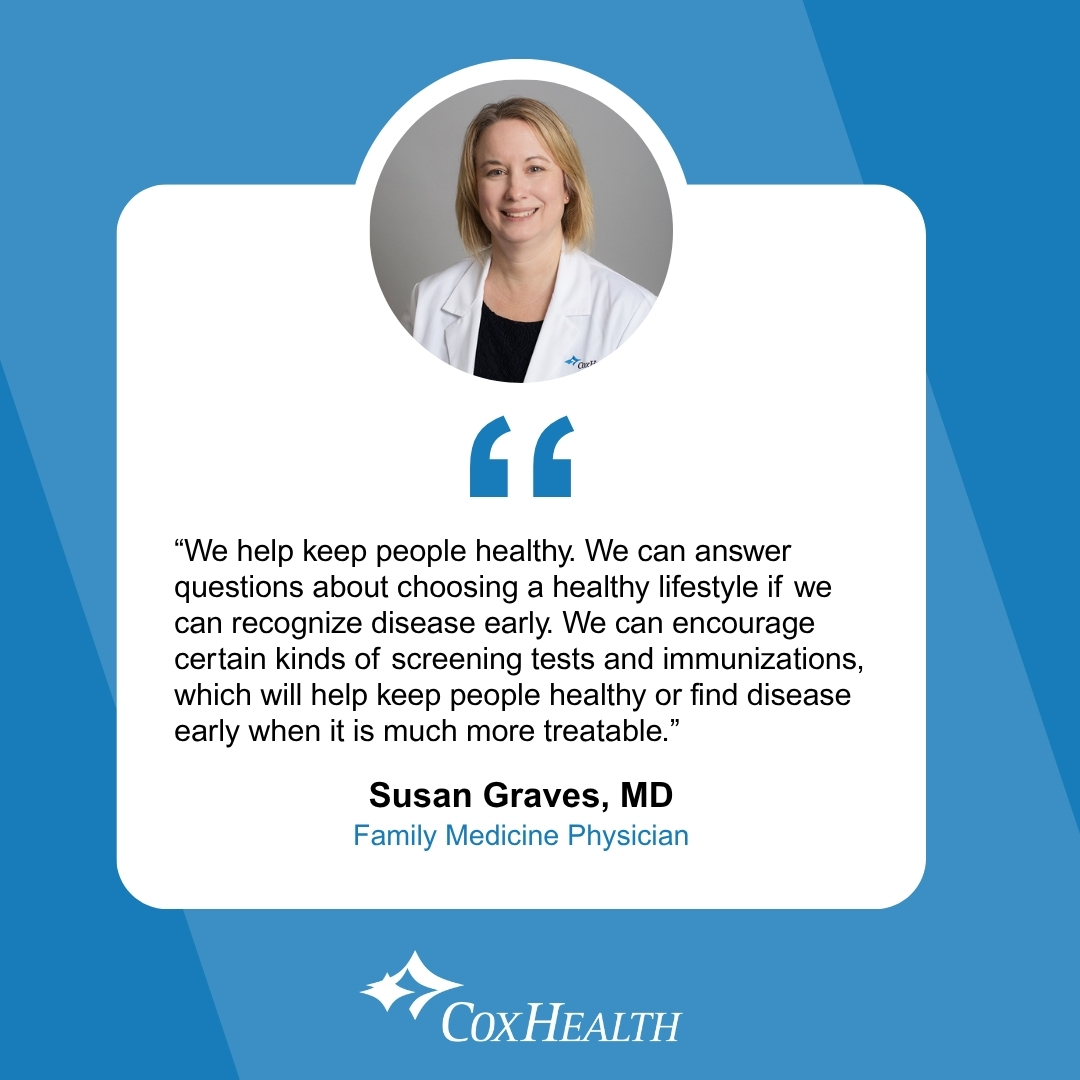
Primary care providers are your partners in managing long-term health.
Take a proactive approaching to your future health today and establish care. https://t.co/7vWav2I4sq
BREAKING: The @AmerMedicalAssn has adopted the following policies at its 2026 #AMAmtg:
"The AMA [will] convene a meeting with the National Association of Boards of Pharmacy and other national pharmacy organizations to identify ways to improve communications between physicians and pharmacists about physicians’ and pharmacists’ corresponding responsibility and related areas" about physicians' plenary prescriptive authority (including controlled medications), providing a report in June 2027....
The "AMA [will] work with pharmacies subject to the national opioid litigation settlements to provide data on refusals to fill and dispense medications, including the reasons for such refusals."
Why are we discouraged?
Why are we depressed?
Why are we disappointed?
At the most basic of levels, it’s because we’ve tried to find a replacement identity in the fallen world. And the scary thing is: this replacement identity is often an unseen and unfelt shift of heart.
No one gives grace better than the person who knows they need it most, and no one gives second chances more than the person who recognizes how many fresh starts they've been given in Christ.
Donna Sweet, M.D., alumna and faculty member for nearly 45 years, has pledged a $1 million estate gift in support of the Department of Internal Medicine at KU School of Medicine-Wichita, with a focus on HIV, infectious disease and primary care education. https://t.co/qELsY5Sfw5
KEY COURT DECISION: Express Scripts, Inc., et al. v. Anne Arundel County, Maryland.
The Maryland Supreme Court has held “that the licensed dispensing of, or administration of benefit plans for, a controlled substance does not constitute an actionable public nuisance under Maryland common law.” Moreover, “The Court has never recognized a government actor’s ability to recover damages for public nuisance.”
https://t.co/l1EZb3yUb1
Rejection of the "public nuisance tort," specifically rejecting the "government actor’s ability to recover damages for public nuisance," should have profound effects on other MDL settlements.
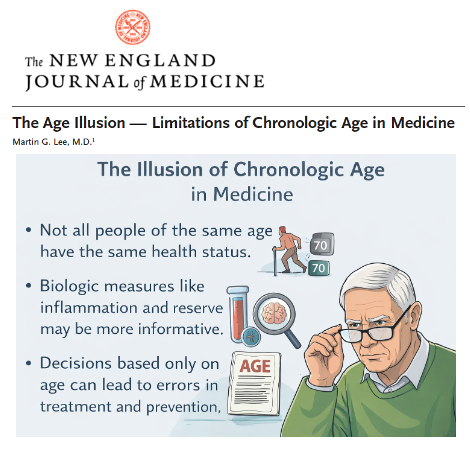
The age illusion in medicine: why your number may not reflect your biology. Biologic age refers to how your body functions and adapts to stress, which may differ from the number of years you have lived. Lee and colleagues describe in a new viewpoint in the New England Journal of Medicine how relying on chronologic age can mislead clinical decision making.
Key Points:
- Chronologic age is frequently used as a shortcut for health status, despite large differences in function between individuals of the same age.
- Biologic measures such as physiological reserve, inflammation and epigenetic markers better predict outcomes than age alone.
- Overreliance on age can lead to missed treatments in older adults and missed prevention in younger adults.
My take: This is a powerful reminder that medicine is still too focused on a number instead of on the person. If we want precision care, we need to measure what truly matters which is resilience, function and biology.
Here are 5 points that resonated w/ me:
1- Age alone is a poor proxy for health and may lead to wrong decisions.
2- Two folks the same age can have very different brain and body resilience.
3- Biologic markers may better guide treatment decisions than simple age cutoffs.
4- Personalized care will require moving beyond age based algorithms.
5- The future of medicine will focus on function, biology and reserve rather than just years lived.
https://t.co/pRLHtz0hnY #parkinson #alzheimer #dementia
Female doctors get their patients better outcomes. Female doctors do not outlive their male colleagues. The trade is not an accident.
Dr. Noemi Adame, board-certified pediatrician and founder of Culver Pediatric Center, sat with this on The Podcast by KevinMD.
The data she walks through:
Female physicians demonstrate better patient outcomes across multiple fields of medicine.
Portal data shows patients and staff make 25% more requests of female primary care doctors than male. Same panel. Same hours on the schedule. 25% more inbox work. Unpaid. Unrewarded.
A JAMA article found that while women generally outlive men, female physicians do not get that longevity benefit. The added stress of being a female doctor may be why.
When Adame was a hospitalist, she noticed staff and patients interacted differently with her than with her male colleagues. When she was in corporate medicine clinic, she was the last one out the door, often by hours. She blamed herself. She asked her employer for a time flow study, certain it would prove she was inefficient. The EHR super-user who shadowed her found the opposite. She was faster than average. Her notes were so thorough a scribe would have been a downgrade. The system was the variable.
Her playbook for holding a boundary in medicine, worth bookmarking:
Ask if the request is fair to both parties or only to one.
Replace "I'm sorry" with "Thank you for waiting."
Do not bend a rule once, because the negotiation never ends.
Tell the patient exactly what you are giving up so the trade is visible.
The structural problem she names is sharper than the burnout conversation usually allows. Female physicians are not burning out because they cannot keep up. They are burning out because the system asks them to do more for the same pay and rewards them with shorter lives.
Listen to the full conversation on The Podcast by KevinMD. Link in the replies.
For female physicians: at what point in your career did you realize the workload was unequal, not your time management?
#ThePodcastbyKevinMD #PhysicianBurnout
Rankings released by @usnews this week feature eight @KUMedCenter graduate programs among the nation's best, with two in the top 10 among public institutions, and a top-tier ranking for @KUMedicine. Explore the full list of rankings: https://t.co/46MHeNohns
I am officially on my last nerve today with medical disinformation on opioid therapy and pharmacists who are at the peak of the curve that describes the Dunning Kruger Effect (original paper from 1999 can be found at https://t.co/Pt3h3zwIJw).
Here are the facts about opioid therapy:
1) The @US_FDA has approved opioid analgesics as safe and effective when prescribed appropriately for moderate-to-severe pain. Because they are safe and effective when prescribed appropriately for moderate-to-severe pain.
2) It is ethically impermissible to deprive patients from an established therapeutic benefit in a randomized, placebo-controlled clinical trial (RCTs); after a drug has been proven effective, studies that examine its long-term effectiveness should involve randomized comparisons to other drugs, such as in Enriched Enrollment Randomized Withdrawal (EERW) studies. Critics who wrongfully insist that we must have RCTs to justify the use of Long-term Opioid Therapy (LTOT) are either disingenuous or they are woefully uninformed (again, see the Dunning-Kruger Effect).
3) According to FDA Postmarketing Studies (PMRs) on opioid therapy, the prevalence of addiction in patients taking opioids for pain - operationalized BROADLY by the @US_FDA as patients meeting DSM-5 Criteria for moderate-to-severe opioid use disorder (OUD) - is approximately 1.5%. The prevalence of alcoholism in adults using ethanol is about 10% and the prevalence of tobacco addiction in adults who smoke is about 60-80%. Again, critics who refer to the risk of opioid addiction as "high" either lack the knowledge to appropriately contextualize that risk (Dunning-Kruger again) or they are disingenuous.
4) Buprenorphine is indeed a useful medication for treating both chronic pain and OUD, but it is too early to label it as the drug of choice for cancer pain or chronic, non-cancer pain. The largest review of buprenorphine in palliative care [Thakkar, et al. J Pain Symptom Manage. 2025 Dec 29:S0885-3924(25)01016-4] "found consistent evidence that buprenorphine was comparable to other full opioid agonists when used as both a short-acting and long-acting analgesic for palliative care patients. It also did not display significant differences in risks of adverse effect." Additionally, the authors observed, "While buprenorphine’s superior safety profile, particularly its lower risk of respiratory depression and overdose compared with full opioid agonists, is well established in the literature, none of the included palliative care studies reported on respiratory depression." Given this, it is also premature to conclude that buprenorphine is truly a safer option for LTOT than other full-acting opioids (FAOs); although that argument is a rational one, it remains unproven.
5) There is a substantial and growing body of evidence that suggests that abruptly discontinuing LTOT or reducing opioid doses too rapidly may cause patient harms including uncontrolled pain, mental health crises, increased risk of self-harm or suicide and increased risk of overdose from illicit fentalogues (See, for example, Oliva et al. BMJ. 2020 Mar 4;368). Discussions about reducing opioid dose or transitioning to buprenorphine should include a comparison of these risks versus the risks of LTOT. Additionally, clinicians must transition from a recovery model of illness to a model that acknowledges that some patients have PERMANENT, INTRACTABLY PAINFUL conditions that justify the use of LTOT under the ethical principle of double-effect.
6) The systemic vilification of opioid medications that began with the 2012 PROP Petition to the FDA on Opioid Labeling occurred - at least in part - to support large-scale multidistrict litigation (MDL) against opioid manufacturers and distributors. Many of the medical experts involved these lawsuits inappropriately influenced federal opioid policy despite having undisclosed financial and professional conflicts of interest that should have disqualified them from participating in the policy creation process [see Kollas CD, Boyer-Kollas B. Chapter 15: Laws and Policies Affecting Pain Management in the United States. Bonica’s Management of Pain, 6th Edition (James P. Rathmell JP, Edwards RR, Gilligan CJ). Wolters Kluwer, 2026, ISBN: 9781975222369. In press for Fall 2026].
7) Ultimately, all pain care should be individualized and compassionate, make use of evidenced based treatments (that use both medication and non-medication-based approaches) and, when appropriate clinically, may include opioid therapy with a focus on optimizing therapeutic benefits while mitigating risks of both long- and short-term side effects, including the risk of OUD; patients with OUD or opioid addiction should enjoy the same level of access to individualized, compassionate care as patients with chronic pain. That level of care is detail-oriented, time-consuming and professionally challenging - but all of our patients deserve nothing less.
Tomorrow is Match Day – a BIG day for our graduating medical students – so we're sharing some throwback photos. All graduating medical students across the country will find out tomorrow where they will go for residency training. Good luck! #Match2026