@elonmusk Space X is looking for a design architect…I’m an architect with big ideas working in the RGV. The system sucks and I lack credentials. I’m reaching out for a hook up to be brought into the fold and to access your AI resources to do real architecture and have an impact.
Olivia Moore just explained why the open office is about to die.
Not because of culture shifts. Not because of remote work.
Because AI runs on voice. And voice requires walls.
Moore: “I do think the way that we work and when we work and how we work is going to change in the AI era.”
She’s not predicting the future. She’s describing what’s already happening while most companies are still rearranging desk layouts.
Moore: “Voice dictation has blown up in enterprises.”
Think about what that sentence actually means.
Talking to AI is faster than typing to it. Not marginally faster. Dramatically faster.
Your hands were never the right interface. Your voice was.
Moore: “It started with vibe coding where engineers would just talk into a mic and it would produce software for them in Cursor.”
Engineers figured it out first. They stopped typing code and started speaking it into existence.
Output didn’t just increase. It multiplied.
The keyboard became a bottleneck overnight.
Moore: “Now it’s spread to sales, marketing, and business.”
This is the part that should keep every executive up at night.
It’s not just developers anymore.
Every department is discovering that voice is the fastest path between intent and execution.
The entire workforce is about to start talking to machines all day.
Moore: “That is not well suited to an open office where everyone can hear what everyone else is saying.”
Here’s the collision nobody planned for.
The most productive way to use AI requires talking out loud.
The most common office design requires everyone to be quiet.
Those two realities cannot coexist.
Fifty people in one room dictating prompts simultaneously. That’s not a workspace. That’s an acoustic disaster killing the output it was designed to produce.
Moore: “I think there’s going to be some cultural and even environmental changes that are going to happen to adapt to the AI world.”
She’s being diplomatic.
What she’s really describing is the complete physical restructuring of the workplace.
Walls going up. Private rooms. Acoustic isolation becoming a competitive advantage.
The open office is dead. It just doesn’t know it yet.
Every company still pouring money into wide open collaborative floors is investing in architecture that actively fights the way humans will work for the next decade.
The ones who figure this out first don’t get a marginal edge.
They get a workforce operating at a speed their competitors physically cannot match.
Not because of better models.
Because of better walls.
My information consumption is now 1/4 X, 1/4 podcast interviews of the smartest practitioners, 1/4 talking to the leading AI models, and 1/4 reading old books. The opportunity cost of anything else is far too high, and rising daily.
Hey @elonmusk spot me several million to build some exploratory housing developments in the RGV. Space X needs housing at the same level as the work. Traditional vetting takes too much time that I should be focusing on getting shit done. 🤙🏼
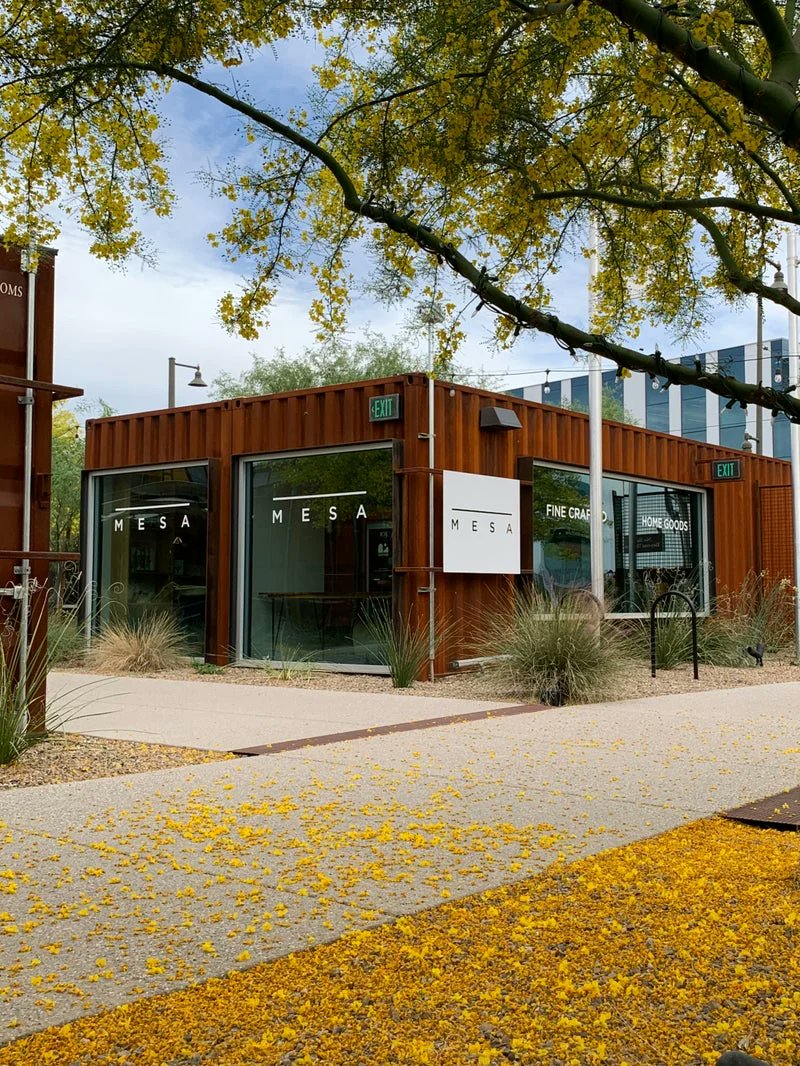
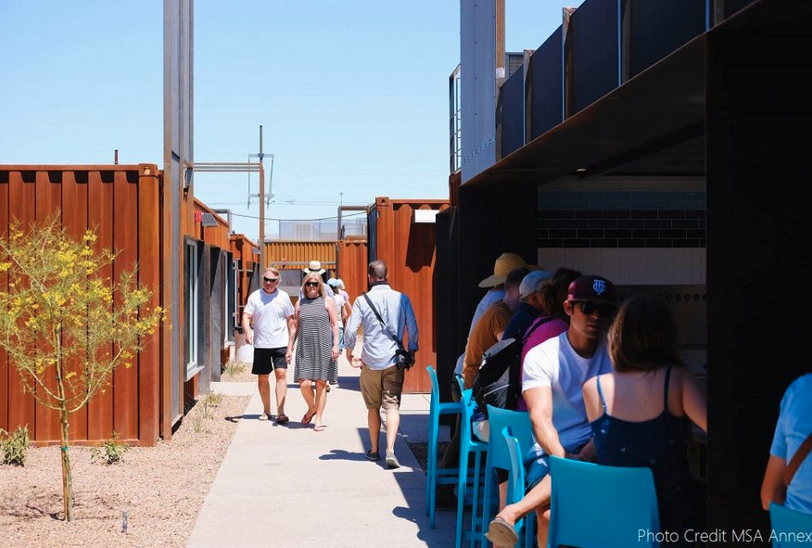
MSA Annex is a shopping destination made from modified shipping containers in Tuscon, Arizona’s Mercado District.
This development style is part placemaking, part adaptive reuse, and part small business incubator.
Every time someone says that 'reducing the role of the car will need radical changes' show them this.
Creating current car dependency was only possible with a massive, decade-long and destructive effort to erase the city as we knew it.
(by @Segbydesign)
No one would take seriously a DOT engineer who said "if you knew we kept that street dangerous, you should've driven a different way."
But that's exactly how Texas DOT responded to a person using a bike lane. "You should've known to use the sidewalk instead."
Hoboken, New Jersey is a dense city center that hasn’t had a traffic death in over 4 years. They’ve accomplished this by creating more narrow, one-way streets, high visibility crosswalks, raised intersections, curb extensions, bike & bus lanes, and removing parking spaces.
Why do you appreciate unions?
I’ll start:
Weekends off
Paid vacations
Work breaks
Sick leave
Paid holidays
No child labor
Safer working conditions
Health care and retirement benefits
“If neoliberalism turned people into subjects,” says @stacyfmitchell, a new approach “should look to create the kinds of communities that cultivate people’s capacity to be citizens.”
Hear more from "Rethinking Globalization, Intermediation & Efficiency:"
https://t.co/SCDVp9aSxw
Hemp is becoming an increasingly popular material among architects seeking to reduce the carbon impact of their projects. Here is a roundup of nine buildings constructed using the versatile cannabis crop.
https://t.co/hLtf4RnBI2
A new government workplace building designed to maximize energy efficiency, performance, and occupant well-being while enhancing community health. Explore the sustainable design strategies helping drive results at Torre Judicial: https://t.co/EiF8ZkbdVh
Dormitories designed by Louis Kahn are under threat of demolition again with the Indian Institute of Management Ahmedabad backtracking on its decision not to demolish them. https://t.co/S6T1H3uDQT