Nederland kent een steeds groter democratisch probleem dat nauwelijks wordt besproken: de opkomst van wat je de GONGO-maffia kunt noemen. GONGO staat voor Government-Organized Non-Governmental Organizations: organisaties die zich presenteren als onafhankelijke maatschappelijke waakhonden, maar grotendeels afhankelijk zijn van overheidssubsidies. Ze vormen steeds minder een tegenmacht en steeds vaker een verlengstuk van hetzelfde bestuurlijke ecosysteem dat zij geacht worden te controleren.
Het mechanisme is even simpel als effectief. De overheid verstrekt subsidies. Met dat belastinggeld bouwen deze organisaties omvangrijke bureaucratieën op, produceren zij rapporten, leveren zij de data waarop beleid wordt gebaseerd, adviseren zij over vergunningen en starten zij juridische procedures om nóg strengere regelgeving af te dwingen. Dat leidt vervolgens weer tot meer beleid, meer ambtenaren, meer subsidies en meer invloed. Een zichzelf versterkende cirkel waarin vrijwel iedereen binnen het systeem wint, behalve de belastingbetaler.
In dossiers als stikstof zien we hoe gesubsidieerde organisaties wetenschappelijke gegevens aanleveren, overheden adviseren, vergunningen beïnvloeden, juridische procedures starten en vervolgens aanschuiven bij de onderhandelingen over de uitkomst.
Nog problematischer wordt het wanneer sommige van deze organisaties niet alleen tegen bedrijven procederen, maar vervolgens ook met diezelfde bedrijven onderhandelen over het intrekken van juridische procedures in ruil voor verstrekkende concessies, natuurcompensatie of financiële afspraken.
Daardoor vervagen de grenzen tussen belangenbehartiging, beleidsbeïnvloeding en private onderhandeling. Zelfs wanneer dergelijke afspraken juridisch geoorloofd zijn, ontstaat de schijn dat procedures niet uitsluitend worden gevoerd uit algemeen belang, maar ook als drukmiddel om politieke of financiële doelstellingen af te dwingen.
Daarmee vervaagt de grens tussen onafhankelijke belangenbehartiging, beleidsvorming en politieke machtsuitoefening. Wie betaalt, bepaalt. Wanneer overheid, subsidieontvangers, beleidsmakers en lobbyisten steeds vaker onderdeel zijn van hetzelfde netwerk, verdwijnt de institutionele afstand die een gezonde rechtsstaat juist nodig heeft.
De slachtoffers zijn voorspelbaar: boeren die geen vergunning krijgen, bouwers die projecten stil moeten leggen, ondernemers die investeren in permanente juridische onzekerheid en burgers die steeds hogere belastingen betalen om een uitdijend netwerk van subsidieafhankelijke organisaties te financieren. De Nederlandse polder verandert zo van een systeem van checks and balances in een gesloten bestuurlijk kartel.
Dit is geen aanval op natuur, milieu of maatschappelijke organisaties. Integendeel. Een vrije samenleving heeft juist behoefte aan krachtige, onafhankelijke NGO’s. Maar onafhankelijkheid begint bij financiële onafhankelijkheid. Wie grotendeels wordt betaald door de overheid kan onmogelijk volledig onafhankelijk toezicht houden op diezelfde overheid.
Libertariërs waarschuwen hier al decennia voor. Macht concentreert zich altijd wanneer geld, regelgeving, wetenschap, rechtspraak en lobby in hetzelfde ecosysteem samenkomen. Daarom is de oplossing helder: volledige transparantie over financiering, een strikte scheiding tussen subsidieverstrekking en politieke lobby, geen structurele overheidssubsies voor organisaties die actief beleid proberen te beïnvloeden en een rechtsstaat waarin gekozen volksvertegenwoordigers de koers bepalen, niet een gesloten netwerk van overheid, gesubsidieerde actiegroepen en belangenorganisaties.
Een vrije samenleving leeft van echte tegenmacht. Zodra die tegenmacht financieel afhankelijk wordt van de staat, verandert zij van waakhond in huisdier. En zodra dat huisdier ook nog mede de regels schrijft, de procedures voert en de onderhandelingen bepaalt, is de democratische controle fundamenteel uit balans.
"Chaque fois que Votre Majesté crée une fonction, Dieu crée un sot pour l'acheter."
Nous sommes en 1693 et la France est à genoux.
Le roi Louis XIV s'est ruiné dans des guerres interminables à travers toute l'Europe.
Les caisses du royaume sont d'un vide abyssal.
C'est là qu'entre en scène le cynique contrôleur général des Finances, Louis Phélypeaux de Pontchartrain.
Plutôt que de réduire le train de vie de la monarchie, il va orchestrer une arnaque institutionnelle de génie : la vente massive d'emplois publics.
L'idée est redoutable. L'État invente un métier administratif de toutes pièces et le vend aux enchères.
Un riche bourgeois fait un énorme chèque au Trésor royal pour acheter cette charge.
En échange, il obtient un prestige social, devient fonctionnaire à vie, et surtout, il encaisse un salaire régulier payé par l'impôt des citoyens.
Une fois nommé, ce fonctionnaire est totalement intouchable. Il est impossible de le licencier.
Au début, Pontchartrain vend des postes utiles, comme des charges de juges, de notaires ou de conseillers de ville.
Mais l'obsession de l'argent facile rend le pouvoir royal complètement fou.
Quand les emplois sérieux sont tous pourvus, le ministre invente des métiers grotesques pour continuer à lever du cash.
En 1706, un décret royal crée ainsi le poste très officiel d'inspecteur contrôleur des perruques.
Dans la foulée, le roi met en vente des charges d'inspecteur des porcs rôtis, de jaugeur de tonneaux ou encore d'essayeur de beurre frais.
L'escroquerie à court terme est parfaite.
Louis XIV encaisse des millions en liquide pour financer ses armées et ses palais.
Mais le désastre économique à long terme est colossal.
Pour éponger sa dette immédiate, l'État a condamné le peuple à entretenir éternellement des milliers de bureaucrates qui ne produisent absolument rien.
Cette armée de parasites administratifs, protégée par la loi, va saigner l'économie française et paralyser le pays jusqu'à ce que le système explose en 1789.
La leçon de l'histoire est intemporelle.
Face à la faillite, un État refuse toujours de maigrir.
Il préfère inventer des postes absurdes, encaisser l'argent tout de suite, et laisser les générations futures payer la facture de son incompétence.
La route du pire est toujours pavée de bonnes intentions
Quand je vois la jeune génération réclamer toujours plus de marxisme, plus de socialisme, plus d'État, plus de « planification » pour réparer un monde qu'on lui a appris à détester — je n'ai pas envie de ricaner. J'ai envie de crier.
Parce que je reconnais le premier chapitre d'une histoire dont je connais, moi, la dernière page.
Cette histoire, un homme l'a écrite en 1944, sous les bombes. Friedrich Hayek. Le livre : La Route de la Servitude. Et il l'a dédié — lisez bien — « aux socialistes de tous les partis ». Pas par mépris. Par affection. Par urgence. Parce qu'il avait vu, de ses propres yeux, une Europe entière basculer.
Retenez ceci, c'est le cœur de tout : le totalitarisme ne commence jamais avec des monstres. Il commence avec des gens bien.
Il commence avec des idéalistes qui veulent le bien commun. Des jeunes gens généreux qui ne supportent plus l'injustice. Des partis mous, consensuels, qui promettent de tout arranger si on leur confie juste un peu plus de pouvoir. Le problème n'est pas leurs intentions. Le problème est le mécanisme qu'ils enclenchent.
Voici ce mécanisme. Suivez-le, il est implacable.
Pour planifier une économie, il faut une décision unique là où il y avait des millions de choix libres. Il faut donc concentrer le pouvoir. Or aucune société n'est jamais d'accord sur un plan unique — chacun a ses fins, ses rêves, ses priorités. Le planificateur se heurte alors à un mur : le désaccord. Et le désaccord devient un obstacle à éliminer. On commence par convaincre. Puis par contraindre. Puis par réduire au silence. Non par sadisme — par nécessité logique. Le plan exige qu'on écrase ce qui lui résiste.
Et arrive alors le chapitre le plus glaçant de Hayek : « Pourquoi les pires accèdent au sommet. » Dans un système qui réclame un pouvoir total, ce ne sont pas les meilleurs qui gagnent. Ce sont ceux qui sont prêts à tout. L'homme scrupuleux hésite ; l'homme sans scrupule agit. La machine collectiviste, quelles que soient ses couleurs, sélectionne mécaniquement les brutes.
Regardez l'Allemagne. On vous a raconté que Hitler tombait du ciel, une anomalie, un accident du mal. C'est faux, et c'est dangereux de le croire. Ce que Hayek a compris, c'est que l'Allemagne avait passé un demi-siècle à abandonner le libéralisme classique — l'individu, le droit, le marché — au profit du culte de l'organisation, du collectif, de l'État qui sait mieux que vous. La gauche et la droite partageaient déjà la même prémisse : l'individu doit se soumettre au plan de la nation. Hitler n'a pas eu à construire cette machine. Il l'a trouvée déjà montée, chauffée, prête. Il n'a eu qu'à saisir le volant.
C'est ça, l'avertissement. Le totalitarisme n'est pas une idéologie. C'est une structure. Vous pouvez la remplir de rouge, de brun, de n'importe quelle couleur généreuse. Une fois que vous avez accepté que l'individu doit plier devant le collectif, que la propriété n'est qu'un privilège révocable, que la liberté d'échanger, de parler, d'entreprendre s'arrête là où commence « le bien commun » décrété d'en haut — vous avez posé les rails. Le train, lui, viendra tout seul.
Et il vient toujours avec les meilleures intentions du monde. Chaque marche vers l'abîme est justifiée, raisonnable, compassionnelle. Un impôt de plus pour les pauvres. Un contrôle de plus contre les méchants. Une liberté de moins, mais « juste celle-là ». Personne ne choisit la servitude. On y glisse, une bonne intention après l'autre.
Alors je lance cette bouteille à la mer. À vous qui avez vingt ans et le cœur en feu. Votre révolte contre l'injustice est belle — gardez-la. Mais par l'amour de Dieu, apprenez l'histoire. Lisez Hayek. Lisez ce que fut réellement le XXᵉ siècle, non pas la caricature qu'on vous en sert. Les dizaines de millions de morts qu'il a laissés derrière lui n'ont pas été tués par des sadiques venus d'ailleurs, mais par des systèmes bâtis, au départ, sur des rêves de justice.
La liberté n'est pas le problème à réparer. Elle est le trésor qu'on est en train de vous convaincre de brader.
Réveillez-vous.
Оказывается величайший экономист, историк и интеллектуал современности Томас Соуэлл имел и имеет свою позицию по поводу Израиля и евреев.
Колонка The Middle East "Peace Process". 2002.
«Эвфемизм "земля в обмен на мир" на Ближнем Востоке на практике означает передачу земли в обмен на обещания. Проблема в том, что землю нельзя вернуть назад без новой войны, в то время как обещания можно нарушить вообще без каких-либо издержек».
Колонка The "Peace Process" Myth. 2005
«Самая фундаментальная ошибка западного мира — верить в то, что существует некая комбинация уступок, которая принесет мир. Но нет таких уступок, которые удовлетворят людей, желающих вашего полного исчезновения».
«Никакого "ближневосточного мирного процесса" не существует. Существует ближневосточный военный процесс, в который западные страны упорно пытаются внедрить идеи о мире, не имеющие никакого отношения к реальности в этой части планеты».
Колонка Cease-Fires Do Little To Halt Bloodshed. 2014
«Есть что-то гротескное в том, как люди, живущие за тысячи миль в безопасности и комфорте, высокомерно критикуют и пытаются микроменеджерить действия израильтян, находящихся под обстрелом ракет, запускаемых по их стране организацией ХАМАС».
«Для людей, находящихся на безопасном расстоянии, "прекращение огня" звучит как нечто прекрасное, но для людей под ракетным обстрелом это означает дать нападающим время на пополнение запасов и подготовку к последующим атакам».
Телепередача Uncommon Knowledge. 2005
«Я помню, как много лет назад разговаривал с человеком из еврейской организации, и он спросил, что можно сделать с антисемитизмом. И я сказал: "Ну, вы могли бы потерпеть неудачу". Потому что пока вы успешны, всегда будут люди, которые ненавидят вас за это».
Книга Black Rednecks and White Liberals. 2005
«Евреи не просто преуспевают, они преуспевают так, что это угрожает эго других людей. (...) Когда кто-то приезжает в страну без гроша в кармане, живет в трущобах, а всего через поколение его дети становятся врачами и учеными — это лишает окружающих любых оправданий для собственных неудач».
Those of us who have cracked a history book or two can argue that after Vladimir Lenin, Josef Stalin, Mao Zedong, Pol Pot, Kim Il-Sung, and others, being an openly declared communist is indistinguishable from being openly very, very, _very_ pro-murder. Being a communist and saying you opposed all the mass murder committed in its name is not all that different than being a Nazi and saying you opposed all the genocide.
Hammurabi vs. Mamdani
1754 BC. Hammurabi writes 282-clauses, thinking a king can override laws of supply and demand with a chisel and a threat.
The Code set maximum prices on grain, wool, oil, and silver-denominated wages for laborers. A boatman earned a fixed rate. A hired ox cost a fixed rate. Violate the ceiling and you faced death. Hammurabi genuinely believed that price stability came from royal decree, not from the voluntary exchange of millions of individuals acting on real, local knowledge that no palace scribe possessed.
Here's what happened. When Babylon fixed grain prices below market-clearing levels, merchants stopped selling grain openly. They held stock, moved it through informal channels, or waited. Shortages followed. This is not speculation: clay tablets from the Old Babylonian period record complaints about goods disappearing from markets and black market exchange at rates far above the official ceiling. Price controls suppress the visible supply of goods, which is considerably worse if you're a Babylonian trying to feed a household.
Free market thinkers have pointed this out for centuries, and the mechanism never changes: a price ceiling set below what buyers and sellers would freely negotiate tells producers that the state values their goods less than those goods actually cost to produce. Producers respond rationally. They exit, hide, or redirect. The shortage is the controlled market functioning exactly as incentives dictate.
You are watching the same policy run on loop across 3,800 years of recorded history. Venezuela in 2014. Nixon's price controls in 1971. Diocletian's Edict on Maximum Prices in 301 AD, which Romans promptly ignored while Diocletian executed people for ignoring it. The edict collapsed within a decade. The interesting question is never whether price controls work. The interesting question is why each new government that imposes them believes it solved the calculation problem that destroyed every previous attempt.
Now it's New York's turn to learn this obvious lesson, at great expense to its people.
German Democratic Republic, August 1961.
You have built a workers' paradise. You have abolished the exploiting class, seized the means of production, and promised each citizen according to his need. And yet the citizens keep leaving.
Between 1949 and 1961, roughly 2.7 million people walked out of East Germany. Doctors, engineers, machinists. The productive ones, mostly. When your best people flee toward the capitalist hellscape next door, you have received a market signal, and it is not flattering.
So Walter Ulbricht poured the concrete. On August 13, 1961, the border closed. The official name tells you everything: the Antifaschistischer Schutzwall, the Anti-Fascist Protection Rampart. A wall to protect people. From what? From the freedom to buy a banana in West Berlin and never come back.
Here's the thing the central planners never advertise. A prison and a paradise require opposite architecture. You build fences to keep intruders out of the good place. You build walls to keep inmates inside the bad one. The barbed wire pointed inward. The machine guns at Bernauer Strasse faced east, at the very proletariat the whole project claimed to serve.
Abolish prices and you abolish rational production. Ludwig von Mises wrote it in 1920. The East Germans spent 28 years and 140 dead at the Wall confirming the math.
"This means that almost all Western media outlets have unflinchingly disseminated Hamas propaganda to their tens of millions of viewers, while disregarding Israeli figures almost entirely. The world’s journalists have taken the word of jihadi butchers above the evidence-based testimony of a friendly democracy and shared this narrative with the world.
It is no exaggeration to say that this comprises one of the gravest failures of journalistic scepticism in modern times. The uncomfortable truth is that we have been living through the most intense age of propaganda since Soviet times, made only more appalling by the fact that it has been spread voluntarily within supposedly free societies."
https://t.co/J3Lme482HL
Facts matter.
To the antisemites of the world:
You claim Jews control everything. What you ignore is history: for centuries, Jews were barred from land, trades, universities, and many professions, and were repeatedly expelled from the countries we lived in. So we turned to education, commerce, medicine, law, science, and entrepreneurship because we had little else.
In medieval Europe, Jews were pushed into moneylending because Christians were forbidden from charging interest, then blamed for it.
When we were shut out, we built our own institutions. When we were denied opportunity, we created it.
Then came October 7, the worst massacre of Jews since the Holocaust. Instead of mourning with us, much of the world excused or celebrated it.
This was never just about borders. Jews were persecuted long before 1948.
Israel is not a colonial project. It is the return of an indigenous people to its homeland.
We seek not domination, but the right to live safely, freely, and in peace.
Never Again is a promise. - Kim Kaliser
The internet was not a government gift to humanity. Private companies built it.
ARPANET, the 1969 Defense Department research network, connected four university nodes and moved data between government contractors. That is where the state's contribution ends. What you actually use today, the commercial web you shop on, stream from, and communicate through, came from private investment and entrepreneurial competition in the 1990s after the National Science Foundation lifted its ban on commercial traffic in 1991.
Tim Berners-Lee wrote the World Wide Web protocols at CERN, a physics lab, not the Pentagon. Netscape, a private company funded by venture capital, built the browser that made the web accessible to ordinary people. MCI and Sprint built the backbone infrastructure. Marc Andreessen and Jim Clark did more for your internet access than any defense appropriations committee ever did.
This matters because the myth works as a rhetorical weapon. Every time a politician wants to justify funding some new bureaucratic technology initiative, someone invokes DARPA like a prayer. The implication is that without government seed money, private actors sit paralyzed. History says otherwise. The telephone, the automobile, commercial aviation: entrepreneurs drove all of it, with government typically arriving late to regulate the profits out of whatever was working.
ARPANET was a narrow military communications tool. Profit motive turned it into civilization's nervous system. Remember which institution did which job.
Who is actually committing ethnic cleansing?
In 1948, around 100,000 Arabs lived in Israel. Today there are over 2 million Arab citizens with full rights.
In the same period, nearly one million Jews were expelled from Arab countries. Ancient Jewish communities in Iraq, Yemen, Egypt, Syria, and Libya were completely wiped out. Almost none remain.
So tell me, who is really carrying out ethnic cleansing in the Middle East?
Before the Crusades, two-thirds of the Christian world had already fallen under Islamic rule.
Your school probably skipped that part.
They taught you the Crusades began in 1095, as if Christians just woke up one morning and decided to march east for no reason.
But history did not begin in 1095.
By then, Islamic armies had already conquered massive portions of the Christian world:
Syria.
Egypt.
North Africa.
The Holy Land.
Spain.
In 711 AD, Islamic forces crossed into Spain.
By 732 AD, they had pushed all the way into France.
That is where Charles Martel met them at the Battle of Tours and stopped the advance into Western Europe.
Some historians consider it one of the most decisive battles in world history.
So when people talk about the Crusades without mentioning the 400 years before them, they are not giving you history.
They are giving you a narrative.
Were the Crusades complicated?
Of course.
Were Christians perfect?
No.
But the idea that the Crusades were some random act of Christian aggression is historically dishonest.
The real story begins long before 1095.
And once you know what happened before the Crusades, the entire conversation changes.
They buried this.
Now you know.
We are watching people call 6th, 7th, 8th, or even 10th generation Jews in Israel “settlers,” while insisting that if you arrived in the United States yesterday and had a child today, that child is unquestionably American.
I don’t believe that arriving yesterday and giving birth today automatically makes someone indigenous to the land. But for those who do believe that, why don’t they apply the same logic to Israelis whose families have lived there for decades or even centuries?
This isn’t simply a double standard. It’s a standard they made up and apply only to Jews in Israel.
> Be Jonny Kim
> Born to South Korean immigrants in Los Angeles
> Grows up in an intensely abusive household, constantly full of fear
> The night before he graduates high school, his father threatens the family with a gun
> Police arrive, a shootout happens, and his father is killed
> Decides he wants to protect people so he enlists in the Navy at 18
> Survives Hell Week and becomes a Navy SEAL
> Deploys to Iraq twice as a combat medic, sniper, and point man
> Completes over 100 combat operations under fire
> Earns a Silver Star and a Bronze Star for saving wounded comrades
> Watches his close friends die in battle and realizes he wants to heal people, not just fight
> Leaves active duty to get a degree in Mathematics from USD
> Auditions for medical school and gets accepted into Harvard
> Graduates from Harvard Medical School as an M.D. in 2016
> Starts his residency in emergency medicine at Massachusetts General Hospital
> Gets bored of being a regular doctor and applies to NASA
> Selected as 1 of only 12 candidates out of 18,300 applicants
> Becomes a NASA Astronaut in 2020
> Decides space isn't enough, so he joins Navy flight school to face his fear of flying
> Earns his wings as a fully certified military pilot and naval flight surgeon
> Launches into space on a rocket to the International Space Station
> Logs 245 days in orbit, traveling 104 million miles around the Earth before returning home
> Returns to Earth as a SEAL, a Harvard Doctor, an Aviator, and an Astronaut at just 41 years old
And Jonny Kim is still the most humble guy on the planet who makes everyone else's resume look blank.
Jonny Kim is badass.
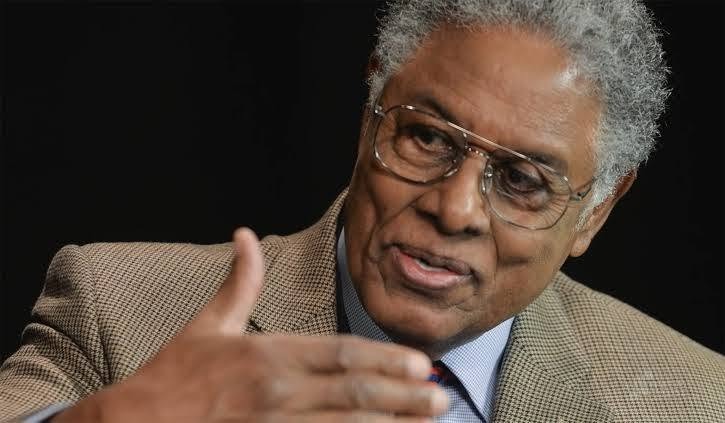
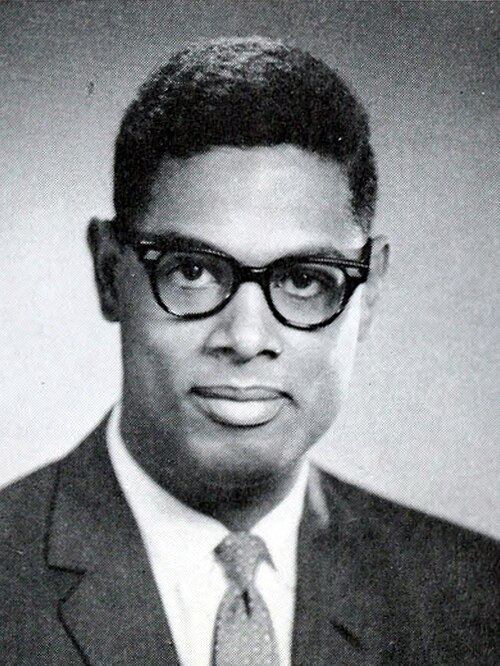
Thomas Sowell is 96 years old, and the man has spent seven of those decades teaching the same lesson the political class refuses to learn: there are no solutions, only trade-offs.
He started as a Marxist. Worked in the federal government in 1960, studying minimum wage policy in Puerto Rico. The data told him what the textbooks would not: when you raise the price of labor by law, you price the least-skilled workers out of a job. His government colleagues cared more about protecting the program than protecting the workers. That killed his faith in central planning faster than any theory.
Read "Knowledge and Decisions" (1980) and you get the whole architecture of his thought. Prices carry information. No planner in Washington, however credentialed, can gather what millions of buyers and sellers signal every second through their bids and refusals. Hayek made this point in his 1945 paper on the use of knowledge in society. Sowell took it and built an entire method around it, applying it to housing, education, race, crime, and the endless parade of "compassionate" schemes that reliably wreck the people they claim to rescue. Rent control empties buildings. Occupational licensing locks the poor out of trades. Sowell documented every one of these disasters with numbers, not slogans.
You want the sharpest example? Look at his work on race and economics. He showed that black Americans made faster gains in employment and income in the decades before the great expansion of the welfare state than after it. The programs sold as help became a ceiling. He said it plainly when saying it plainly cost him invitations to every respectable dinner party in the country. He never flinched. He wrote another column instead and another book, well into his nineties.
This man never mistook good intentions for good results. Go read him. You will emerge harder to fool.
Almost every major revolution in modern history followed the same script: overthrow one power, install another.
France swapped the King for Robespierre, then for Napoleon.
Russia swapped the Czar for Lenin, then for Stalin.
Cuba swapped Batista for Castro.
Only one revolution broke the script. The American one, in 1776. 🧵
I get what you mean here, but saying "the socialists" will have the "new ideas" is like saying "the Shakers have all the fresh thinking." Socialism is not new. The label is about 2 centuries old, give or take. The idea is thousands of years old. There's not a single major idea proposed by the DSA crowd that wasn't an old idea before I was born. From price controls and rent-freezes, to wealth taxes, or shunning Jews. It's all old, old hat. You can agree with it. Or admire it's newfound energy or something. But the ideas are old, tried, and failed.
https://t.co/t5hiVeryGW
What was the Armenian Genocide carried out by the Ottoman Turks, and why does Turkey deny responsibility for it?
The Armenian Genocide was the systematic destruction of the Armenian population of the Ottoman Empire during World War I, carried out primarily between 1915 and 1917. It's recognized by most historians and many governments as the first genocide of the 20th century.
The Ottoman government, controlled by the Young Turks (Committee of Union and Progress), targeted its Christian Armenian minority. On April 24, 1915, hundreds of Armenian intellectuals and community leaders were arrested in Constantinople and later killed. This date is now commemorated as Genocide Remembrance Day.
The main methods included mass shootings, and death marches into the Syrian desert where hundreds of thousands died of starvation, dehydration, exposure, and disease. Able-bodied men were often killed outright, while women, children, and the elderly were deported on foot. Concentration camps existed at the end of these routes. Estimates of the death toll range from roughly 600,000 to 1.5 million, with 1 million to 1.5 million being the figure most commonly cited.
The killings extended to other Christian groups as well (Assyrians and Greeks), and forced conversion, abduction of women and children, and seizure of property accompanied the deportations.
The official Turkish position acknowledges that many Armenians died but disputes the characterization. The denial rests on several arguments and motivations:
1. National identity and founding narrative. The modern Republic of Turkey was founded in 1923 by figures connected to the late Ottoman state. Accepting the genocide label implicates the country's foundational generation and conflicts with the national self-image.
2. The "civil war" framing. Turkey's official line is that the deaths occurred during wartime chaos, mutual ethnic conflict, famine, and disease, not a centrally planned extermination. It points to Armenian groups that sided with invading Russian forces, framing the deportations as a wartime security measure rather than genocidal intent.
3. Legal and financial liability. Formal recognition could open the door to demands for reparations, property restitution, and territorial claims, creating concrete material stakes.
Acknowledging the genocide has long been politically taboo. Article 301 of the Turkish penal code has been used to prosecute people for "insulting Turkishness," and discussing the genocide openly has carried legal and social risk. Journalist Hrant Dink, who spoke about it, was assassinated in 2007.
Turkey actively lobbies other governments against official recognition and has historically threatened diplomatic and economic consequences for countries that use the term.
The scholarly consensus, including the International Association of Genocide Scholars, holds that the events meet the definition of genocide established in the 1948 UN Genocide Convention.
https://t.co/Oky86Xu6A9
C'est encore l'argument le plus con des mecs qui attaquent le capitalisme.
« Le capitalisme ne ruisselle pas. » Mon frère, regarde les chiffres avant de tweeter.
En 1990, 2,3 milliards de personnes vivaient dans l'extrême pauvreté. Aujourd'hui : environ 800 millions. 1,5 milliard d'êtres humains sortis de la misère en une génération. Ça fait à peu près 115 000 personnes qui quittent l'extrême pauvreté CHAQUE JOUR depuis 35 ans.
Et ça s'est passé où, exactement ? Pile dans les pays qui ont ouvert leur économie au marché. La Chine passe de 760 millions de pauvres à quasi zéro après avoir lâché le collectivisme maoïste pour le marché. L'Inde, le Vietnam, l'Indonésie, le Bangladesh : même histoire. Pas un seul pays au monde n'a sorti sa population de la pauvreté avec la planification centrale. Pas. Un. Seul.
Maintenant écoute bien, parce que c'est là que ton cerveau doit faire un effort.
Le fait d'observer des inégalités dans un système ne prouve pas que le système ne marche pas. Ça prouve juste que les gens ne montent pas tous à la même vitesse. Ce qui compte, c'est la direction : est-ce que le plancher monte ?
Et là t'as deux systèmes en face.
D'un côté, une idéologie qui sur tout le XXe siècle a produit environ 100 millions de morts — famines organisées, goulags, exécutions — et zéro ascension sociale durable. De l'autre, un système qui a sorti 1,5 milliard d'humains de la misère sans avoir jamais eu besoin d'un seul barbelé pour retenir sa population.
Une fois que t'as cette data sous les yeux, t'as exactement deux options.
Soit tu réfléchis deux secondes et tu révises. Soit tu restes dans ton dogme parce que t'as confondu « je veux que tout le monde soit égal » avec « je veux que tout le monde soit également pauvre ».
« Les gens le voient depuis 300 ans. » Ouais. Ils le voient tellement bien que les barbelés ont toujours été dans le sens pour empêcher les gens de SORTIR du paradis socialiste, jamais d'y entrer.
Oubliez Bernard Madoff.
La plus grande pyramide de Ponzi de l'histoire a été inventée et couverte par l'État français.
Nous sommes en 1715, à la mort de Louis XIV. Le pays est totalement ruiné par des décennies de guerres.
La dette de la monarchie est tellement colossale qu'elle est mathématiquement impossible à rembourser.
Le pouvoir central est aux abois. Il confie alors les finances du royaume à John Law, un banquier et brillant joueur de poker écossais.
Son idée est redoutable. Il va remplacer les pièces d'or et d'argent par du papier-monnaie, imprimé par une banque qu'il dirige.
Pour convaincre le peuple, il crée la Compagnie des Indes qui promet des richesses infinies grâce aux colonies en Louisiane.
L'État lance une propagande massive. Les Français se ruent pour échanger leur or durement gagné contre des actions en papier.
La mécanique s'emballe. Les prix des actions explosent. La rue Quincampoix à Paris devient le théâtre d'une spéculation hystérique.
Pendant ce temps, la banque de Law imprime de la monnaie de singe sans aucune limite.
Pourquoi ? Pour permettre à l'État français de racheter sa propre dette avec cet argent magique qui ne repose sur rien.
Mais en 1720, l'illusion s'effondre. Les premiers investisseurs sentent le vent tourner et demandent à récupérer leur or en échange de leurs billets.
C'est la panique. Les caisses sont vides. Le miracle financier n'était qu'un mirage.
Des émeutes éclatent. Du jour au lendemain, des milliers d'artisans, de marchands et de familles sont rayés de la carte financière.
Leurs économies de toute une vie sont réduites à de simples morceaux de papier sans aucune valeur.
John Law doit fuir la France en urgence pour échapper à la mort.
Mais le grand vainqueur de ce braquage à l'échelle nationale reste l'État.
Dans la panique générale, le pouvoir a réussi à liquider une immense partie de ses dettes sur le dos de l'épargne des citoyens.
L'histoire du système de Law prouve une chose.
Quand un gouvernement est pris à la gorge par sa propre gestion désastreuse, il n'hésitera jamais à détruire votre patrimoine pour assurer sa survie.