🌏 Happy New Week ✨
“Great leaders inspire others to believe in themselves.”
We are proud to celebrate Munashe C. Masiyiwa, YAI Team Lead, for being named a Kofi Annan Democracy Prize Finalist 2026.
A recognition of his commitment to youth leadership, accountability and citizen-driven change.
Through YAI, he continues to champion conversations on public finance accountability and resource justice.
@KofiAnnanFdn@OneYoungWorld@weleadteam@CIVICUSalliance@euinzim@aueuyouthvoices
This is a very interesting issue and one that will be important for students of economics, history, politics, and agrarian studies.
The arrest of 20 undocumented foreign nationals working on farms around Hoedspruit in Limpopo should not simply be viewed as a law enforcement story. It should also be seen as a case study in labour economics, agriculture, migration, and public policy.
I have spoken to a number of farmers in Limpopo over the years, and the common thread that has emerged from those conversations is that commercial farming in the province is, unfortunately, heavily dependent on Zimbabwean labourers. Many of them, according to the farmers themselves, are undocumented.
I once spoke to a black South African farmer who owns a large farm in Limpopo. He told me that the rough estimate among farmers is that every large-scale commercial farm in the province employs at least 500 undocumented immigrants.
He was explaining what he believed would happen if undocumented workers were removed from farms across South Africa at the same time.
For students of economics and agrarian studies, what is particularly interesting is his assessment of the likely outcomes. He argued that one of three things would happen: agricultural products from Limpopo would become significantly more expensive, production would decline because of labour shortages, or both would happen simultaneously.
He explained that prices would rise sharply if large numbers of South Africans were willing to take these jobs because they would understandably demand higher wages.
However, he believed the more likely scenario was that very few South Africans would be willing to undertake such labour-intensive work at wages that farming can realistically sustain.
His argument was that farming is not nearly as profitable as many people imagine. Once fuel, fertiliser, transport, electricity, irrigation, equipment, and wages are factored in, profit margins are often relatively thin.
If farmers were forced to pay substantially higher wages to attract local labour, those costs would ultimately be passed on to consumers through higher food prices. If that proved impossible, some farmers would simply become uncompetitive or go out of business.
From a political science perspective, the more interesting question is how the state would respond to such consequences.
Would it accept labour shortages? Would it tolerate higher food prices? Would it create legal seasonal worker programmes? Would it subsidise farmers? Or would it accelerate investment in mechanisation? These are policy questions that deserve serious analysis rather than emotional slogans.
We are already beginning to see labour shortages in sectors such as sugarcane farming in KwaZulu-Natal. If similar shortages become widespread in Limpopo, the economic and political implications will be significant.
I also want to make one thing absolutely clear because I know that some people who are unable to separate analysis from advocacy will deliberately misrepresent this discussion.
Examining the likely economic consequences of enforcing immigration laws is not the same as supporting illegal immigration. I support the rule of law.
However, intellectual honesty requires us to analyse the likely consequences of policy decisions before they are implemented. Serious societies do not fear these discussions; they encourage them, because good policy is built on evidence, not emotion.
One of the most important things for students of economics and agrarian studies is to look at what happened in America when Donald Trump came in. He ran a programme to remove illegal labourers working on farms. What happened was that there was nobody to pick the produce, it was left rotting, and the price of produce in supermarkets went up. As you all saw, he later went easy on farm labourers because of the economic consequences for America.
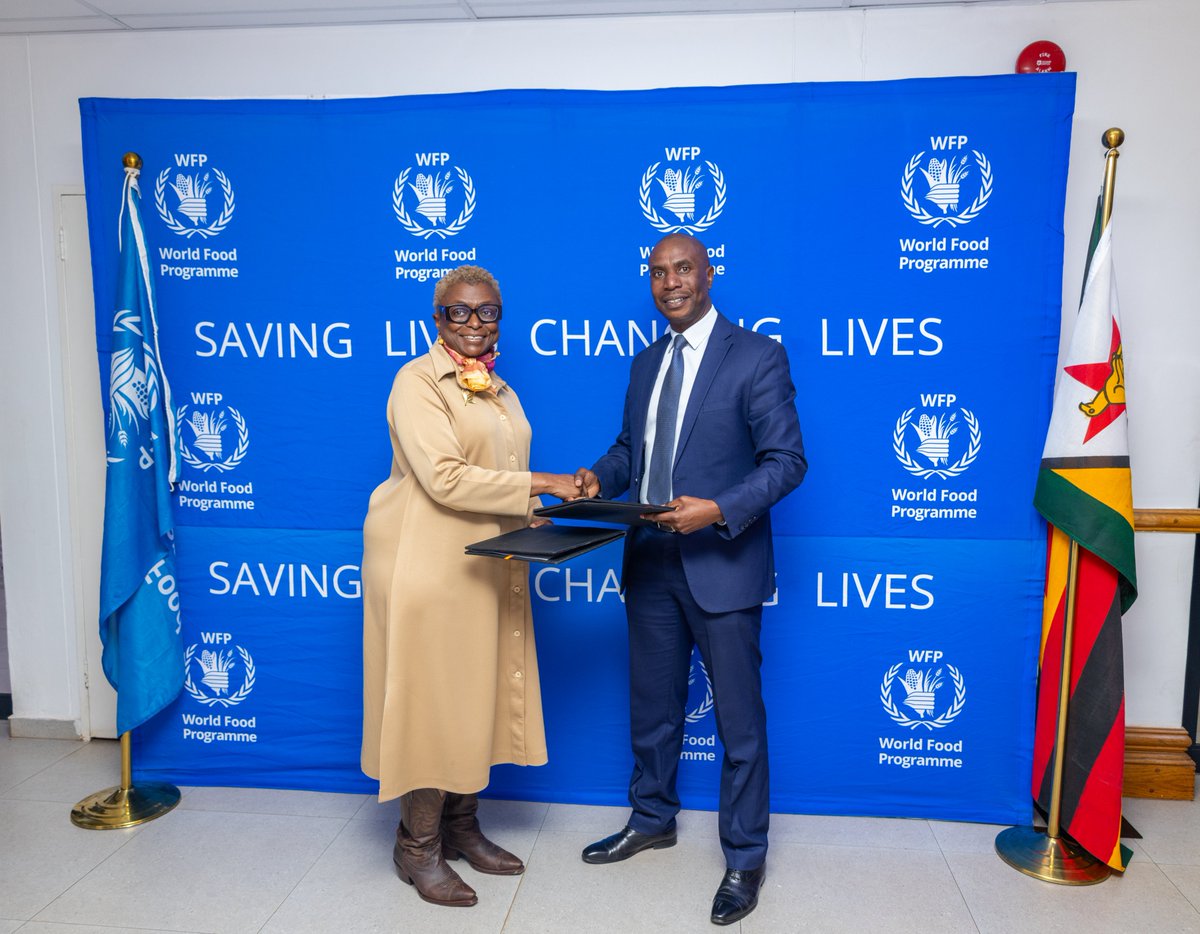
Food security is about more than food on the table it’s about strong systems.
Today, @WFP and @ZMXExchange signed an MoU to link #Zimbabwe’s smallholder farmers to fair, transparent markets helping turn production into prosperity and move closer to #ZeroHunger.
"This thing [Alcohol] will kill you before you realize your ambitions."
~ President Paul Kagame
How many LEADERS are prepared to preach this unpopular gospel in 2026? That’s a sign of a True Leader!! Be prepared to say the unpopular FACTS! Besides President Kagame I have also heard Julius Malema say things which others won’t say because of “VOTEs”
“As young people, we need you. We love you. But first and foremost, take care of yourselves.
This religion of alcohol, I think people even recruit others into it. Alcohol is killing you. It’s killing young people. The older ones are already gone. It has killed so many older people like us. Others are already on that same path and seem unable to stop.
But I want to warn you and beg you: everything we have been talking about, what brought you here, and the plans we have for our country, this thing will kill you before you realise your ambitions.” President Kagame
“Don’t wait for somebody to feed you. You must strive to feed yourself. Dependence is another word for stupidity."
President Paul Kagame on Tuesday urged young people to reject a culture of dependence and embrace self-reliance
“As young people, we need you. We love you. But first and foremost, take care of yourselves.
This religion of alcohol, I think people even recruit others into it. Alcohol is killing you. It’s killing young people. The older ones are already gone. It has killed so many older people like us. Others are already on that same path and seem unable to stop.
But I want to warn you and beg you: everything we have been talking about, what brought you here, and the plans we have for our country, this thing will kill you before you realise your ambitions.” President Kagame |#MeetThePresident Indangamirwa 16th Cohort
@GeoPomonaZW I am so excited and happy to see such wonderful work you guys are doing. You're probably 1 of the few notable and conspicuous movement in our nation.
Its becoming difficult to ignore the environmental and cultural paradigm you have ignited towards sustainable waste management
Today, our team was on the ground in Dzivarasekwa 1 and Rugare for our ongoing Communities and Behavioural Change Programme, engaging with residents and distributing bin liners to support proper waste disposal.
Under the vision and leadership of our CEO and Executive Chairman, Dr. Dilesh Nguwaya, Geo Pomona Waste Management remains committed to fostering cleaner, healthier, and environmentally conscious communities across Harare.
We are here to protect our tomorrow!
#geopomona #sustainbilityinaction #wastemanagement #environmentalsustainability #specialadvisoronwastemanagementandenvironmentalsustainability
@GeoPomonaZW I am so excited and happy to see such wonderful work you guys are doing. You're probably 1 of the few notable and conspicuous movement in our nation.
Its becoming difficult to ignore the environmental and cultural paradigm you have ignited towards sustainable waste management
Zim has the potential to strengthen its role in Southern Africa’s agricultural future.
In the next episode of #BitesOfChange, @WFP CD @BarbaraTClemens sits down with @MoLAFWRD_Zim Permanent Secretary Prof. Obert Jiri to discuss how #Zimbabwe is strengthening its food systems.
Did you know? @WFP and @FAO have launched their first-ever Joint Anticipatory Action Appeal ahead of expected #ElNiño climate shocks that could threaten food security and livelihoods this year and next. #Zimbabwe is among the 22 high-risk priority countries.
Despite shrinking resources, @WFP continued to respond in emergencies while finding smarter, faster ways to reach those most in need.
📖 Read our Annual Review: https://t.co/JraNKOHguq
Food security starts with food safety.
@WFP handed over laboratory equipment to the @SAZstandards to strengthen food testing and quality assurance systems.
Strong local testing capacity is essential to ensuring safe, high quality food, advancing #Zimbabwe's NDS2 aspirations.
It is not surprising that you say so, my brother. You are a Zimbabwean, and we Zimbabweans are known for supporting personalities rather than ideas.
You will stand by Cristiano Ronaldo whether he plays well or badly, whether he scores or not. That does not surprise me at all. It is the same mindset we see in politics, where some people say they will die fighting for Mnangagwa or Chamisa, instead of fighting for a principle, a cause, or an idea.
The problem with personality politics, whether in football, religion, business, or politics, is that it discourages objective thinking. Once you become emotionally invested in an individual, every criticism becomes a personal attack and every failure must be explained away.
Ideas should be bigger than individuals. Causes should outlive personalities. Leaders, footballers, and public figures come and go, but principles remain.
Support Ronaldo if you want, support Mnangagwa if you want, support Chamisa if you want, but never surrender your ability to think critically and judge performance on the facts.




![ali_naka's tweet photo. "This thing [Alcohol] will kill you before you realize your ambitions."
~ President Paul Kagame
How many LEADERS are prepared to preach this unpopular gospel in 2026? That’s a sign of a True Leader!! Be prepared to say the unpopular FACTS! Besides President Kagame I have also heard Julius Malema say things which others won’t say because of “VOTEs”](https://pbs.twimg.com/media/HOXkH_iWUAAG2dj.jpg)


