“A society that mocks virtue prepares its own collapse.”
- Plato
When a society begins to ridicule virtue, it weakens the moral foundation that allows it to endure. In The Republic, Plato emphasized that justice, honesty, and self-discipline are more than admirable qualities—they are essential principles that create trust and hold communities together.
When integrity becomes something to mock rather than respect, cynicism can take its place and social trust begins to disappear. As corruption and self-interest grow, the common good becomes secondary, leaving a society increasingly divided and vulnerable to decline from within.
“The man, the more he studies, the more simpler he becomes, because as he studies he discovers the greatness of his ignorance.”
- Aristotle
Aristotle (384–322 BCE) was an ancient Greek philosopher whose ideas profoundly influenced Western thought. A student of Plato and later the tutor of Alexander the Great, he explored subjects ranging from logic and ethics to politics, science, nature, and human knowledge. His philosophy placed great importance on observation, rational thought, and careful investigation.
“The man, the more he studies, the simpler he becomes, because as he studies he discovers the greatness of his ignorance.”
Although this quotation is often credited to Aristotle, its exact wording is difficult to locate within his surviving writings. Still, the message reflects a longstanding philosophical idea: gaining knowledge often makes us increasingly aware of everything we have yet to understand.
Someone with limited knowledge may initially feel confident that they understand a subject completely. Deeper study, however, exposes layers of complexity, unanswered questions, and the boundaries of what we know. In this sense, genuine education tends to encourage humility rather than certainty or arrogance.
The “simplicity” described in the quote does not suggest becoming less intelligent. Instead, it refers to becoming less concerned with appearing knowledgeable. As understanding grows, so does the realization that there is no need to pretend we possess every answer.
The larger lesson is that wisdom often brings an awareness of our own limitations. The more we learn, the more clearly we recognize how much remains unknown. True intelligence is not believing we know everything—it is remaining humble, curious, and willing to continue learning.
@RpsAgainstTrump Where did Trump find this fool? Surely, even MAGA farmers realize that she is part of the problem and is not part of the solution. Competency counts!
"A dangerous Quadrangle of Doom is shaping the behavior of the Trump administration. The Quadrangle of Doom consists of a megalomaniacal president, fanatics in key positions in his administration, radicalized MAGA true believers, and cowardly elites."
https://t.co/gqfhUl42j5
“Being hated by idiots is the price you pay for not being one of them.”
- Jean Cocteau
Jean Cocteau (1889–1963) was a celebrated French poet, author, filmmaker, and visual artist whose creativity left a lasting mark on French culture. Born in Maisons-Laffitte, France, he became renowned for his imaginative approach to art and literature. His work frequently examined themes of love, beauty, identity, creativity, and the mysteries of human existence. Through poetry, cinema, theater, and drawing, Cocteau developed a distinctive artistic vision that blurred the boundaries between fantasy and reality.
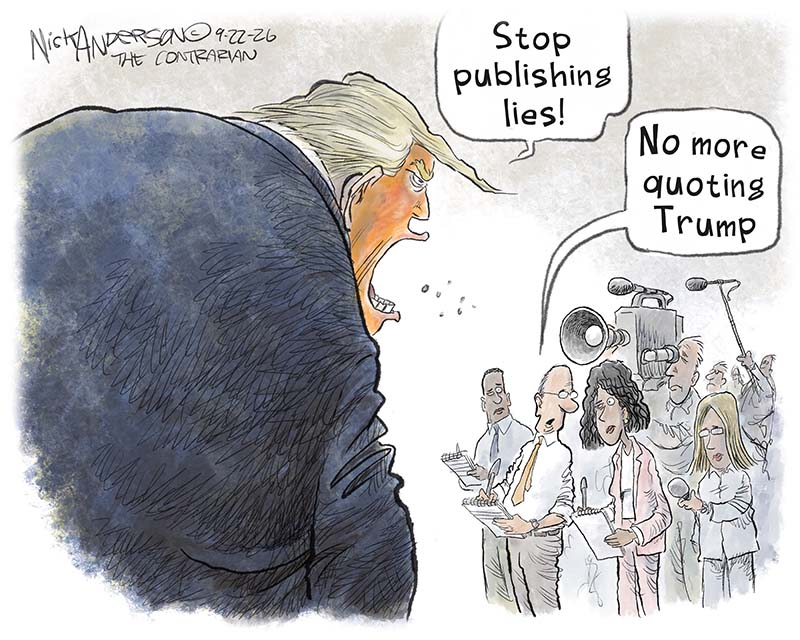
I found watching Trump’s UN speech today deeply depressing. It is a matter of national shame and humiliation that he is our president. Every country in the world, friend and foe alike, sees we are governed by a vainglorious fool.
A teacher earning $60,000 pays Social Security taxes on every dollar she earns.
A worker earning $184,500 does too.
But someone earning $10 million pays tax on just the first $184,500.
That doesn’t make sense. We can protect Social Security if everyone paid their fair share.
This is truly a great man. He has invested more in Ukraine than 185 countries combined.
Meet Howard Buffett, Warren Buffett’s middle son. He is 71 years old. He dropped out of college three times. He drinks Dr Pepper and looks for a McDonald’s wherever he travels.
Since the beginning of the war, his foundation has become the largest private donor to Ukraine: $1.4 billion.
Over four years, he has personally visited Ukraine 27 times.
In April 2022, he saw burned-out agricultural machinery and called the president of John Deere:
“How many combines are available in Europe?”
“Fifteen. All of them were supposed to go to Russia.”
“I’ll take them all.”
Then came all the available New Holland equipment in Europe. Altogether, more than 100 tractors and combines were provided to Ukrainian farmers.
He even tested demining equipment himself - on his own farm in Illinois, detonating explosives beneath rollers. When a Ukrainian deputy minister expressed doubts, Buffett told him:
“Stop counting my tractors. If necessary, I’ll blow up a thousand of them.”
Andriy Stavnitser initially asked him for $1 million for Superhumans. Buffett asked how much was needed to build the entire center.
“$14 million.”
“Okay. And what do you expect in return?”
“Nothing. Build it.”
Today, his support for Superhumans has reached $77 million, and the center has treated more than 1,700 patients.
But his largest area of spending is neither agricultural machinery nor prosthetics.
It is food: 642 million meals.
And that is only part of it:
* 344,000 windows replaced after Russian attacks;
* 9 bridges, 4 power plants, 2,500 generators, and 18 DNA laboratories;
* Much of Bucha rebuilt with his funding.
“I already have more friends in Ukraine than I do at home,” he says.
He celebrates birthdays in Ukraine, comes for Christmas, and even has a Ukrainian godson.
Friends, this is truly a great man - someone who understands that he cannot take all his money with him when he leaves this world.
I simply want to thank him and wish him well.
Whatever else one may say, this is real help from a person who had no personal obligation to Ukraine.
He simply chose to help.
Source: translated from the original text by Oleh Bairak.